
Latest News
Nigeria at 65: Youth Group Demands New Generation of Leaders

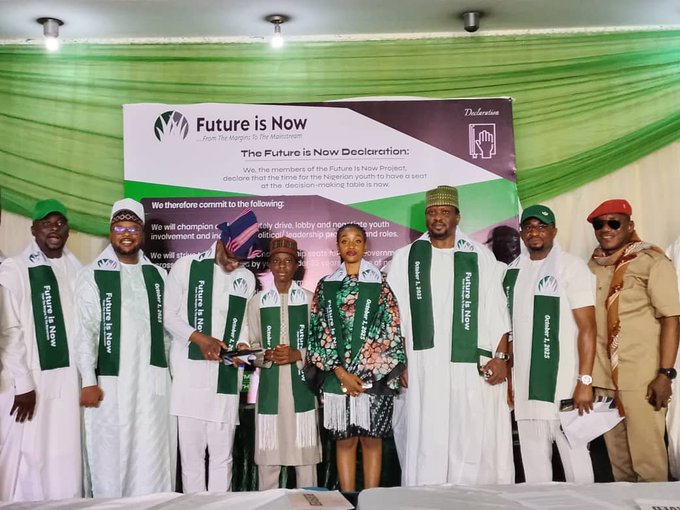
Nigeria marks its 65th independence anniversary, a leading youth group has called for a generational shift in political leadership, saying the country’s future depends on younger voices taking charge.....KINDLY READ THE FULL STORY HERE▶
The group, under the banner of the National Youth Alliance, said Nigeria cannot continue to rely on the same political class that has dominated for decades. It urged leaders to open more space for young people to participate in decision-making and governance.
Speaking during an anniversary gathering in Abuja on Thursday, the group’s president, Ibrahim Musa, said young Nigerians make up more than 60% of the population but remain excluded from real power. “Nigeria’s independence was achieved by leaders who were in their 20s and 30s. Today, the youth are still relegated to the sidelines,” he said.
The demand comes as the country struggles with economic hardship, unemployment, insecurity, and public mistrust of political institutions. Many young Nigerians say the problems have worsened because older leaders refuse to give way to new ideas.
At the event, several speakers criticized what they called a recycling of the same individuals in government positions. “We cannot keep expecting progress from the same class of politicians who have led us for over 40 years,” said youth activist Chidinma Okafor. “Our generation must be allowed to take responsibility.”
Nigeria’s average age is about 18, according to government data, yet most elected leaders are over 50. While the 2018 “Not Too Young To Run” law lowered the age requirement for candidates, activists say structural barriers and money politics still block youth from competing fairly.
Experts note that the call for change reflects wider frustration among Nigerians under 35, who have been at the forefront of social movements in recent years. In 2020, young people organized the #EndSARS protests against police brutality, a movement that shook the nation and demonstrated their political strength.
Analysts say such calls may intensify ahead of the next general election, when millions of new voters, mostly young, are expected to register. Political observers believe youth participation could alter the balance of power if mobilized effectively.
Some older politicians have also acknowledged the need for transition. Former senator and elder statesman Shehu Adamu said in a televised interview that the country must prepare for younger leaders. “We should not wait until a crisis forces the change. It is better to nurture it now,” he said.
The youth group in Abuja proposed several steps, including stronger party reforms to support young candidates, transparent campaign financing, and more youth representation in policymaking bodies. They also urged government institutions to create mentorship programs linking current leaders with younger professionals.
Despite skepticism about whether the political elite will yield ground, the group pledged to keep pressing. “We are not asking for favors,” Musa said. “We are demanding our rightful place in shaping Nigeria’s destiny.”
Nigeria gained independence from Britain in 1960. Over the years, it has moved between military rule and democracy, with leadership often concentrated in older figures who were part of the country’s earlier political struggles. Youth groups argue that while experience is valuable, the challenges of today—technology, globalization, and new economic realities—require leaders who can connect with the younger population.
As the independence celebrations continue, the call for generational change has struck a chord with many citizens. Whether it leads to policy reforms or shifts within political parties remains uncertain, but observers say the demand is unlikely to fade.
For now, Nigeria’s young people say they will continue to organize, campaign, and demand that their voices shape the nation’s next chapter.


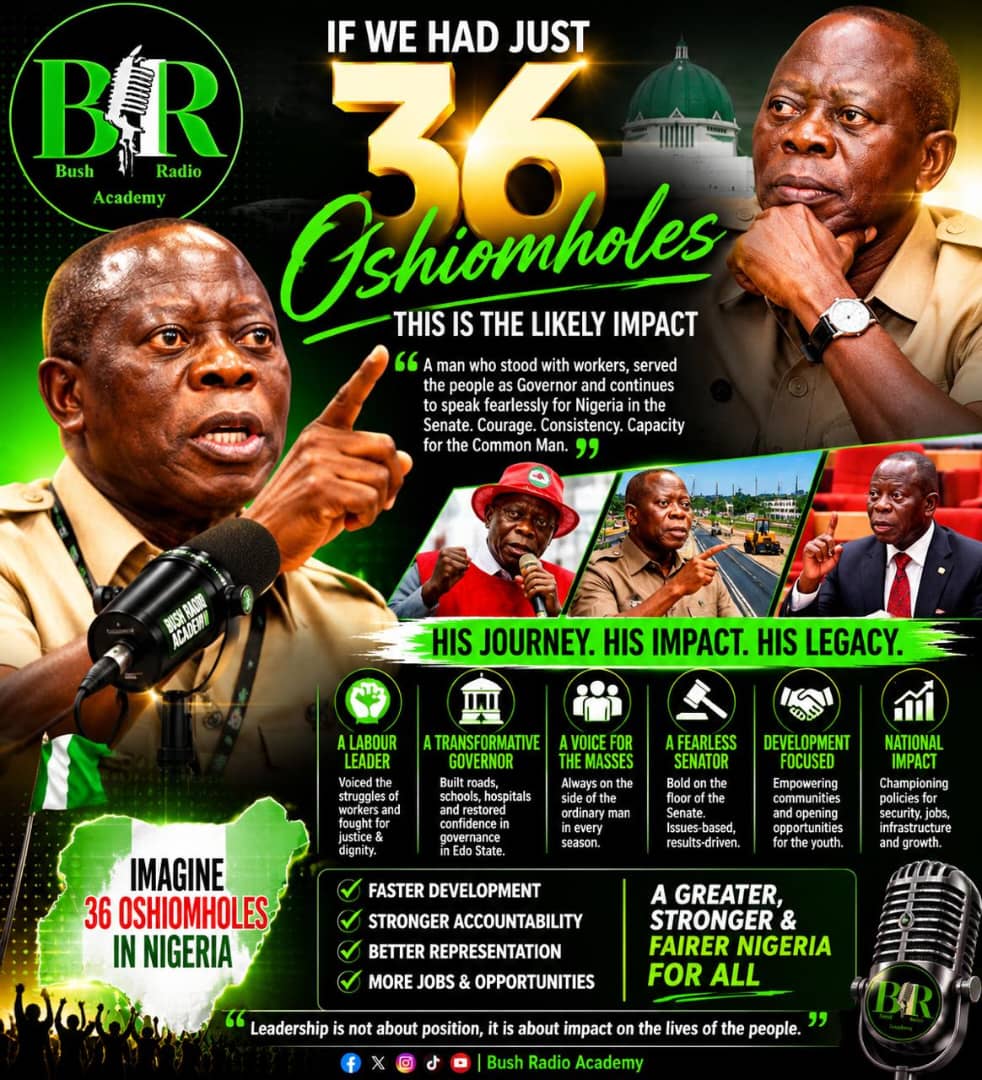
....KINDLY READ THE FULL STORY HERE▶
Nigeria is blessed with many distinguished leaders, public servants, technocrats, entrepreneurs, and patriots who contribute daily to national development.
Yet every generation produces a few individuals whose public journey cuts across multiple phases of national life and leaves a visible imprint at every stage.
One of such figures is Adams Oshiomhole.
The interesting question is not whether one agrees with him on every issue.
The more fascinating question is this:
What would Nigeria look like if every state produced a leader with the same intensity, consistency, and public engagement that has defined Oshiomhole’s career?
From The Shop Floor To The National Stage
Before politics, Oshiomhole became nationally known through the labour movement.
As President of the Nigeria Labour Congress, he emerged as one of the most recognizable voices advocating for workers, salaries, welfare, and social justice.
Many Nigerians still remember the period when labour negotiations dominated national conversations and Oshiomhole became a symbol of resistance against policies perceived as unfavourable to ordinary citizens.
Whether one agreed with his methods or not, few doubted his willingness to stand in difficult places and speak for those without access to power.
That reputation for advocacy would later become the foundation of his political career.
The Governor Who Preferred Construction Sites To Comfort Zones
When he became Governor of Edo State, the transition from activist to administrator was closely watched.
Could a labour leader govern?
The answer came through roads, schools, healthcare facilities, urban renewal projects, and public sector reforms that transformed significant parts of Edo State.
Across communities, infrastructure became a defining feature of his administration.
Roads that had been neglected for years were reconstructed.
Schools received attention.
Public confidence in government delivery improved.
His administration was not without criticism, as is the case with every government, but even political opponents often acknowledge that his tenure changed the physical landscape of the state.
More importantly, he cultivated an image of accessibility.
Many citizens saw a governor who appeared willing to leave the office, inspect projects personally, and engage directly with communities.
The Senator Who Refuses To Stay Silent
Today, as a Senator representing Edo North Senatorial District, Oshiomhole continues to attract attention for a different reason.
In an era where many legislators work quietly behind committee doors, he remains one of the most vocal voices on the floor of the Senate.
On issues ranging from insecurity to economic policy, governance accountability, public spending, and national development, he has consistently demonstrated a willingness to ask difficult questions.
He has repeatedly argued that government performance should not be measured merely by budgets approved but by results delivered.
For many Nigerians, that resonates deeply.
The average citizen is less interested in figures on paper and more interested in safer communities, better roads, quality schools, reliable healthcare, and economic opportunities.
Oshiomhole’s interventions often reflect that perspective.
His constituency projects, community engagements, educational support initiatives, infrastructure interventions, and empowerment programmes have reinforced his long-standing image as a politician who remains connected to grassroots realities.
Why The Common Man Relates To Him
Perhaps Oshiomhole’s greatest political strength is not his position.
It is his story.
He understands the language of the market woman because he once represented workers.
He understands the concerns of civil servants because he fought for them.
He understands the demands of governance because he has governed.
And he understands legislative oversight because he now serves in the National Assembly.
That combination is rare.
It allows him to speak in a manner that often resonates beyond party lines.
Many Nigerians see not just a politician, but someone who has experienced different layers of public service and continues to engage with national issues from the perspective of ordinary citizens.
If There Were 36 Oshiomholes…
Imagine 36 governors with relentless energy for project inspection.
Imagine 36 senators constantly demanding accountability and measurable results.
Imagine 36 public officials willing to challenge inefficiency regardless of whose interests are affected.
Imagine 36 leaders deeply connected to grassroots communities while simultaneously participating in national policy discussions.
The result would likely be faster infrastructure development.
Stronger public accountability.
Greater citizen engagement.
More attention to workers’ welfare.
And perhaps a more responsive system of governance.
This is not to suggest that Nigeria lacks capable leaders.
Far from it.
Across the country are men and women making meaningful contributions in public service, business, academia, security, healthcare, and governance.
But Oshiomhole’s journey offers an important lesson.
Nations make progress when leadership is active rather than passive.
When public office becomes a platform for service rather than status.
When leaders remain close enough to hear the voices of the people they represent.
The real story is not about creating 36 Oshiomholes.
It is about cultivating the values that have defined much of his public life: courage, advocacy, accountability, visibility, grassroots engagement, and an unwavering willingness to speak when others choose silence.
If those qualities were replicated across Nigeria’s institutions, regardless of who occupies public office, the country would undoubtedly move faster toward the future its citizens desire.
And perhaps that is the most important question of all:
Osigwe Omo-Ikirodah is the Principal and CEO of Bush Radio Academy
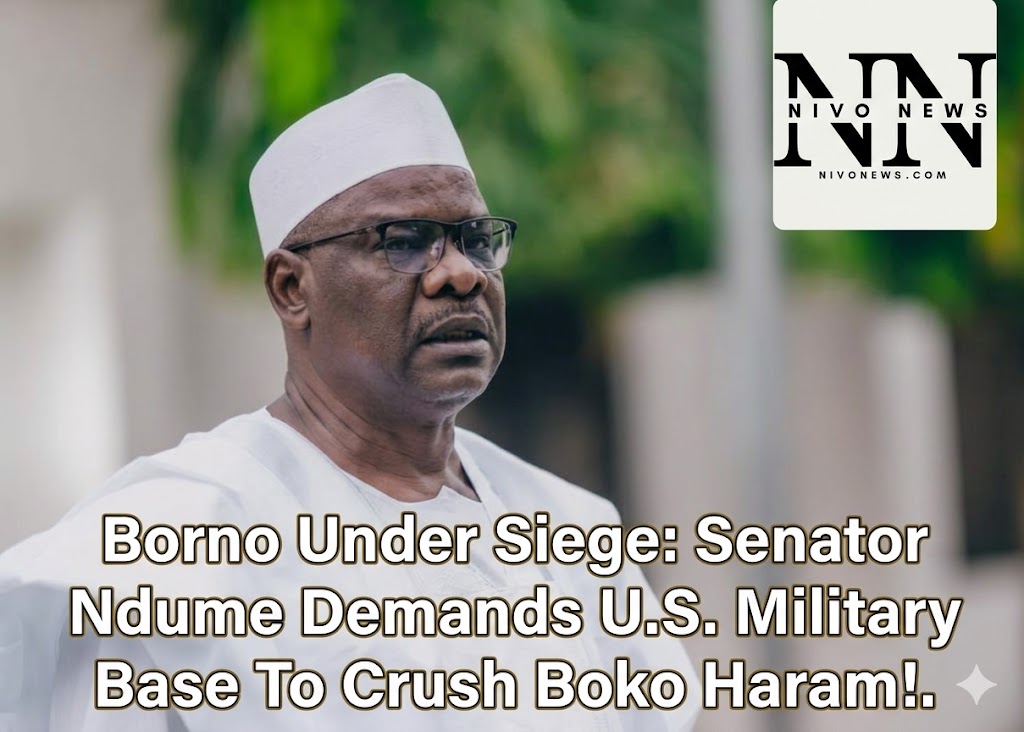
Former Senate Chief Whip, Ali Ndume, has publicly urged the United States to establish a military presence in Borno State to effectively neutralize Boko Haram insurgents in the North-East. Representing the Borno South Senatorial District, the senator argued during an interview on Channels Television’s Politics Today that a U.S. base near the Mandara Mountains could disrupt critical insurgent supply routes and significantly weaken terrorist operations.....KINDLY READ THE FULL STORY HERE▶
Senator Ndume emphasized that the geographical location of the Mandara Mountains is a strategic hub for insurgent movement and logistics. Key points regarding his proposal include:
-
Technological Advantage: He stated that the U.S. possesses the technological capacity required to monitor insurgent movements from the Mandara Mountains all the way to the Sambisa Forest.
-
Disrupting Logistics: Ndume noted that insurgents utilize a circular route through areas like the Lake Chad region, Kaga, and Mandaragirau to maintain their operations.
-
Cutting Off Supply Lines: By securing the Mandara Mountains in Gwoza, he believes the military could effectively “cycle out” the insurgents, leaving them without access to support or necessary supplies.
Call for Enhanced Support
While appealing for American intervention to utilize their expertise and advanced surveillance, Ndume also stressed that the Nigerian Army requires sufficient resources and a significant number of “boots on the ground” to successfully secure these areas. He expressed his full support for such a partnership, noting that he had previously discussed the possibility of U.S. involvement to address the persistent insecurity in the region.

Nigeria’s build-up to Wednesday’s high-profile friendly against Portugal has been dealt a significant blow, with defender Igoh Ogbu sidelined by a suspected left Achilles tendon rupture. The 26-year-old Slavia Prague star sustained the injury during training on Saturday evening, forcing him to leave the pitch for urgent medical attention. While further tests are pending to confirm the severity, team officials are concerned that the setback could lead to a lengthy recovery.....KINDLY READ THE FULL STORY HERE▶
This development compounds an already difficult situation for head coach Eric Chelle, who is navigating the absence of several key players. The squad is currently missing stars like Victor Osimhen and Ademola Lookman, as well as Ola Aina, who remains sidelined following the conclusion of his club season. Ogbu’s absence is a major loss to the team’s defensive strategy, especially considering his recent consistent form in Europe and his rising importance to the national squad.
Despite these challenges, the Super Eagles enter the match in Leiria with positive momentum, having recently defended their Unity Cup title following wins over Zimbabwe and Jamaica, alongside a hard-fought 2-2 draw against Poland.
Conversely, Portugal’s squad has been significantly bolstered by the return of PSG stars Nuno Mendes, Vitinha, João Neves, and Gonçalo Ramos, all of whom joined camp following their Champions League final victory over Arsenal. Coach Roberto Martínez now has nearly his full roster available for Wednesday’s encounter at the Estádio Dr. Magalhães Pessoa. This match serves as a rematch of their 2022 meeting in Lisbon, where Portugal secured a decisive 4-0 win.
-

 latest10 months ago
“Social Media Erupts As Jim Iyke Declares Rita Dominic Nollywood’s Most Beautiful”
-
 latest2 years ago
Edo Political Showdown: Oshiomhole Appears At Presidential Villa As Tinubu Hands APC Gubernatorial Flag To Okpebholo (Photos & Video)
-
 entertainment2 years ago
Love Knows No Age American Woman Defends Marriage To Young Nigerian Man “I’m Not 70”
-
 latest2 years ago
Olumide Akpata Strikes Again: Drops Killer Track, Sends Edo State Into Frenzy!(Video)
-
 Politics3 years ago
Nigerians React As Pastor Adeboye Foresees Passing Away On A Sunday After Enjoying A Satisfying Meal Of Pounded Yam
-
 latest2 years ago
FG Identifies 31 States At Risk Of Heavy Flooding In 2024: See Full List
-
 Politics2 years ago
BREAKING: Inspector-General Of Police Summons Top Police Commanders For Crucial-Security Challenges
-
 latest2 years ago
5 NYSC Corpers Perish In Fatal Road Accident Returning From Camp