
Latest News
Covenant of Blood: The Tragic Silence of the State in Benue and Plateau

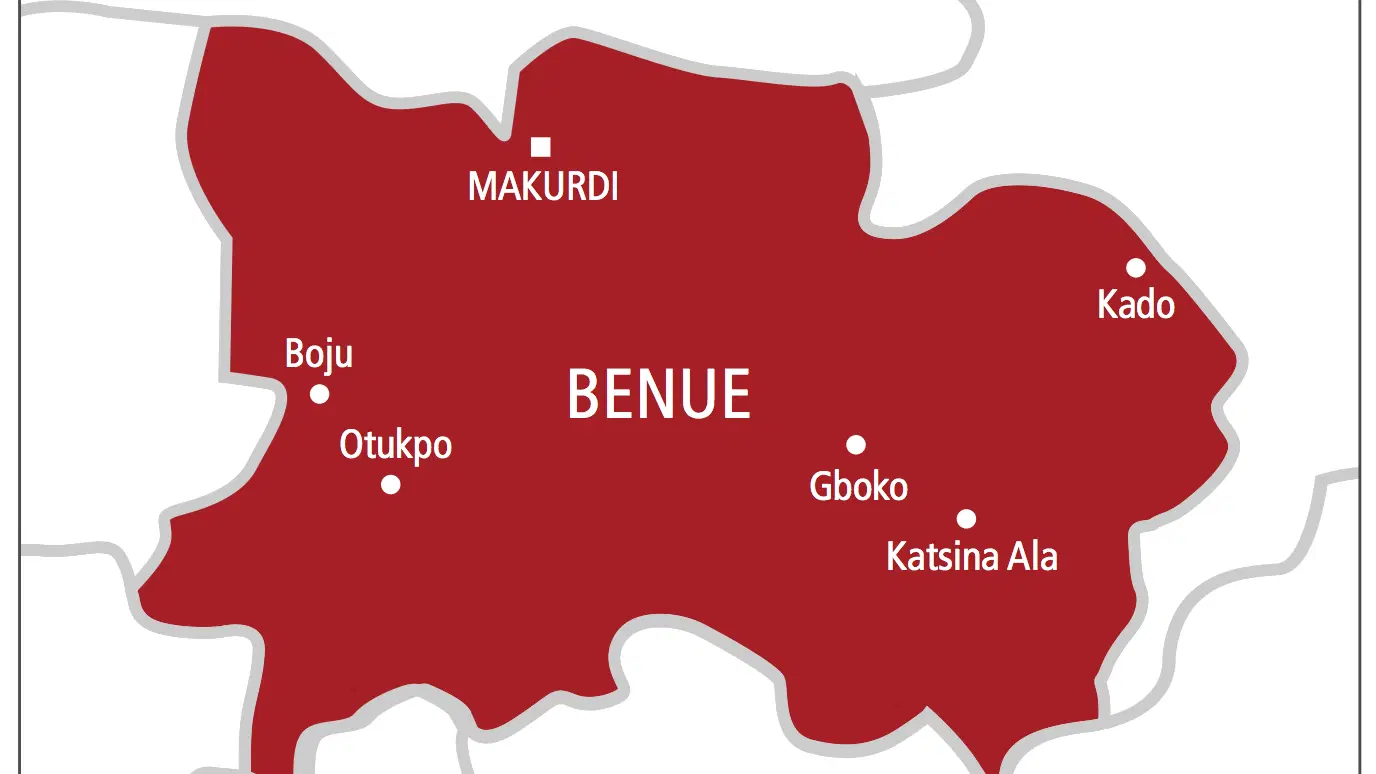
For years, Nigeria’s North-Central region—especially Benue and Plateau states—has endured relentless waves of violence, characterised by systematic killings, mass displacement, and the destruction of once-thriving communities. The primary victims are rural, agrarian populations whose means of survival have been decimated by repeated assaults, largely carried out by armed herder militias. What initially stemmed from resource-based disputes over land and water has now escalated into widespread criminal violence, fuelled by climate change, surging population growth, deepening ethnic-religious tensions, and, most critically, the failure of the state. The consequences have been devastating, eroding the socio-economic foundation of the region—particularly in Benue, long regarded as Nigeria’s food basket.....KINDLY READ THE FULL STORY HERE▶
One of the most chilling illustrations of Nigeria’s deepening security crisis occurred in June 2025, when over 100 people were reportedly slaughtered in Yelwata, Benue State, during one of many coordinated assaults on farming communities. Just 18 months earlier, the Christmas massacres of December 2023 in Plateau State left nearly 200 civilians dead—killed in cold blood.
These atrocities are not random; they are part of an entrenched and systematic campaign of violence and displacement targeting agrarian populations across Nigeria’s North-Central region. Research points to a clear pattern: state failure, unchecked impunity, and recurring reprisal attacks, worsened by the weak enforcement of critical legislation—such as Benue’s Open Grazing Prohibition and Ranches Establishment Law.
The consequences are catastrophic: the economic foundation of these communities is collapsing, national food security is under threat, and trust in the Nigerian state continues to erode. What Nigeria confronts in Benue and Plateau is no longer just a security challenge—it is a legitimacy crisis. The state’s repeated inability to protect lives, uphold justice, or enforce laws risks undermining its constitutional authority. Unless structural and sustained reforms are urgently implemented, the violence in the North-Central and other regions will only deepen, dragging more communities into chaos and jeopardising Nigeria’s already fragile economic progress.
Moving Beyond Symbolism
To meaningfully address the spiralling crisis in Benue, Plateau, and across Nigeria’s North-Central region, the federal government must move past symbolic responses and embrace a holistic, long-term security strategy rooted in accountability and justice.
A starting point is the full and consistent enforcement of existing legal frameworks—most notably the Benue State Anti-Open Grazing and Ranches Establishment Law, designed to prevent the very kind of violent conflict now raging. Yet, lax enforcement has allowed armed groups to act with near-total impunity. Federal security agencies must collaborate closely with state authorities to ensure that offenders are arrested and prosecuted—and that communities are protected, not abandoned.
While a complete overhaul of the country’s security architecture may not be immediately feasible, targeted improvements in intelligence gathering and tactical response are critical. Resources must be invested in technological surveillance, including drones, satellite imaging, and geospatial analysis, to track and neutralise armed groups operating from forests and ungoverned spaces. Nigeria’s counterinsurgency efforts in the Northeast have proven that such strongholds can be dismantled—if political will exists. That same commitment is now urgently required in Benue, Plateau, and other flashpoints.
The Case for Multilevel Policing
In parallel, the government must fast-track the implementation of state or multilevel policing systems, granting governors the operational control needed to respond to local threats. State executives are often best positioned to detect and act on early warning signs of violence. However, without authority over law enforcement, they remain powerless.
To avoid politicisation, any decentralised policing structure must be built with strong institutional safeguards, including independent oversight bodies, regular audits, and constitutional mechanisms allowing federal intervention in cases of abuse. Without a more responsive and decentralised policing system, Nigeria will continue to fight rural violence from a position of weakness.
From Impunity to Enforcement—and Peacemaking
Ending the cycle of bloodshed requires more than boots on the ground. Nigeria must urgently launch a nationwide disarmament initiative, targeting militias and criminal networks exploiting ethnic and communal tensions. This must be backed by a federal-level judicial inquiry to investigate repeated attacks, unmask their sponsors, and ensure robust prosecutions under Nigerian law.
Impunity must end—not just for the sake of justice, but for the survival of the nation’s unity.
Equally important is investing in peacebuilding at the grassroots. Religious leaders, traditional authorities, and local stakeholders must be formally integrated into early warning and response networks, in partnership with civil society organisations. These actors can detect and defuse local tensions before they escalate into full-blown violence.
Restoring the State’s Legitimacy
Together, these measures represent more than just a response to the violence in Nigeria’s North-Central zone—they offer a blueprint for restoring the credibility and authority of the Nigerian state. Without bold, coordinated, and justice-driven action, the violence will not stop. It will spread, deepen, and consume whatever remains of Nigeria’s rural heartlands and economic hopes.
Malik Samuel is a senior researcher at Good Governance Africa-Nigeria in Abuja. He previously worked with the Institute for Security Studies (ISS), focusing on the Boko Haram conflict in the Lake Chad Basin. His experience spans Amnesty International Nigeria, Médecins Sans Frontières, and the International Centre for Investigative Reporting. He holds a Master’s in Conflict, Peace, and Security from Universitat Oberta de Catalunya and the United Nations Institute for Training and Research (UNITAR).

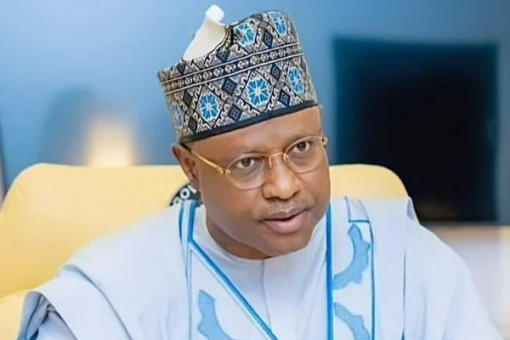
Kaduna State Governor, Uba Sani, says the state has mapped out 22,435 hectares of degraded land for restoration under the Agro-Climatic Resilience in Semi-Arid Landscapes (ACReSAL) project using modern geospatial mapping technology.....KINDLY READ THE FULL STORY HERE▶
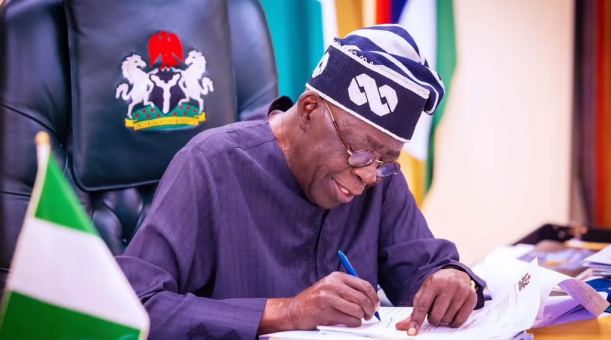
President Tinubu has given full backing for the implementation of the ₦68.32 trillion 2026 budget after signing the Appropriation Bill passed by the National Assembly into law.....KINDLY READ THE FULL STORY HERE▶
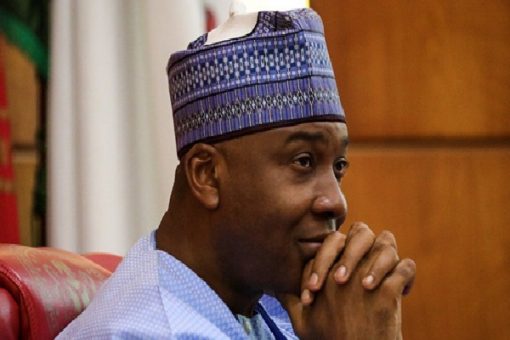
The Peoples Democratic Party (PDP) in Kwara State has described moves to prosecute former Senate President Bukola Saraki and former Governor Abdulfatah Ahmed over alleged culpable homicide as an attempt to reopen the 2018 Offa robbery tragedy for political purposes.....KINDLY READ THE FULL STORY HERE▶
-

 latest8 months ago
“Social Media Erupts As Jim Iyke Declares Rita Dominic Nollywood’s Most Beautiful”
-
 latest2 years ago
Edo Political Showdown: Oshiomhole Appears At Presidential Villa As Tinubu Hands APC Gubernatorial Flag To Okpebholo (Photos & Video)
-
 entertainment2 years ago
Love Knows No Age American Woman Defends Marriage To Young Nigerian Man “I’m Not 70”
-
 latest2 years ago
Olumide Akpata Strikes Again: Drops Killer Track, Sends Edo State Into Frenzy!(Video)
-
 Politics2 years ago
Nigerians React As Pastor Adeboye Foresees Passing Away On A Sunday After Enjoying A Satisfying Meal Of Pounded Yam
-
 latest2 years ago
FG Identifies 31 States At Risk Of Heavy Flooding In 2024: See Full List
-
 latest2 years ago
5 NYSC Corpers Perish In Fatal Road Accident Returning From Camp
-
 Politics2 years ago
BREAKING: Inspector-General Of Police Summons Top Police Commanders For Crucial-Security Challenges