
latest
Nigerian Govt Releases List Of 48 Terrorism Financiers.


The Federal Government has released an updated list of 48 individuals and organisations allegedly linked to terrorism financing and sponsorship in Nigeria.....KINDLY READ THE FULL STORY HERE▶
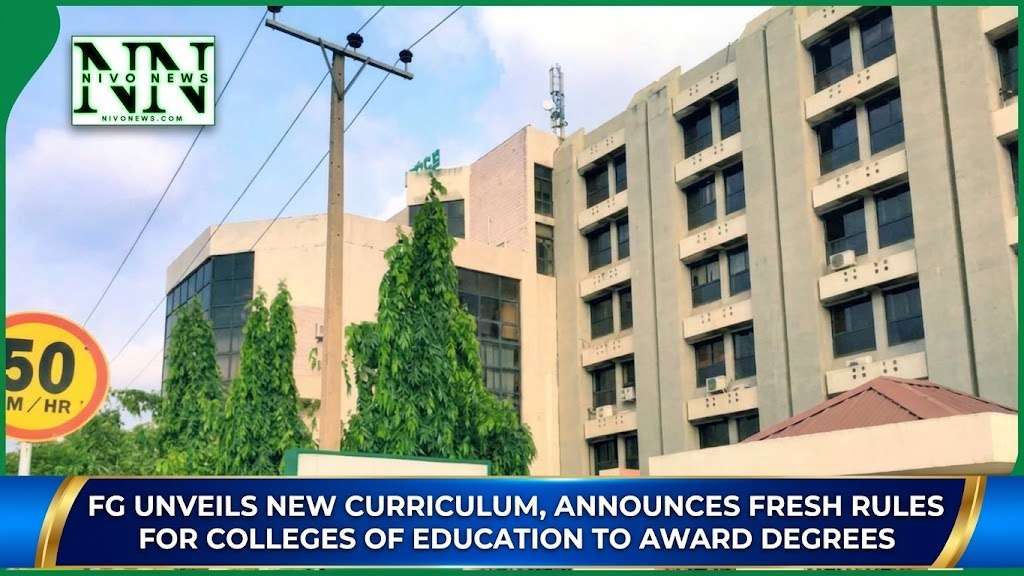
The Federal Government has cautioned colleges of education against introducing degree programmes without first ensuring they have qualified lecturers, adequate classrooms and the necessary facilities to deliver quality education.....KINDLY READ THE FULL STORY HERE▶
The Minister of State for Education, Prof. Suwaiba Sa’id Ahmad, gave the warning on Tuesday in Abuja while unveiling a new curriculum and a five-year strategic plan for colleges of education across the country.
According to Naija News, Ahmad described the decision to allow colleges of education to award degrees alongside the Nigeria Certificate in Education (NCE) as a positive development but stressed that academic standards must not be compromised.
She explained that institutions must demonstrate that they have qualified teaching staff, adequate infrastructure and effective quality assurance mechanisms before introducing or expanding degree programmes.
The minister noted that the success of the policy should not be measured by the number of colleges offering degrees but by the quality of teachers they produce.
She also charged the National Commission for Colleges of Education (NCCE) with ensuring that institutions fully understand and effectively implement the revised curriculum.
Ahmad urged college managements to align their budgets, recruitment plans and infrastructure development projects with the broader education reform agenda.
She further called for stronger collaboration among the Federal Ministry of Education, the NCCE, the National Universities Commission (NUC) and college administrators to prevent confusion over their respective regulatory responsibilities.
Speaking at the national retreat and workshop on implementing the dual mandate and the NCCE Medium-Term Strategic Plan for 2026–2031, NCCE Executive Secretary, Dr Angela Ajala, said the reforms were designed to produce teachers capable of meeting the changing demands of schools and learners.
Ajala stressed that colleges of education must go beyond issuing certificates and focus on preparing students with the practical skills required for effective teaching.
She explained that the revised curriculum would equip trainee teachers with digital skills, inclusive education practices, entrepreneurship knowledge and modern teaching techniques.
According to her, the curriculum was developed through contributions from academics, curriculum specialists, professional bodies and regulatory agencies.
She added that the changes would provide student teachers with more practical experience and better prepare them for the realities of classroom teaching.
However, Ajala warned that the reforms would have limited impact without qualified lecturers, modern teaching equipment and adequate funding.
She urged provosts and other college administrators to assess their institutions’ readiness to implement the new policy, particularly in the areas of staffing, infrastructure, funding and administration.
The minister formally unveiled the revised curriculum alongside the NCCE’s strategic plan covering 2026 to 2031 at the Abuja event.
The plan is expected to guide colleges of education in strengthening their academic programmes and preparing students for careers in teaching.
Ahmad urged education officials and college administrators to work together to ensure the reforms improve teacher training and raise the overall quality of education in Nigeria.
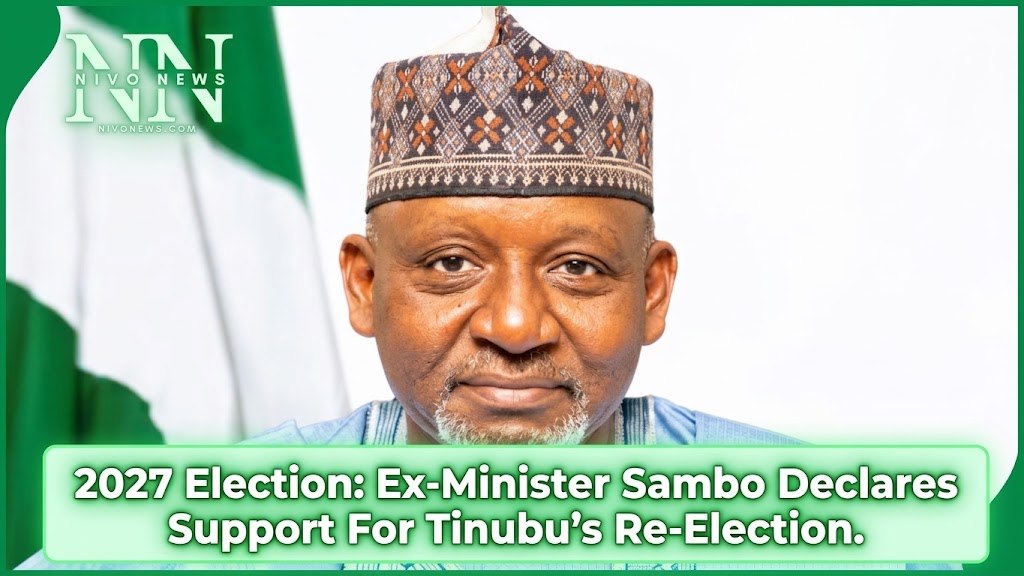
Former Minister of Transportation, Mu’azu Jaji Sambo, has declared his support for President Bola Tinubu’s re-election bid in 2027, urging Nigerians to give the president more time to complete his economic reforms.....KINDLY READ THE FULL STORY HERE▶
Sambo made the remarks in Jalingo, Taraba State, where he expressed confidence that the All Progressives Congress (APC) would perform strongly in the 2027 general elections.
The former minister, who previously served as Minister of State for Works and Housing before becoming Minister of Transportation under former President Muhammadu Buhari, coordinated the Tinubu/Shettima campaign in Taraba State during the 2023 elections.
While acknowledging the economic hardship and rising cost of living affecting Nigerians, Sambo argued that the sacrifices being experienced were necessary to achieve lasting economic and financial stability.
“We are not oblivious to the feedback from the common man and the general increase in cost of living. However, we believe that the sacrifices being made today are necessary for enduring economic and financial stability,” he said.
He expressed confidence that the situation would improve as the administration’s reforms and infrastructure investments begin to produce results.
“Nigerians can rest assured that it will get better. I firmly believe that the reforms, coupled with other interventions, including increased spending on infrastructure projects, will ultimately translate into long-term economic stability and prosperity for the people,” Sambo stated.
However, the former Taraba governorship aspirant acknowledged that the administration’s achievements were not being adequately communicated to Nigerians.
He urged government officials and APC stakeholders to explain the benefits of the president’s policies in simple terms that ordinary citizens could understand.
“Undoubtedly, PBAT is working, but we need men and women who will translate the impact of his work into simple terms that the common man on the street can understand. Many people are not adequately explaining the benefits of these reforms, either in the short or over the long term,” he said.
Sambo also called on Nigerians and political leaders to support Tinubu’s national development agenda.
“I believe it is high time all of us joined hands with President Tinubu to build our country,” he added.
The former minister expressed optimism that the APC would secure widespread support across the country in the 2027 elections.
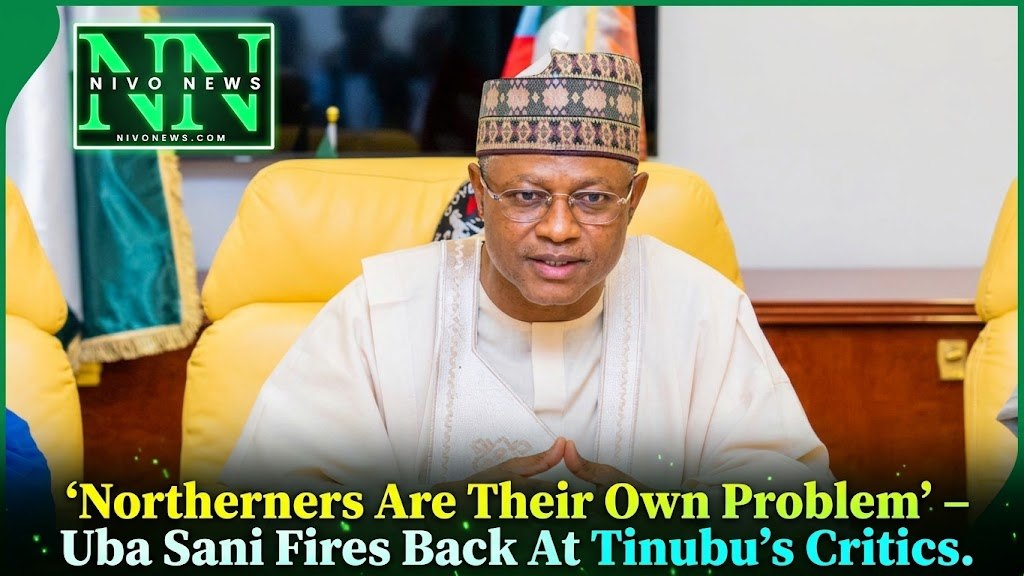
Kaduna State Governor, Uba Sani, has blamed northern political leaders for the persistent poverty and developmental challenges facing the region, urging them to take responsibility for their past failures rather than shifting the blame to the current administration.....KINDLY READ THE FULL STORY HERE▶
The governor made the remarks while defending his support for President Bola Tinubu’s re-election bid in 2027, insisting that he would continue to stand by the president despite the economic hardship and rising cost of living affecting Nigerians.
Speaking in an interview with Daily Trust on Tuesday, Sani argued that northern leaders needed to examine their records and acknowledge their contributions to the region’s longstanding problems.
“The northerners are their own problem. We shouldn’t run away. The only way to help, I think, is for us to sit down and look at ourselves in the mirror, and accept that we are the problem,” he said.
Sani maintained that poverty in northern Nigeria did not begin with Tinubu’s administration, although he acknowledged that the region’s difficulties had worsened over the years.
He likened the situation to a dilapidated building that had been neglected for so long that restoring it had become increasingly difficult.
According to the governor, northern political leaders must accept responsibility for their past shortcomings instead of blaming the current administration for every challenge confronting the region.
He said he had previously called on leaders in the North to reflect on their performance and admit that they had disappointed the people, but his appeals had not received sufficient attention.
Despite public dissatisfaction over economic hardship and the rising cost of living, Sani insisted that he had no regrets about backing Tinubu’s second-term ambition.
“I have no apology supporting President Bola Ahmed Tinubu, and I will continue to support him till the last minute,” he declared.
When asked whether he was prepared to take political risks for the president, the governor expressed confidence that his decision would eventually be vindicated.
“I can tell you today, tomorrow, and next tomorrow, that I will be vindicated,” he said.
Sani explained that his support for Tinubu was partly rooted in their longstanding relationship, which dates back to 1994, when both men were involved in the struggle to restore democracy in Nigeria.
He recalled Tinubu’s association with the National Democratic Coalition (NADECO) and his support for pro-democracy activists during military rule, when some campaigners were forced into exile.
The governor said their shared commitment to democracy and the devolution of power had shaped his perception of the president.
He also argued that Tinubu’s administration had delivered benefits to Kaduna State through federal projects and appointments.
Among the projects he highlighted were the Federal University of Applied Sciences in Southern Kaduna, the Federal University of Education in Zaria, the Federal University of Petroleum Resources in Rigachikun and a proposed conversion of Kaduna Polytechnic into a federal university of technology.
He also cited the reconstruction of the Kaduna-Birnin Gwari road and the appointment of Kaduna indigenes to senior positions in the Federal Government.
According to Sani, these developments were benefits to the state rather than personal favours to him.
“The favour he has done is not to me, because he has not given me. It’s to the state,” he said.
The governor further challenged opposition parties to present credible alternatives to Tinubu instead of merely urging Nigerians to reject the president in the 2027 election.
“When you say don’t vote for Asiwaju, you must bring an alternative,” he stated.
Sani maintained that opposition parties seeking to replace Tinubu must convince Nigerians that they have better policies and plans to address the country’s challenges.
On security concerns in Kaduna State, the governor acknowledged that attacks remained a challenge, particularly in Millennium City.
He said he had discussed the situation with military and other security officials, adding that plans were underway to strengthen security operations in the area.
-

 latest1 year ago
“Social Media Erupts As Jim Iyke Declares Rita Dominic Nollywood’s Most Beautiful”
-
 latest3 years ago
Edo Political Showdown: Oshiomhole Appears At Presidential Villa As Tinubu Hands APC Gubernatorial Flag To Okpebholo (Photos & Video)
-
 entertainment3 years ago
Love Knows No Age American Woman Defends Marriage To Young Nigerian Man “I’m Not 70”
-
 latest3 years ago
Olumide Akpata Strikes Again: Drops Killer Track, Sends Edo State Into Frenzy!(Video)
-
 Politics3 years ago
Nigerians React As Pastor Adeboye Foresees Passing Away On A Sunday After Enjoying A Satisfying Meal Of Pounded Yam
-
 latest3 years ago
FG Identifies 31 States At Risk Of Heavy Flooding In 2024: See Full List
-
 Politics3 years ago
BREAKING: Inspector-General Of Police Summons Top Police Commanders For Crucial-Security Challenges
-
 latest3 years ago
5 NYSC Corpers Perish In Fatal Road Accident Returning From Camp