
latest
Oshoma Blames Past PDP Leaders For Party Crisis, Says Wike Was Called In Too Late.

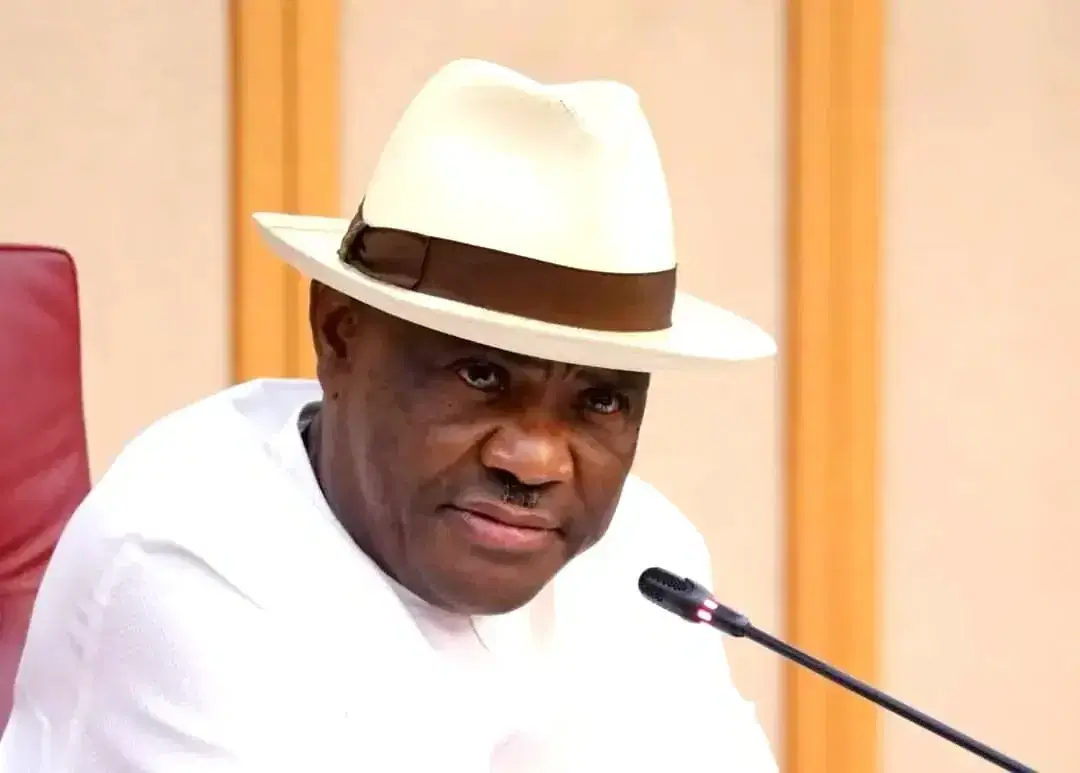
According to Nivo News, human rights activist Liborous Oshoma has attributed the ongoing crisis within the Peoples Democratic Party (PDP) to the failures of its past leaders. Speaking on Arise News, Oshoma accused Federal Capital Territory Minister Nyesom Wike of destabilizing the party ahead of the 2027 elections.....KINDLY READ THE FULL STORY HERE▶
Oshoma stated that the PDP turned to Wike for support after former leaders abandoned the party during its most critical moments. He explained, “I would not just start the crisis of PDP from 2023. I would first and foremost blame the past presidents that the platform of the PDP produced for abandoning the party when it needed them most. At that time, it suddenly dawned on them that there was no money to run the party. Some persons went to mortgage the party to Modu Sheriff. Atiku had left. Obasanjo had torn his PDP card. And then they quickly ran to Wike.”
He further argued that this move effectively “mortgaged the party’s future” to the then Rivers State governor without fully considering the repercussions. Highlighting the party’s legal disputes, Oshoma pointed to the prolonged conflict between the Federal High Court in Abuja and the Federal High Court in Port Harcourt, noting, “It shows truly that something is wrong.”
Oshoma also criticized Wike for turning against PDP leaders he previously supported, stating, “You said you wanted Uche Secondus out, he went out. Atiku was your problem, Atiku had gone. Now Damagum came. You were in hot romance with him until now. Enough should be enough.”
On the contentious Ibadan convention, Oshoma condemned the persistent clashes between courts of coordinate jurisdiction, explaining, “It’s sad and unfortunate that at this day and time, we’re still having a ping-pong of judgments and court orders. When courts of coordinate jurisdiction clash, you pick and choose which to obey. In this case, the last court order, from Oyo State, was obeyed, and they went ahead with the convention.”

The Governor of Borno State, Babagana Umara Zulum, has called on Muslims in the state to use the last ten days of Ramadan to pray for an end to insecurity.....KINDLY READ THE FULL STORY HERE▶
The appeal was made in a statement by his Special Adviser, Dauda Iliya.
Governor Zulum, who is currently performing the Lesser Hajj in Saudi Arabia, said he led fellow Muslims in a special prayer session in the Holy Land, seeking lasting peace for Borno State and Nigeria.
He emphasized that recent coordinated attacks by Boko Haram insurgents should not weaken the spirit of resilience and unity among the people in confronting the common enemy.
“As we enter the final ten days of Ramadan, let us intensify our prayers to Almighty Allah and engage in all acts of worship to attract His mercy, blessings, and rewards,” Zulum said.
“This is a sacred period for prayers and supplications. Let us renew our faith in light of the recent attacks. I will also join special prayers in the Holy Land, asking for an end to this prolonged conflict.
“I encourage members of the Christian community observing Lent to join in these special prayers. The recent attacks should unite us against the common enemy. Though this is a dark moment, we shall overcome, insha Allah,” he added.
Condoling with families who lost loved ones in the attacks, Governor Zulum reassured that the Borno State government will continue to provide full support to the military and security agencies to eradicate insurgency and terrorism in the state.

The Federal Ministry of Budget and Economic Planning yesterday hosted a high-level meeting with the leadership of Médecins Sans Frontières (MSF) Nigeria to discuss renewing the Federal Cooperation Agreement and enhancing collaboration for uninterrupted humanitarian services across the country.....KINDLY READ THE FULL STORY HERE▶
Minister of Budget and Economic Planning, Senator Abubakar Bagudu, reaffirmed the Federal Government’s commitment to supporting humanitarian initiatives while highlighting key challenges affecting service delivery in several states.
He identified challenges such as limited infrastructure in many local government areas, weak laboratory capacity due to electricity and equipment gaps, and insufficient or poorly maintained ambulance and emergency services.
Other issues include uneven health-system performance across wards and regions, persistent disparities in development indicators—particularly in northern states—community perceptions that affect programme participation, and the need for improved allocation and management of public resources.
Senator Bagudu emphasised the government’s dedication to improving coordination, accountability, and long-term development planning. He also highlighted ongoing efforts to strengthen health systems, expand economic opportunities, support agriculture, and promote sustainable local structures that reduce dependence on external aid.
Speaking for MSF, Country Director Dr Pitchou Kayembe expressed gratitude for the continued collaboration with the Nigerian government and reaffirmed MSF’s commitment to life-saving humanitarian operations. He highlighted MSF’s long-standing presence in Nigeria and its ongoing initiatives, including:
-
Supporting and motivating field teams operating in challenging conditions
-
Active collaboration with government stakeholders on operational matters
-
Supervision of projects, site inspections, and verification
-
Coordinating with ministries on policy and service delivery
-
Upholding correct procedures, fairness, and programme improvements
Dr Kayembe acknowledged the difficulties faced but confirmed MSF’s commitment to providing high-quality medical and humanitarian aid.
Dr Deborah Odoh, Permanent Secretary of the Ministry, also praised MSF’s contributions, recalling her previous experience working closely with the organisation. She commended MSF’s efforts to reach remote northern communities and reaffirmed the Ministry’s support for ongoing humanitarian initiatives.
The meeting concluded with a mutual understanding of the urgent need to renew the cooperation agreement to ensure uninterrupted delivery of essential humanitarian services across Nigeria.

Democracy is widely understood as an ongoing process of governance grounded in popular sovereignty, rather than a fixed state or a one-time event. This explains why even the United States—often regarded as a model of democracy after more than 200 years—faces challenges such as intense partisanship, declining trust in institutions, threats to the electoral process, a partisan Supreme Court, and a distrusted media.....KINDLY READ THE FULL STORY HERE▶
Similarly, some of the challenges facing Nigeria’s democratic journey—like what some describe as “state capture” by elites, authoritarian tendencies of executives with military backgrounds, a legislature dominated by inexperienced politicians, and political parties run more like military garrisons than democratic institutions—should not be seen as fatal threats to the country’s democracy.
Contrary to the claims of sore losers such as Atiku Abubakar, Peter Obi, Rotimi Amaechi, and collaborators like Pat Utomi, Omoyele Sowore, and Oby Ezekwesili, who attempt to frame Nigeria’s democratic difficulties as beginning with President Bola Tinubu’s administration, the reality is different. These self-proclaimed defenders of democracy echo earlier actors who, rather than accept electoral outcomes, resorted to undemocratic measures—like courting the military to seize power in 1966. For instance, some of Peter Obi’s supporters openly called for a military takeover after he placed third in an election, failing to meet the constitutional threshold.
Over the past three years, these so-called champions of democracy have focused on undermining state institutions: attacking the executive, legislature, and judiciary. Dele Farotimi, a prominent member of Obi’s supporters, traveled to the U.S. seeking foreign intervention against the inauguration of a freely elected president. When that failed, his group lobbied the U.S. Congress to discredit Nigeria’s president. Meanwhile, the legislature, acting within its mandate, became a target of calumny, and attempts were made to compromise the Supreme Court, the institution responsible for ensuring stability and upholding the rule of law.
Despite these challenges, there is no reason to despair over Nigeria’s democracy. From the eve of independence, when institutions were still forming, through decades of military rule and poorly prepared civilian administrations, Nigeria has made significant strides in democratic governance.
Today, calls for foreign intervention or cries of “war” by dissatisfied political actors hold little sway. Nigerians have a deeper understanding of democracy than in 1966. Those who have disrespected democratic norms—abandoning party rules, losing re-election bids, or migrating to unregistered parties—cannot suddenly claim the mantle of democracy defenders.
The strategy of “if we cannot have it, no one else must have it” has long been evident among seasonal political migrants. Peter Obi’s recent formal registration with ADC highlights this pattern, as supporters previously threatened the party to secure an automatic ticket for him, demonstrating a disregard for party rules and democratic norms.
Even debates around the Electoral Act and indirect primaries—intended to regulate internal party processes—have been misconstrued, echoing historical cases where party elites manipulated delegate votes, such as Obasanjo vs. Ekwueme in 1998 or Atiku vs. others in 2019 and 2023.
Comparisons with other democracies must be cautious. For instance, the U.S. Supreme Court has repeatedly shielded a leader accused of serious misconduct, and the Republican-controlled legislature has often supported undemocratic measures. In contrast, Nigeria’s institutions—presidency, legislature, judiciary, and free press—have ensured continuity, periodic elections, and accountability.
In conclusion, despite the attempts by self-styled warriors of democracy to undermine institutions, Nigeria’s democratic process has matured and strengthened over time. The country now boasts a system many nations might wish to emulate: periodic elections, an independent legislature and judiciary, and a free press.
-

 latest7 months ago
“Social Media Erupts As Jim Iyke Declares Rita Dominic Nollywood’s Most Beautiful”
-
 latest2 years ago
Edo Political Showdown: Oshiomhole Appears At Presidential Villa As Tinubu Hands APC Gubernatorial Flag To Okpebholo (Photos & Video)
-
 entertainment2 years ago
Love Knows No Age American Woman Defends Marriage To Young Nigerian Man “I’m Not 70”
-
 latest2 years ago
Olumide Akpata Strikes Again: Drops Killer Track, Sends Edo State Into Frenzy!(Video)
-
 Politics2 years ago
Nigerians React As Pastor Adeboye Foresees Passing Away On A Sunday After Enjoying A Satisfying Meal Of Pounded Yam
-
 latest2 years ago
FG Identifies 31 States At Risk Of Heavy Flooding In 2024: See Full List
-
 latest2 years ago
5 NYSC Corpers Perish In Fatal Road Accident Returning From Camp
-
 Politics2 years ago
BREAKING: Inspector-General Of Police Summons Top Police Commanders For Crucial-Security Challenges