
latest
Customs Launches Digital Vehicle Verification Platform to Curb Smuggling


Nigeria Customs Service (NCS) has launched a new digital vehicle verification platform designed to stop smuggling, eliminate fake customs documents, and improve transparency in the country’s auto import sector.....KINDLY READ THE FULL STORY HERE▶
The platform, known as the Customs Verification Management System (CVMS), allows Nigerians to verify the customs status of any imported vehicle by entering its Vehicle Identification Number (VIN). According to the NCS, the verification process takes only minutes and replaces the old manual system that was slow and vulnerable to fraud.
Comptroller-General of Customs Bashir Adewale Adeniyi said the CVMS marks a major step in the agency’s modernization drive. He explained that the digital platform would close loopholes exploited by smugglers and boost government revenue.
“For years, verification of imported vehicles relied on fragmented and outdated methods that left room for misinformation, fraud, and revenue leakages,” Adeniyi said at the launch event in Abuja. “Today, we have introduced a transparent, efficient, and user-friendly platform that redefines how vehicle verification is conducted in Nigeria.”
The new system, developed in partnership with the Trade Modernisation Project, integrates vehicle records dating back to 2017. It allows customs officers, dealers, and car buyers to confirm whether a vehicle was properly cleared through official channels. Users will pay a verification fee of ₦15,000 per vehicle and can make payments with local or international debit or credit cards.
Officials say the CVMS will help tackle the growing problem of smuggled vehicles and fake clearance papers that have cost the federal government billions in lost revenue. It will also make it harder for stolen or illegally imported vehicles to enter the market.
Adeniyi said the move aligns with Nigeria’s broader efforts to digitalize public services and improve trade facilitation. “This initiative brings openness to an area that was previously shrouded in uncertainty and manipulation,” he said. “It empowers citizens, strengthens enforcement, and supports our goal of a fully automated customs system.”
The Association of Motor Dealers of Nigeria (AMDON) welcomed the platform, calling it a positive development for the industry. Chairman Ajibola Adedoyin said the system would protect honest dealers from harassment and build public trust in the used-car market. “This platform is long overdue. It will help legitimate dealers prove the authenticity of their vehicles and encourage buyers to make informed decisions,” he said.
The launch of the CVMS is part of a larger plan to modernize customs operations by using data analytics and digital tools to detect irregularities in import records. The NCS said the system’s built-in reporting features will enable officers to track and flag suspicious vehicle transactions in real time.
Vehicle smuggling has long been one of the biggest challenges facing Nigerian customs. Many imported cars enter the country through unapproved routes or are undervalued to avoid duties. The digital verification system is expected to help close these gaps by linking all vehicle import records into one secure database.
The NCS said the CVMS is now live and accessible to the public nationwide. Training programs are underway for customs officers and licensed dealers to ensure smooth adoption. Over the next few months, the service plans to integrate the platform with other trade and border management systems.
Adeniyi added that the ultimate goal is to achieve full automation of Nigeria’s customs operations by 2030. “We are building a system that not only secures our borders but also supports economic growth through transparency and technology,” he said.
The Customs Service encouraged all vehicle importers, dealers, and buyers to use the CVMS before purchasing or clearing imported vehicles. Officials believe that if widely used, the new platform could significantly reduce smuggling, increase revenue, and promote confidence in Nigeria’s automobile market.


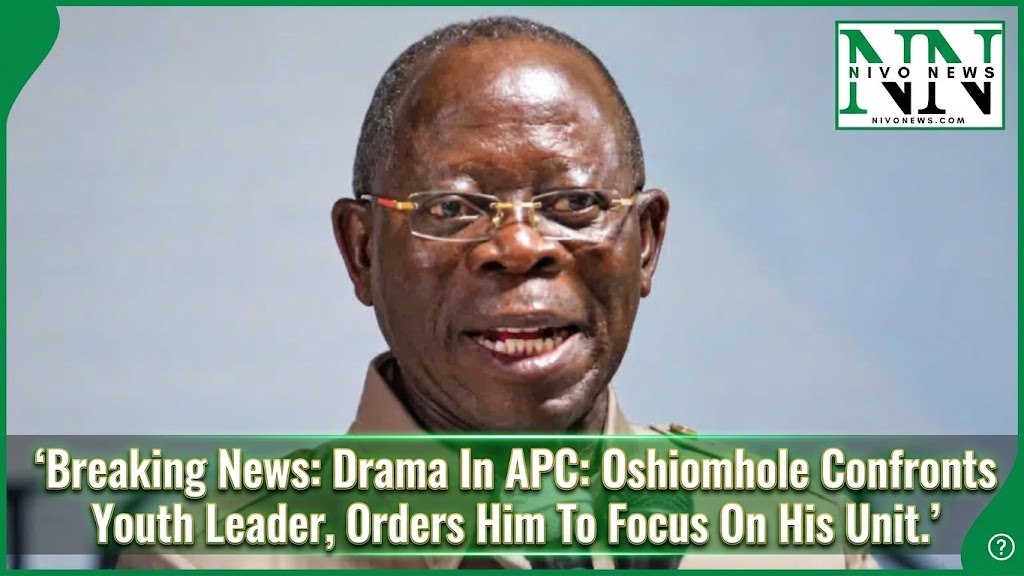
Senator Adams Oshiomhole has described the disagreement surrounding the leadership of the All Progressives Congress (APC) youth campaign team as a distraction.....KINDLY READ THE FULL STORY HERE▶
Oshiomhole, who represents Edo North Senatorial District, made the remarks during an appearance on Arise TV’s Morning Show.
The former Edo State governor, who currently serves as Deputy Director-General of Mobilisation for President Bola Tinubu’s 2027 Presidential Campaign Council, disclosed that he had already spoken with the APC National Youth Leader, Dayo Israel, about the controversy.
He advised Israel to focus on mobilisation activities within his unit and ward rather than seeking to oversee youth mobilisation across the campaign structure.
Speaking during the programme, Oshiomhole said:
“I think the issue of Israel is just a complete distraction. I have spoken to him. I said, Israel, go and work in your unit. Go and work in your ward.
“You are party youth leader, it doesn’t make it obligatory that you must lead the youth. It is not Israel who is going to mobilize the youth in my village or mobilize the youth in my unit.
“So all these people looking for big titles are completely minor as far as I’m concerned.
“I’m on record as telling President Tinubu in 2023, I said even to be a sweeper, if my sweeping the office will help the process of him being elected as president, I’ll be quite happy to be called the sweeper of the Campaign Council.”

Nigerian music executive Michael Collins Ajereh, popularly known as Don Jazzy, has revealed how he spent the first significant amount of money he earned from the music industry.....KINDLY READ THE FULL STORY HERE▶
The Mavin Records boss shared the experience during a recent appearance on the On The Grind podcast.
Don Jazzy disclosed that he initially spent his first major earnings on parties and other luxuries rather than investing the money.
According to the music producer, he bought 50 bottles of champagne and went clubbing after receiving the money.
However, he said he soon realised the importance of managing his finances wisely and began investing in businesses, including signing and promoting emerging artistes.
The music executive explained that his investments in record labels and other ventures have yielded significant returns, giving him enough financial security to no longer depend on working to survive.
Speaking on the podcast, he said: “The first big money I got from music I lavished it. I bought 50 bottles of champagne and went clubbing. But I quickly coordinated myself and invested in signing new artistes. Now I don’t have to work ever again.
“You don’t necessarily have to invest in a record label, but the money you are making in your youth, invest it in a lucrative business as opposed to wasting it on frivolities.”
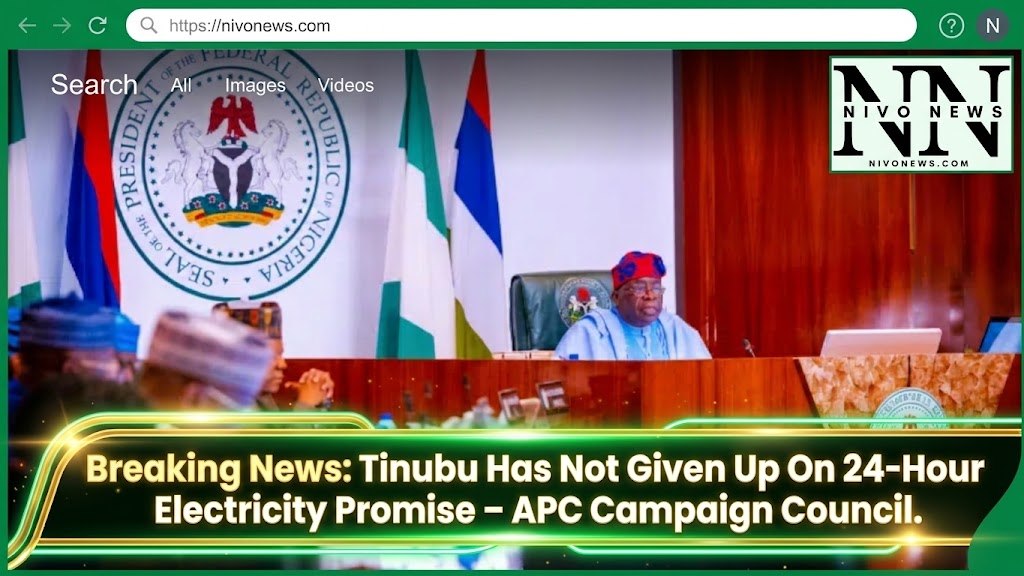
The All Progressives Congress Presidential Campaign Council (APC-PCC) has maintained that President Bola Tinubu remains committed to fulfilling his campaign promise to end estimated electricity billing and improve power supply across the country.....KINDLY READ THE FULL STORY HERE▶
The council made this known on Sunday, November 1, acknowledging that Nigeria’s electricity sector still faces major challenges but insisting that the administration is implementing reforms to address the problems and deliver on its 2023 pledge.
Tinubu made the promise while addressing members of the Organised Private Sector in Lagos ahead of the 2023 general elections. He assured Nigerians that they would enjoy electricity without having to pay estimated bills and challenged voters to reject him in 2027 if he failed to fulfil the pledge without offering adequate reasons.
In a statement, APC-PCC spokesperson Dele Alake said critics had failed to consider the full context of the President’s commitment, particularly his assurance that he would explain any shortcomings to Nigerians before seeking re-election.
Alake argued that a proper assessment of Tinubu’s performance should take into account developments in electricity generation, metering, transmission infrastructure and market stability since he assumed office in May 2023.
“While fixing the power sector crisis remains unfinished, the President is working consistently to deliver on his promise to Nigerians, and his commitment to face the challenges head-on has never diminished,” the statement said.
The council identified the Electricity Act 2023, signed by Tinubu on June 9, less than two weeks after his inauguration, as a major milestone in efforts to reform the sector.
According to the APC-PCC, the legislation opened up the electricity market to state governments, giving them the opportunity to participate in power generation, transmission and distribution.
It noted that Lagos, Enugu, Abia, Ekiti, Oyo, Kaduna and Niger states had begun setting up electricity regulatory agencies to attract private sector investment.
On the financial challenges facing the industry, the council said the Federal Government had taken responsibility for more than ₦6 trillion in legacy debts accumulated between 2015 and 2025.
It added that the administration had introduced a ₦4 trillion bond programme to settle verified debts owed to 21 electricity generation and gas companies.
The first two tranches of the programme reportedly raised more than ₦1.2 trillion, which the council said would help support investments in power generation facilities.
The APC-PCC also pointed to the Presidential Metering Initiative, introduced to address a shortage of more than seven million electricity meters.
It claimed that over 1.5 million customers had received meters within the last three years.
The council further highlighted solar power projects targeting universities, hospitals and rural communities through the Rural Electrification Agency.
On transmission infrastructure, the APC-PCC said Tinubu had reviewed the Presidential Power Initiative inherited from the previous administration and signed an agreement with German partners in December 2023 to accelerate its implementation.
It also disclosed that the Federal Executive Council approved contracts in December 2024 for five substations belonging to the Transmission Company of Nigeria (TCN), with the projects expected to be completed and commissioned before the end of Tinubu’s first term.
The council added that the Federal Executive Council approved another contract in June 2026 for the construction of eight new substations and the upgrading of four existing facilities.
It said plans were also underway to modernise the Osogbo Grid Control Centre, which is more than 60 years old, and construct an East-West super grid.
“Power project implementation requires equipment that is a long-lead item and thus cannot be achieved overnight,” the statement said.
Addressing concerns over electricity tariffs, Alake explained that the administration was working towards aligning tariffs with production costs to improve liquidity in the electricity market while protecting low-income households.
He said the service-based tariff bands were designed to strengthen the financial position of electricity distribution companies, improve cash flow and reduce the government’s electricity subsidy burden.
“The administration will continue to explore ways to improve the commercial situation of the power sector while protecting access to electricity for the less privileged in society,” the statement added.
The APC-PCC maintained that reforms in the electricity sector were still ongoing, insisting that Tinubu had not abandoned his campaign promise to improve power supply and end estimated billing.
-

 latest1 year ago
“Social Media Erupts As Jim Iyke Declares Rita Dominic Nollywood’s Most Beautiful”
-
 latest3 years ago
Edo Political Showdown: Oshiomhole Appears At Presidential Villa As Tinubu Hands APC Gubernatorial Flag To Okpebholo (Photos & Video)
-
 entertainment3 years ago
Love Knows No Age American Woman Defends Marriage To Young Nigerian Man “I’m Not 70”
-
 latest3 years ago
Olumide Akpata Strikes Again: Drops Killer Track, Sends Edo State Into Frenzy!(Video)
-
 Politics3 years ago
Nigerians React As Pastor Adeboye Foresees Passing Away On A Sunday After Enjoying A Satisfying Meal Of Pounded Yam
-
 latest3 years ago
FG Identifies 31 States At Risk Of Heavy Flooding In 2024: See Full List
-
 Politics3 years ago
BREAKING: Inspector-General Of Police Summons Top Police Commanders For Crucial-Security Challenges
-
 latest3 years ago
5 NYSC Corpers Perish In Fatal Road Accident Returning From Camp