
latest
Cashew Farmers Decry Exploitation, Demand Market Regulation

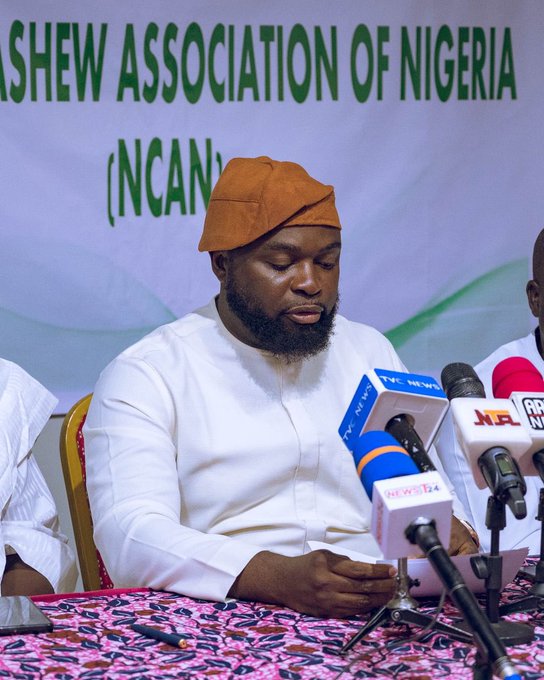
Cashew farmers across Nigeria are raising alarm over what they describe as exploitation by middlemen and exporters, urging the government to regulate the market and protect their livelihoods.....KINDLY READ THE FULL STORY HERE▶
Farmers say they are being forced to sell their produce at very low prices while traders and exporters make huge profits. They warn that without urgent intervention, many small-scale farmers may abandon cashew production, a crop that has become one of Nigeria’s most important non-oil exports.
The National Cashew Association of Nigeria said Wednesday that the lack of regulation in the cashew market has created opportunities for exploitation. According to the group, farmers are often left with little bargaining power because foreign buyers and local agents dictate prices.
Cashew nuts are a valuable export commodity, contributing millions of dollars to Nigeria’s economy each year. But farmers argue that the benefits rarely reach them. Instead, they claim they are trapped in a system where profits are concentrated in the hands of a few traders who control access to international markets.
“We produce the cashew, we invest in the farms, but we are not the ones enjoying the real value,” said Ibrahim Musa, a cashew farmer from Kogi State. “Middlemen take advantage of us because the government has not put in place proper regulations.”
Many farmers complain that prices offered at the farm gate are so low they barely cover production costs. For instance, while international buyers pay high rates for processed cashew nuts, local farmers selling raw cashew are often forced to accept whatever price middlemen offer.
Experts say the problem is made worse because Nigeria exports most of its cashew raw instead of processing it locally. This reduces the earnings of farmers and limits job creation within the country. Processed cashew is far more valuable on the global market.
“Until Nigeria invests in cashew processing and protects farmers with fair pricing policies, we will keep losing out,” said agricultural economist Chika Eze. “Right now, the farmers do all the hard work, but the profits are leaving the country.”
Farmers are calling for government-backed minimum prices, the creation of regulated buying centers, and policies to promote local processing industries. They also want authorities to clamp down on sharp practices by middlemen who hoard cashew and manipulate prices.
The Nigerian Export Promotion Council has previously highlighted cashew as a strategic crop for diversifying the economy away from oil. However, farmers say government promises have not yet translated into practical support on the ground.
Cashew farming is a major source of income for thousands of rural households, especially in states like Kogi, Oyo, Enugu, and Kwara. In many communities, it provides school fees for children and pays medical bills. But as profits shrink, families are struggling to survive.
“The money I make from cashew is no longer enough to take care of my family,” said Grace Ojo, a farmer in Oyo State. “If things do not change soon, I may have to cut down my trees and plant something else.”
Stakeholders warn that if farmers abandon cashew, Nigeria risks losing a vital source of foreign exchange. Neighboring countries such as Benin and Côte d’Ivoire have strengthened their cashew industries through better regulation and processing facilities, giving them a competitive edge.
Analysts say that regulating the market could help stabilize prices, encourage investment, and give farmers a fairer share of profits. They stress that Nigeria must act quickly to avoid losing ground in the global cashew trade.
For now, farmers continue to call for urgent action. “We are not asking for too much,” Musa said. “All we want is fairness and a system that rewards our hard work.”
If the government responds with stronger policies and investments in cashew processing, farmers say the industry could not only support rural communities but also boost Nigeria’s position as a top global producer.


The Chairman of the Kogi State Independent Electoral Commission (KOSIEC), Mamman Nda-Eri, has assured voters and political parties that the commission will safeguard valid votes and ensure they are duly counted in Saturday’s local government election.....KINDLY READ THE FULL STORY HERE▶
The Chairman of the Kogi State Independent Electoral Commission (KOSIEC), Mamman Nda-Eri, has assured voters and political parties that the commission will safeguard valid votes and ensure they are duly counted in Saturday’s local government election.
Nda-Eri gave the assurance while monitoring the electoral exercise, reaffirming the commission’s commitment to conducting a fair election and maintaining political neutrality.
He acknowledged that some political parties had raised complaints about the process but dismissed certain allegations circulating on social media, describing some of the claims as inaccurate. He also maintained that some parties had failed to satisfy the requirements for participating in the election.
The KOSIEC chairman admitted that electoral commissions often face accusations of bias but said his commission would make every effort to demonstrate its impartiality.
“Electoral commissions often face allegations of bias, but we will do our best to show that we are impartial. We will also ensure that no polling unit closes at 3 pm if voters are still waiting in queues,” Nda-Eri said.
He further assured voters that everyone eligible to vote who was still waiting in line would be given the opportunity to exercise their franchise.
Nda-Eri attributed voter turnout to increased voter education and the efforts of political parties to mobilise and sensitise their supporters during their campaigns.
He explained that preparations for the election had begun approximately 360 days earlier and that the exercise was being conducted in line with the commission’s approved timetable.
The KOSIEC chairman urged eligible voters who had not yet cast their ballots to participate in the election, emphasising that voting remained essential to strengthening democratic accountability and ensuring that elected representatives reflected the will of the people.
Tighten the election reportLead with the polling-unit assurance
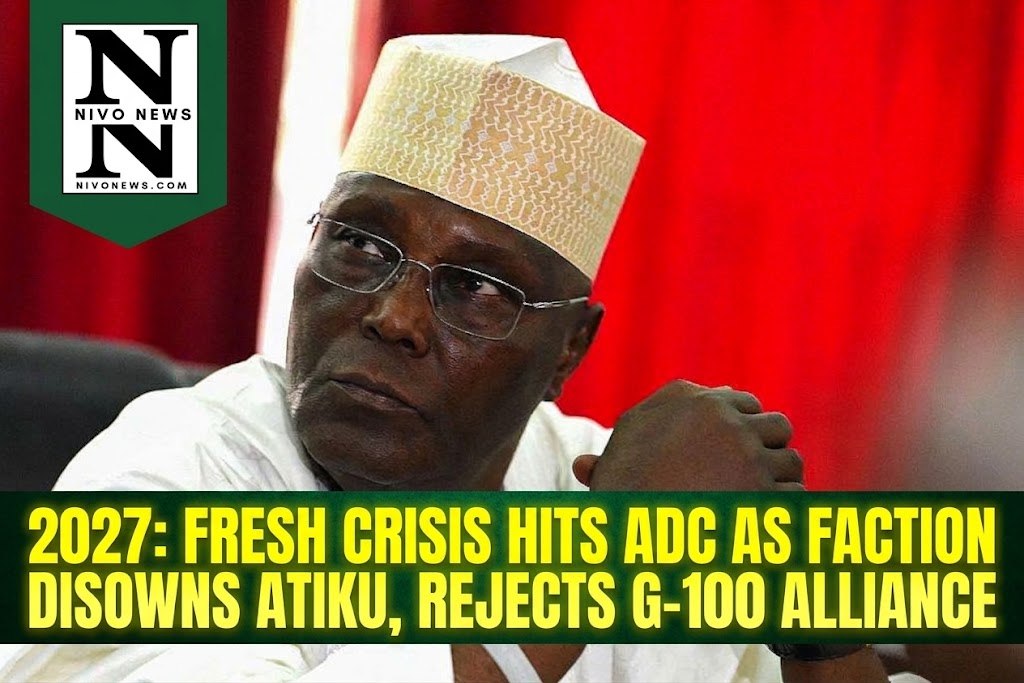
A faction of the African Democratic Congress (ADC), led by Nafiu Bala Gombe, who identifies himself as the party’s national chairman, has cautioned former Vice-President Atiku Abubakar against presenting himself as the party’s presidential candidate for the 2027 general elections.....KINDLY READ THE FULL STORY HERE▶
The faction also dismissed claims of any agreement to enter into an alliance, merger or coalition with the G100 Coalition.
It accused Atiku and some members of the coalition of allegedly attempting to pressure its leadership into accepting an arrangement that could compromise the party’s independence.
In a statement issued on Saturday, Gombe maintained that the ADC would participate in the 2027 elections independently, insisting that the party would not allow its political future to be determined by individuals driven by personal ambitions.
He reaffirmed the faction’s position that the party would make its own decisions regarding its political direction and electoral participation.

The University College Hospital (UCH), Ibadan, has stated that it has no official record indicating that Nigerian singer Olayemi Bolaji, popularly known as Toluwanisings, was brought to the facility before his death.....KINDLY READ THE FULL STORY HERE▶
The clarification comes amid public outrage over allegations that several hospitals in Ibadan, Oyo State, failed to provide emergency medical care to the singer after he reportedly collapsed.
Toluwanisings’ personal assistant, Babadunni Olayemi, had claimed that efforts to save the singer were unsuccessful despite taking him to between seven and eight hospitals in the city.
According to him, some of the hospitals reportedly cited a doctors’ strike, while others allegedly declined to admit the singer.
He said, “They took him to different hospitals. Some said doctors were on strike, while others said hospitals rejected him. We all tried, praying for him and taking him around to hospitals. We took him to about seven or eight different hospitals here in Ibadan, but God said it was his time.”
The incident has generated widespread reactions, with some Nigerians linking the reported difficulties in obtaining emergency treatment to the industrial action by resident doctors at UCH. Others have criticised the government over what they described as inadequate attention to the country’s healthcare sector.
However, UCH’s Public Relations Officer, Funmilayo Enitan, told The Punch that the hospital had previously experienced an internal strike but had resumed normal services following the suspension of the resident doctors’ industrial action.
Enitan clarified that the dispute was an internal hospital strike rather than a nationwide industrial action.
She also maintained that the hospital’s management had not received any official notification that Toluwanisings was brought to the facility.
“The hospital is running its services. The strike was a local one within the hospital; it was not a national strike. I was not aware that he was brought to UCH. I was not officially informed that he was brought to UCH. There was no record of it with the management,” she said.
-

 latest1 year ago
“Social Media Erupts As Jim Iyke Declares Rita Dominic Nollywood’s Most Beautiful”
-
 latest3 years ago
Edo Political Showdown: Oshiomhole Appears At Presidential Villa As Tinubu Hands APC Gubernatorial Flag To Okpebholo (Photos & Video)
-
 entertainment3 years ago
Love Knows No Age American Woman Defends Marriage To Young Nigerian Man “I’m Not 70”
-
 latest3 years ago
Olumide Akpata Strikes Again: Drops Killer Track, Sends Edo State Into Frenzy!(Video)
-
 Politics3 years ago
Nigerians React As Pastor Adeboye Foresees Passing Away On A Sunday After Enjoying A Satisfying Meal Of Pounded Yam
-
 latest3 years ago
FG Identifies 31 States At Risk Of Heavy Flooding In 2024: See Full List
-
 Politics3 years ago
BREAKING: Inspector-General Of Police Summons Top Police Commanders For Crucial-Security Challenges
-
 latest3 years ago
5 NYSC Corpers Perish In Fatal Road Accident Returning From Camp