
latest
A Journey Of Purpose: Sharing My Chevening Story Of Impact And Hope


A Journey Of Purpose: Sharing My Chevening Story Of Impact And Hope....KINDLY READ THE FULL STORY HERE▶

Within me burns a fervent fire of excitement as I prepare to share my Chevening journey. It’s a narrative that traverses the realms of humanitarian development, social justice, and community building, radiating an unyielding hope that this voyage will enrich my knowledge and empower me to give back to my communities more profoundly.
Though not the most enthusiastic writer, I am driven to convey my Chevening story through words. My odyssey toward social impact commenced officially upon graduating from the University of Benin in 2007. Subsequently, as part of my mandatory one-year service to the nation through the National Youth Service Corps (NYSC), I embarked on a transformative expedition to Northern Nigeria, specifically Yobe state.
As a freshly minted law graduate, the conventional path led me to the NYSC legal aid group. Yet, destiny had other plans, drawing me inexorably to the Millennium Development Goals (MDG) Community Development Service (CDS) group, now Sustainable Development Goals (SDGs).
In no time, I recognized that I had discovered my true calling. The MDG service group ignited a flame within me, fanning the flames of my innate interest in humanitarian service. Here, I found a purpose that transcended the confines of a conventional legal career. In the heart of Yobe state, I began to perceive the tremendous potential for positive change through community engagement, development, and social impact.
Growing up during oppressive military regimes in Nigeria, I witnessed firsthand assaults on human rights, blatant disregard for citizens’ dignity, and systemic exclusion that gradually became the norm. These early experiences, along with the stories of my parents and the community around me, deeply affected me, instilling a determination to use my education and skills effectively to make a difference in the lives of those most in need. More than three decades later, I remain steadfast on that path.
These experiences marked the genesis of my journey, one I embarked upon with unwavering commitment. The desire to create a meaningful impact on the lives of the less privileged compelled me to pursue further education and professional opportunities in development and human rights.
Over the past year, restlessness overcame me as I contemplated more effective ways to channel my passion. I encountered situations that prompted me to think, “There must be more we can do!”
One of the most pivotal moments in my journey was the realization that change was attainable, even in the face of adversity. Beyond isolated and collaborative efforts to address the daily needs of citizens and communities, I believe it is crucial, even imperative, to tackle systemic imbalances and pursue holistic development.
Today, I find myself at a new juncture in my journey—as a Chevening scholar. This invaluable opportunity allows me to enhance my knowledge and skills in the field of development, alongside like-minded individuals from around the world. Together, we share a commitment to effecting positive change in our homelands and on a global scale. I stand on the brink of this new chapter, my Chevening journey.
Learning that Chevening received a total of 70,930 applications from 160 countries, with 14,700 originating from Nigeria alone, filled me with immense gratitude when I received the news of being one of the 44 scholars selected. This path, my Afro-consciousness, my Chevening scholarship, and all the in-between moments are not mere accidents. My steps were meticulously orchestrated, even when I had no inkling of the next one.
Now, I embark on a journey to enrich my knowledge while pursuing an MSc in Development Studies at the prestigious University of London. The curriculum of the School of Oriental and African Studies (SOAS) enticed me, particularly its cultural context.
Each day since I was chosen for Chevening, I have been keenly aware of the immense responsibility that accompanies this opportunity. My aspiration is to deepen my knowledge and expertise, delving into the intricacies of humanitarian development and social justice. I aim to equip myself with the skills required to bring about enduring change and positive impact.
At this juncture, I must express my gratitude to everyone who played a part in this process—my support system. These individuals, often unaware of the roles they played, have been instrumental in my journey.
To my dear friend Nura Ali, my personal hand-holder, whose unwavering faith, friendship, and support inspire me endlessly—my gratitude knows no bounds.
To Oluseun Abimbola SAN, my esteemed big brother who is always available to provide guidance and counsel, regardless of the hour. His vast knowledge and comforting words are a constant source of strength.
To Professor Oluyemisi Bamgbose, for whom mere words cannot suffice, but endless gratitude for recognizing potential in me even when I saw only a seed. Uli Thum, a professional friend of rare value, who left an indelible mark on my journey—thank you, Uli!
To my comrade and friend, Tunji Buhari, who patiently listens to my rants and laments until they transform into ideas and solutions.
To my fellow CIVICUS consultant-turned-brother and Chevening Scholar Kenneth Gyamerah, who tirelessly answers my numerous questions, offering more illumination than I ever imagined on this journey.
To my cheerleader sister, Joke Akinsanmi, who attracts good fortune with her boundless goodwill. Thank you for providing an outlet when I needed it most. To my prayer-pillar brother, Dayo Ige, who works diligently behind the scenes, and my unwavering physical warrior and brother, De
ji Ige, who defends me against my worries—I owe this to all of you.
To all the communities of women, children, and men whose lives I have touched in nearly two decades of community building, I am profoundly grateful for the privilege to effect change and speak truth to power during pivotal moments.
Deep appreciation to my colleagues and comrades at Corporate Accountability and Public Participation Africa (CAPPA), led by Akinbode Oluwafemi. This narrative would be incomplete without your presence.
Finally, to the one person who would have been elated about this achievement if he were alive: Rev. Fr. Ezekiel Ade Owoeye, my firm and grounded director at JDPC Ibadan. This is for you. Continue to rest in peace.
I long to return to my communities, armed with additional knowledge and fresh perspectives. I envision a future in which I can contribute even more effectively, where my actions resonate deeper and impact more lives. As I take these strides forward, I carry with me the wisdom of the past, the inspiration of the future, and an unwavering belief that together, we can make the world a better place.
In conclusion, I am not only eager to share my Chevening story; I am enthusiastic about living it to the fullest—learning, growing, and returning home with a renewed sense of purpose, ready to give back in a more meaningful way.
As the saying goes, “It takes a village to raise a child.” I am that child.
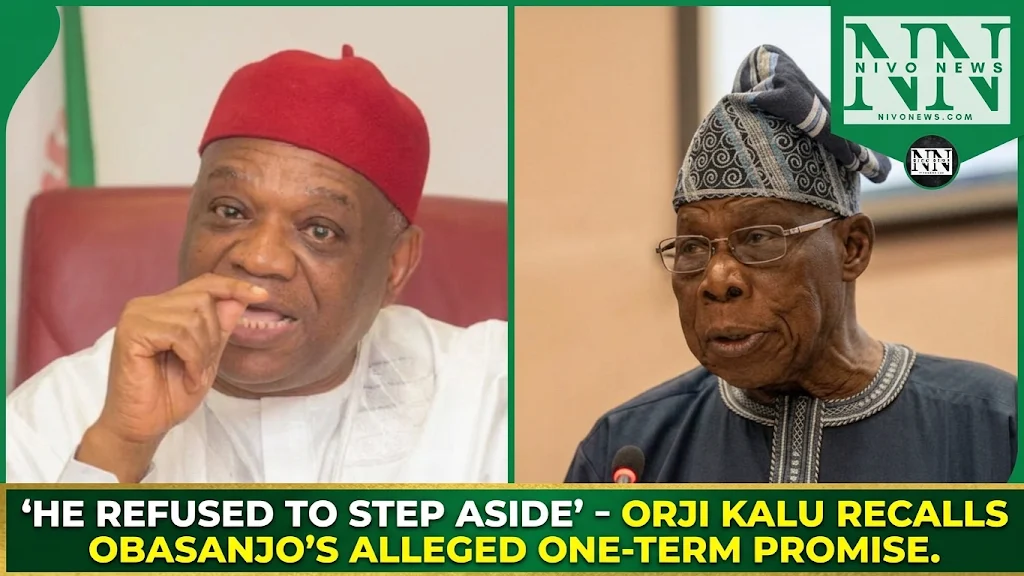
Former Abia State Governor, Orji Uzor Kalu, has revealed the circumstances that led to the breakdown of his relationship with former President Olusegun Obasanjo.....KINDLY READ THE FULL STORY HERE▶
Kalu said their disagreement stemmed from an alleged agreement that Obasanjo would serve only one term as president before handing over power to former military Head of State, General Ibrahim Babangida.
He explained that the understanding was reached among himself, Babangida and Obasanjo before the latter was supported to become Nigeria’s president.
Kalu made the disclosure during an appearance on Arise Television, where he spoke about his political relationship with the former president.
According to him, the arrangement was for Obasanjo to serve a single four-year term from 1999 to 2003 before transferring power to Babangida.
He said, “I had a very good relationship with President Obasanjo, and it went sour. And it didn’t go sour because I wanted what I wanted to have as a person. It’s because I wanted something for all of us Nigerians.
“Because most of the things we discussed, he didn’t do. We discussed that he would be president for four years. We discussed that he would only do four years and leave, and another person would take over. We helped him a lot when he came out of prison. We maintained our support to make sure that he succeeded.”
The former governor further explained that Obasanjo was expected to hand over power to another political bloc after completing his first term.
He noted that Obasanjo’s emergence as president in 1999 was partly aimed at addressing the political grievances of the South-West following the annulment of the June 12, 1993 presidential election and the death of its presumed winner, Chief MKO Abiola.
Kalu added that the arrangement was also expected to sustain the rotation of power, with the presidency eventually returning to the North.
However, he said he could not confirm reports that Babangida had considered making him vice president under the proposed political arrangement.
“Whether he had given IBB to make me vice president, I don’t know. Man, I never thought about that. But the one you’re certain about is what I was certain about,” he added.
Reflecting on the disagreement, Kalu said he was much younger at the time but had since grown older and become more conscious of the importance of honouring political agreements.
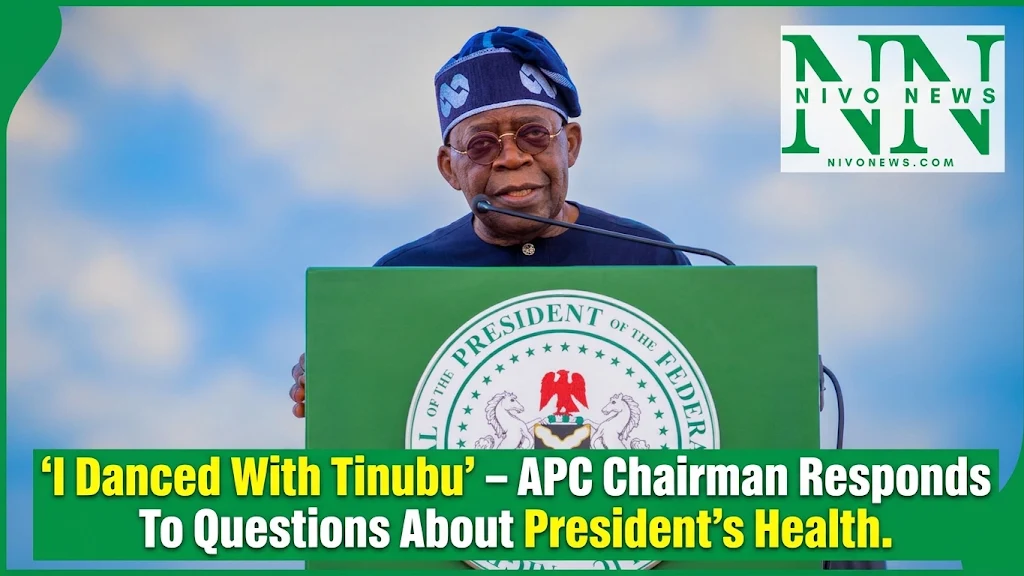
The National Chairman of the All Progressives Congress (APC), Nentawe Yilwatda, has urged Nigerians to support President Bola Tinubu’s re-election bid, insisting that the President is physically fit to continue leading the country.....KINDLY READ THE FULL STORY HERE▶
Yilwatda made the appeal on Monday night while appearing on Channels Television’s Politics Today.
He argued that Tinubu’s recent visits to Akwa Ibom and Rivers States on Friday demonstrated his physical fitness and ability to handle the demands of the presidency.
Speaking during the programme, Yilwatda said he personally witnessed the President dancing during his visit to Akwa Ibom.
“Did you watch him (Tinubu) dance in Akwa Ibom? I was there live and I danced with him, he danced to the music of the people,” he said.
The APC chairman maintained that Tinubu’s schedule during the visit showed that he was capable of handling demanding engagements.
“Tinubu is fit to go. He was in Akwa Ibom, he had a dinner, town hall meeting with the people that same Friday, he engaged the people late in the night after the dinner and the next morning he was in Rivers.
“And if someone is not fit, he will do 48 hours of non-stop engagements and trips at the same time? Bring another complaint,” Yilwatda added.
He also explained that the APC had arranged Tinubu’s campaign schedule in a way that would prevent governance from suffering.
According to him, the President would spend two days campaigning and three days attending to official duties, with visits to Jigawa and Jos also scheduled.
Yilwatda further disclosed that the Senate President and Speaker of the House of Representatives had advised against participating in every campaign activity to ensure that the National Assembly continued its work.
He said the party had equally staggered the activities of members of its National Working Committee to prevent its operations from being disrupted by the campaign.
The APC chairman questioned whether governance, the National Assembly and the party should be shut down simply because of the election campaign, describing such a suggestion as unreasonable.
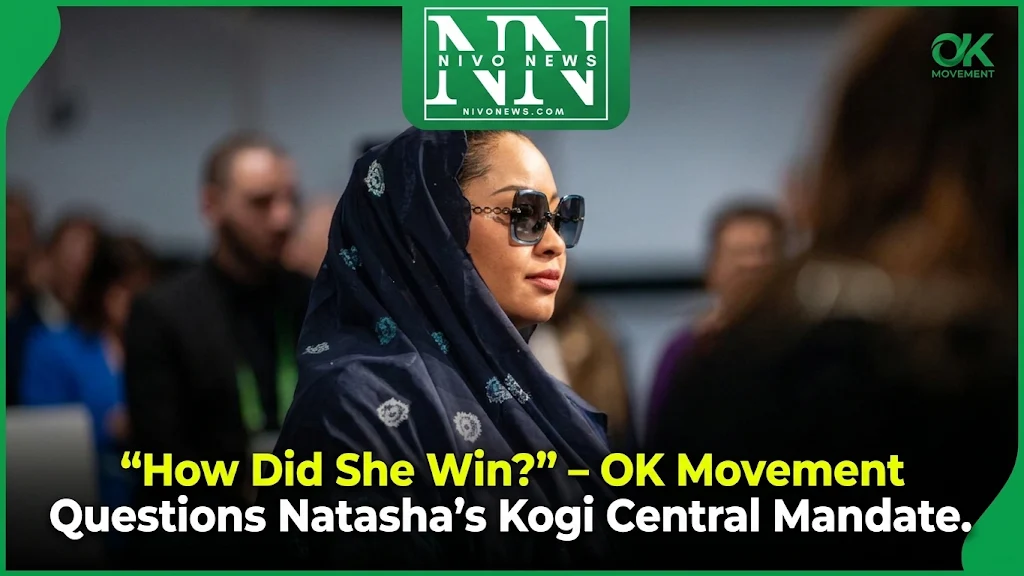
The Obi-Kwankwaso Movement has responded to Senator Natasha Akpoti-Uduaghan, representing Kogi Central, following her criticism of the group’s call for an investigation into her distribution of millions of naira to constituents.....KINDLY READ THE FULL STORY HERE▶
News reports that Akpoti-Uduaghan had criticised the Movement for urging the Economic and Financial Crimes Commission (EFCC) to investigate her cash empowerment programme, which she claimed was funded through a Federal Government budgetary allocation.
However, speaking in an interview with Punch, the Director-General of the Obi-Kwankwaso Movement, John Ughulu, said the senator’s response failed to address the concerns raised by the group.
Ughulu maintained that elected public officials needed continuous orientation on their constitutional duties, ethical responsibilities and accountability to the people.
He said the widely discussed cash distribution had raised concerns about the possible misuse of public office and the integrity of Nigeria’s electoral process.
According to him, if investigations establish that the money was distributed to influence voters ahead of an election, the action could amount to advance vote buying and should be examined under relevant electoral laws.
Ughulu stated:
“What Nigerians witnessed in the widely discussed money distribution incident raises serious questions about the abuse of public office and the integrity of our electoral process.
“If the circumstances establish that the money was distributed to influence voters ahead of an election, the matter could amount to advance vote buying and should be investigated under the relevant provisions of Nigerian electoral law.”
The movement’s director-general also challenged Akpoti-Uduaghan to clarify whether similar cash distributions formed part of her election campaigns, arguing that the circumstances surrounding her emergence as a senator also warranted scrutiny.
He said:
“The election that brought Senator Natasha into the National Assembly was decided by the people. Therefore, an important question must be asked: Was the same practice of distributing money to influence voters involved in securing her electoral victory?
“That question deserves a factual answer, not an emotional reaction.”
The group further rejected suggestions that its criticism was politically motivated, insisting that its position on electoral accountability applied to politicians across party lines, including candidates of the Nigeria Democratic Congress (NDC).
Ughulu stressed that the movement would not overlook alleged electoral misconduct involving individuals within its political camp while condemning similar actions by members of other parties.
He added:
“We cannot condemn alleged electoral malpractice under the present administration while appearing to tolerate similar conduct from individuals within our own political space. The same standards of integrity, transparency and accountability must apply to everyone.
“The OK Movement will not make exceptions for anyone. This applies equally to NDC candidates and candidates of every other political party. Anyone involved in electoral manipulation, vote buying, result falsification or any attempt to undermine the will of the electorate should expect lawful scrutiny and accountability.”
Ughulu also warned that the movement would explore legal options to demand accountability if the EFCC or other relevant agencies failed to investigate credible allegations.
-

 latest1 year ago
“Social Media Erupts As Jim Iyke Declares Rita Dominic Nollywood’s Most Beautiful”
-
 latest3 years ago
Edo Political Showdown: Oshiomhole Appears At Presidential Villa As Tinubu Hands APC Gubernatorial Flag To Okpebholo (Photos & Video)
-
 entertainment3 years ago
Love Knows No Age American Woman Defends Marriage To Young Nigerian Man “I’m Not 70”
-
 latest3 years ago
Olumide Akpata Strikes Again: Drops Killer Track, Sends Edo State Into Frenzy!(Video)
-
 Politics3 years ago
Nigerians React As Pastor Adeboye Foresees Passing Away On A Sunday After Enjoying A Satisfying Meal Of Pounded Yam
-
 latest3 years ago
FG Identifies 31 States At Risk Of Heavy Flooding In 2024: See Full List
-
 Politics3 years ago
BREAKING: Inspector-General Of Police Summons Top Police Commanders For Crucial-Security Challenges
-
 latest3 years ago
5 NYSC Corpers Perish In Fatal Road Accident Returning From Camp