
Latest News
Advocating For The Poor: SECCIMA President Ngonadi Calls For Tax Policy Adjustment By Government


Advocating For The Poor: SECCIMA President Ngonadi Calls For Tax Policy Adjustment By Government....KINDLY READ THE FULL STORY HERE▶

We express our gratitude to God for His mercies. In general, it is evident that we have not yet reached a point where every Nigerian can breathe a sigh of relief.
How has the persistent devaluation of the naira impacted businesses in the Southeast?
The devaluation of the naira is not confined to the Southeast alone; it affects the entire nation. As the naira continues to devalue, its purchasing power weakens, leading to increased costs for commodities, including raw materials. What could be purchased for N200 in 2021 now costs as much as N1,500 today. A bag of rice is being sold for prices ranging from N32,000 to N56,000, while a bag of cement costs N5,000. Currently, the exchange rate in the parallel market stands at an alleged N950 per US dollar. Inflation is on the rise, causing hardships for businesses, the underprivileged, and the general population.
The removal of oil subsidies has resulted in significant price hikes for petroleum products and other goods. How has this affected your operations in the manufacturing industry?
The removal of oil subsidies may align with the government’s fiscal needs, but it ought to have been a subject of discussion with stakeholders. As it stands, the sudden removal of oil subsidies has adversely affected everyone, especially the less fortunate. The prices of essential goods have surged beyond the means of ordinary Nigerians. Recently, petrol prices have fluctuated between N620 and N700 per litre, depending on one’s location in the country.
Inadequate power supply remains a major obstacle for industries across the nation. How has this challenge impacted your business?
For a long time, we have relied on generators to power our production machinery due to inconsistent power supply. We purchase diesel at prevailing market rates, incurring significant expenses. Consequently, when considering production costs, the prices of our products have had to increase. Some industries, airlines, pharmaceutical companies, and others have been forced to shut down due to soaring production costs. Some have downsized their workforce, while others struggle to pay their employees.
Critics blame the government for the naira’s instability and poor resource management. What is your perspective on this issue?
Economic and business growth thrive in a stable currency environment with affordable production factors. In a nation with an unstable currency, it’s impossible to talk about economic or business growth. Naira devaluation weakens the currency, reducing its purchasing power and driving up the costs of industrial production materials.
Furthermore, poor resource management leads to poverty, especially when government policies favor a select few wealthy individuals. To stimulate economic and business growth, the government should prioritize stabilizing the naira and implementing policies that support the impoverished.
There have been concerns about the government’s increasing borrowing and debt burden. What is your take on this matter?
Borrowing is a common practice worldwide, usually done for specific purposes and with a plan for repayment, including interest. Governments borrow to address their financial challenges, but continuous borrowing without repayment increases the debt burden. Borrowed funds should be invested in projects, industrial development, and other profitable ventures to generate income and facilitate timely repayment. No country can sustain itself solely through borrowing.
The Central Bank’s cashless policy and naira swap faced significant challenges. How do you believe this policy should be managed?
Read Also Former Adamawa State Governor Urges Nigerians To Be Patience With Tinubu’s Policies
The cashless policy had a substantial impact on everyone, leading to cash shortages and long queues at banks. Such important policies, including the removal of fuel subsidies, should not be rushed but should involve consultations with stakeholders to avoid negative consequences. The policy should primarily apply to large-scale businesses and multinationals engaged in extensive monetary and financial transactions. Petty traders, hawkers, and small-scale farmers, among others, should be exempt from the policy.
The taxation policy in the country, particularly in the Southeast, has faced criticism. President Tinubu has established a fiscal policy and tax reform committee. What are your thoughts on this?
Taxes are a legitimate source of government revenue, but concerns exist about excessive taxation and multiple levies. The increase in value-added tax (VAT) to 7.5% from 5.2% during President Muhammadu Buhari’s administration for certain products has faced criticism. In the Southeast, toll gates impose substantial costs on transporting goods from Onitsha to Aba. Even small-scale operators like motorcycle riders, cart pushers, groundnut vendors, vegetable sellers, and street traders are subjected to taxes and levies. It is troubling that those collecting these levies from the less privileged are often well-off individuals with cars and comfortable lifestyles. There is a need to review the tax policy to alleviate the burden on the poor and exclude them from taxation.
Additionally, the government should focus on industrialization in the Southeast to create employment opportunities for the eligible population. As a governmental institution, it should continue to take the necessary steps to improve the well-being of the people.
Latest News
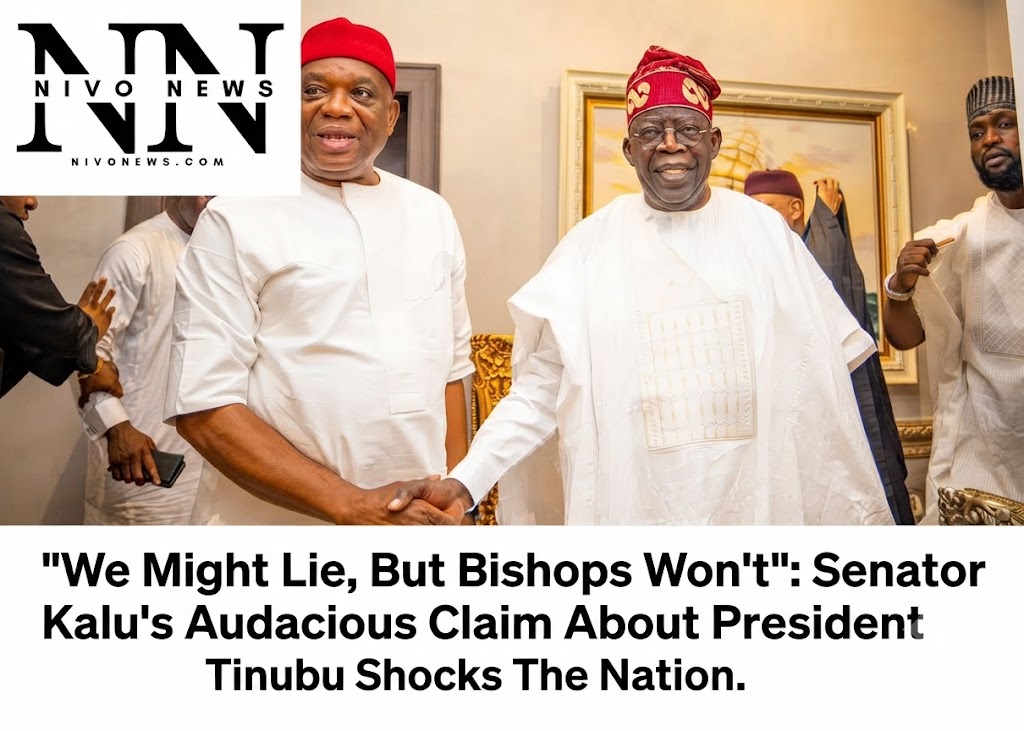
“We Might Lie, But Bishops Won’t”: Senator Kalu’s Audacious Claim About President Tinubu Shocks The Nation.
-
Candid Assessment: Senator Orji Uzor Kalu has suggested that political figures often present an inaccurate picture of Nigeria’s economic and security conditions to President Bola Tinubu.....KINDLY READ THE FULL STORY HERE▶
-
-
Role of Clerics: Praising the Catholic bishops as the national conscience, the lawmaker noted that their counsel remains vital because they deliver unvarnished truths that politicians may withhold.
-
National Hardships: While acknowledging the genuine difficulties currently faced by citizens, Kalu defended the administration’s trajectory and expressed strong support for the bishops’ engagement with the presidency.
-

Professor Segun Aina, a computer engineering scholar, has officially stepped into his role as the new Registrar for the Joint Admissions and Matriculation Board (JAMB).....KINDLY READ THE FULL STORY HERE▶
Taking over leadership at the JAMB headquarters in Bwari, Abuja, Aina succeeds Professor Ishaq Oloyede, whose 10-year, two-term tenure concluded on July 31, 2026. Initially approved by President Bola Tinubu on May 21 when Aina was 39, this appointment marks him as the youngest individual ever to lead the examination body.
When the appointment was first announced, Bayo Onanuga, the Special Adviser to the President on Information and Strategy, highlighted Aina’s deep background in digital infrastructure, public-sector reforms, and national examination systems, noting his historic milestone as one of Nigeria’s youngest computer engineering professors.
In his inaugural address, Aina acknowledged the foundation laid by his predecessor—who is widely credited with modernizing the Unified Tertiary Matriculation Examination (UTME)—and vowed to expand on those achievements. Emphasizing a strong stance against malpractice, he warned wrongdoers that their illicit activities have no place at JAMB, promising to ramp up modern technological investments and deepen partnerships with security agencies to safeguard the integrity of the admissions process.
Latest News
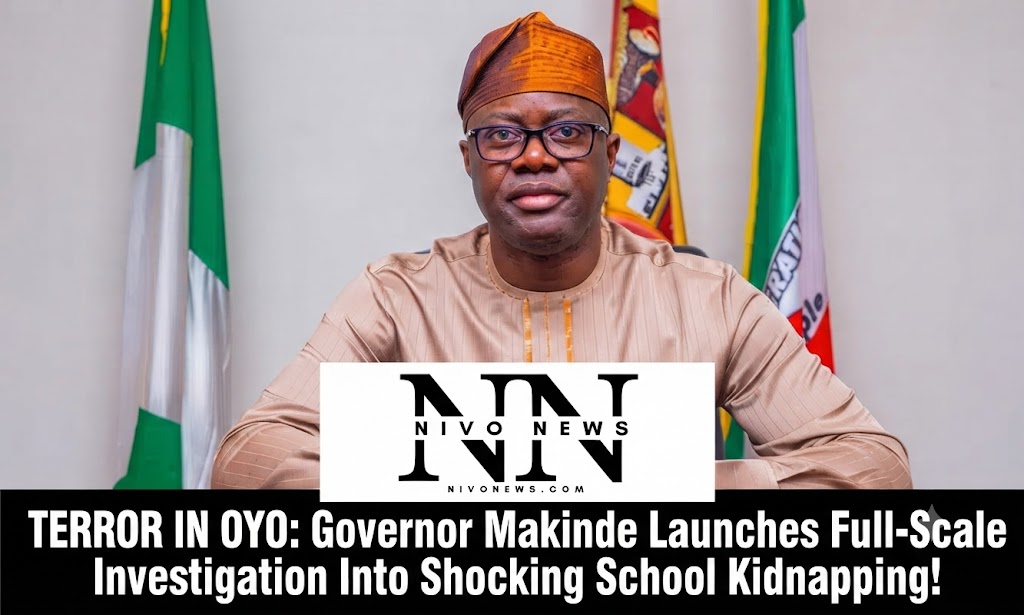
TERROR IN OYO: Governor Makinde Launches Full-Scale Investigation Into Shocking School Kidnapping!.
-
The Commission: Oyo State Governor Seyi Makinde established a Judicial Commission of Inquiry to probe the kidnapping of students and teachers from the Esinele and Yawota communities in the Oriire Local Government Area.....KINDLY READ THE FULL STORY HERE▶
-
-
Meeting at the Villa: President Bola Tinubu met with the Olubadan of Ibadan, Oba Rasheed Ladoja, at the Presidential Villa in Abuja to address the successful rescue of the Oriire captives.
-
No Ransom Policy: President Tinubu emphasized that the government declined to pay a ransom because security forces had mapped out the abductors’ forest stronghold.
-
Military Expansion: To improve response times against terrorism and banditry, the administration is expanding the military from 8 divisions to 12 and setting up additional formations.
-
-

 latest11 months ago
“Social Media Erupts As Jim Iyke Declares Rita Dominic Nollywood’s Most Beautiful”
-
 latest2 years ago
Edo Political Showdown: Oshiomhole Appears At Presidential Villa As Tinubu Hands APC Gubernatorial Flag To Okpebholo (Photos & Video)
-
 entertainment2 years ago
Love Knows No Age American Woman Defends Marriage To Young Nigerian Man “I’m Not 70”
-
 latest2 years ago
Olumide Akpata Strikes Again: Drops Killer Track, Sends Edo State Into Frenzy!(Video)
-
 Politics3 years ago
Nigerians React As Pastor Adeboye Foresees Passing Away On A Sunday After Enjoying A Satisfying Meal Of Pounded Yam
-
 latest2 years ago
FG Identifies 31 States At Risk Of Heavy Flooding In 2024: See Full List
-
 Politics3 years ago
BREAKING: Inspector-General Of Police Summons Top Police Commanders For Crucial-Security Challenges
-
 latest2 years ago
5 NYSC Corpers Perish In Fatal Road Accident Returning From Camp