
latest
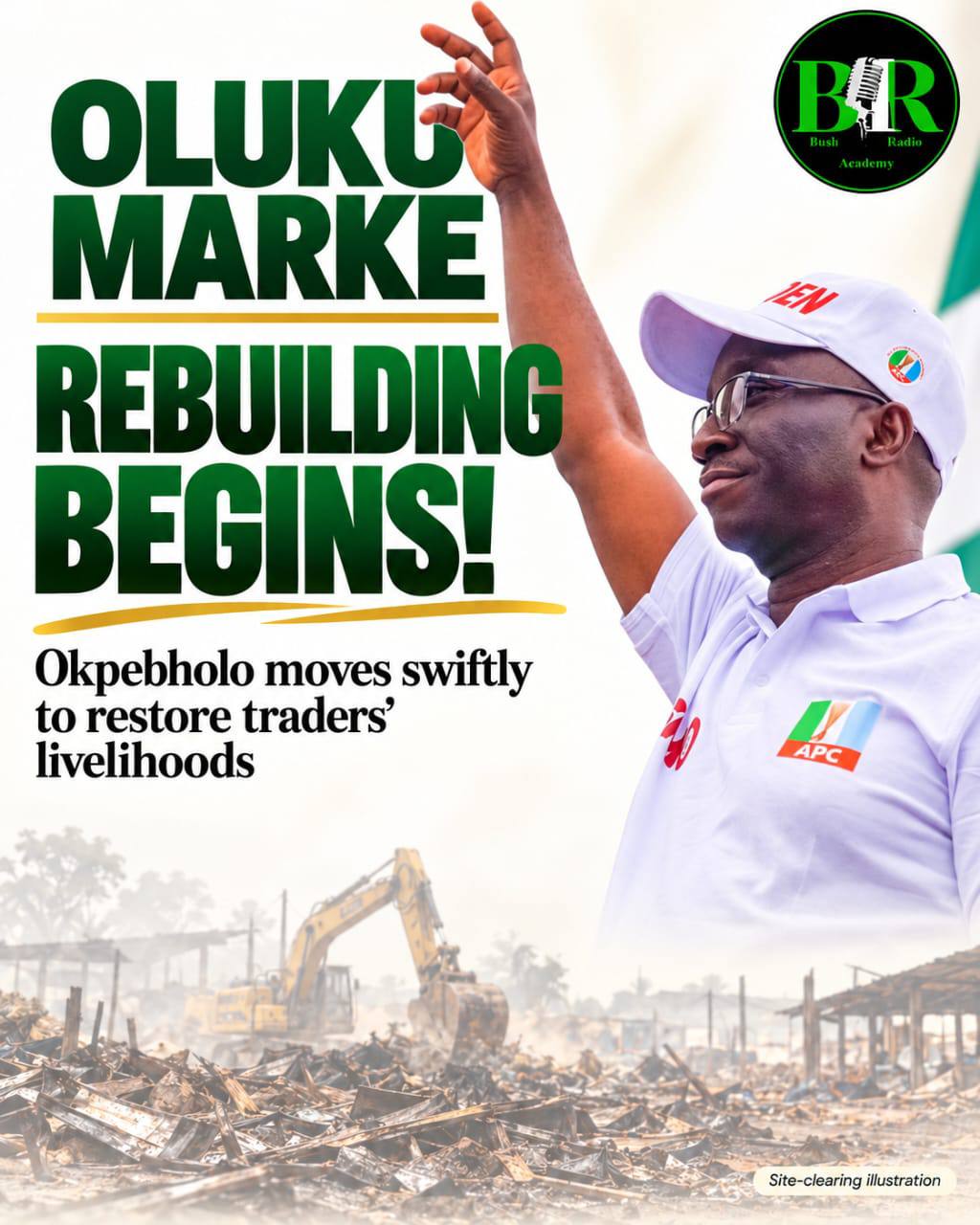
Oluku Market: Okpebholo Moves From Promise To Rebuilding, Restoring Hope For Traders

....KINDLY READ THE FULL STORY HERE▶
For the traders whose livelihoods were devastated by last week’s tanker explosion at Oluku Market, the commencement of rebuilding offers something urgently needed: a visible path back to business.
Governor Monday Okpebholo’s response has moved beyond his visit to the scene and his assurance that affected traders would receive government support. With rebuilding now underway, that promise is taking physical shape.
The significance lies in the speed: a disaster struck, the governor responded, and the work of restoration has begun.
The fire occurred on Thursday, October 15, along the Benin–Lagos Road in Ovia North-East Local Government Area. By the following day, Okpebholo was at the market, assessing the destruction, listening to traders and pledging to rebuild. He also visited injured victims at the University of Benin Teaching Hospital, extending his response from the scene of economic devastation to the bedside of those receiving treatment.
Now, the commencement of reconstruction gives affected families a stronger reason to look ahead.
For someone whose shop has just been destroyed, time carries a heavy cost. Rent, school fees, feeding expenses and loan obligations continue even when trading stops. Every additional week without income can deepen the damage and make recovery more difficult.
That is why the urgency at Oluku matters. Getting rebuilding underway creates the conditions for traders to recover their working spaces and begin the journey towards earning again.
A market may be built with blocks, roofing sheets and concrete, but its real value is measured in the households it sustains.
Behind every stall is a network of people: the farmer supplying produce, the driver delivering goods, the apprentice learning a trade, the porter earning a daily wage and the parent depending on sales to keep a child in school. Restoring the market helps reconnect that chain of economic activity.
The intervention also draws credibility from an earlier example in Ekpoma.
After fire destroyed the Police Officers’ Wives Association shopping complex in January 2026, Okpebholo visited the affected traders and promised to rebuild. In April, he commissioned the reconstructed complex and announced ₦200 million in support for traders whose goods had been destroyed. That response addressed both the trading environment and the need to help businesses recover.
For Oluku traders, Ekpoma provides a practical reference: a devastated commercial space was rebuilt, and government committed additional support towards restoring livelihoods.
Jattu forms another part of this wider effort. Following the January 2025 market fire, the administration pledged assistance to victims. By September 2026, Jattu Modern Market was among the commercial facilities reported to be undergoing extensive reconstruction under the administration’s market renewal programme.
From Ekpoma to Jattu and now Oluku, the common concern is the survival of local enterprise. These markets serve different communities, but the people who depend on them share the same basic aspiration: a secure place to work and a fair opportunity to earn.
The administration’s wider redevelopment programme offers relevant lessons. Plans for the redesigned Oba Market included a mini fire station, a sick bay and other welfare facilities, demonstrating how market infrastructure can incorporate protection for the people and investments within it.
This is where Okpebholo’s commitment to a progressive Edo State meets everyday reality. Progress becomes meaningful when government protects the foundations of ordinary people’s independence—the shop, the stall, the tools and the opportunities through which families sustain themselves.
His swift response at Oluku, followed by the commencement of rebuilding, sends an important message about that responsibility. It shows the value of responding while the needs are urgent and carrying an assurance into action.
The work must now maintain that momentum until traders can return, reopen and rebuild their income.
For the people of Oluku, the strongest expression of hope will be the sound of business returning to a place where fire brought everything to a halt. The rebuilding already underway is the first concrete step towards that recovery.
Osigwe Omo-Ikirodah is the Principal and CEO of Bush Radio Academy
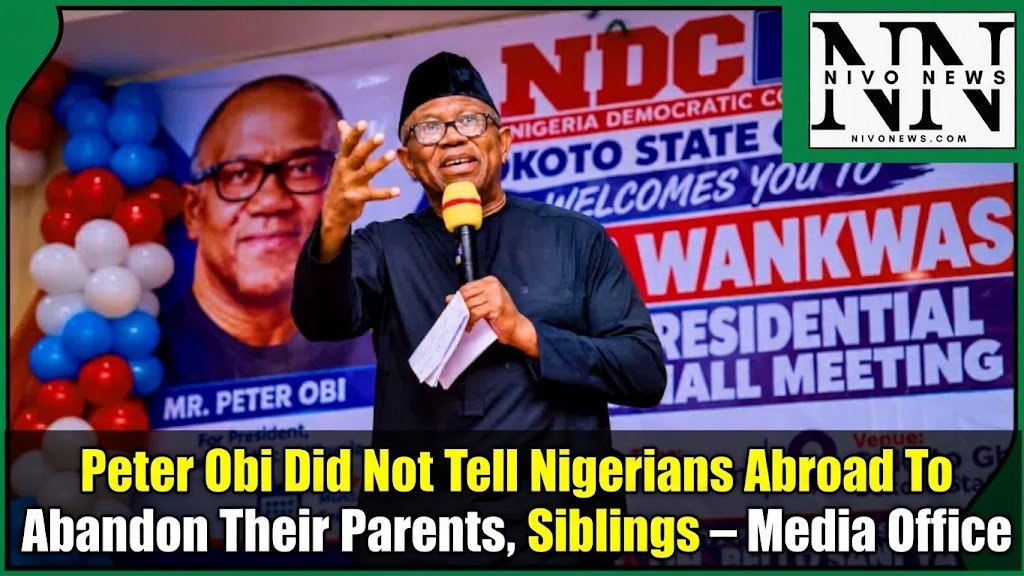
The Peter Obi Media Office has dismissed claims that the presidential candidate of the Nigeria Democratic Congress (NDC), Peter Obi, urged Nigerians living abroad to stop providing financial assistance to their relatives in Nigeria.....KINDLY READ THE FULL STORY HERE▶
The clarification followed controversy over remarks Obi made during a town hall meeting with supporters in the United Kingdom, where he encouraged Nigerians in the diaspora to urge relatives demanding financial assistance to support leaders capable of delivering good governance.
During the engagement, Obi reportedly said: “You have people at home in Nigeria today who are begging you for money. Tell them no! Let’s put somebody who has proven to be productive.”
In a statement issued on Monday night, the media office’s spokesperson, Idris Zekeri Jnr, said the controversy stemmed from what he described as a misrepresentation of Obi’s comments during his engagement with Nigerians in Europe.
Zekeri alleged that portions of the video had been edited and circulated without the context necessary to understand the former Anambra State governor’s message.
He insisted that Obi neither intended to discourage Nigerians abroad from supporting their loved ones nor disregard the sacrifices they make to provide for family members back home.
“Peter Obi’s remarks were never intended to encourage Nigerians abroad to abandon their parents, siblings, or other loved ones in Nigeria. Nothing could be further from the truth,” the statement said.
The media office acknowledged that many Nigerians living abroad shoulder significant financial responsibilities for their families at home. These include paying school fees, settling medical bills, providing food and helping relatives cope with the country’s difficult economic conditions.
However, it argued that the continued dependence of many households on financial assistance from relatives abroad highlighted the urgent need to address the underlying problems preventing families from meeting their basic needs.
According to the office, Obi advocates building a country where citizens can earn decent incomes, access affordable healthcare and provide quality education for their children without relying on money sent by relatives living overseas.
“Peter Obi’s vision is to create a Nigeria that works for all, a country in which remittances from the diaspora support national development instead of being essential to families’ survival,” the statement added.
The office stressed that the central message of Obi’s remarks was not a call for Nigerians abroad to withdraw financial support from their families, but a demand for better governance and economic opportunities that would reduce such dependence.
It maintained that Nigeria, given its resources and potential, should not leave so many households struggling to survive without assistance from family members outside the country.
The statement described Obi’s message as a call to tackle the root causes of poverty rather than continue managing its consequences.
“He is not asking Nigerians abroad to stop supporting their families. Rather, he is advocating for a Nigeria in which their families will no longer need to depend on them in order to survive,” the media office stated.
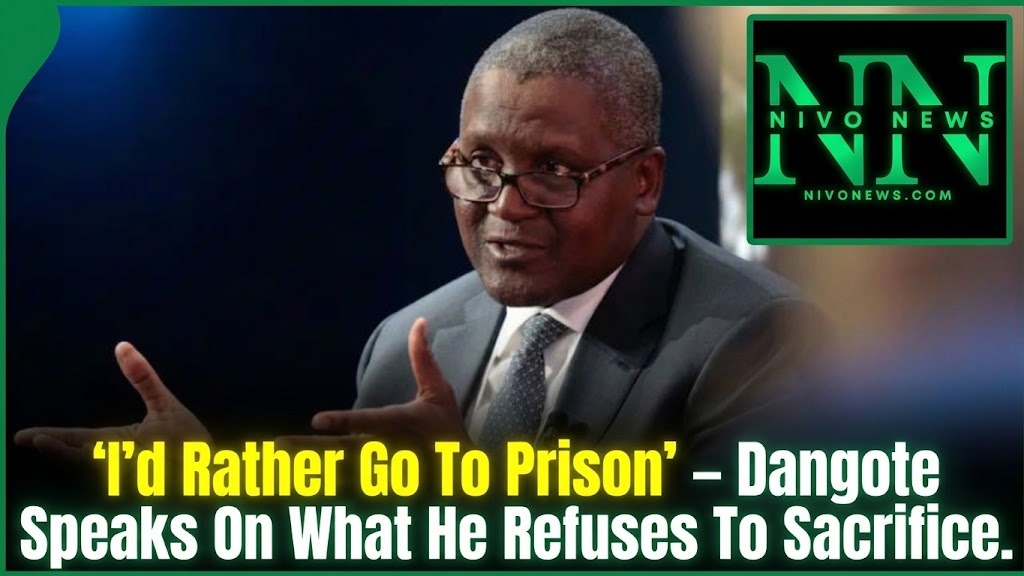
Dangote made the statement in Lagos while presenting his “Vision 2030” plan, an initiative aimed at accelerating industrialisation across Africa.....KINDLY READ THE FULL STORY HERE▶
During the event, the business mogul was asked to choose between spending seven days without his mobile phone and losing access to his private jet for the same period.
In response, Dangote made it clear that giving up his phone would be the more difficult option, explaining that he relies heavily on it to communicate and maintain contact with people.
“Ah… I think it’s easier you put me in prison than to take my phone away. So, you know, I mean taking my phone away is no-go area, okay?” he said.
The billionaire also disclosed that his mobile phone contains more than 13,000 contacts, reflecting the extensive network of relationships he has built over the years.
“I know that would be almost… my number, I have that number since… Twitter… I have more than 13,000 contacts on my phone,” Dangote stated.
When asked how he had accumulated such a large number of contacts, the industrialist explained that he rarely blocks people, allowing his contact list to continue growing.
“Wow. Wow. I hardly… I don’t like blocking people, so a lot of people,” he added.
Dangote is the chairman of the Dangote Group, a major African conglomerate with business interests spanning cement production, fertiliser, manufacturing and petroleum refining, among other industries.
His remarks offered a glimpse into how important his mobile phone is to his daily activities and the management of his extensive personal and business network.
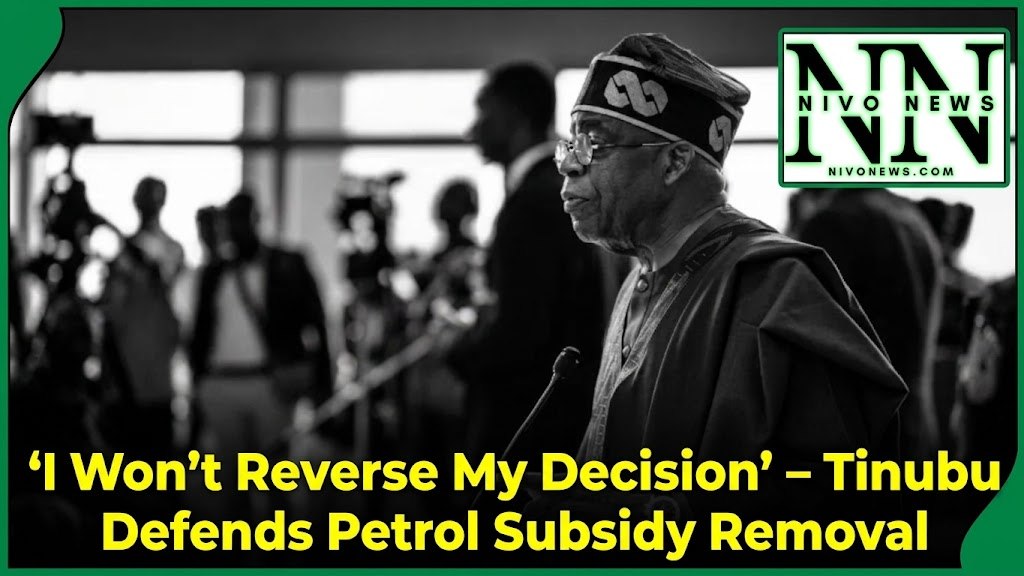
President Bola Ahmed Tinubu has defended his administration’s decision to remove the petrol subsidy, insisting that Nigeria will not return to the policy despite growing calls from opposition figures for its reinstatement.....KINDLY READ THE FULL STORY HERE▶
The President declared that he had no regrets about ending the subsidy regime, arguing that it had become financially unsustainable and was placing the country at risk of economic collapse.
Tinubu made the remarks on Monday during a political gathering tagged Together till 2027: An Evening with Original City Boy, organised by the City Boy Movement in collaboration with the Relax-Tinubu-Is-Fixing-Nigeria movement.
The two groups are supporting the President’s re-election bid ahead of the January 16, 2027, presidential election.
Addressing supporters at the event, Tinubu criticised opposition proposals to restore petrol subsidy, particularly those associated with former Vice President Atiku Abubakar.
He maintained that reversing the policy would undermine his administration’s economic reforms and efforts to put the country on a more sustainable financial footing.
The President likened calls for a return to subsidy to asking the biblical Moses to return to Egypt after leading the Israelites out of captivity.
“I could listen to my political opponents promising a return to subsidy. Most of all, sometimes I remember my scripture studies, both the Bible and the Holy Quran. When Moses left Egypt, they faced the challenge, and the Red Sea parted and gave way.
“You cannot ask Moses to go back to Egypt. We wake up with ideas, original thoughts, and deep thinking to move this country forward. With your energy, your support, we will never go back to Egypt. No regrets,” Tinubu said.
He expressed confidence in Nigeria’s economic future, insisting that the country was making progress and should remain committed to its current direction.
Tinubu also urged his supporters to see the forthcoming election as a decision about their own future rather than simply a campaign to secure another term for him.
“Nigeria must win this election before any candidate does. You are not campaigning for me. You are campaigning for your own future, and that future is renewed hope. There’s nothing that will push us back,” he stated.
While acknowledging the difficulties Nigerians had experienced over the past three years, the President said he had chosen to take responsibility for the country’s challenges instead of concentrating on the shortcomings of previous administrations.
He argued that Nigeria could not achieve lasting economic growth by continually relying on borrowing to finance its needs.
“We understood that a nation cannot borrow its way to greatness,” Tinubu said.
The President’s comments come amid continued political debate over the removal of petrol subsidy, with opposition figures calling for its restoration as part of efforts to ease the economic burden on Nigerians.
However, Tinubu maintained that his administration would not reverse the decision, insisting that the country must continue on its current reform path.
-

 latest1 year ago
“Social Media Erupts As Jim Iyke Declares Rita Dominic Nollywood’s Most Beautiful”
-
 latest3 years ago
Edo Political Showdown: Oshiomhole Appears At Presidential Villa As Tinubu Hands APC Gubernatorial Flag To Okpebholo (Photos & Video)
-
 entertainment3 years ago
Love Knows No Age American Woman Defends Marriage To Young Nigerian Man “I’m Not 70”
-
 latest3 years ago
Olumide Akpata Strikes Again: Drops Killer Track, Sends Edo State Into Frenzy!(Video)
-
 Politics3 years ago
Nigerians React As Pastor Adeboye Foresees Passing Away On A Sunday After Enjoying A Satisfying Meal Of Pounded Yam
-
 latest3 years ago
FG Identifies 31 States At Risk Of Heavy Flooding In 2024: See Full List
-
 Politics3 years ago
BREAKING: Inspector-General Of Police Summons Top Police Commanders For Crucial-Security Challenges
-
 latest3 years ago
5 NYSC Corpers Perish In Fatal Road Accident Returning From Camp