
latest
“Electoral Act Reforms: NASS Approves Dedicated Fund For INEC, E-Transmission, And More”.


In response to criticism over the recently signed Electoral Act, 2026, President Bola Tinubu’s administration, the National Assembly (NASS) has clarified that it consulted extensively with key stakeholders—including the Attorney General of the Federation (AGF), the Independent National Electoral Commission (INEC), civil society organizations (CSOs), and development partners—over a two-year period before the law’s enactment.....KINDLY READ THE FULL STORY HERE▶
The new law now makes electronic transmission of election results, use of the Bimodal Voter Accreditation System (BVAS), and creation of a digital membership register by all political parties mandatory for primaries conducted with INEC oversight.
Senate Leader Senator Opeyemi Bamidele (APC, Ekiti Central) outlined other major reforms, highlighting the establishment of a dedicated fund for INEC to ensure its financial autonomy, operational stability, and administrative continuity.
The Act also empowers the commission to recommend a two-year jail term for any Resident Electoral Commissioner (REC) who withholds vital documents, mandates an electronic register of voters, and increases campaign spending limits for various elective offices.
Bamidele noted that NASS harmonized different versions of the Electoral Bill, particularly Clause 60(3), to avoid constitutional issues ahead of the 2027 general elections. He stressed that the law’s development was a collective effort involving key stakeholders, not a unilateral parliamentary action.
“The National Assembly worked with the AGF, CSOs, INEC, and development partners, incorporating their inputs into the Act. Given this inclusive process, there is no need for prolonged Executive review before assent,” Bamidele said.
He added that the new electoral governance framework strengthens institutional independence, improves transparency, integrates technology in elections, and reinforces accountability in the system.
Among key provisions, Section 3 establishes INEC’s dedicated fund, requiring election funds to be released at least six months before elections and allowing the commission to review questionable results declared under duress. Section 47 mandates presiding officers to use BVAS or any other technological device approved by INEC for voter accreditation.
Section 60(3) requires electronic transmission of results to the INEC Result Viewing Portal (IReV), with Section 60(6) prescribing six months’ imprisonment, a N500,000 fine, or both for any presiding officer who frustrates this process. The law allows the use of Form EC8A as a backup if electronic transmission fails due to communication issues.
Section 72(2) permits a certified true copy of a court order to suffice for swearing in a candidate when INEC fails to issue a certificate of return. Section 74(1) requires RECs to release certified true copies of any document within 24 hours of payment, with failure attracting a minimum two-year jail term.
Unlike the 2022 Electoral Act, the 2026 law allows only direct and consensus primaries, phasing out indirect primaries to broaden participation and reduce the influence of money in delegate selection. Section 77 requires political parties to maintain digital registers, issue membership cards, and submit registers to INEC at least 21 days before primaries, congresses, or conventions.
The Act also raised campaign spending limits: presidential elections from N5 billion to N10 billion; governorship from N1 billion to N3 billion; Senate from N100 million to N500 million; House of Representatives from N70 million to N250 million; House of Assembly from N30 million to N100 million; Area Council from N30 million to N60 million; and councillorship from N5 million to N10 million.
Section 125 strengthens measures against vote buying, impersonation, and result manipulation, prescribing two-year imprisonment or fines of N500,000–N2 million, or both, upon conviction.
Bamidele concluded: “The Electoral Act, 2026 consolidates and refines Nigeria’s electoral governance framework, enhancing electoral credibility, reducing disputes, and strengthening democratic governance.”

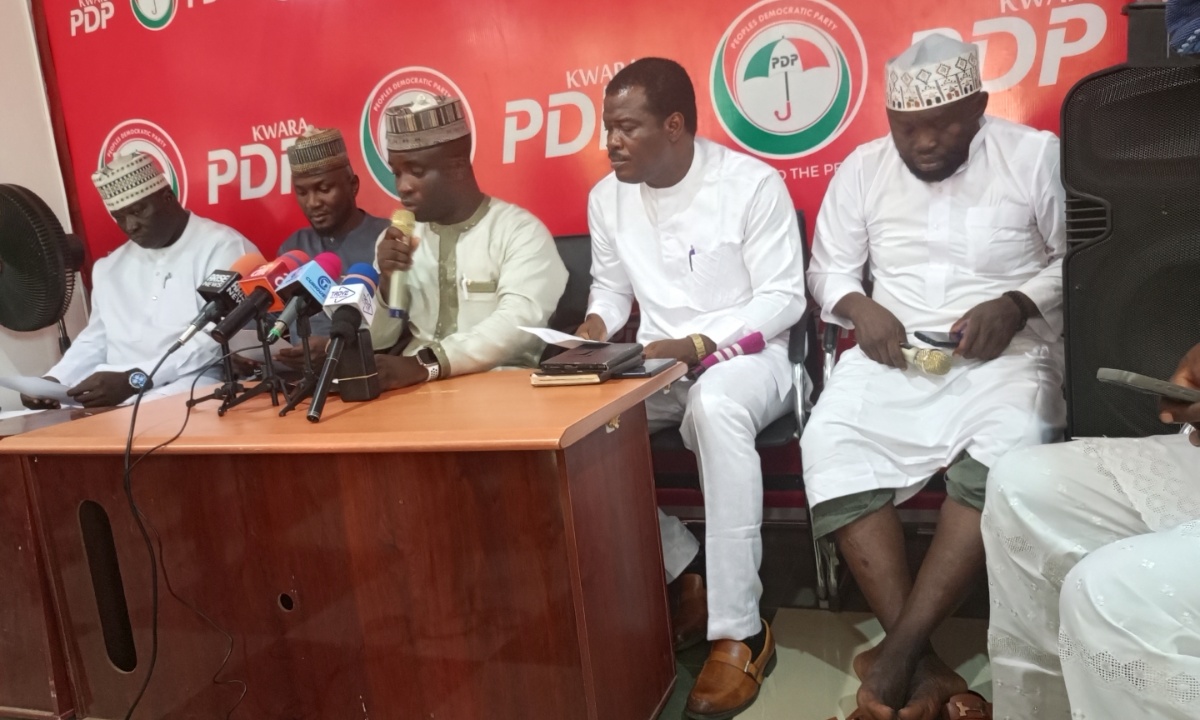
The Peoples Democratic Party (PDP) in Kwara State has strongly opposed reported moves by the state government to revisit the alleged Offa robbery case involving former Governor Abubakar Bukola Saraki and others.....KINDLY READ THE FULL STORY HERE▶

Senator representing Oyo South, Sharafadeen Alli, has declared his intention to contest the Oyo State governorship election ahead of the 2027 general elections.....KINDLY READ THE FULL STORY HERE▶

A PDP chieftain and convener of The Alternative, Otunba Segun Showunmi, has declared his intention to contest the 2027 Ogun State governorship election.....KINDLY READ THE FULL STORY HERE▶
-

 latest8 months ago
“Social Media Erupts As Jim Iyke Declares Rita Dominic Nollywood’s Most Beautiful”
-
 latest2 years ago
Edo Political Showdown: Oshiomhole Appears At Presidential Villa As Tinubu Hands APC Gubernatorial Flag To Okpebholo (Photos & Video)
-
 entertainment2 years ago
Love Knows No Age American Woman Defends Marriage To Young Nigerian Man “I’m Not 70”
-
 latest2 years ago
Olumide Akpata Strikes Again: Drops Killer Track, Sends Edo State Into Frenzy!(Video)
-
 Politics2 years ago
Nigerians React As Pastor Adeboye Foresees Passing Away On A Sunday After Enjoying A Satisfying Meal Of Pounded Yam
-
 latest2 years ago
FG Identifies 31 States At Risk Of Heavy Flooding In 2024: See Full List
-
 latest2 years ago
5 NYSC Corpers Perish In Fatal Road Accident Returning From Camp
-
 Politics2 years ago
BREAKING: Inspector-General Of Police Summons Top Police Commanders For Crucial-Security Challenges