
latest
Tinubu’s Tax Revolution: Nigeria Ends 60 Years Of Oil Dependence.


Nigeria has embarked on a new fiscal journey with the signing of the Nigeria Tax Act 2025, a far-reaching reform that analysts describe as the most ambitious economic transformation since independence. President Bola Ahmed Tinubu signed the landmark legislation in June, marking a decisive shift from the country’s long-standing reliance on oil revenue. The Act, which will take effect on January 1, 2026, aims to rebuild public trust, strengthen national accountability, and redefine taxation as a shared tool for progress rather than a burden.....KINDLY READ THE FULL STORY HERE▶
For more than six decades, Nigeria’s economic fortunes have been tied to crude oil. The discovery of oil in the late 1950s and the boom of the 1970s ushered in an era of dependence that weakened the country’s tax culture and accountability mechanisms. With petrodollars flowing freely, the discipline of taxation faded, leaving citizens skeptical about how their contributions were spent.
According to Nivo News, the new law represents a structural and moral renewal — a deliberate effort to correct decades of fiscal imbalance and social disconnection. Since independence, Nigeria’s tax system has evolved through sporadic reforms, from the establishment of the Federal Inland Revenue Service (FIRS) and the introduction of Value Added Tax (VAT) in 1993 to subsequent legislative updates, including the Finance Acts between 2019 and 2023. However, these measures often failed to address the root causes of inequality, inefficiency, and distrust that plagued the system.
Despite earning trillions from oil, Nigeria’s tax-to-GDP ratio has remained one of the lowest in Africa, averaging around 10 percent — far below Ghana’s 17 percent and South Africa’s 28 percent. This chronic underperformance left the economy vulnerable to oil shocks and fiscal instability. The Nigeria Tax Act 2025 seeks to reverse that trend by unifying and modernising all major tax laws, including company income tax, personal income tax, VAT, customs duties, and stamp levies.
The reform introduces a Wealth and Luxury Tax to ensure that affluent Nigerians — owners of private jets, luxury estates, and high-end vehicles — make fair contributions to national development. Conversely, small businesses and low-income earners are granted exemptions, lower rates, and incentives to expand their operations. The new framework is designed to promote fairness, equity, and inclusiveness across all economic levels.
Technology forms a cornerstone of the reform through the creation of a National Tax Portal, which allows taxpayers to file, pay, and track their taxes digitally. This innovation is expected to eliminate middlemen, reduce corruption, and increase transparency in government revenue. A newly established Public Tax Accountability Council (PTAC) will also publish quarterly reports detailing how tax revenues are spent — a step aimed at rebuilding public confidence and ensuring citizens see tangible results from their civic contributions.
Economists believe the Act could transform Nigeria’s economy into one driven by productivity, innovation, and sustainability. It introduces incentives for manufacturers, renewable energy firms, and farmers, fostering job creation while reducing import dependence. For many Nigerians, the reform represents not just a new law but a restoration of faith — a chance to see their taxes translate into functional schools, hospitals, and roads.
President Tinubu, during the signing ceremony, affirmed that the reform’s goal is to make taxation a partnership in progress rather than a punishment. By consolidating decades of fragmented fiscal policies into one unified law, the government aims to restore integrity and fairness to the system.
Observers describe June 26, 2025, as a turning point — the day Nigeria began to move from oil dependency to accountability, from privilege to fairness, and from disillusionment to partnership. If the Act achieves its purpose, taxation will no longer symbolize exploitation but belonging — proof that every Nigerian, from farmer to entrepreneur, holds a stake in building a nation rooted in equity and shared prosperity.
entertainment
“STEP ASIDE, LEGENDS!” Portable Accuses Davido And Wizkid Of Hoarding The Spotlight And Killing Other Artistes’ Careers!.
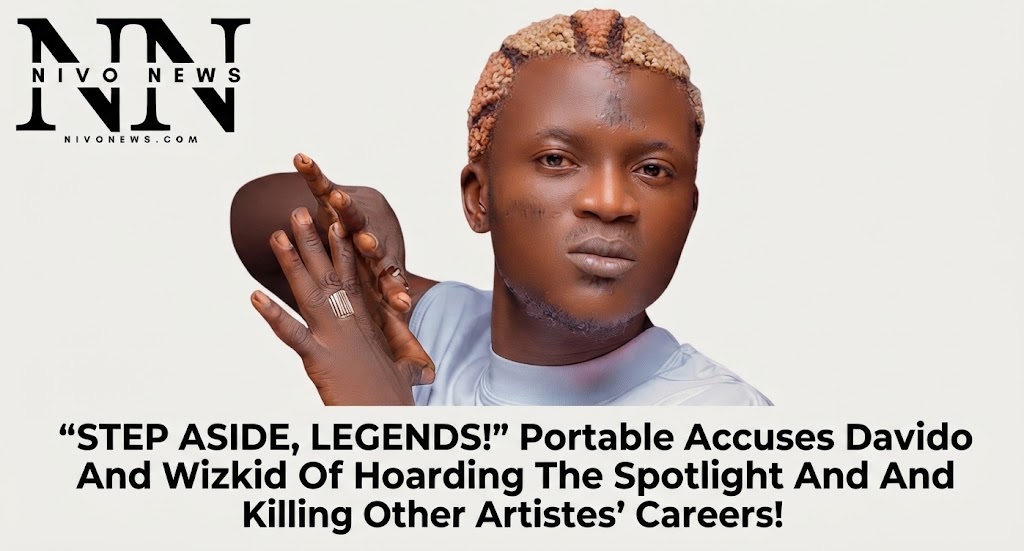
Controversial Nigerian singer Habeeb Okikiola, better known as Portable, has voiced his frustration that heavyweights like Davido, Wizkid, Burna Boy, and Olamide have held a tight grip on the peak of the Nigerian music scene for over a decade. In a video posted to his Instagram story, he argued that while these Afrobeats giants have actively helped push other artists into the limelight, their stubborn refusal to step down or retire has effectively blocked a new generation from taking over the spotlight. Portable drew a contrast with past legends like 2Face, Timaya, and Eedris Abdulkareem, who had their time and eventually moved on.....KINDLY READ THE FULL STORY HERE▶
Shifting his focus to the traditional music scene, the Zazuu crooner called out veteran Fuji stars—specifically naming K1 De Ultimate, Pasuma, and Saheed Osupa—accusing them of failing to support and lift up underground Fuji acts the way Afrobeats stars do. He also humorously justified his public callouts of top artists, admitting that his controversial antics toward the likes of Olamide, Wizkid, and Davido are simply tactical moves to get close to them, chill out, and tap into their wealth.
Summarizing his unfiltered thoughts, Portable stated: “If you see me drag Olamide, the reason is because I want to chill with him. If you see me drag Wizkid, I want to chill with him. If you see me drag Davido, I want to spend his money. Davido, Burna Boy, Olamide and Wizkid are trying; they blow people up, but Fuji Artistes like K1 De Ultimate, Pasuma and Osupa Saheed aren’t lifting Fuji underground artistes up. Four artistes have been reigning in Nigeria for over 10 years. Timaya, 2face, and Eedris Abdulkareem came, reigned and left, but Davido, Olamide, Burna Boy, and Wizkid have refused to retire and let other artistes to reign.”
entertainment
THE UNTOLD STORY OF A LADIES’ MAN! Why Jim Iyke Admits He Was Toasting Women On A Weekly Basis!.
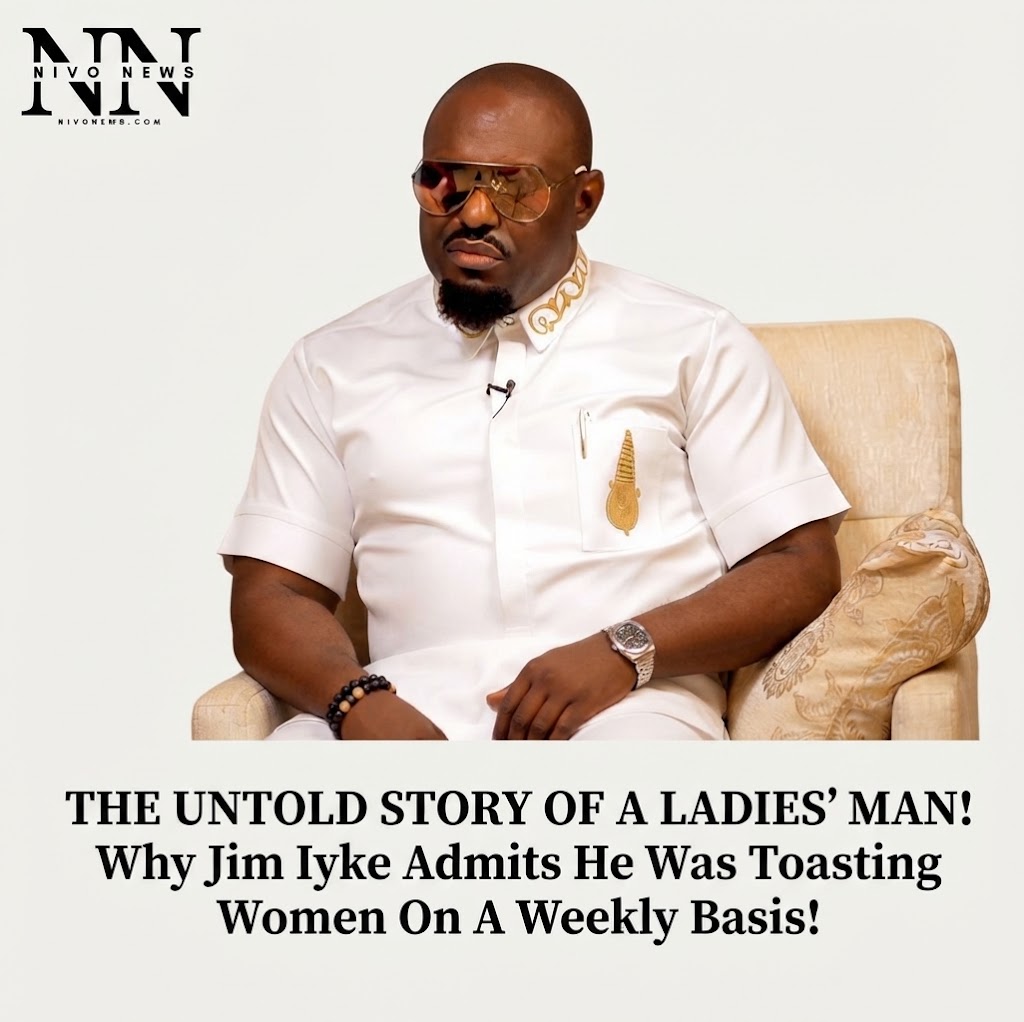
Nollywood icon Jim Iyke recently shared a hilarious look back at his university days during an appearance on the Lahor Podcast, confessing that his complete inability to cook led him to weaponize romance for home-cooked meals.....KINDLY READ THE FULL STORY HERE▶
The actor admitted that because he couldn’t boil water for survival, he made a habit of pursuing new romantic interests on a weekly basis solely to have them cook for him, only to break things off right after the meal was served. This cyclical food-for-romance scheme worked smoothly until he was finally caught red-handed, tanking his dating reputation across his entire department and causing the women there to completely shut him out. Reflecting on the amusing chapter, Jim Iyke joked, “The only thing I don’t know how to do in this life is cooking. In university, I used to toast girls every week so they could cook for me. Once she finished cooking, I’d break up with her. The day I was caught, the whole department stopped giving me a chance.” 😂
latest
SCANDAL AT THE POLLS! INEC Drops A Bombshell Denial As NDC Accuses Commission Of Rigging Candidate Lists!.
The Independent National Electoral Commission (INEC) has firmly rejected claims made by the Nigeria Democratic Congress (NDC) that unapproved and unauthorized candidates were inserted into its candidate list for the Anambra State House of Assembly. Responding to a statement released by NDC National Chairman Senator Moses Cleopas Zuwoghe, INEC’s Chief Press Secretary, Adedayo Oketola, maintained that the electoral body lacks the legal authority or institutional interest to choose or substitute candidates for political parties.....KINDLY READ THE FULL STORY HERE▶
Oketola emphasized that political parties bear the sole responsibility for uploading and submitting candidate details through the designated INEC portal using official access credentials. He noted that all portal activities are fully tracked and digitally recorded, allowing the commission to trace the exact history and source of any entry. While addressing the serious allegation that INEC officials bypassed the party to collect Form EC9 directly from aspirants, Oketola announced that the commission will inspect the relevant records for the specified constituencies and urged the NDC to come forward with concrete evidence and details against any allegedly complicit officials for proper investigation.
-

 latest1 year ago
“Social Media Erupts As Jim Iyke Declares Rita Dominic Nollywood’s Most Beautiful”
-
 latest2 years ago
Edo Political Showdown: Oshiomhole Appears At Presidential Villa As Tinubu Hands APC Gubernatorial Flag To Okpebholo (Photos & Video)
-
 entertainment2 years ago
Love Knows No Age American Woman Defends Marriage To Young Nigerian Man “I’m Not 70”
-
 latest2 years ago
Olumide Akpata Strikes Again: Drops Killer Track, Sends Edo State Into Frenzy!(Video)
-
 Politics3 years ago
Nigerians React As Pastor Adeboye Foresees Passing Away On A Sunday After Enjoying A Satisfying Meal Of Pounded Yam
-
 latest2 years ago
FG Identifies 31 States At Risk Of Heavy Flooding In 2024: See Full List
-
 Politics3 years ago
BREAKING: Inspector-General Of Police Summons Top Police Commanders For Crucial-Security Challenges
-
 latest2 years ago
5 NYSC Corpers Perish In Fatal Road Accident Returning From Camp