
Politics
Legal Analyst Urges Tinubu to Cut Foreign Trips, Focus on Security and Poverty


Nigerian legal practitioner and political analyst, Liborous Oshoma, has urged President Bola Tinubu to reduce his foreign trips and concentrate on tackling the security and poverty challenges facing the country.....KINDLY READ THE FULL STORY HERE▶
Speaking during a recent media interview, Oshoma said the president’s frequent travels abroad have become a distraction from the pressing problems at home. He advised Tinubu to spend more time addressing the issues of insecurity, unemployment, and widespread poverty affecting millions of Nigerians.
“While foreign relations are important, the president needs to be more visible at home to show leadership,” Oshoma said. “People are suffering. They need to see their leader on the ground, not just abroad.”
President Tinubu has embarked on several international trips since taking office in May 2023, attending global summits, bilateral meetings, and investment forums. His administration has said these trips are aimed at attracting foreign investment and strengthening diplomatic ties.
However, critics argue that the results of these travels have not been felt by ordinary Nigerians, who continue to struggle with high living costs and security threats. Nigeria is battling rising food inflation, youth unemployment, and widespread violence from banditry and insurgency in several parts of the country.
The African Democratic Congress (ADC) and other opposition groups have accused the president of spending too much time outside the country. The ADC recently claimed that Tinubu has spent nearly a quarter of his presidency abroad, calling the trips “wasteful” and “unproductive.”
Oshoma echoed similar concerns, warning that the president’s absence could weaken coordination in the fight against insecurity and economic hardship. He said Nigeria needs strong, hands-on leadership to confront its worsening challenges.
“Traveling and attending conferences cannot solve insecurity or hunger,” Oshoma said. “What Nigerians want is a leader who listens, visits troubled areas, and ensures policies are implemented effectively.”
Security experts have also cautioned that Nigeria’s instability requires the president’s direct involvement. Persistent attacks by armed groups in the North West and North Central regions, as well as kidnappings across the country, have left many citizens feeling unsafe. Meanwhile, the National Bureau of Statistics reports that more than 133 million Nigerians live in multidimensional poverty.
Opposition figures, including former Labour Party presidential candidate Peter Obi, have also criticized Tinubu’s travel schedule. Obi said the president should prioritize citizens’ welfare before attending international engagements, describing the constant trips as “ill-timed and insensitive.”
Supporters of the president, however, argue that the foreign visits are part of a broader strategy to reposition Nigeria’s economy and attract investors. They point to recent announcements of potential partnerships in energy, infrastructure, and technology as signs that the trips could bring long-term benefits.
Still, public frustration remains high as many Nigerians demand faster improvements in security and living conditions. Analysts say the government must balance foreign diplomacy with domestic action to restore confidence.
Oshoma urged Tinubu to review his schedule and focus more on domestic governance. “Nigerians need assurance that their president understands their pain,” he said. “Being present and responsive at home is the first step toward rebuilding trust.”
As economic and security pressures mount, many observers believe Tinubu’s ability to remain engaged locally could shape public perception of his leadership in the months ahead.


latest
Political Shift Ahead Of 2027: Pro-Tinubu Group Picks Ex-Obidient Organiser For Top Position.

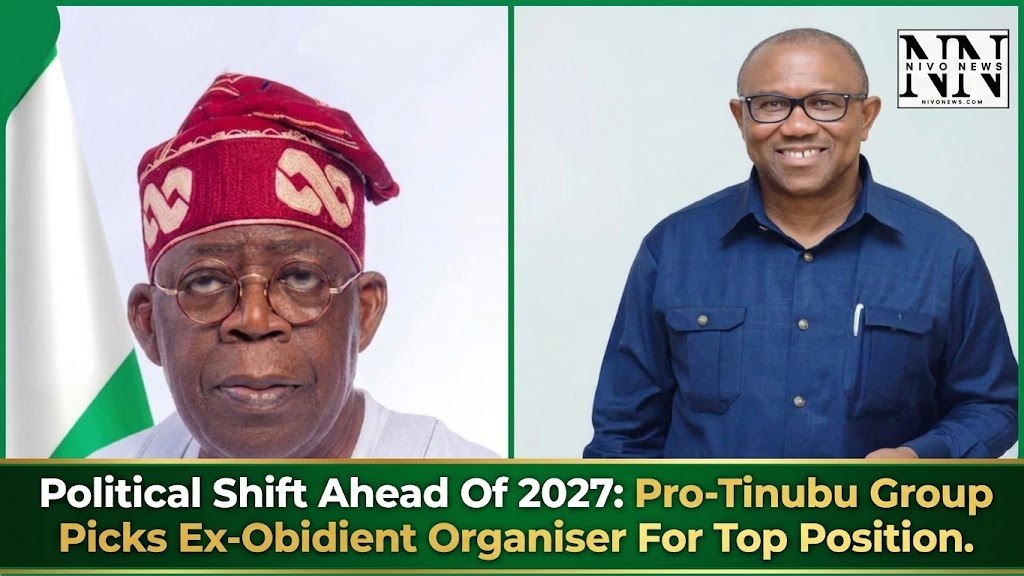
The Tinubu Must Stay Movement (TMS) has appointed Marcel Ngogbehei as Director-General of its alliance with the Directorate of Mobilisation and Integration (DMI), citing his extensive experience in Nigeria’s public sector and the United Kingdom.....KINDLY READ THE FULL STORY HERE▶
The appointment was announced by Kashifu Inuwa Abdullahi, Chairman of the Board of Trustees and Convener of the Tinubu Must Stay Movement.
Abdullahi described Ngogbehei as a trusted associate whose leadership qualities and professional competence he had known for more than two decades.
“I have known Marcel for over 25 years. We have worked together, faced difficult challenges together and delivered results together. I know his character, I know his ability, and I trust him to deliver,” Abdullahi said.
He explained that the decision was based on Ngogbehei’s professional background, understanding of public institutions and ability to foster collaboration among different stakeholders.
Abdullahi recalled that they worked together at Galaxy Backbone Plc and subsequently at the Central Bank of Nigeria (CBN), where they contributed to the development and implementation of several major technology initiatives.
Among the projects he highlighted were the Integrated Personnel and Payroll Information System (IPPIS), the Government Data Center, the CBN Cashless Policy and the establishment of the bank’s Enterprise Architecture function.
According to Abdullahi, the Enterprise Architecture initiative helped the CBN achieve savings exceeding $1 million.
“These were not just technology projects. They were about making government systems work better, reducing waste, improving efficiency and building institutions that serve Nigerians,” he said.
On the political objectives of the alliance, the Tinubu Must Stay Movement questioned whether opposition parties had presented sufficiently detailed and convincing proposals for tackling Nigeria’s major challenges.
The movement argued that criticism of government policies should be accompanied by practical alternatives that Nigerians could assess.
“Nigerians are tired of promises without clear plans. If you say the government is wrong, tell the people what you will do better. How will you create jobs? How will you reduce the cost of living? How will you improve electricity, schools and hospitals? And where will the money come from?” the group stated.
However, the movement acknowledged that the Tinubu administration should also be held accountable for its performance.
“President Tinubu must be judged [by] the complexity of the problem he inherited and by what his government delivers. The opposition must also be judged by the solutions it offers. Nigerians deserve answers from both sides,” it added.
The group said its position was intended to promote informed discussions on public policies, government spending and their impact on ordinary Nigerians.
Abdullahi noted that Ngogbehei’s appointment came as the alliance continued to establish its organisational structures and define its programmes.
In his new role, Ngogbehei is expected to oversee organisational coordination, grassroots mobilisation and civic-accountability initiatives.
The alliance disclosed that its activities would include public discussions on government performance, assessments of alternative policy proposals and engagement with communities across the country.
Ngogbehei holds a degree in Computer and Electronics Engineering from Lagos State University and attended the Sloan programme at London Business School.
His professional experience includes senior technology roles at Galaxy Backbone Plc and the Central Bank of Nigeria, as well as leadership responsibilities on key projects within the United Kingdom Civil Service.
Beyond his professional career, Ngogbehei played an organisational role in the mobilisation efforts surrounding Peter Obi’s 2023 presidential campaign.
He served as Director of Strategy at the Peter Obi Support Network before becoming Chairman of the Coalition for Peter Obi (CPO).
In those positions, he participated in nationwide grassroots mobilisation, voter-registration advocacy and the organisation of the 2022 Labour Party/CPO Leadership Summit in Abuja.
He later became Director-General of the Directorate of Mobilisation and Integration, where his activities focused on grassroots coordination, citizen participation and organisational development.
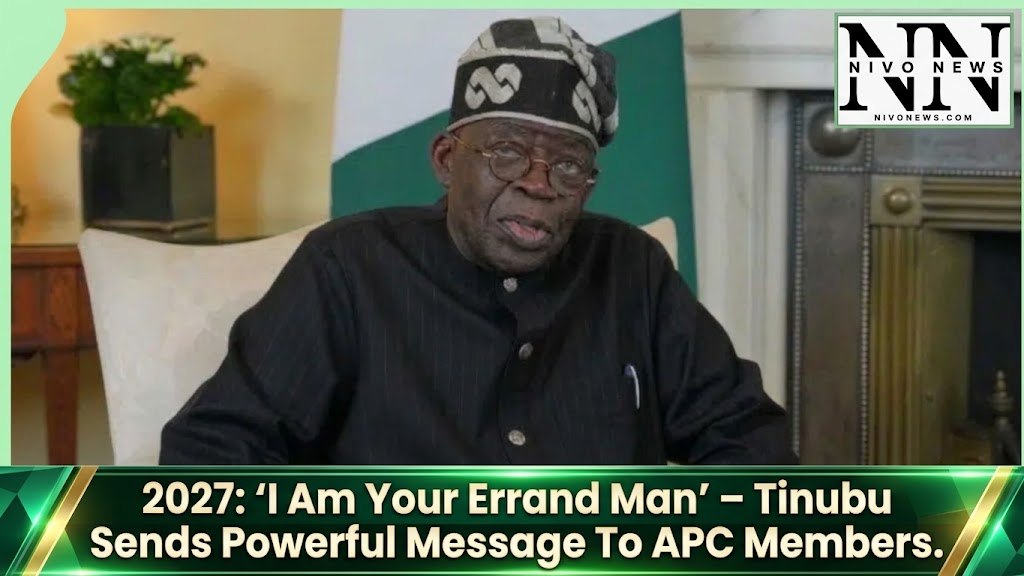
President Bola Tinubu has described himself as the “errand man” of the All Progressives Congress (APC) as the ruling party prepares for the 2027 general elections.....KINDLY READ THE FULL STORY HERE▶
The President also pledged to remain committed to the party’s manifesto and ensure the fulfilment of its promises and objectives.
reports that Tinubu made the declaration on Wednesday during the inauguration of the APC Presidential Campaign Council at the Banquet Hall of the Presidential Villa in Abuja.
Addressing party leaders and members of the council, Tinubu assured them of his commitment to implementing the APC’s policies, promises and agenda.
“To me, I am your errand man. Even for the president, I raise my hand for full commitment that we abide by my promises and the manifestos, the objective, the intention of our party. That’s all I give you,” he said.
The President commended APC leaders at various levels for successfully conducting the party’s congresses, despite predictions by opposition figures that the exercise would trigger an internal crisis.
According to Tinubu, the party successfully completed the process without the anticipated divisions.
“We conducted it. They said there would be implosion. We passed through it. We did not fail. You did not let us down,” he stated.
Tinubu maintained that rather than weakening the party, the congresses and primary elections had strengthened the APC and reinforced its unity.
He added that the newly inaugurated campaign council would be responsible for taking the party’s vision, achievements and policy agenda to Nigerians across the country.
“This council will carry our vision, our record and our agenda to every Nigerian, and it will carry them to every ward of this country. We arrive at this moment strong, united and renewed,” the President said.
Tinubu urged members of the campaign council to intensify grassroots mobilisation and work towards securing electoral victories for the APC in their respective wards ahead of the 2027 elections.
He stressed that the inauguration was more than a formal political gathering, describing it as a renewed commitment to the Nigerian people and the responsibilities entrusted to the ruling party.
“The APC is ready. We have not gathered merely to inaugurate a council; we have gathered to renew a covenant, a covenant with the Nigerian people and the historic responsibility they have entrusted to us as Nigeria’s governing party. We promise we will not let them down,” he said.
The President also expressed appreciation to party members for their contributions to the APC’s previous electoral success but emphasised that they must work towards delivering another victory in 2027.
Tinubu warned that members would not receive credit for their efforts until they had successfully mobilised voters and delivered the required results at the polls.
“But no one gets credit for an incomplete assignment. So, until you deliver the next election, until you deliver your wards, until you deliver the votes, before we can say thank you,” he added.
latest
2027 Showdown: Shettima Mocks Peter Obi Over Economic Figures, Sparks Fresh Political Tension.
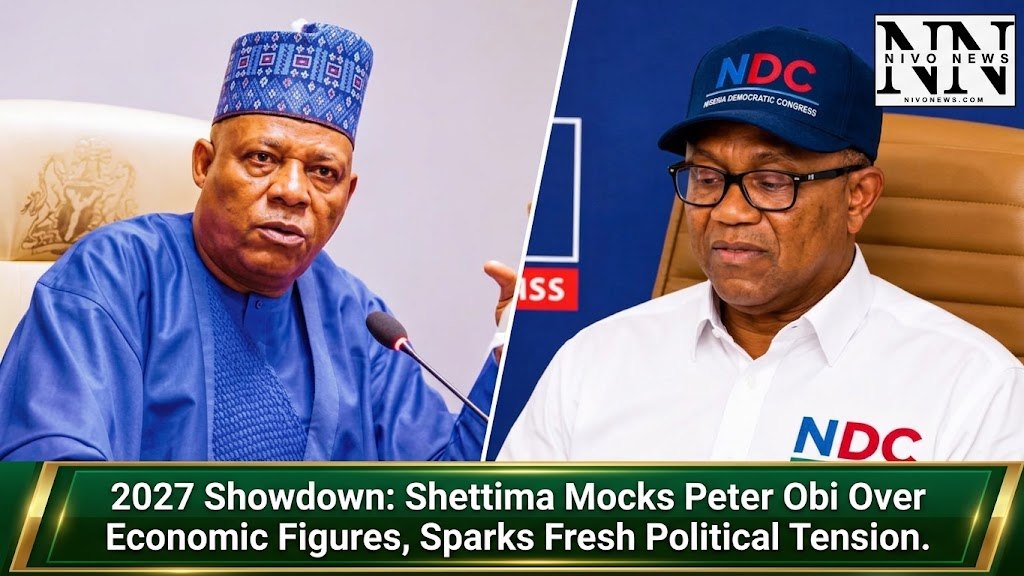
Vice President Kashim Shettima has taken a swipe at former Anambra State Governor Peter Obi over his economic proposals, describing him as “the master of bogus statistics and incoherent economic prescriptions.”....KINDLY READ THE FULL STORY HERE▶
Shettima accused Obi, an opposition presidential hopeful, of relying heavily on foreign economic models without adequately considering Nigeria’s unique circumstances and challenges.
The Vice President made the remarks on Wednesday during the inauguration of the All Progressives Congress (APC) Presidential Campaign Council at the State House Banquet Hall, Presidential Villa, Abuja.
Although Shettima referred to Obi as his “very good friend,” he questioned the former governor’s tendency to compare Nigeria’s economic situation with that of countries such as Bangladesh.
He said Obi appeared convinced that economic policies designed for other countries could be applied directly to Nigeria without taking local realities into account.
“He seems convinced that a size 36 shirt tailored for Bangladesh will somehow fit Nigeria’s size 52 frame,” Shettima stated.
The Vice President argued that such comparisons failed to recognise the distinct characteristics that shape the economic and political realities of different nations.
According to him, effective governance requires an understanding of a country’s social, economic, political and institutional environment.
Shettima maintained that policies that work in Bangladesh cannot automatically deliver the same results in Nigeria without considering differences in population, economic structures, institutions and national circumstances.
He further argued that Nigeria, with a population exceeding 250 million, could not be effectively governed using borrowed statistics and economic recommendations that ignored the country’s peculiar challenges.
Despite expressing respect for Obi, Shettima also challenged the presidential candidate of the Nigeria Democratic Congress (NDC) over his position on the outcome of the 2023 presidential election.
The Vice President accused Obi of making what he described as a bogus claim about winning the election, arguing that the former governor had no evidence to substantiate the assertion.
Shettima described the position as a “delusion of grandeur,” adding that the political contest was against what he characterised as “the politics of yesterday dressed as tomorrow’s deliverance.”
-

 latest1 year ago
“Social Media Erupts As Jim Iyke Declares Rita Dominic Nollywood’s Most Beautiful”
-
 latest3 years ago
Edo Political Showdown: Oshiomhole Appears At Presidential Villa As Tinubu Hands APC Gubernatorial Flag To Okpebholo (Photos & Video)
-
 entertainment3 years ago
Love Knows No Age American Woman Defends Marriage To Young Nigerian Man “I’m Not 70”
-
 latest3 years ago
Olumide Akpata Strikes Again: Drops Killer Track, Sends Edo State Into Frenzy!(Video)
-
 Politics3 years ago
Nigerians React As Pastor Adeboye Foresees Passing Away On A Sunday After Enjoying A Satisfying Meal Of Pounded Yam
-
 latest2 years ago
FG Identifies 31 States At Risk Of Heavy Flooding In 2024: See Full List
-
 Politics3 years ago
BREAKING: Inspector-General Of Police Summons Top Police Commanders For Crucial-Security Challenges
-
 latest3 years ago
5 NYSC Corpers Perish In Fatal Road Accident Returning From Camp