
latest
Nigeria to Relaunch Currency Trade Scheme After Setback – CBN


Central Bank of Nigeria (CBN) says it will relaunch a national currency trade settlement scheme after earlier attempts failed to deliver expected results.....KINDLY READ THE FULL STORY HERE▶
CBN Governor Olayemi Cardoso made the announcement during a media briefing at the International Monetary Fund and World Bank annual meetings in Washington, D.C. He said the initiative will allow Nigeria to conduct trade with other countries using national currencies instead of relying on the U.S. dollar.
“We have had an experiment with using national currencies in bilateral trade, and to be frank, it did not work out very well for us,” Cardoso said. “That is not to say we are not interested in doing this. We are. We are really at an early stage of putting up a framework to ensure it is a win-win for everybody.”
The central bank chief explained that the new framework will be more structured and carefully designed to prevent the problems that weakened previous efforts. He said lessons learned from the failed attempt would guide the relaunch.
A Second Attempt at Local Currency Trade
Nigeria first introduced a currency swap deal with China in 2018 to encourage trade in the naira and yuan instead of the U.S. dollar. The agreement, worth about ₦720 billion (RMB 15 billion), aimed to reduce pressure on Nigeria’s foreign reserves.
However, the plan faced several challenges. Many importers and exporters continued to prefer using dollars, and banks struggled with limited yuan liquidity. Exchange rate instability and low awareness among traders also affected participation.
Despite the setback, Nigeria and China renewed their currency swap agreement in 2024, valued at N3.28 trillion (RMB 15 billion) and valid for three years. The deal aims to strengthen trade ties and reduce dependence on the dollar amid ongoing economic reforms.
Reforms to Strengthen the Naira
Cardoso said Nigeria’s recent foreign exchange reforms have improved transparency and built a stronger foundation for local currency trade. The CBN introduced a new “B-matching” system that makes foreign exchange transactions more open and competitive.
The bank has also started publishing audited financial statements and net reserves to boost confidence in its operations. Cardoso said these changes have made the naira more competitive, making it a better time to revive the currency trade scheme.
Analysts say the move could help Nigeria stabilize its currency, reduce dollar demand, and promote closer trade relationships with countries willing to trade in their local currencies.
Potential Benefits and Challenges
If successful, the relaunch could lower transaction costs and make trade more affordable for Nigerian businesses. It may also protect the economy from global currency fluctuations and strengthen the country’s external sector.
However, economists warn that key challenges remain. The central bank will need to maintain exchange rate stability, ensure liquidity in partner currencies, and improve communication with traders and banks.
Financial analyst Abiodun Ayodele said the plan could work if Nigeria develops strong monitoring systems and clear guidelines. “Without discipline and transparency, it may end up like the last attempt,” he said.
Next Steps
Cardoso said the CBN will begin consultations with trade partners and financial institutions to design the new framework. Details of the scheme, including which countries may participate first, are expected to be released after the bank completes its internal review.
The relaunch forms part of Nigeria’s broader economic reform plan aimed at restoring investor confidence, stabilizing the foreign exchange market, and supporting local industries.
Observers say the success or failure of the new currency trade scheme could shape Nigeria’s foreign trade outlook and determine how well the country can manage its dependence on the U.S. dollar in the years ahead.


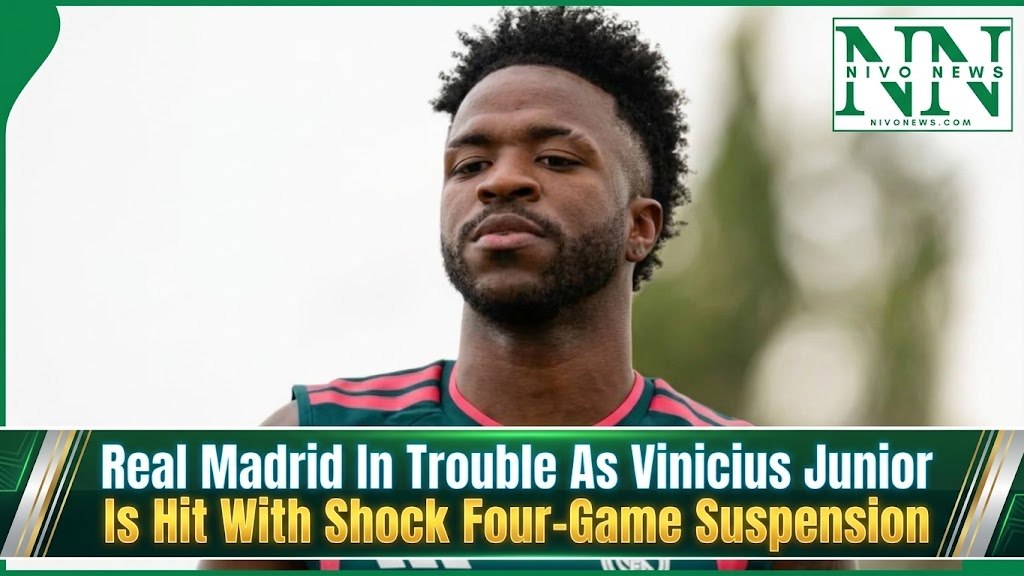
Real Madrid forward Vinicius Junior has been handed a four-match suspension after being found guilty of pulling an opponent’s hair and aggressively confronting the referee during his team’s 1-0 victory over Villarreal.....KINDLY READ THE FULL STORY HERE▶
The 26-year-old Brazilian winger was sent off in the 73rd minute of Saturday’s encounter after grabbing and pulling the hair of Villarreal player Nathan Saliba while the two were running down the pitch.
Vinicius had earlier found the back of the net, but his goal was disallowed.
The Spanish football federation’s disciplinary committee announced the suspension shortly before Real Madrid’s Champions League fixture against Roma on Wednesday.
According to the committee, the Brazilian received a two-match ban for the hair-pulling incident, while an additional two-match suspension was imposed over his conduct towards the referee following his dismissal.
In his match report, referee Isidro Díaz de Mera stated that Vinicius protested the red card by raising his voice and approaching him aggressively. The official also noted that the forward had to be restrained by his teammates.
The punishment means Vinicius will miss several important domestic fixtures, including Real Madrid’s home clash against Sevilla on Sunday and the highly anticipated El Clasico against Barcelona the following week.
He will also be unavailable for the club’s away matches against Racing Santander and Valencia.
Vinicius’ absence from the Barcelona showdown represents a significant setback for Real Madrid, given his importance to the team’s attacking strength.
The four-game suspension leaves the Spanish giants without one of their leading forwards during a crucial stage of their domestic campaign.
latest
Political Shift Ahead Of 2027: Pro-Tinubu Group Picks Ex-Obidient Organiser For Top Position.

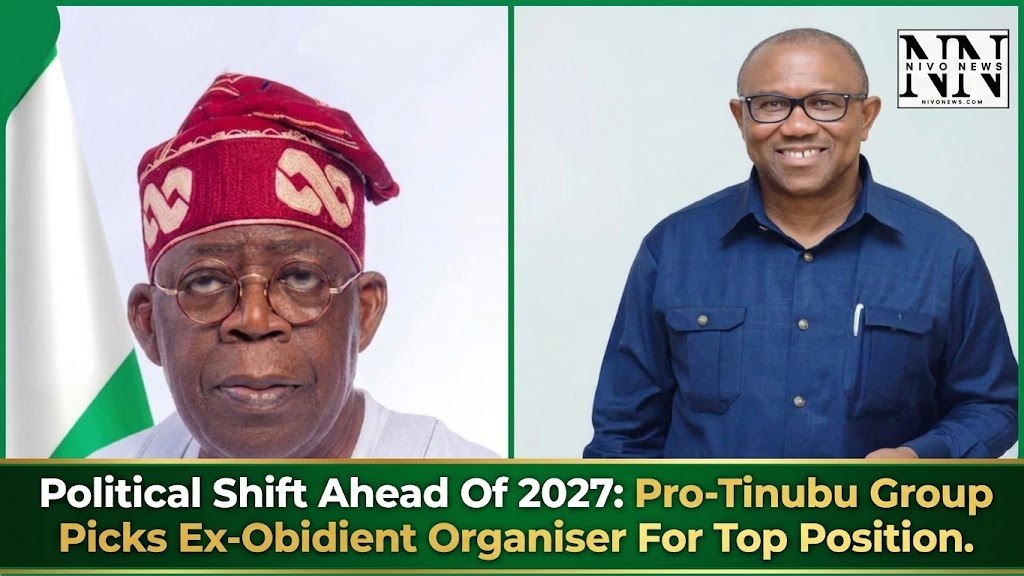
The Tinubu Must Stay Movement (TMS) has appointed Marcel Ngogbehei as Director-General of its alliance with the Directorate of Mobilisation and Integration (DMI), citing his extensive experience in Nigeria’s public sector and the United Kingdom.....KINDLY READ THE FULL STORY HERE▶
The appointment was announced by Kashifu Inuwa Abdullahi, Chairman of the Board of Trustees and Convener of the Tinubu Must Stay Movement.
Abdullahi described Ngogbehei as a trusted associate whose leadership qualities and professional competence he had known for more than two decades.
“I have known Marcel for over 25 years. We have worked together, faced difficult challenges together and delivered results together. I know his character, I know his ability, and I trust him to deliver,” Abdullahi said.
He explained that the decision was based on Ngogbehei’s professional background, understanding of public institutions and ability to foster collaboration among different stakeholders.
Abdullahi recalled that they worked together at Galaxy Backbone Plc and subsequently at the Central Bank of Nigeria (CBN), where they contributed to the development and implementation of several major technology initiatives.
Among the projects he highlighted were the Integrated Personnel and Payroll Information System (IPPIS), the Government Data Center, the CBN Cashless Policy and the establishment of the bank’s Enterprise Architecture function.
According to Abdullahi, the Enterprise Architecture initiative helped the CBN achieve savings exceeding $1 million.
“These were not just technology projects. They were about making government systems work better, reducing waste, improving efficiency and building institutions that serve Nigerians,” he said.
On the political objectives of the alliance, the Tinubu Must Stay Movement questioned whether opposition parties had presented sufficiently detailed and convincing proposals for tackling Nigeria’s major challenges.
The movement argued that criticism of government policies should be accompanied by practical alternatives that Nigerians could assess.
“Nigerians are tired of promises without clear plans. If you say the government is wrong, tell the people what you will do better. How will you create jobs? How will you reduce the cost of living? How will you improve electricity, schools and hospitals? And where will the money come from?” the group stated.
However, the movement acknowledged that the Tinubu administration should also be held accountable for its performance.
“President Tinubu must be judged [by] the complexity of the problem he inherited and by what his government delivers. The opposition must also be judged by the solutions it offers. Nigerians deserve answers from both sides,” it added.
The group said its position was intended to promote informed discussions on public policies, government spending and their impact on ordinary Nigerians.
Abdullahi noted that Ngogbehei’s appointment came as the alliance continued to establish its organisational structures and define its programmes.
In his new role, Ngogbehei is expected to oversee organisational coordination, grassroots mobilisation and civic-accountability initiatives.
The alliance disclosed that its activities would include public discussions on government performance, assessments of alternative policy proposals and engagement with communities across the country.
Ngogbehei holds a degree in Computer and Electronics Engineering from Lagos State University and attended the Sloan programme at London Business School.
His professional experience includes senior technology roles at Galaxy Backbone Plc and the Central Bank of Nigeria, as well as leadership responsibilities on key projects within the United Kingdom Civil Service.
Beyond his professional career, Ngogbehei played an organisational role in the mobilisation efforts surrounding Peter Obi’s 2023 presidential campaign.
He served as Director of Strategy at the Peter Obi Support Network before becoming Chairman of the Coalition for Peter Obi (CPO).
In those positions, he participated in nationwide grassroots mobilisation, voter-registration advocacy and the organisation of the 2022 Labour Party/CPO Leadership Summit in Abuja.
He later became Director-General of the Directorate of Mobilisation and Integration, where his activities focused on grassroots coordination, citizen participation and organisational development.

The family of Nigerian gospel singer Olayemi Bolaji, popularly known as Toluwanisings, has officially confirmed his death.....KINDLY READ THE FULL STORY HERE▶
reports that the family announced the tragic news on Wednesday night in a statement published on the singer’s Instagram account, revealing that he died in the early hours of Wednesday, October 14, 2026.
The statement identified the deceased as Minister Olayemi Bayonile Bolaji of the Toluwani Gospel Music Ministry (TOGOMM), describing him as a cherished husband, family member and gospel minister.
The family expressed profound sadness over his passing and appealed to the public to remember his wife and other loved ones in their prayers during this difficult period.
The statement read, “With deep sorrow, the family announces the passing of Minister Olayemi Bayonile Bolaji, Toluwani Gospel Music Ministry (TOGOMM), who passed away in the early hours of 14 October 2026.
“A dearly loved husband, family member, and gospel minister.
“Please keep his wife, family, and loved ones in your prayers during this difficult time.”
The family also disclosed that further information regarding the singer’s funeral arrangements would be made available in due course.
However, as of the time of filing this report, the circumstances surrounding Toluwanisings’ death and the cause of his passing had not been officially disclosed.
-

 latest1 year ago
“Social Media Erupts As Jim Iyke Declares Rita Dominic Nollywood’s Most Beautiful”
-
 latest3 years ago
Edo Political Showdown: Oshiomhole Appears At Presidential Villa As Tinubu Hands APC Gubernatorial Flag To Okpebholo (Photos & Video)
-
 entertainment3 years ago
Love Knows No Age American Woman Defends Marriage To Young Nigerian Man “I’m Not 70”
-
 latest3 years ago
Olumide Akpata Strikes Again: Drops Killer Track, Sends Edo State Into Frenzy!(Video)
-
 Politics3 years ago
Nigerians React As Pastor Adeboye Foresees Passing Away On A Sunday After Enjoying A Satisfying Meal Of Pounded Yam
-
 latest2 years ago
FG Identifies 31 States At Risk Of Heavy Flooding In 2024: See Full List
-
 Politics3 years ago
BREAKING: Inspector-General Of Police Summons Top Police Commanders For Crucial-Security Challenges
-
 latest3 years ago
5 NYSC Corpers Perish In Fatal Road Accident Returning From Camp