
latest
Africa Backs Nigeria’s Oil Reforms As Komolafe Emerges AFRIPERF Chair.

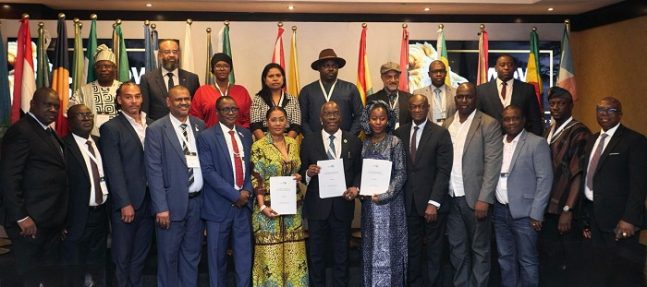
The Pan-African Regulatory Excellence Forum (PAREF) has applauded the appointment of the Chief Executive of the Nigerian Upstream Petroleum Regulatory Commission (NUPRC), Gbenga Komolafe, as the interim chairman of the newly inaugurated African Petroleum Regulators Forum (AFRIPERF). The organization described the development as a remarkable recognition of Nigeria’s leadership in oil and gas sector reforms.....KINDLY READ THE FULL STORY HERE▶
According to Nivo News, PAREF in a statement signed by its Executive Director, Dr. Aisha Njoroge, on Monday, said Komolafe’s emergence reflects growing confidence in Nigeria’s regulatory transformation and its capacity to steer collaborative energy governance across Africa.
AFRIPERF, inaugurated on September 18, 2025, during the Africa Oil Week in Accra, Ghana, brings together regulators from 16 African countries. Eight nations, including Nigeria, Ghana, Gambia, Madagascar, Sudan, Guinea, Togo, and Somalia, have already endorsed the forum’s charter. The platform aims to harmonize oil and gas laws, regulatory standards, and compliance systems across the continent to eliminate long-standing policy inconsistencies that have hindered investment and weakened Africa’s negotiating power in global markets.
PAREF described Komolafe’s elevation as a “vote of confidence in reform-driven leadership and Nigeria’s unwavering commitment to transparency, innovation, and efficiency in the petroleum sector.”
Dr. Njoroge emphasized that the forum’s success would hinge on its ability to establish uniform gas measurement standards, emissions regulations, digital compliance frameworks, and transparent reporting mechanisms for oil and gas production. She cautioned that AFRIPERF must go beyond bureaucracy to become a practical institution promoting efficiency, transparency, and environmental sustainability.
PAREF noted that Africa’s oil-producing nations currently operate under varied fiscal and environmental regimes, which have created inefficiencies and limited intra-African trade. The establishment of AFRIPERF under Komolafe’s stewardship, it said, presents an opportunity to address these gaps and strengthen Africa’s collective voice in global energy diplomacy.
However, the organization warned against political interference, stressing that the forum’s credibility depends on inclusivity and fair representation among member states. “Regulatory convergence should not lead to domination by bigger nations. Every member must have an equal voice to maintain legitimacy,” Njoroge stated.
She also raised concerns about capacity disparities among African regulators, noting that while some have embraced digital monitoring systems, others still depend on outdated, manual processes. She urged AFRIPERF to establish mechanisms for shared learning and resource pooling to avoid deepening existing inequalities.
On financing, PAREF advised the forum to adopt a transparent, sustainable funding structure free from overreliance on donor support. “AFRIPERF’s independence must be protected. While partnerships with global institutions are beneficial, Africa’s energy priorities must be defined and financed by Africans,” Njoroge said.
Highlighting Komolafe’s impressive track record at NUPRC—particularly his focus on data transparency, host community development, and anti-theft monitoring—PAREF described him as “uniquely positioned” to lead Africa’s regulatory integration. It also praised Nigeria’s Petroleum Industry Act (PIA) of 2021, which it said had already positioned the country’s oil regulator as one of the most advanced on the continent.
“With Komolafe’s leadership, Africa has a genuine opportunity to build a harmonized petroleum governance system that supports energy transition, economic diversification, and shared prosperity,” the statement concluded.
PAREF further urged African governments to rally behind AFRIPERF’s agenda, calling for unity and commitment to ensure the forum’s success. “Africa must speak with one voice in global energy governance. Komolafe’s leadership provides the credibility; what remains is the political will,” Njoroge added.
The All Progressives Congress (APC) has officially declared as fake the list currently circulating online that claims to reveal the winners of its recent primary elections. In a statement issued on Sunday, National Publicity Secretary Felix Morka clarified that the party has not yet published any official results.....KINDLY READ THE FULL STORY HERE▶
Official Procedures for Candidates To ensure clarity, the party outlined the standard process for confirming successful aspirants:
-
The APC will notify successful candidates directly through its established, official communication channels.
-
Certificates of Return will be issued to these candidates only after they have been formally notified.
-
The party has urged members, stakeholders, and the public to disregard any unauthorized reports, emphasizing that such claims are false and should not be treated as official information.
APC Responds to Peter Obi’s Allegations In separate political developments, Dr. George Agbakahi, an APC chieftain in the South-East, has strongly rejected claims by former Labour Party presidential candidate Peter Obi that there is a plot to block his candidacy for the 2027 election. Dr. Agbakahi labeled the allegations as “baseless, unfortunate, and politically motivated”.
-
Agbakahi challenged the need for credible evidence, stating that any accusations of executive interference in the electoral process must be supported by verifiable proof.
-
He noted that there is no public evidence suggesting that the Federal Government or the Presidency is attempting to prevent qualified opposition figures from participating in the 2027 race.
-
Addressing concerns regarding the Nigeria Democratic Congress, he clarified that the party’s current legal challenges are the result of internal political disputes rather than government action, and he reminded the public that the Nigerian judiciary remains an independent body where parties can seek legal redress.
Is there anything else regarding 2027 political updates or party statements you would like me to process?
latest
Power To The States! National Assembly Finalizes Transmission Of Revolutionary State Police Bill!.
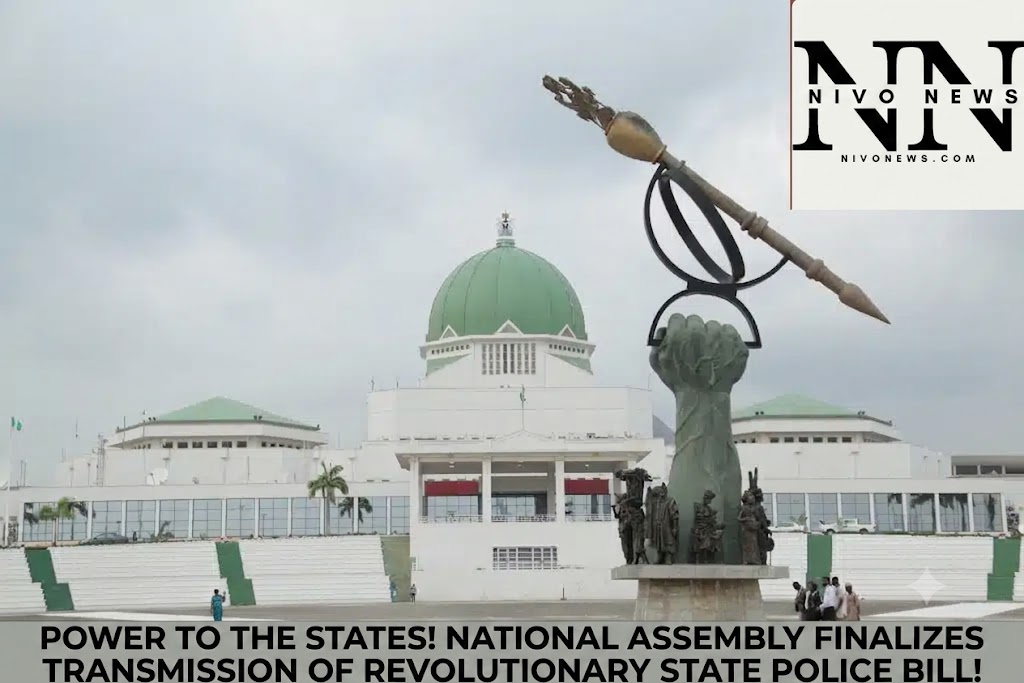
The National Assembly is scheduled to transmit the Constitution Alteration Bill regarding the creation of state police to the 36 state Houses of Assembly this week. This legislative action follows the bill’s passage in the Senate, with the next constitutional step requiring approval from at least 24 state assemblies before the bill can be forwarded to President Bola Ti....KINDLY READ THE FULL STORY HERE▶
Legislative Process and Consultation Yemi Adaramodu, Chairman of the Senate Committee on Media and Publicity, confirmed that state speakers and governors are prepared to receive the bill following their engagement during the Senate’s consideration process. Senate Leader Opeyemi Bamidele emphasized that the bill, which secured 84 out of 109 votes in the Senate—a 77.06% approval rate—is a product of rigorous, multi-tiered consultations involving the executive branch, state governors, speakers, and police leadership.
Key Provisions and Perspectives The proposed amendment aims to implement a dual policing structure:
-
Structure: States will be empowered to create and maintain their own police services.
-
National Security: The Nigeria Police Force will continue to manage national security issues, including terrorism, cybercrime, border security, and arms trafficking.
-
Safeguards: The bill includes protections against potential abuse, specifically prohibiting state police from targeting individuals or groups based on criticism of government authorities.
Stakeholder Reactions The proposal has generated varied responses from political stakeholders:
-
Supporters: Benue State Governor Hyacinth Alia lauded the passage as a significant move to enhance Nigeria’s security architecture. The Labour Party (LP) also expressed support, noting that the bill would encourage community-based policing.
-
Opponents: The Peoples Redemption Party (PRP) has expressed opposition, raising concerns regarding the timing and the credibility of the legislative process.
-
Senate Stance: Senate Leader Bamidele maintained that the initiative is driven by critical national security needs rather than political agendas, urging opposition parties to provide
nubu for his assent.
latest
“It’s Time!” Senate Leaders Defend Controversial State Police Bill Amid Growing Security Crisis!.
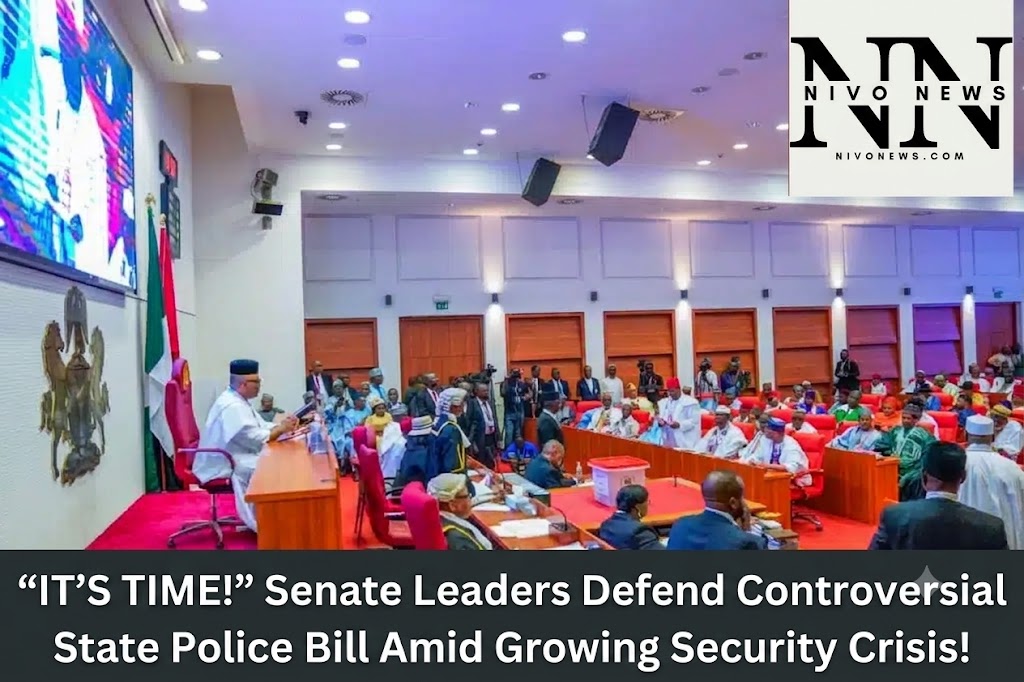
The Senate has defended its recent approval of the Constitution Alteration Bill aimed at establishing state police, emphasizing that the initiative is a response to urgent national security demands rather than political motives. The bill, which passed on Wednesday following a support vote from more than two-thirds of the senators, was framed by Senate Leader Opeyemi Bamidele on Sunday as a “child of necessity” and a result of national consensus.....KINDLY READ THE FULL STORY HERE▶
Consultation and Broad Support According to Bamidele, the proposal was developed through extensive consultations conducted by the Senate Ad-hoc Committee on the Review of the 1999 Constitution. Key aspects of the legislative process include:
-
The Senate consulted extensively with various stakeholders, including the Executive, the Nigeria Governors’ Forum (NGF), state assembly speakers, police leadership, and others.
-
At every stage of the consultation process, stakeholders largely embraced the bill, citing the stark security realities currently facing the country.
-
The bill garnered bipartisan support in both chambers of the National Assembly.
-
Opposition party members from the PDP, ADC, NDC, and Labour Party supported the bill in the interest of national stability rather than partisan concerns.
-
In the Senate, 84 out of 109 members voted in favor of the bill, representing a 77.06 percent approval rating.
Call for Constructive Engagement Bamidele urged opposition parties to move beyond disagreement and provide constructive input on national security. He noted that political differences should not prevent parties from supporting reforms intended to foster peace and stability across the nation.
-

 latest10 months ago
“Social Media Erupts As Jim Iyke Declares Rita Dominic Nollywood’s Most Beautiful”
-
 latest2 years ago
Edo Political Showdown: Oshiomhole Appears At Presidential Villa As Tinubu Hands APC Gubernatorial Flag To Okpebholo (Photos & Video)
-
 entertainment2 years ago
Love Knows No Age American Woman Defends Marriage To Young Nigerian Man “I’m Not 70”
-
 latest2 years ago
Olumide Akpata Strikes Again: Drops Killer Track, Sends Edo State Into Frenzy!(Video)
-
 Politics3 years ago
Nigerians React As Pastor Adeboye Foresees Passing Away On A Sunday After Enjoying A Satisfying Meal Of Pounded Yam
-
 latest2 years ago
FG Identifies 31 States At Risk Of Heavy Flooding In 2024: See Full List
-
 Politics3 years ago
BREAKING: Inspector-General Of Police Summons Top Police Commanders For Crucial-Security Challenges
-
 latest2 years ago
5 NYSC Corpers Perish In Fatal Road Accident Returning From Camp