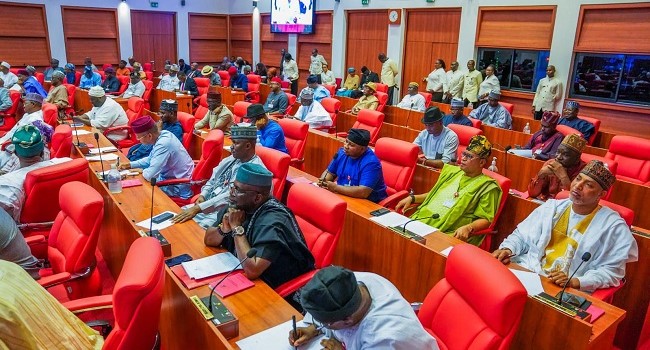
Nigerian Senate has given the executive arm of government a two-week deadline to present a detailed report on the performance of the 2024 budget before it begins work on the 2026–2028 Medium-Term Expenditure Framework (MTEF) and Fiscal Strategy Paper (FSP).....KINDLY READ THE FULL STORY HERE▶
The directive was issued during a meeting on Thursday at the National Assembly between the Senate Committee on Finance and members of President Bola Tinubu’s economic team, led by the Minister of Finance and Coordinating Minister of the Economy, Wale Edun.
Sen. Sani Musa, chairman of the Senate Committee on Finance, said the National Assembly would not consider the new fiscal framework without first evaluating how the 2024 budget has performed.
“We cannot proceed with discussions on the MTEF without a clear understanding of how the 2024 budget has been implemented,” Musa said. “We are giving the executive two weeks from today to submit a comprehensive performance report to guide our review.”
Senate Demands Accountability
The Senate stressed that the report must contain verifiable data on revenue collection, capital releases, debt servicing, and project execution across ministries and agencies. Lawmakers said the review would help determine whether budgetary targets for 2024 were met and highlight areas that need improvement.
Musa explained that the report will serve as the foundation for the preparation of the 2026–2028 MTEF, which sets the government’s spending priorities for the next three years.
“We have heard from the accountant-general and the budget office, but what we need is a documented and certified performance report that can stand public scrutiny,” he added.
Mixed Reactions from the Executive
During the closed-door session, Finance Minister Wale Edun told senators that the 2024 budget is performing “reasonably well” despite economic headwinds. He said the government is focused on improving revenue collection and ensuring fiscal stability.
However, the Director-General of the Budget Office, Tanimu Yakubu, described the last two fiscal years as “turbulent.” He cited fluctuating oil prices, high inflation, and unexpected costs under the Petroleum Industry Act as major challenges affecting budget execution.
Yakubu said oil production has been below projected levels, while rising debt service obligations have strained the country’s finances. He noted that the federal government is exploring new measures to boost non-oil revenue and manage expenditure more efficiently.
Borrowing Plans Under Scrutiny
The Senate’s demand comes just days after President Tinubu requested approval to borrow $2.35 billion from external sources to finance part of the 2025 budget deficit and refinance existing Eurobonds. The president also proposed issuing a $500 million sovereign sukuk in the international capital market to fund infrastructure projects.
Lawmakers have expressed concern about Nigeria’s growing debt profile, urging the executive to prioritize transparency and ensure borrowed funds are tied to tangible development outcomes.
Deadline and Possible Action
The Senate set October 23 as the deadline for the executive to submit the 2024 budget performance report. Lawmakers warned that failure to meet the deadline could delay consideration of the 2026–2028 MTEF and other related fiscal proposals.
Musa said the Senate’s insistence on accountability is aimed at improving budget discipline and preventing the recurrence of poor implementation that has affected past fiscal plans.
“This is not about confrontation; it’s about transparency,” he said. “Nigerians deserve to know how public funds are being managed.”
The Finance Ministry is expected to compile the report in collaboration with the Budget Office, Office of the Accountant-General, and other relevant agencies before submission.
If submitted on time, the Senate Committee on Finance will review the figures before presenting its recommendations to the full chamber for debate and possible adoption.