
Latest News
Greenwich Merchant Bank Meets ₦50bn CBN Capital Requirement


Greenwich Merchant Bank on Thursday announced that it has successfully met the ₦50 billion minimum capital requirement set by the Central Bank of Nigeria (CBN) for merchant banks, marking a major milestone in its growth and stability efforts.....KINDLY READ THE FULL STORY HERE▶
In a statement, the bank said the new capital was achieved through a rights issue and private placement exercise, which brought in an additional ₦22.6 billion in fresh funds. The development pushes Greenwich’s total paid-up capital above the CBN threshold, officially meeting the regulatory requirement.
“This achievement reflects the trust and confidence our shareholders have in our vision,” said Kayode Falowo, Chairman of Greenwich Group. “We are proud to have reached this milestone as one of the first merchant banks to comply with the new CBN directive.”
Managing Director and Chief Executive Officer, Benson Ogundeji, said the capital raise is more than a compliance exercise. According to him, it represents a strategic step to strengthen the bank’s balance sheet, expand its services, and enhance long-term sustainability.
“This capital milestone will enable us to pursue larger transactions, deliver innovative financial products, and deepen our market presence,” Ogundeji said.
CBN’s Capital Directive
The Central Bank of Nigeria had earlier directed all banks to recapitalize before March 2026 to boost the strength and stability of the financial sector. Under the new rules, merchant banks are required to maintain at least ₦50 billion in capital, while national and international commercial banks must hold ₦200 billion and ₦500 billion, respectively.
The move comes as the CBN seeks to protect the banking industry from economic shocks and ensure that lenders can support Nigeria’s development agenda. Several banks have since launched capital-raising efforts through rights issues, public offers, or mergers to meet the new thresholds.
Financial analysts say Greenwich’s early compliance puts it in a strong position ahead of the 2026 deadline. “This shows discipline and strategic foresight,” said Lagos-based financial analyst Tunde Adebayo. “Meeting the CBN benchmark this early gives Greenwich room to focus on business expansion rather than scrambling for funds later.”
Plans for Expansion
Following the capital boost, Greenwich said it plans to invest in digital banking platforms, small and medium enterprise (SME) financing, and sustainable investment products. The bank also aims to expand its wealth management and corporate advisory services, strengthening its presence in key markets.
According to the management, the additional funds will be used to improve technology infrastructure, enhance customer service, and increase operational efficiency. The bank said these efforts will allow it to offer better value to clients while contributing to economic growth.
The board added that the recapitalization aligns with Greenwich’s long-term strategy to become a leading financial institution in Nigeria and across Africa.
Strengthened Outlook
Industry observers have praised the move as a sign of confidence in the country’s banking sector. The recapitalization exercise, they said, will enhance banks’ ability to lend to businesses, support economic diversification, and build resilience in times of uncertainty.
By meeting the ₦50 billion capital mark, Greenwich joins a small group of financial institutions that have already complied with the new CBN directive. The milestone underscores the bank’s stability and readiness to compete in an evolving financial landscape.
Bottom Line:
Greenwich Merchant Bank’s success in meeting the CBN’s ₦50 billion capital requirement signals strong investor confidence and positions the institution for broader growth. As Nigeria’s banking industry braces for higher capitalization standards, Greenwich’s proactive approach may set a benchmark for others to follow.


Latest News
DOUBLE AGENT CRISIS: Melaye Fires Epic Warning Over Adedeji’s Alleged Dual Roles As Tax Boss and President’s Fundraiser!.

African Democratic Congress (ADC) chieftain Dino Melaye has strongly criticized the inclusion of Nigeria Revenue Service (NRS) Executive Chairman, Zacch Adedeji, as Deputy Director of Fundraising for President Bola Tinubu’s 2027 presidential campaign.....KINDLY READ THE FULL STORY HERE▶
Appearing as a guest on Arise Television’s Prime Time, Melaye argued that assigning campaign fundraising duties to the head of a critical national revenue agency demonstrates profound desperation and violates public service rules.
Key Objections and Legal Challenge
-
Conflict of Interest: Melaye emphasized that because the NRS chairman’s office is a Senate-confirmed position bound by statutory and public service regulations, holding a simultaneous political campaign role creates an unacceptable conflict of interest.
-
Intentions Questioned: He alleged that the arrangement suggests the initial appointment to the NRS was strategically designed to channel financial backing toward the president’s re-election bid.
-
Legal Action: Vowing to challenge the development in a court of law, Melaye stated his intention to expose what he perceives as a disregard for governance standards.
Response to Campaign List Review
Melaye also reacted to recent reports regarding the suspension and review of the campaign council roster. He claimed that the swift administrative pullback and the omission of certain names were direct reactions to public outcry and criticisms raised by opposition figures.
Would you like to explore official updates or review related portal information regarding political appointments and guidelines? You can check updates through the Arise News Portal or reference announcements via Daily Post.
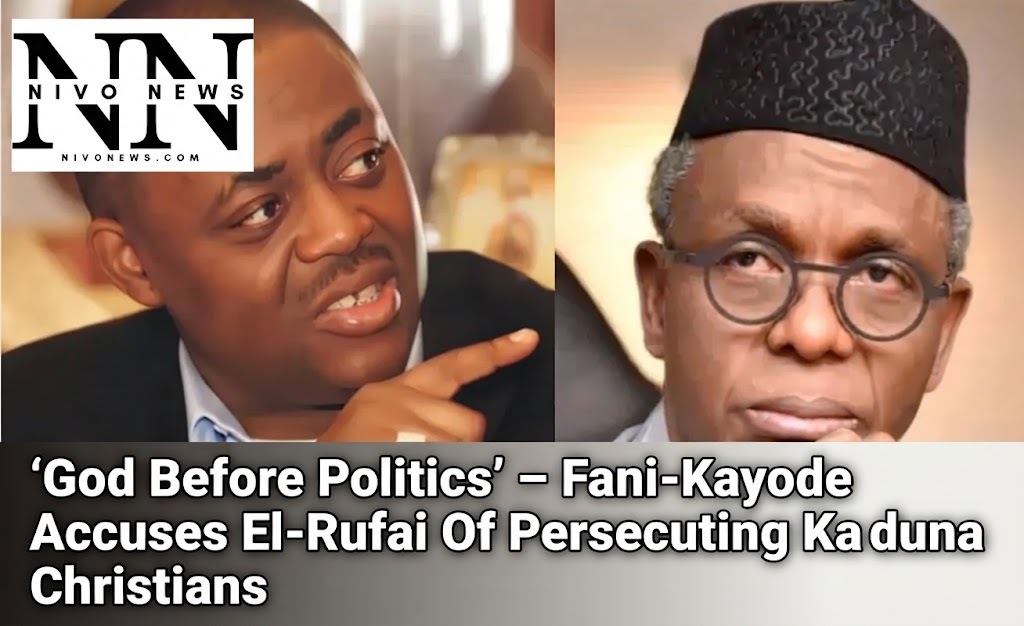
Former Aviation Minister and Nigeria’s former Ambassador to South Africa, Femi Fani-Kayode, has publicly criticized former Kaduna State Governor Nasir El-Rufai, alleging that his eight-year administration oversaw the systematic marginalization and mistreatment of Christian communities in the state.....KINDLY READ THE FULL STORY HERE▶
Addressing northern Christian leaders, Fani-Kayode claimed that during El-Rufai’s tenure, Christian communities faced violence, denial of developmental projects, and unequal allocation of resources. He asserted that Christian clergy members frequently endured insults and opposition regarding government policies, yet maintained a stance of prayer and non-violence.
Shifting his focus to the current administration, Fani-Kayode praised incumbent Governor Uba Sani—who previously served as a special adviser under El-Rufai—describing him as fair-minded and inclusive. According to Fani-Kayode, Sani had privately expressed deep concern over the previous administration’s approach toward religious groups in the state.
Furthermore, Fani-Kayode alleged that El-Rufai’s former deputy, Barnabas Bala Bantex, was also undermined and disrespected because of his faith during cabinet sessions. Concluding his remarks, Fani-Kayode emphasized that principles of fairness and spiritual duty must always transcend partisan politics.
Latest News
Inside Oshiomhole’s Warning: Why Hope Uzodinma Is The Wrong Man To Sell The APC Government to Ndigbo!
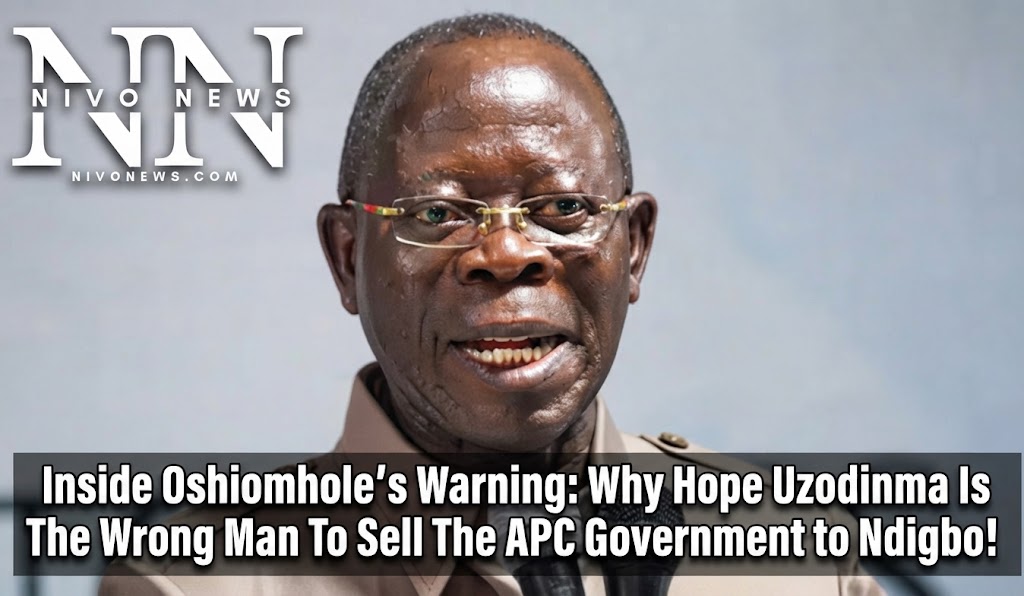
Former Edo State Governor and current Senator Adams Oshiomhole has clarified that Imo State Governor Hope Uzodimma should not bear the sole responsibility of championing President Bola Tinubu and his administration across the South-East region.....KINDLY READ THE FULL STORY HERE▶
Speaking during a television interview on Sunday, Oshiomhole addressed broader political engagement strategies aimed at strengthening ties between the Federal Government and the South-East. He noted that while Uzodimma holds a prominent position as secretary within the ruling party’s campaign structure, that role does not translate to an exclusive mandate for explaining government policies and milestones to the Igbo community.
Instead, Oshiomhole emphasized that all political leaders and governors representing the South-East share an equal duty to communicate effectively with their constituents and build strong bridges with the center.
“Please note, the fact that Hope Uzodimma is the secretary doesn’t mean he will be the one marketing President Bola Ahmed Tinubu to the Igbo nation. I believe that every other governor in the South-East also has a role to play,” Oshiomhole stated.
-

 latest1 year ago
“Social Media Erupts As Jim Iyke Declares Rita Dominic Nollywood’s Most Beautiful”
-
 latest2 years ago
Edo Political Showdown: Oshiomhole Appears At Presidential Villa As Tinubu Hands APC Gubernatorial Flag To Okpebholo (Photos & Video)
-
 entertainment2 years ago
Love Knows No Age American Woman Defends Marriage To Young Nigerian Man “I’m Not 70”
-
 latest2 years ago
Olumide Akpata Strikes Again: Drops Killer Track, Sends Edo State Into Frenzy!(Video)
-
 Politics3 years ago
Nigerians React As Pastor Adeboye Foresees Passing Away On A Sunday After Enjoying A Satisfying Meal Of Pounded Yam
-
 latest2 years ago
FG Identifies 31 States At Risk Of Heavy Flooding In 2024: See Full List
-
 Politics3 years ago
BREAKING: Inspector-General Of Police Summons Top Police Commanders For Crucial-Security Challenges
-
 latest2 years ago
5 NYSC Corpers Perish In Fatal Road Accident Returning From Camp