
Latest News
West Africa Battles Rising Drug Trafficking as Local Addiction Surges


West Africa is facing a sharp rise in drug trafficking that is not only fueling international crime but also driving addiction among local communities, according to new reports from regional authorities and international agencies.....KINDLY READ THE FULL STORY HERE▶
The region, once known mainly as a transit hub for cocaine and heroin headed to Europe and North America, is now seeing an alarming increase in local consumption. Health experts warn that the spread of drug use, especially among young people, is creating a public health emergency.
Authorities say traffickers are exploiting porous borders, weak law enforcement, and corruption to move narcotics across countries such as Nigeria, Ghana, Guinea-Bissau, and Senegal. Large shipments of cocaine from Latin America and heroin from Asia are often seized at ports and airports, but officials admit many still slip through undetected.
In Nigeria alone, the National Drug Law Enforcement Agency (NDLEA) reported seizing record amounts of cocaine and methamphetamine in recent years. Yet the agency says street-level sales of cannabis, opioids, and synthetic drugs are expanding, with addiction rising in both urban and rural areas.
“The danger is no longer just about transit,” said Amaka Okoye, a public health specialist in Lagos. “Now, drugs are staying here. They are damaging families, communities, and the economy.”
The United Nations Office on Drugs and Crime (UNODC) estimates that millions of West Africans now struggle with drug dependence, particularly with opioids like tramadol, which is widely abused in the region. The drug is cheap, accessible, and often smuggled in large quantities, making it a popular choice among young people who use it for energy or escape.
Health workers say addiction is stretching already fragile healthcare systems. Rehabilitation centers are few, treatment options are limited, and stigma prevents many from seeking help. In some rural areas, local leaders say entire villages have been affected, with farmers, traders, and students turning to drugs.
Community leaders are raising alarms. “We are losing our youth,” said Chief Musa Ibrahim from northern Nigeria. “They start with tramadol or codeine, and before long, they cannot work, they cannot study. It is destroying futures.”
The impact goes beyond health. Security experts warn that drug trafficking is also financing armed groups and criminal networks. In parts of the Sahel, profits from the trade are believed to support insurgencies and cross-border smuggling operations. This adds another layer of instability to a region already struggling with terrorism and economic hardship.
Regional governments have promised tougher action. Nigeria, Ghana, and other states have launched new operations to intercept shipments and arrest traffickers. International partners, including the European Union and United States, have also pledged support through training and intelligence sharing.
But experts say enforcement alone will not solve the problem. “We need prevention, education, and treatment,” said Dr. Kwame Mensah, a Ghanaian addiction counselor. “If young people see no jobs and no hope, drugs will always find them. This is a social crisis as much as a security crisis.”
Analysts argue that tackling the issue requires cooperation across borders, stronger institutions, and investment in public health. Without urgent action, they warn, West Africa could shift from being a corridor for drugs to becoming a region deeply entrenched in addiction.
The crisis highlights a painful irony: while international traffickers profit from West Africa’s position on the global drug map, it is local communities that pay the highest price.
For now, health workers and community leaders say the most urgent need is awareness. “We must talk about it, educate our children, and support those struggling,” said Okoye. “This is not just about crime. It is about saving lives.”


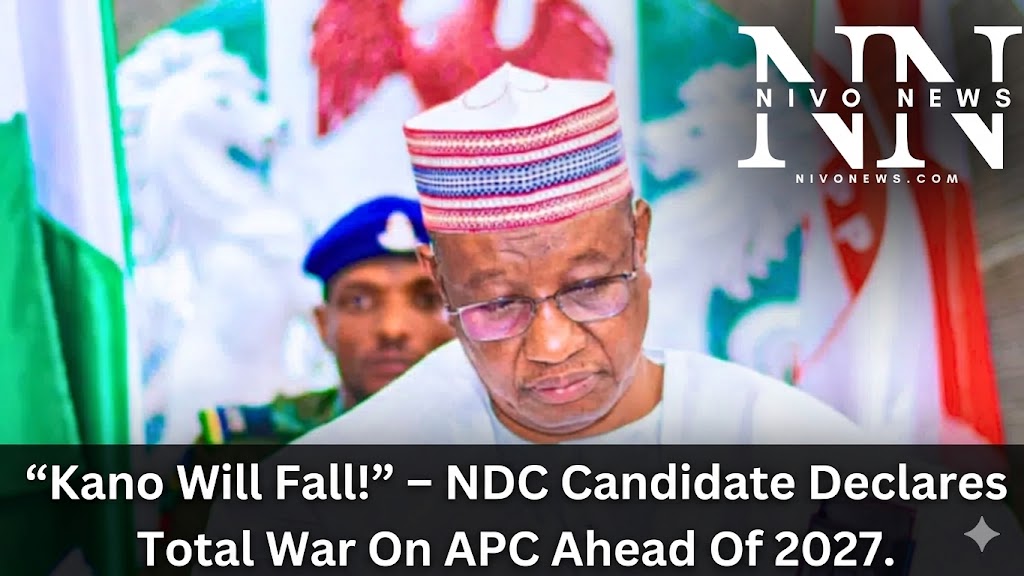
Aminu Abdulsalam Gwarzo, the Nigerian Democratic Congress (NDC) governorship candidate for Kano State, has declared his firm belief that his party will defeat the incumbent administration in the 2027 elections. During a recent event to affirm his candidacy, the former deputy governor emphasized the unity between the NDC and the Kwankwasiyya movement, asserting their shared determination to lead Kano State in a new direction.....KINDLY READ THE FULL STORY HERE▶
Gwarzo reaffirmed the movement’s unwavering commitment to the ideals of its leader, Rabiu Musa Kwankwaso, stating, “We are the followers of Kwankwaso. We are here, and we continue to pray day and night. By the will of Allah, this government will be defeated in a single stroke.” He pointed to the palpable enthusiasm within the movement as clear evidence that democratic change is well within reach.
Looking toward the upcoming election, Gwarzo outlined a strategy centered on robust grassroots mobilization and consistent engagement with the electorate. He also encouraged his supporters to maintain peace and adhere to the law as the political climate heats up. Finally, he called on the people of Kano to critically evaluate the performance of their political leaders to ensure they are prepared to make informed choices at the ballot box.
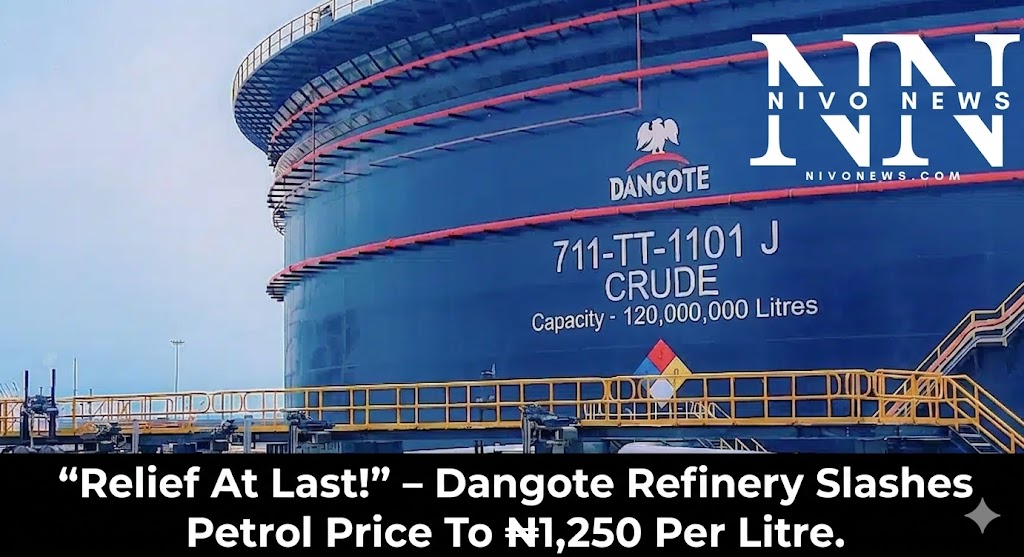
The Dangote Petroleum Refinery has adjusted its gantry price for Premium Motor Spirit (petrol), lowering it from ₦1,275 to ₦1,250 per litre, marking a two per cent reduction. This price shift is attributed to a decline in international crude oil prices, which serve as the refinery’s primary feedstock. An official from the refinery noted that such adjustments are expected in a deregulated market and emphasized that the company will continue to calibrate prices based on evolving market conditions. Despite this move, current retail prices at many filling stations across Nigeria remain above ₦1,350 per litre, with costs varying by location and marketer.Beyond pricing, the refinery has been credited as a key driver of Nigeria’s improving economic outlook. S&P Global Ratings recently upgraded the country’s long-term foreign- and local-currency sovereign credit ratings from “B-” to “B,” citing factors such as stronger economic growth, increased oil production, and improved external balances. S&P specifically highlighted the operational ramp-up of the Dangote refinery’s 650,000-barrel-per-day facility as a significant contributor to the nation’s enhanced balance-of-payments position and overall economic resilience.....KINDLY READ THE FULL STORY HERE▶
Latest News
Political Grudge Match: Ganduje Mocks Kwankwaso, Declares Him His Former “Political Boy”!.

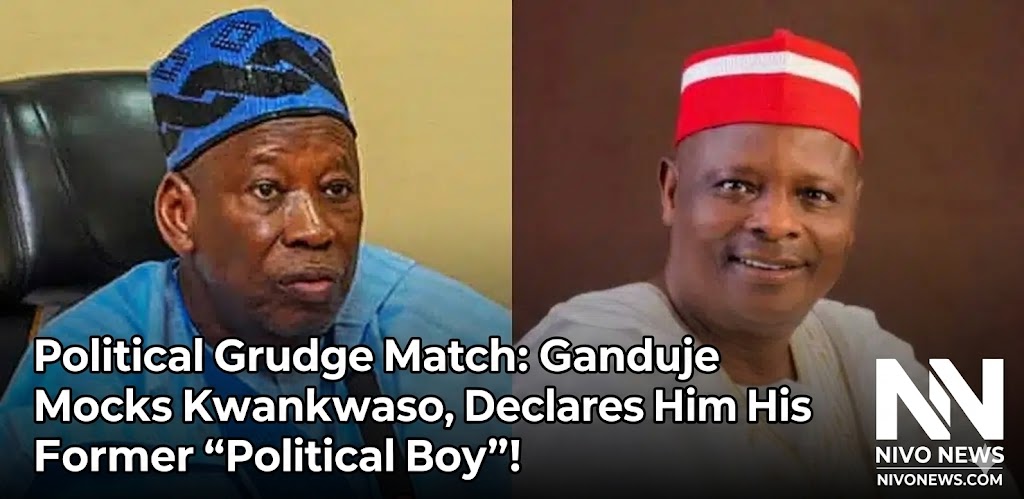
A political war of words has erupted between former APC National Chairman Abdullahi Umar Ganduje and former presidential candidate Rabiu Musa Kwankwaso. The friction began when Kwankwaso, speaking at his Kano residence, insisted that prominent politicians—including Ganduje—owe their political rise to his mentorship and cannot deny their past loyalty to him. Ganduje, currently performing the Hajj pilgrimage in Saudi Arabia, responded through his chief of staff, Muhammad Garba, by asserting that Kwankwaso was actually his own protégé. Ganduje highlighted his role in Kwankwaso’s early career, including his support during Kwankwaso’s rise to the House of Representatives and his decision to step down as a gubernatorial candidate in 1998 to serve as Kwankwaso’s deputy. Ultimately, Ganduje advocated for moving away from “godfather” labels to focus on effective leadership and peace in Kano.....KINDLY READ THE FULL STORY HERE▶
Option 2: Concise Summary
Following Rabiu Musa Kwankwaso’s claims that top Kano politicians were once his “political boys,” Abdullahi Umar Ganduje has fired back, asserting he was actually the mentor in their relationship. While Kwankwaso insisted that his former allies owe their success to his political structure, Ganduje countered by citing his own past support for Kwankwaso’s career, including his sacrifice during the 1998 Kano governorship race. Furthermore, Ganduje requested respect for the office of current Governor Abba Kabir Yusuf and urged Kano’s political class to prioritize unity over divisive rhetoric regarding past hierarchies.
-

 latest9 months ago
“Social Media Erupts As Jim Iyke Declares Rita Dominic Nollywood’s Most Beautiful”
-
 latest2 years ago
Edo Political Showdown: Oshiomhole Appears At Presidential Villa As Tinubu Hands APC Gubernatorial Flag To Okpebholo (Photos & Video)
-
 entertainment2 years ago
Love Knows No Age American Woman Defends Marriage To Young Nigerian Man “I’m Not 70”
-
 latest2 years ago
Olumide Akpata Strikes Again: Drops Killer Track, Sends Edo State Into Frenzy!(Video)
-
 Politics2 years ago
Nigerians React As Pastor Adeboye Foresees Passing Away On A Sunday After Enjoying A Satisfying Meal Of Pounded Yam
-
 latest2 years ago
FG Identifies 31 States At Risk Of Heavy Flooding In 2024: See Full List
-
 Politics2 years ago
BREAKING: Inspector-General Of Police Summons Top Police Commanders For Crucial-Security Challenges
-
 latest2 years ago
5 NYSC Corpers Perish In Fatal Road Accident Returning From Camp