
latest
Nigeria Ranks Among World’s Poorest in Trade, Experts Warn


Nigeria ranks among the poorest-performing countries in global trade, according to experts who say weak infrastructure, low production capacity and heavy reliance on oil exports continue to limit Africa’s largest economy.....KINDLY READ THE FULL STORY HERE▶
Analysts argue that Nigeria has failed to fully benefit from international trade despite its size, natural resources and large population of more than 200 million. They warn that unless urgent reforms are made, the country could continue to lose opportunities for growth and job creation.
According to a recent report from trade policy researchers, Nigeria lags far behind other emerging economies in manufacturing, export diversification and competitiveness. The country still relies heavily on crude oil for about 90 percent of its export earnings, leaving it vulnerable to global price swings.
“Trade is one of the strongest drivers of economic development, but Nigeria has not positioned itself to take advantage of it,” said Lagos-based economist Emmanuel Ojo. “We remain a consumer nation, importing more than we produce, and this is not sustainable.”
Experts point to poor infrastructure as a major obstacle. Nigeria faces chronic power shortages, inadequate transport networks and congested ports, all of which raise the cost of doing business. In addition, inconsistent trade policies and high tariffs discourage local industries from competing internationally.
The World Bank and other global institutions have repeatedly noted Nigeria’s weak performance in non-oil exports. Agricultural goods such as cocoa, sesame seeds and cashew nuts make up only a small fraction of earnings compared to oil. Even these products often suffer from quality control problems and poor processing facilities.
Nigeria’s position contrasts sharply with countries like Vietnam and Bangladesh, which have built strong export sectors in textiles, electronics and agriculture despite having smaller economies. Experts say Nigeria could learn from their strategies, especially in creating export zones, investing in value-added industries and building trade-friendly infrastructure.
“The problem is not lack of potential,” said Ojo. “Nigeria has fertile land, a young workforce and access to regional markets. But the system is weak, and without reforms, the gap with other countries will only grow wider.”
The African Continental Free Trade Area (AfCFTA), which began implementation in 2021, offers new chances for Nigeria to expand exports within Africa. But experts say the country has been slow to take advantage of the agreement due to domestic challenges and unclear trade strategies.
Some Nigerian business leaders also argue that government policies often favor imports over local production. They say heavy dependence on imported goods undermines industries such as textiles, food processing and machinery manufacturing.
“Every time you go to the market, most products are from China, India or Europe,” said Abuja trader Aisha Bello. “Nigerian-made goods are few, and when they exist, they are more expensive because producers face so many challenges.”
The government has acknowledged the problem and pledged to diversify the economy. Programs to support agriculture, small businesses and local manufacturing have been launched, but progress remains slow. Inflation, currency instability and insecurity in parts of the country have further weakened trade performance.
Economists warn that without bold reforms, Nigeria may continue to miss out on billions of dollars in trade opportunities. They call for investment in roads, railways and energy, as well as policies that encourage innovation and reduce bureaucracy.
“Nigeria cannot afford to remain at the bottom of global trade rankings,” said Ojo. “If we are serious about lifting people out of poverty, creating jobs and becoming a strong economy, trade must be at the center of national policy.”
For now, Nigeria’s trade outlook remains uncertain. The question is whether Africa’s most populous country can turn its potential into real economic power — or remain stuck as a nation rich in resources but poor in trade.


entertainment
COURTROOM CHAOS: Security Scramble As Enraged Mob Brutally Attacks Chidimma Adetshina Outside South African Courthouse!.


Security personnel had to step in following a hostile incident involving Miss Universe Nigeria 2024, Chidimma Adetshina, outside the Cape Town Regional Court in South Africa.....KINDLY READ THE FULL STORY HERE▶
-
-
Court Proceedings: Adetshina appeared in court for ongoing hearings related to a legal challenge brought by South Africa’s Department of Home Affairs, which alleges that she lacks valid immigration status.
-
The Incident: According to viral footage, the beauty queen was shoved and harassed by chanting onlookers as she exited the courthouse before security intervened to clear a path.
-
Legal Stance: Adetshina maintains that she was born in South Africa and is actively contesting the deportation attempts through legal channels.
-
latest
EL-RUFAI’S BATTLEGROUND: ADC Chieftain Demands Immediate Action From Northern Elders In Shocking Statement!.
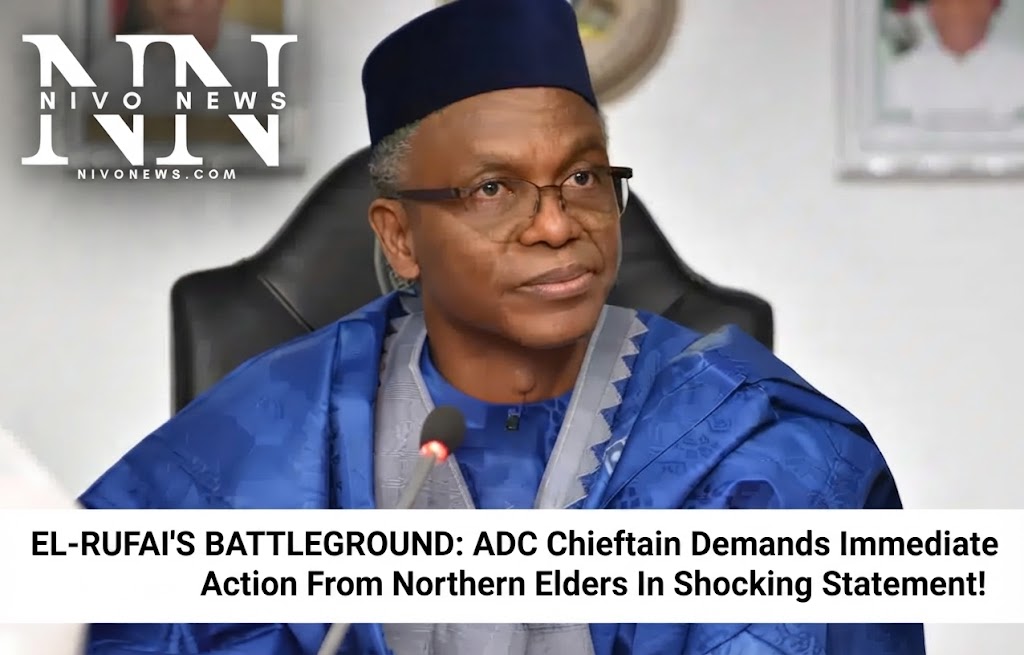
Former North-West National Vice Chairman of the African Democratic Congress (ADC), Jafar Ibrahim Sani, has called upon Northern elders and political leaders to advocate for strict adherence to due process regarding the legal situation facing former Kaduna State Governor Nasir El-Rufai.....KINDLY READ THE FULL STORY HERE▶
-
-
Call for Solidarity: In a statement titled “El-Rufai, The North, Our Elders and the Test of Loyalty,” Sani criticized political stakeholders who abandon their associates during times of adversity, emphasizing that true loyalty is tested when challenges arise.
-
Emphasis on Fairness: While acknowledging that opinions on El-Rufai’s public life vary, Sani maintained that personal or political disagreements should not compromise the pursuit of fairness and the rule of law.
-
Pursuit of Justice: He urged stakeholders to support a legal process that ensures transparency, noting that a fair trial should ultimately follow whatever outcome the courts lawfully determine.
-
latest
TACTICAL TAKEOVER: US Military Lands In Bauchi To Launch High-Stakes Drone Training For Nigerian Troops!.
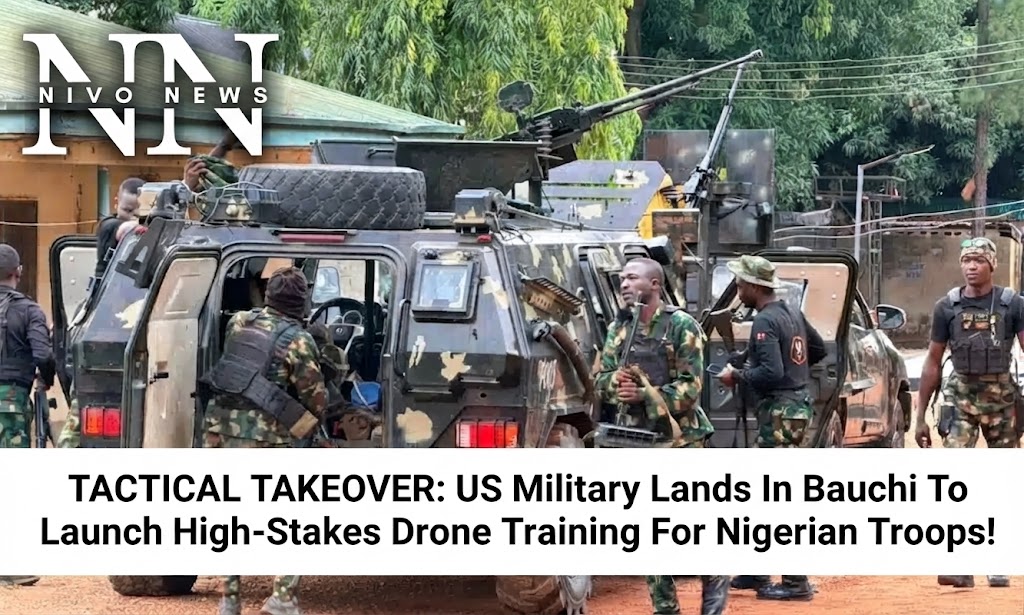
The United States Africa Command (AFRICOM) has announced a collaborative military training initiative with Nigerian forces in Bauchi State, designed to enhance security cooperation, combat readiness, and bilateral relations between the two nations.....KINDLY READ THE FULL STORY HERE▶
-
-
Scope of Training: According to an AFRICOM report, the program covers several key areas chosen by Nigerian leadership, including small-unit tactics, weapons familiarization, explosive ordnance disposal, water treatment and testing, camouflage techniques, and Combat Lifesaver/Tactical Combat Casualty Care instruction.
-
Unmanned Aircraft Systems (UAS): The drone training drew significant focus, with U.S. intelligence personnel guiding members of the Nigerian Air Force Special Forces Regiment through both instructional sessions and hands-on operational practice.
-
Strengthening Interoperability: Officials highlighted that the joint exercises extend beyond technical skill development, fostering vital working relationships and tactical cooperation at the foundational levels of both militaries.
-


-

 latest12 months ago
“Social Media Erupts As Jim Iyke Declares Rita Dominic Nollywood’s Most Beautiful”
-
 latest2 years ago
Edo Political Showdown: Oshiomhole Appears At Presidential Villa As Tinubu Hands APC Gubernatorial Flag To Okpebholo (Photos & Video)
-
 entertainment2 years ago
Love Knows No Age American Woman Defends Marriage To Young Nigerian Man “I’m Not 70”
-
 latest2 years ago
Olumide Akpata Strikes Again: Drops Killer Track, Sends Edo State Into Frenzy!(Video)
-
 Politics3 years ago
Nigerians React As Pastor Adeboye Foresees Passing Away On A Sunday After Enjoying A Satisfying Meal Of Pounded Yam
-
 latest2 years ago
FG Identifies 31 States At Risk Of Heavy Flooding In 2024: See Full List
-
 Politics3 years ago
BREAKING: Inspector-General Of Police Summons Top Police Commanders For Crucial-Security Challenges
-
 latest2 years ago
5 NYSC Corpers Perish In Fatal Road Accident Returning From Camp