
Latest News
Graves Ransacked, Peace Shattered: Fresh Wave of Jukun-Tiv Carnage Stuns Nigeria

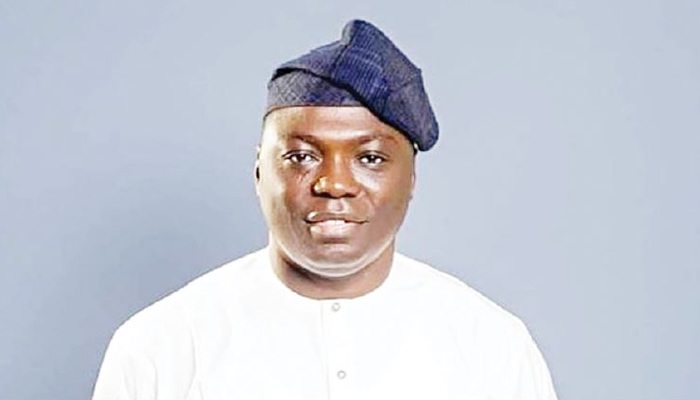
He escaped the violence but died in exile—longing for home. Yet even in death, peace eluded him. Just hours after his burial in Wukari, Taraba State, the remains of retired school director Michael Usange were exhumed and burned by suspected ethnic militias, a horrifying act that has sent shockwaves across the nation, The PUNCH reports.....KINDLY READ THE FULL STORY HERE▶
They set my father on fire,” Joseph Usange cried, his grief raw and unrestrained.
In a country where the living already face relentless insecurity, the desecration of graves in Taraba reveals an even deeper tragedy—peace is now denied to the dead.
On June 28, 2025, a quiet funeral procession made its way to Chiina, a sleepy ancestral village along the Wukari–Chinkai road. The mourners had gathered to lay to rest their patriarch, Mr. Michael Usange—a respected retired educationist and displaced Tiv elder who had died in Kyado, Benue State, after six years in exile.
A former Director at the Taraba State Teaching Service Board, Usange had devoted his life to education and public service. But his life was upended in 2019 when the Jukun-Tiv conflict engulfed his community. Forced to flee with nothing, he sought refuge in Benue, carrying with him the heartbreak of displacement.
His final wish, according to his family, was to be buried in his ancestral homeland—a wish that, though fulfilled, was soon cruelly violated. Not long after he was laid to rest, suspected attackers stormed the grave site, exhumed his body, and set it ablaze.
What was meant to be a solemn farewell became a gruesome spectacle—a scene of unthinkable horror for the Usange family and the Chiina community.
“We only wanted to bury our father,” said Joseph Usange, his voice cracking with emotion. “We pleaded for peace, but they came with fire and hate. They treated our father like garbage.”
The desecration has reopened deep wounds and sparked widespread outrage. It is a haunting reminder of how far the decades-long Jukun-Tiv conflict has festered—mutating into an unrelenting cycle of violence and retribution, where not even the dead are spared.
The Jukun-Tiv crisis, rooted in historical grievances over land, power, and identity, has plagued Taraba for decades. The central issue remains a bitter dispute over “indigene” status—Jukun claim to be the original inhabitants of Wukari, while the Tiv assert their long-standing residence and equal rights.
The crisis is fuelled by marginalisation, political exclusion, and unresolved colonial-era divisions. The Tiv have long felt sidelined in Taraba’s governance and economic structures. These grievances are deepened by the perception that key institutions favour the Jukun, who historically aligned with the Northern establishment, while the Tiv gravitated towards southern political blocs.
Major clashes were recorded in 1959, 1964, 1976, 1991–1992, and again in 2000–2002. The 2019–2020 violence, which forced Usange into exile, erupted in Kente on April 1, 2019, and marked one of the deadliest chapters in recent years—escalated by modern weaponry and entrenched hate.
Despite decades of bloodshed and failed peace efforts, little has been done to address the roots of the conflict. Now, even the sanctity of the grave is no longer respected.
The desecration of Michael Usange’s remains is not just an attack on one man—it is a grotesque symbol of a nation’s failure to protect both its living and its dead. And unless urgent reconciliation and justice take hold, the cycle of vengeance will only dig deeper, leaving no rest for the dead—and no hope for the living.

....KINDLY READ THE FULL STORY HERE▶
He brings more than a party membership card—he brings people, structure, credibility and a proven record of empowerment.
With 109,823 votes secured in 2023 and deep grassroots goodwill across Kwara Central, Senator Saliu Mustapha represents the kind of independent electoral strength President Bola Ahmed Tinubu needs within the Rainbow Coalition.
His mission is clear: Tinubu for a second term—and Saliu Mustapha for another term representing Kwara Central.

A participant of Pastor Jerry Eze’s popular online prayer broadcast, New Season Prophetic Prayers and Declarations (NSPPD), named Sandra Okpara, has taken to social media to appeal for help in recovering a mistaken bank transfer.....KINDLY READ THE FULL STORY HERE▶
In a viral video detailing the incident, Sandra explained that hours after participating in the morning service, taking communion, and paying her regular offering, she attempted to fund a voucher purchase by transferring N1,640,200 to her personal Zenith Bank account. Instead, the heavy sum was erroneously sent to the church account.
Making a public appeal to anyone with contacts at Streams of Joy International, the single mother of two stressed that the funds do not belong to her and that the rightful owners have already begun demanding the money.
Esther Umoh, a media aide to Nigeria Democratic Congress (NDC) presidential candidate Peter Obi, has strongly refuted claims that peaceful protesters were behind the recent violent assault on their convoy in Benue State. Speaking out via a statement on her official X account, Umoh alleged that the Special Assistant on Youth to the Benue State Governor was actively embedded with the thugs who launched the attack along the Gboko-Makurdi Expressway in Makurdi. According to her account, the incident unfolded shortly after Obi touched down in the state capital while en route to Yelwata to extend condolences and assess communities devastated by the deadly June 13, 2025 attack.....KINDLY READ THE FULL STORY HERE▶
-

 latest1 year ago
“Social Media Erupts As Jim Iyke Declares Rita Dominic Nollywood’s Most Beautiful”
-
 latest3 years ago
Edo Political Showdown: Oshiomhole Appears At Presidential Villa As Tinubu Hands APC Gubernatorial Flag To Okpebholo (Photos & Video)
-
 entertainment2 years ago
Love Knows No Age American Woman Defends Marriage To Young Nigerian Man “I’m Not 70”
-
 latest3 years ago
Olumide Akpata Strikes Again: Drops Killer Track, Sends Edo State Into Frenzy!(Video)
-
 Politics3 years ago
Nigerians React As Pastor Adeboye Foresees Passing Away On A Sunday After Enjoying A Satisfying Meal Of Pounded Yam
-
 latest2 years ago
FG Identifies 31 States At Risk Of Heavy Flooding In 2024: See Full List
-
 Politics3 years ago
BREAKING: Inspector-General Of Police Summons Top Police Commanders For Crucial-Security Challenges
-
 latest3 years ago
5 NYSC Corpers Perish In Fatal Road Accident Returning From Camp