
Economy
Nigerian Commercial Banks Face $1 Billion Loan Losses In First Half Of 2023 Amid Inflation And Rate Hikes


Nigerian Commercial Banks Face $1 Billion Loan Losses In First Half Of 2023 Amid Inflation And Rate Hikes....KINDLY READ THE FULL STORY HERE▶

Nigeria’s leading commercial banks have grappled with a staggering estimated $1 billion in loan losses during the first half of 2023, marking a substantial surge compared to the same period the previous year. This surge is largely attributed to the challenges of rising inflation and interest rate hikes initiated by the Central Bank of Nigeria.
Despite these macroeconomic hurdles, banks like UBA and GTCO have witnessed over 1,000% year-on-year growth in impairment charges, impacting their core lending business and reducing their net interest income.
Nevertheless, banks have managed to maintain non-performing loan ratios within regulatory limits, primarily due to a significant increase in non-interest income generated from forex revaluations.
The figures reveal that Nigeria’s leading commercial banks collectively faced estimated loan losses exceeding $1 billion during the first two quarters of 2023. This information is drawn from the recently released financial statements for the first half of the year.
In local currency terms, these losses surpass N730 billion for the first six months of the year, significantly overshadowing the N163 billion incurred during the same period in the preceding year.
It’s important to note that Access Bank, Nigeria’s largest financial institution by total assets, has yet to release its audited accounts for the first half of the year.
The escalation in impairments is occurring against a backdrop of increasing inflationary pressures and consequent interest rate hikes. To combat soaring inflation, the Central Bank of Nigeria (CBN) has substantially raised its key interest rates, reaching a 15-year peak of 18.75% from 11.5% in December 2021.
Market experts widely anticipate another interest rate hike at the rescheduled Monetary Policy Committee (MPC) meeting, originally slated for September 25 and 26, 2023.
As the CBN continues its proactive measures to combat inflation, the cost of borrowing has surged. This inflationary environment has made servicing loans more expensive, raising the likelihood of borrower defaults.
In response to the heightened risk of customer defaults, banks have had to increase their impairment charges as a buffer against potential future losses. During the first half of 2023, impairment charges on loans and advances across banks saw a substantial year-on-year surge. UBA and GTCO both recorded over 1,000% year-on-year growth in impairment charges for the same period, with loan impairments of N164.2 billion and N153.9 billion, respectively.
GTB attributed these mounting losses to “weakening macroeconomic conditions” and losses incurred from investments in Ghana’s Eurobonds.
The substantial increase in impairment charges on loans and advances underscores a significant concern: banks are bracing themselves for more substantial losses from their core revenue stream, which is lending to customers. These provisions have cast a shadow over the banks’ income generated from their core business line, reducing their net interest income after impairment charges.
Zenith Bank, for instance, outlined the challenge, indicating that high impairment levels and elevated interest expenses due to inflation have impacted its net interest margin (NIM), which dropped from 7.1% to 5.9% year-on-year.
Nonetheless, commercial banks have maintained non-performing loan ratios within regulatory limits. GTB, Zenith Bank, UBA, and FBN Holdings reported NPL ratios of 4.6%, 3.9%, 3.3%, and 4.3%, respectively.
These more favorable ratios have been bolstered by a substantial increase in non-interest income, particularly from forex positions. Four banks within the FUGAZ group (excluding Access Bank) reported a combined N1.3 trillion from forex revaluation gains, primarily from swaps and non-deliverable forwards, a significant leap from just N16 billion during the same period in 2022.
Some financial analysts have suggested that the surge in loan impairments may be a strategic move by banks to fast-track loan provisioning, which can now be offset by the gains from forex revaluations.

Despite a significant drop in global crude oil prices—with Brent falling to $73.14 and WTI to $69.85—petrol prices in Nigeria remain stubbornly high. While global markets have stabilized following the US-Iran conflict, domestic pump prices have barely budged, hovering between ₦1,200 and ₦1,300 per litre.....KINDLY READ THE FULL STORY HERE▶
Although industry insiders argue that ex-depot prices should be closer to ₦700, experts warn that a direct price drop is unlikely. Dr. Ayodele Oni, an oil and gas analyst, explains that in a deregulated market, the naira’s exchange rate is just as critical as the price of crude. He emphasizes that while falling crude prices help, the cost of petrol will only truly stabilize if the naira remains strong, as refined product imports are dollar-denominated. Consequently, relief for the average Nigerian may remain elusive unless both crude prices and the currency improve simultaneously.
Option 2: Accessible and Direct (Best for blogs or general reading)
Global oil prices are nearing pre-conflict levels, but Nigerians aren’t seeing the expected relief at the pump. Even though international oil benchmarks have dropped significantly since the US-Iran tensions cooled, local fuel prices remain stuck at ₦1,200 to ₦1,300 per litre.
Many marketers believe pump prices should be much lower, suggesting a price point closer to ₦700 per litre given current market conditions. However, analysts caution that it isn’t that simple. Because Nigeria’s fuel market is deregulated and reliant on imported refined products, the value of the naira is a major factor. Essentially, even if the price of crude oil falls, the cost of petrol will stay high as long as the dollar remains expensive against the naira. For now, experts believe that significant price relief depends as much on currency stability as it does on global oil trends.
Key Takeaways (Bullet Points)
-
The Disconnect: Global oil prices have returned to pre-conflict levels, yet domestic petrol prices remain high (₦1,200–₦1,300 per litre).
-
The Expectation: Marketers and the public believe current crude prices warrant a drop to around ₦700 per litre at the depot level.
-
The Complication: Experts note that the deregulation of the sector means the naira-to-dollar exchange rate is now a more powerful driver of pump prices than global crude costs alone.
-
The Outlook: Relief for consumers is unlikely to happen based on oil prices alone; it requires a combination of lower crude costs and a more stable naira.
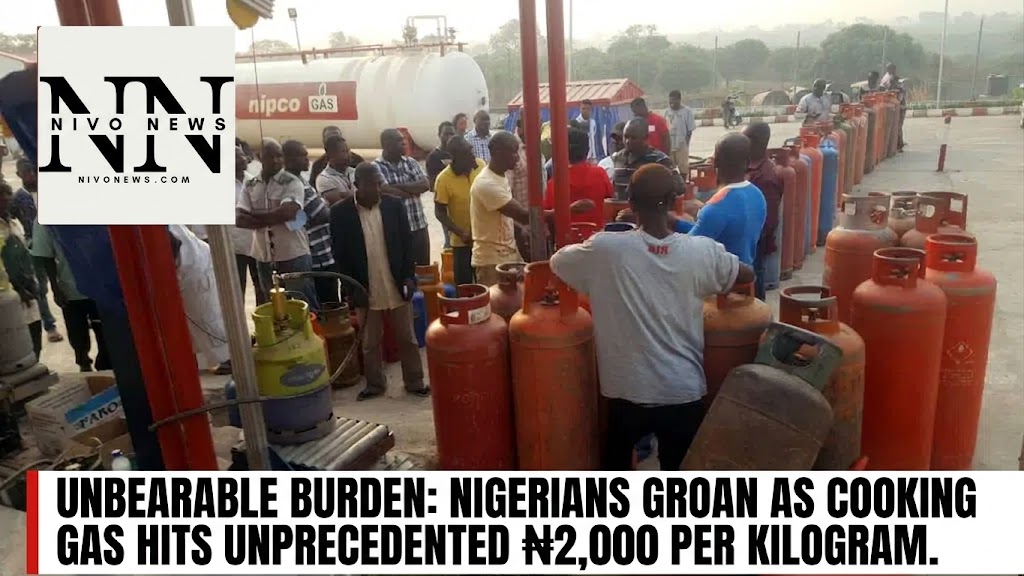
Despite a significant shift toward domestic production and a drop in imports, the price of Liquefied Petroleum Gas (LPG) has surged to ₦2,000 per kilogram in various parts of Nigeria. Data from the Nigerian Midstream and Downstream Petroleum Regulatory Authority (NMDPRA) indicates that local facilities—including the Dangote Petroleum Refinery—have become the primary suppliers of LPG between April 2025 and April 2026, with daily domestic supply reaching 4,500 tonnes by April 2026. Conversely, imports have plummeted, falling from 1,600 tonnes per day in November 2025 to just 200 tonnes per day by March 2026.....KINDLY READ THE FULL STORY HERE▶
Market Challenges and Consumer Hardship
Even with consistent local output, consumers are facing prohibitive costs and localized shortages, leading many households to abandon gas in favor of charcoal and firewood. Key issues contributing to the crisis include:
-
Supply Chain Barriers: Marketers report that sourcing the product has become increasingly difficult, and they are now paying between ₦25.2 million and ₦26.2 million for 20 metric tonnes of LPG.
-
Economic Impact: The Nigerian Association of Liquefied Petroleum Gas Marketers (NALPGAM) stated that these high costs are causing severe hardship for families, food vendors, and small businesses.
-
Policy Setbacks: Stakeholders warn that these trends threaten to reverse years of progress in promoting clean energy adoption and may lead to increased environmental damage.
Infrastructure Progress
While market prices remain high, the Nigerian Gas Infrastructure Company reports that several critical projects designed to improve gas transportation are nearing completion. As of the latest data:
-
The Ajaokuta-Kaduna-Kano (AKK) Gas Pipeline Project is 93.40% complete.
-
The OB3 River Niger Crossing stands at 93.88% completion.
-
The ELPS Midline Compressor Project has reached 94.45% completion.
-
The Odidi-Warri Expansion Project is 70.28% complete, while the Escravos-Odidi project is in its early stages at 17.49%.
Despite this infrastructure progress, industry experts emphasize that addressing distribution bottlenecks remains essential, as increased domestic production alone has so far failed to lower retail prices for the average Nigerian.
Is there a specific aspect of this situation—such as the infrastructure projects or the marketers’ stance—that you would like to explore further?
Economy
REVOLUTIONIZING THE SKIES: How Nigeria’s New $7 Billion AfDB Deal Will Transform Air Travel Forever!.

Nigeria has officially signed a Letter of Intent with the African Development Bank (AfDB) to advance aviation development across the continent. Minister of Aviation and Aerospace Development, Festus Keyamo, formalized the agreement during a dialogue in Brazzaville, Congo, where he served as the African Champion of the AfDB’s Integrated Aviation Transformation Programme.....KINDLY READ THE FULL STORY HERE▶
During the session, Minister Keyamo showcased President Bola Tinubu’s “Renewed Hope Agenda,” emphasizing the need for capital to support key infrastructure and the newly established Nigeria Aircraft Leasing Company. To attract this investment, the Minister highlighted Nigeria’s recent regulatory reforms, including the domestication of the Cape Town Convention and updates to insurance frameworks. In response, AfDB President Dr. Sidi Ould Tah pledged the bank’s support for the programme, signaling a shared commitment to strengthening aviation finance and infrastructure throughout Africa.
Nigeria Moves to Boost Aviation Sector Through AfDB Partnership
Nigeria has taken a major step toward modernizing its aviation industry by signing a Letter of Intent with the African Development Bank (AfDB). Aviation Minister Festus Keyamo, representing the country in Brazzaville, Congo, utilized the platform to present Nigeria’s aviation roadmap under President Tinubu’s “Renewed Hope Agenda.”
A core focus of the discussion was the Nigeria Aircraft Leasing Company, which is expected to improve aircraft financing for local operators. Minister Keyamo assured stakeholders that Nigeria is ready for increased investment, citing significant reforms such as the domestication of the Cape Town Convention and modernized insurance policies. The AfDB has signaled strong support for these initiatives, agreeing to collaborate on the Integrated Aviation Transformation Programme to drive sustainable growth for Nigeria and the wider African aviation market.
Option 3: Short & Punchy (Best for social media or newsletters)
Nigeria is accelerating its aviation growth through a new partnership with the African Development Bank (AfDB). Aviation Minister Festus Keyamo recently signed a Letter of Intent in Brazzaville to unlock funding for the sector, specifically targeting the new Nigeria Aircraft Leasing Company. By implementing key reforms—like the domestication of the Cape Town Convention—Nigeria is positioning itself as a hub for aviation investment. The AfDB has officially pledged its support, marking a key milestone in efforts to modernize air travel infrastructure across the African continent
-

 latest1 year ago
“Social Media Erupts As Jim Iyke Declares Rita Dominic Nollywood’s Most Beautiful”
-
 latest3 years ago
Edo Political Showdown: Oshiomhole Appears At Presidential Villa As Tinubu Hands APC Gubernatorial Flag To Okpebholo (Photos & Video)
-
 entertainment3 years ago
Love Knows No Age American Woman Defends Marriage To Young Nigerian Man “I’m Not 70”
-
 latest3 years ago
Olumide Akpata Strikes Again: Drops Killer Track, Sends Edo State Into Frenzy!(Video)
-
 Politics3 years ago
Nigerians React As Pastor Adeboye Foresees Passing Away On A Sunday After Enjoying A Satisfying Meal Of Pounded Yam
-
 latest3 years ago
FG Identifies 31 States At Risk Of Heavy Flooding In 2024: See Full List
-
 Politics3 years ago
BREAKING: Inspector-General Of Police Summons Top Police Commanders For Crucial-Security Challenges
-
 latest3 years ago
5 NYSC Corpers Perish In Fatal Road Accident Returning From Camp