
Crime
Police Arrest Three Kidnappers Over ₦6.9m Ransom and Victim’s Murder


Nigerian police have arrested three suspected kidnappers accused of collecting a ₦6.9 million ransom and later killing their victim, authorities said Saturday.....KINDLY READ THE FULL STORY HERE▶
The suspects were captured after an intelligence-led operation that tracked them to their hideout in northern Nigeria. Police said the men confessed to abducting the victim, collecting ransom money from the family, and then murdering the hostage despite receiving payment.
Force Public Relations Officer Olumuyiwa Adejobi said in a statement that investigators are working to recover the ransom funds and bring others involved in the crime to justice.
“The suspects thought they could escape the law after committing such a cruel act, but our officers traced their movements and arrested them,” Adejobi said. “This case is a reminder that kidnapping for ransom will not go unpunished in Nigeria.”
According to police, the incident began when the victim, whose name was not released for security reasons, was seized at night by armed men. The kidnappers later contacted the family and demanded millions of naira in exchange for the victim’s safe release.
Relatives of the victim raised ₦6.9 million and delivered it to the suspects as instructed. But instead of freeing the hostage, the kidnappers allegedly killed the victim and fled with the money.
Police said the family reported the murder to local authorities, leading to a coordinated operation involving tactical units, detectives, and community informants. Within days, three men were arrested and taken into custody.
Investigators said the suspects admitted during questioning that they had shared the ransom money before killing the hostage to prevent identification. Police are still searching for other accomplices linked to the case.
Nigeria has faced a surge in kidnappings for ransom in recent years, particularly in the northern regions where criminal gangs often target travelers, students, and rural communities. Victims’ families are usually forced to pay large sums to secure the release of their loved ones.
Security experts say the practice has become one of the country’s most pressing challenges. Human rights groups have warned that families who pay ransom often receive little protection from further attacks, while communities live in fear of repeated kidnappings.
In a country where many people live on less than $2 a day, the ransom payments demanded by armed groups often push families into debt. Authorities have discouraged citizens from paying, but desperation and fear frequently leave families with no choice.
President Bola Tinubu has promised to improve security and strengthen operations against criminal gangs. His administration has deployed more military and police units to rural areas and highways in an effort to reduce abductions.
Despite these steps, kidnappers continue to operate across states such as Kaduna, Zamfara, Niger, and Borno. Analysts say poor policing, limited resources, and corruption have made it difficult to fully eliminate the problem.
In this latest case, police said they will prosecute the three suspects to the fullest extent of the law. Authorities also assured the public that ransom payments linked to kidnappings would be traced and recovered where possible.
“The Nigeria Police Force remains committed to the fight against kidnapping, banditry, and violent crimes,” Adejobi said. “We urge Nigerians to provide timely information and work with security agencies to protect their communities.”
The arrests have given some relief to the victim’s family, though grief remains over the loss of their loved one. Local leaders in the community called on the government to intensify patrols and intelligence gathering to prevent future tragedies.
Kidnapping for ransom remains a lucrative business for armed groups in Nigeria. Analysts warn that unless long-term solutions are implemented — including job creation, improved policing, and better rural development — the cycle of abductions will likely continue.
For now, police say their focus is on prosecuting the suspects and dismantling the wider network involved in the ₦6.9 million ransom case. The investigation is ongoing, and more arrests are expected in the coming weeks.


Crime
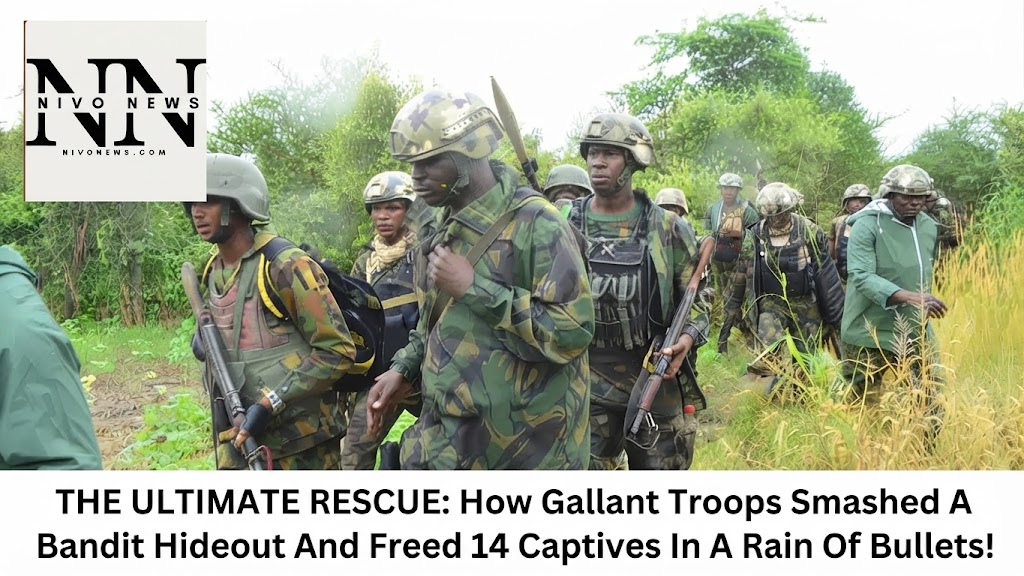
THE ULTIMATE RESCUE: How Gallant Troops Smashed A Bandit Hideout And Freed 14 Captives In A Rain Of Bullets!.

-
Successful Rescue: Nigerian Army troops from Sector 2, Operation FANSAN YAMMA successfully rescued 14 kidnapped victims from bandits in Zamfara State’s Tsafe Local Government Area.....KINDLY READ THE FULL STORY HERE▶
-
-
Swift Intervention: Acting on intelligence regarding suspicious movements near Magazu village, the troops intercepted armed criminals who were attempting to abduct motorists and other civilians.
-
Gunfight and Fugitive Bandits: After engaging the suspects in a firefight, the troops forced them to abandon their vehicle and flee into the surrounding bushes.
-
Casualties and Treatment: While no military personnel were harmed, one rescued victim sustained gunshot wounds and was promptly admitted to the General Hospital in Tsafe for treatment.
-
Ongoing Operations: The military emphasized that this successful mission is part of broader, continuous efforts by Operation FANSAN YAMMA to dismantle criminal networks and secure local communities.
-

-
Police Raid and Rescue: Operatives from the Ogun State Police Command raided an alleged baby factory in Mowe, Obafemi-Owode Local Government Area, successfully rescuing two heavily pregnant women and four children (two boys and two girls).....KINDLY READ THE FULL STORY HERE▶
-
-
Arrests and Missing Newborn: The operation resulted in six arrests, while authorities are actively searching for a newborn baby boy whose whereabouts remain unknown after his mother gave birth at a local hospital.
-
Syndicate Investigation: Triggered by intelligence regarding a human trafficking and illegal adoption ring in Abaren Village, the case has now been transferred to the State Criminal Investigation Department in Eleweran, Abeokuta, for a deeper probe.
-
Police Commitment: Ogun State Commissioner of Police Bode Ojajuni reaffirmed the command’s dedication to eradicating child trading and human trafficking, urging residents to stay vigilant and report suspicious activities.
-

-
Amotekun Nabs Suspected Kidnappers: The Ondo State Security Network Agency, known as Amotekun Corps, has successfully apprehended two suspected kidnappers, including a 27-year-old man trapped during a ransom negotiation.....KINDLY READ THE FULL STORY HERE▶
-
-
Ransom Trap in Akure: According to the state commander, Adetunji Adeleye, who briefed journalists on Monday, operatives leveraged intelligence from informants to monitor and arrest the suspect behind the Shasha area.
-
Foiled Plot in Owo: Authorities also paraded a 19-year-old former employee caught with a weapon who allegedly attempted to kidnap his former boss’s wife in Molege, Owo, before family members raised an alarm.
-
Quick Rescue Operation: Adeleye highlighted a rapid response in the Isinigbo/Osi axis where operatives rescued an abducted woman and her two children following a brief confrontation with kidnappers.
-
Community Collaboration: The commander commended local community members, including the Fulani community, for providing crucial information that aided recent security breakthroughs.
-
-

 latest1 year ago
“Social Media Erupts As Jim Iyke Declares Rita Dominic Nollywood’s Most Beautiful”
-
 latest2 years ago
Edo Political Showdown: Oshiomhole Appears At Presidential Villa As Tinubu Hands APC Gubernatorial Flag To Okpebholo (Photos & Video)
-
 entertainment2 years ago
Love Knows No Age American Woman Defends Marriage To Young Nigerian Man “I’m Not 70”
-
 latest2 years ago
Olumide Akpata Strikes Again: Drops Killer Track, Sends Edo State Into Frenzy!(Video)
-
 Politics3 years ago
Nigerians React As Pastor Adeboye Foresees Passing Away On A Sunday After Enjoying A Satisfying Meal Of Pounded Yam
-
 latest2 years ago
FG Identifies 31 States At Risk Of Heavy Flooding In 2024: See Full List
-
 Politics3 years ago
BREAKING: Inspector-General Of Police Summons Top Police Commanders For Crucial-Security Challenges
-
 latest2 years ago
5 NYSC Corpers Perish In Fatal Road Accident Returning From Camp