
latest
Millions Of Children Out Of School In Northern Nigeria, Future In Jeopardy.


Across northern Nigeria, many classrooms remain partially empty or entirely closed as insecurity keeps students at home. Attacks, abductions, and threats have undermined trust in the safety of schools, forcing families to make impossible choices.....KINDLY READ THE FULL STORY HERE▶
The crisis has persisted for over a decade. On April 14, 2014, Boko Haram kidnapped 276 girls from Government Girls Secondary School in Chibok, Borno State, sparking global outrage and the #ChibokGirls campaign. Later, on February 19, 2018, 112 girls were abducted from the Government Girls Science and Technical College in Dapchi, Yobe State, with Leah Sharibu still held in captivity.
Other mass abductions include over 300 students in Kankara, Katsina State (December 2020), 317 girls in Jangebe, Zamfara State (February 2021), and incidents in Kagara, Niger State, showing the widespread nature of the crisis. Amnesty International records at least 15 major abductions in northern Nigeria since 2014, while Save the Children reports 1,683 students kidnapped between 2014 and 2022. Between December 2020 and December 2021, UNICEF-linked research noted 1,436 students and 17 teachers abducted, with over 11,500 schools temporarily closed due to insecurity.
Even when schools officially reopen, parents often keep children home out of fear. In Papiri, Agwara LGA, Niger State, schools serving more than 50 communities remain mostly unused following the November 2025 abduction of over 300 students and staff, despite their eventual rescue. Parents say fear persists and many relocate their children to safer areas.
In Borgu LGA, armed groups instructed communities to withdraw children from school, citing threats to their lives if they continued attending. In Katsina and Kebbi States, abductions and attacks continue to depress attendance even after rescues, with teachers and students facing dangerous routes to reach classrooms.
The psychological toll is severe. Children returning to school often show anxiety, withdrawal, and difficulty concentrating. Teachers report challenges in helping students catch up academically and socially, while staffing shortages in high-risk areas worsen learning gaps. UNICEF and Save the Children provide temporary learning centers, trauma counseling, and teacher training, yet safety concerns continue to take priority over education.
Girls are disproportionately affected. Fear keeps many at home, increasing risks of early marriage, child labor, and long-term educational setbacks. UNICEF estimates that of the 10.5 million primary-age children out of school in Nigeria, 60% are girls, mostly in the north. Informal learning programs cannot replace structured education, leaving many girls at a lifelong disadvantage.
Confirmed high-risk areas include:
- Papiri, Agwara LGA: Government-mandated closures for 50+ communities; rescued students still mostly out of classrooms.
- Borgu LGA: Schools in town open; neighboring communities keep children home under threat.
- Kankara, Katsina State: Partial closures after abductions.
- Jangebe, Zamfara State: Schools reopened post-rescue; attendance remains low.
- Maga, Kebbi State: Low attendance; one staff fatality reported.
NGOs like UNICEF and Save the Children provide learning centers, psychosocial support, and teacher training, while authorities implement phased school reopenings and increase patrols. Still, families demand credible, consistent security to trust that schools are safe.
Prolonged insecurity disrupts education, causes trauma, and reduces social development, with teachers’ absences worsening learning gaps. Northern Nigeria risks a “lost generation,” particularly girls, if urgent interventions are not implemented.
Rebuilding trust requires coordinated government action, NGO support, and community engagement. Safe, accessible education is essential not only for learning but also for protecting childhood, fostering resilience, and stabilizing society. Until families are confident in their children’s safety, classrooms will remain underused, and students’ futures jeopardized.
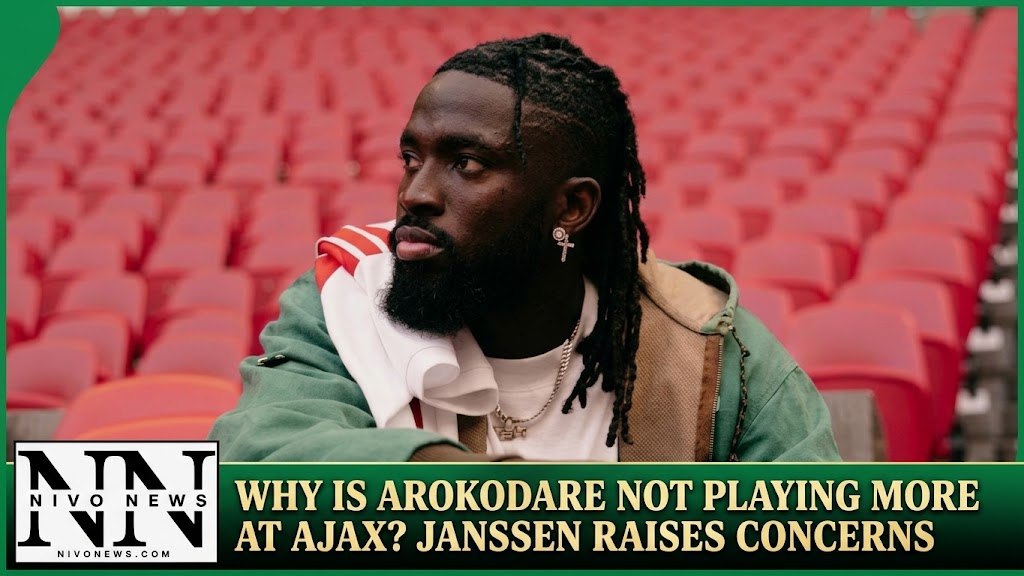
Former Netherlands midfielder Theo Janssen has questioned whether Tolu Arokodare’s loan arrangement is affecting the Nigerian striker’s playing time at Ajax, despite his impressive performances for the Dutch club.....KINDLY READ THE FULL STORY HERE▶
Janssen raised the issue while appearing on Ziggo Sport’s Rondo programme, suggesting that Ajax’s decision to sign Marcos Leonardo on a permanent deal could be influencing the coach’s team selection.
“It has to do with money that he does not always play,” Janssen said, as quoted by Headtopics.
The former midfielder wondered whether Arokodare’s loan status, compared with Leonardo’s permanent contract, could be a factor in the coach’s decisions.
“Tolu is on loan, and Leonardo was bought. Do you think the trainer decides this?” he asked.
Janssen maintained that Arokodare deserved more opportunities, highlighting the striker’s physical strength, finishing ability and character.
“He is a nice guy when you hear him talk. He is strong and can score a goal. He is just a good player,” he added.
Arokodare has recorded nine goals and three assists in 14 appearances across all competitions since joining Ajax, performances that have strengthened his case for a more regular place in the team.
The 25-year-old recently scored the winning goal in Ajax’s 2-1 victory over Sparta Rotterdam on October 25. He also reached the milestone of 100 career goals during the club’s match against Atalanta on October 22.
Ajax signed the Nigerian striker on a season-long loan from Wolverhampton Wanderers on July 29, after he struggled to establish himself during his first season at Molineux.
Reports indicate that Ajax are covering his full wages and paying a loan fee, with additional payments reportedly tied to qualification for European competitions. The agreement is also said to include an option to sign him permanently for approximately €22 million.
Arokodare is reportedly willing to make his stay at Ajax permanent, provided the club improves its salary offer. Ajax are also said to be interested in retaining the striker beyond the current season.
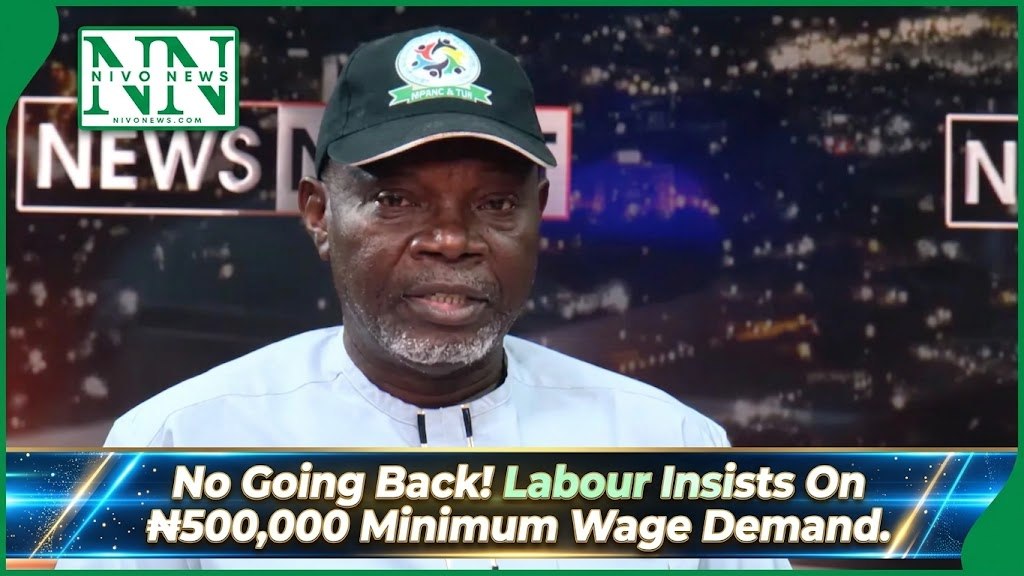
Organised labour has reiterated its demand for a ₦500,000 minimum wage, arguing that the amount reflects the economic challenges Nigerian workers face amid the rising cost of living.....KINDLY READ THE FULL STORY HERE▶
The National Secretary of the Joint National Public Service Negotiating Council (JNPSNC), Gbenga Olowoyo, stated this during an interview on Arise News on Tuesday.
However, Olowoyo said labour remained open to reasonable negotiations with the Federal Government to reach a mutually acceptable figure.
His comments followed a six-hour meeting between organised labour and the Federal Government to discuss workers’ welfare and measures to ease the impact of rising petrol prices.
Olowoyo welcomed the government’s agreement to provide workers with ₦70,000 monthly transport support for six months, beginning in November 2026.
He described the outcome of the meeting as encouraging, noting that the lengthy discussions had produced a positive development for workers.
“I think with the recent development that happened today, the negotiation lasted over six hours, and with the outcome of the meeting, I think it is a good omen,” he said.
The labour leader explained that the transport intervention would benefit workers at all levels, including those at the grassroots, amid concerns about rising transportation costs and the growing pressure on household finances.
He, however, emphasised that the ₦70,000 monthly support was a temporary measure and would not replace labour’s demand for a new minimum wage.
“The template of ₦500,000 is still subsisting. And at the same time, if government is able to dance around ₦500,000, we would be alright to support the President. So I want to believe that, as I told you, we are not going to be rigid, but at the same time, we’ll be reasonable,” Olowoyo stated.
He explained that the proposed minimum wage was intended to help workers meet essential responsibilities, including feeding their families, paying school fees and covering other basic expenses.
Olowoyo also expressed optimism that the agreement would create room for further discussions, particularly the establishment of a tripartite committee to negotiate a new minimum wage, which remains one of labour’s major demands.
According to him, the Federal Government’s decision to sign an agreement with organised labour demonstrated its willingness to address the concerns raised by workers.
He noted that the outcome of the negotiations would extend beyond the unions directly involved, given that the Nigeria Labour Congress (NLC) has more than 40 affiliate unions.
The negotiations initially involved the JNPSNC and eight other unions before the NLC joined the discussions, broadening the representation of workers.
Describing the outcome as a collective victory, Olowoyo expressed confidence that the government would fulfil its commitment to the transport allowance.
“We know government is going to implement it because that is commitment already,” he said.
The six-month transport support programme is expected to run from November 2026 to April 2027. Olowoyo said organised labour hoped to conclude negotiations on the new minimum wage before the temporary intervention expires.
He added that the coming months would provide an opportunity for both parties to resolve outstanding issues and agree on a wage structure that reflects the economic realities confronting Nigerian workers.
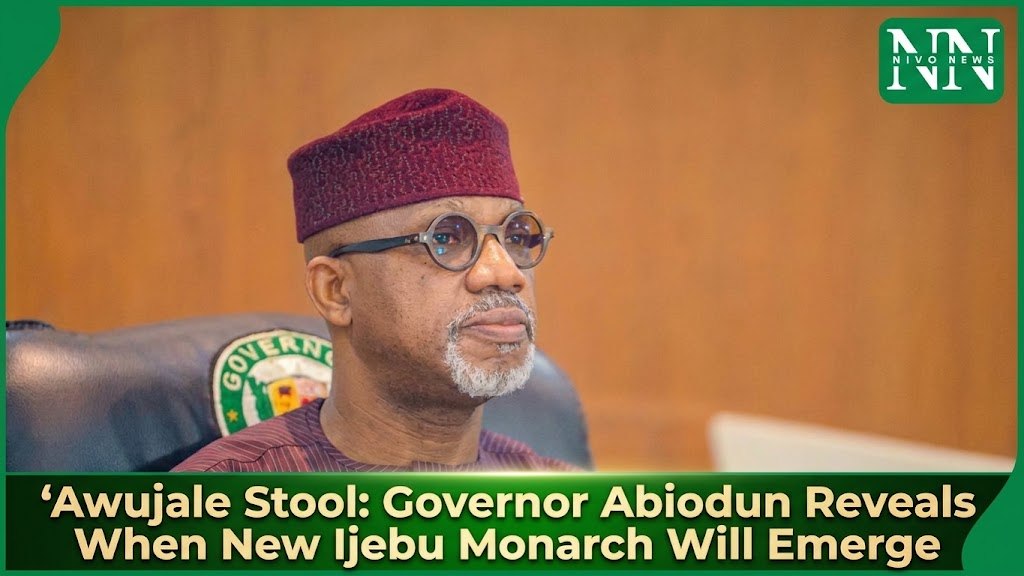
Ogun State Governor, Dapo Abiodun, has assured that a new Awujale of Ijebuland will emerge before May 29, 2027.....KINDLY READ THE FULL STORY HERE▶
The governor gave the assurance in a statement issued on Wednesday by his Media Adviser, Kayode Akinmade.
Abiodun had earlier made the commitment while addressing stakeholders from Ogun East Senatorial District at a meeting in Ijebu-Ode, which brought together representatives of various interest groups.
He also assured residents that the process of selecting the next traditional ruler would be peaceful, smooth and acceptable to the people.
The governor urged the people of Ijebuland to remain calm and patient as the necessary procedures for selecting a new Awujale are being concluded.
“I acknowledge the importance of the Awujale institution to the cultural heritage, identity and unity of Ijebuland. Our people should remain calm and patient as the necessary processes are being concluded,” Abiodun said.
He added that his administration was giving the matter the attention it deserved to ensure a peaceful conclusion and secure the acceptance and support of the people for the new monarch.
At the stakeholders’ meeting, Abiodun explained that the gathering was organised to strengthen engagement with grassroots leaders, address community concerns and highlight his administration’s achievements over the past seven years.
The governor identified oil exploration around Eba Island and the proposed Gateway Deep-Sea Port in Ogun Waterside Local Government Area as key projects expected to drive economic growth in the state.
He also highlighted the proposed Blue Marine Special Economic Zone, saying it would attract investments, create employment opportunities and position Ogun State as a major centre for maritime trade, manufacturing and logistics.
Abiodun reaffirmed his administration’s commitment to infrastructure development and investment promotion. He also expressed appreciation to President Bola Tinubu for supporting critical projects and initiatives in the state.
The governor urged residents to continue cooperating with his administration to sustain peace and promote development across Ogun State.
The Awujale stool has been vacant since July 2025, following the death of Oba Sikiru Adetona at the age of 91. The late monarch reigned for 65 years.
-

 latest1 year ago
“Social Media Erupts As Jim Iyke Declares Rita Dominic Nollywood’s Most Beautiful”
-
 latest3 years ago
Edo Political Showdown: Oshiomhole Appears At Presidential Villa As Tinubu Hands APC Gubernatorial Flag To Okpebholo (Photos & Video)
-
 entertainment3 years ago
Love Knows No Age American Woman Defends Marriage To Young Nigerian Man “I’m Not 70”
-
 latest3 years ago
Olumide Akpata Strikes Again: Drops Killer Track, Sends Edo State Into Frenzy!(Video)
-
 Politics3 years ago
Nigerians React As Pastor Adeboye Foresees Passing Away On A Sunday After Enjoying A Satisfying Meal Of Pounded Yam
-
 latest3 years ago
FG Identifies 31 States At Risk Of Heavy Flooding In 2024: See Full List
-
 Politics3 years ago
BREAKING: Inspector-General Of Police Summons Top Police Commanders For Crucial-Security Challenges
-
 latest3 years ago
5 NYSC Corpers Perish In Fatal Road Accident Returning From Camp