
latest
The Nigerian Opposition Is Its Own Worst Enemy – Here’s Why.


As an opposition spokesperson, it would be easy to simply blame the ruling All Progressives Congress (APC) for the failures of Nigeria’s opposition parties. However, in this piece, I choose to adopt a critical and objective perspective rather than play the role of a devil’s advocate.....KINDLY READ THE FULL STORY HERE▶
Time and again, the Nigerian opposition has shown a remarkable inability to navigate key political moments effectively. This repeated lack of foresight has cost opposition parties talented members, who are often poached by the ruling party. Can anyone really blame them for seizing opportunities?
Nigeria’s democracy stands at a pivotal crossroads. Amid economic challenges and rising insecurity, the nation’s democratic checks and balances—especially a strong opposition—are weakening. While many point fingers at the APC for shrinking political space, the opposition’s own mismanagement is largely responsible for its weakened position.
Major opposition parties—the Peoples Democratic Party (PDP), Labour Party (LP), and the African Democratic Congress (ADC)—have been marked by self-inflicted decline, internal strife, and a lack of ideological depth. Questions about the ADC’s coalition-building raise concerns about strategic oversight, with ongoing litigations threatening its stability. Many key stakeholders feel ignored, leaving them vulnerable to disruption—a reality the APC exploits.
One visible weakness of the opposition is its lack of proactivity. Instead of anticipating the ruling party’s moves, it struggles to manage internal affairs. The PDP, once a formidable force, has been mired in factionalism among supporters of figures like Nyesom Wike and Atiku Abubakar, turning the party into a battlefield of egos. Similarly, the Labour Party, which inspired millions in 2023, has been hampered by leadership disputes involving Julius Abure and factions backed by the Nigeria Labour Congress (NLC). Leadership uncertainty undermines credibility.
During my Master’s studies, I was fascinated by the theory of processualism in political anthropology, which emphasizes conflict, power strategies, and political maneuvering as drivers of social change. Nigerian politicians are often driven by personal goals, and the opposition frequently suffers from naivety, failing to navigate the strategic demands of politics effectively.
The ideological vacuum in opposition parties is another critical weakness. Beyond criticizing the APC or President Tinubu, the opposition offers little concrete policy direction. Analysts like Olisa Agbakoba have noted the opposition’s failure to engage on substantive issues. After the Abuja Municipal Area Council elections, Professor Chidi Odinkalu described Nigeria’s opposition as an “utter disgrace,” a sentiment echoed by media personality Rufai Oseni, who called them a “coalition of jokers.”
Without clear ideological differentiation, opposition parties become mere vehicles for power-seeking, lacking moral authority to inspire the electorate. Organizational fatigue has led to defections, strengthening the APC’s dominance, which now controls 31 of 36 governorships. Many governors and lawmakers defect not out of shared values but because their original parties are ineffective.
Opposition leadership has also failed at inclusivity. Talented activists, unless they are former governors, ministers, or lawmakers, are largely ignored. The Coalition of United Political Parties (CUPP) once served as a strong opposition platform, but lack of funding and support from major opposition leaders has limited its effectiveness, leaving self-sponsored activists to carry the burden.
As the 2027 general elections approach, the opposition’s window for redemption is closing. Blaming the Electoral Act or state apparatus is hollow when internal dysfunction is the real problem. Unless the opposition prioritizes service over personal rivalries and effectively utilizes its talent, it will remain the architect of its own failure.
The APC, by contrast, learned how to operate effectively while in opposition. Nigeria deserves a strong alternative, but until the opposition stops undermining itself, it cannot offer meaningful governance. Seeking power is not equivalent to seeking good governance.
Mark Adebayo is an Abuja-based activist, author, politician, and consultant. He currently serves as National Spokesperson of the Coalition of United Political Parties (CUPP) and Convener of the New Direction for Nigeria Movement (NEDMO).
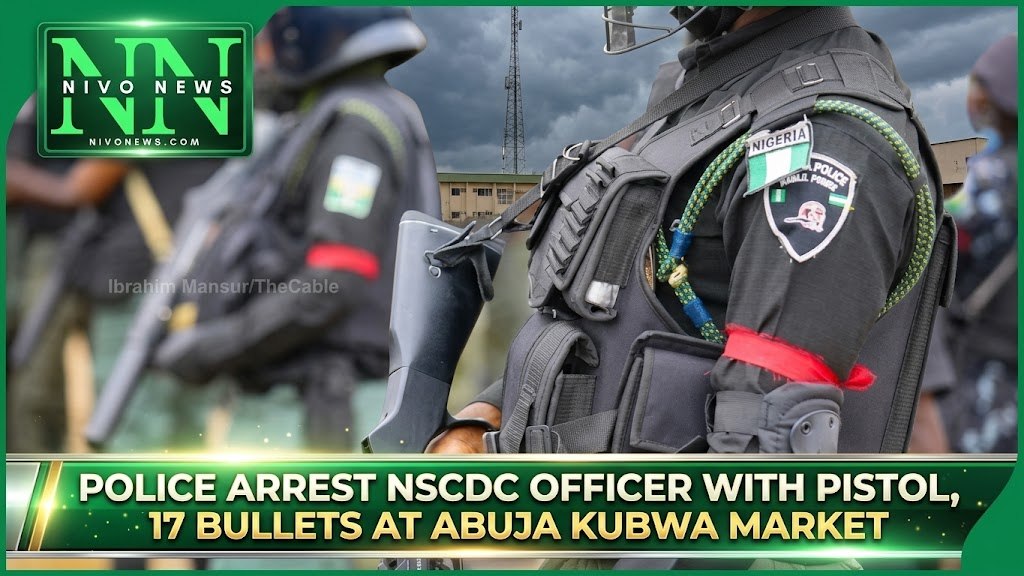
An officer of the Nigeria Security and Civil Defence Corps (NSCDC) has been arrested for allegedly firing gunshots into the air during a confrontation with traders at Kubwa Market in Abuja.....KINDLY READ THE FULL STORY HERE▶
The officer, identified as Onoja Samuel, reportedly arrived at the market armed with a pistol following allegations that some traders had assaulted his wife.
The Federal Capital Territory (FCT) Commissioner of Police, Ahmed Mohammed Sanusi, disclosed the incident while addressing journalists at the command on Wednesday, Naija News reports.
Sanusi said the police received a distress call from Kubwa Market, located in the Bwari Area Council, reporting that a man was shooting into the air.
Following the report, officers attached to the Kubwa Police Division were deployed to the scene, where they arrested the suspect.
According to the police commissioner, preliminary investigations revealed that Samuel holds the rank of Deputy Superintendent of Corps (DSC) in the NSCDC.
He explained that the officer allegedly fired several shots during an argument with the traders.
“During the ensuing argument with the traders, Onoja Samuel, who is a DSC with the NSCDC, fired several shots into the air,” Sanusi said.
The police recovered a CZ pistol and 17 rounds of live 9mm ammunition from the suspect.
Sanusi added that Samuel remained in police custody and would be charged in court upon the conclusion of investigations.
The commissioner also urged personnel of other security agencies operating in the FCT to exercise restraint and notify the police divisions responsible for their areas before conducting authorised operations.
He stressed that effective coordination among security agencies was essential to preventing confrontations and maintaining peace across the territory.
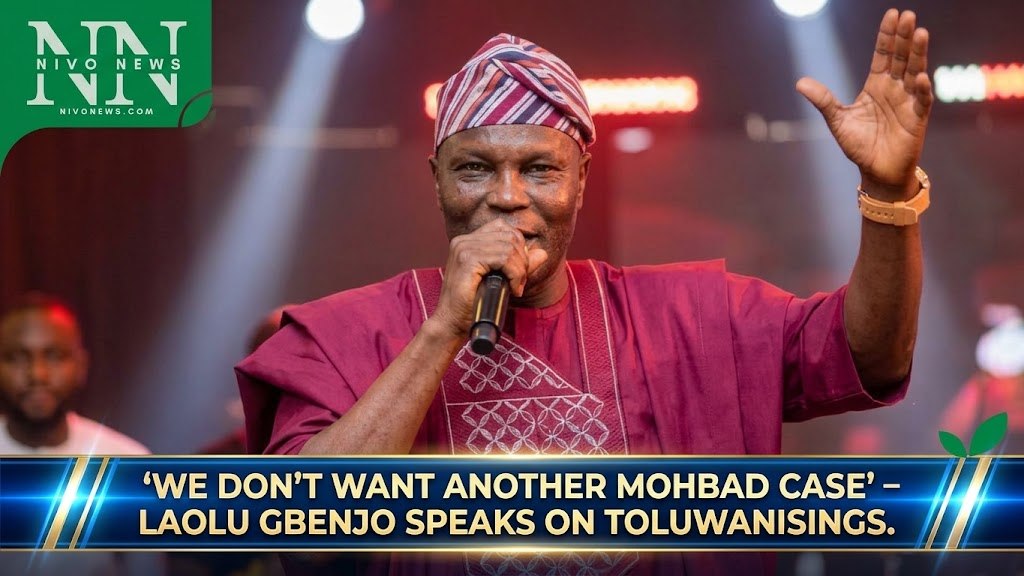
Nigerian gospel singer Laolu Gbenjo has cautioned the public against spreading unverified information about the circumstances surrounding the death of his colleague, Bayonile Bolaji, popularly known as Toluwanisings.....KINDLY READ THE FULL STORY HERE▶
Gbenjo’s warning comes amid growing controversy surrounding the late singer’s death and burial arrangements, with reports of disagreements among members of his family.
The gospel singer spoke on Tuesday during a night of tributes held in honour of Toluwanisings in Ibadan, Oyo State. He warned against allowing the situation to degenerate into a controversy similar to the one that followed the death of Nigerian singer Mohbad.
Describing the deceased as a devoted Christian and a genuine servant of God, Gbenjo said Toluwanisings was passionate about his faith and had a good relationship with people.
He urged the public to stop fuelling unnecessary controversy over the late singer’s death, particularly through social media platforms such as TikTok and Instagram.
“You can never see Toluwani in the midst of jobless people. He had a good heart. He was a friend to everybody. He served the Lord with all his heart. Don’t turn Toluwani into Mohbad. That madness on TikTok and Instagram must stop. If you are jobless, go and look for a job,” Gbenjo said.
Meanwhile, comedians Ayobami Ajewole, popularly known as Woli Agba, and Olamide Oladimeji, also known as Dele Omo Woli, have threatened legal action against individuals allegedly linking them to Toluwanisings’ death.
Woli Agba disclosed this in a public notice shared on his Instagram page on Sunday.
In the notice issued by their solicitors, Gemgold, the comedians warned members of the public against publishing or circulating allegations they described as false and defamatory against them.
The legal notice maintained that the allegations were baseless and intended to damage the reputations of the two entertainers.
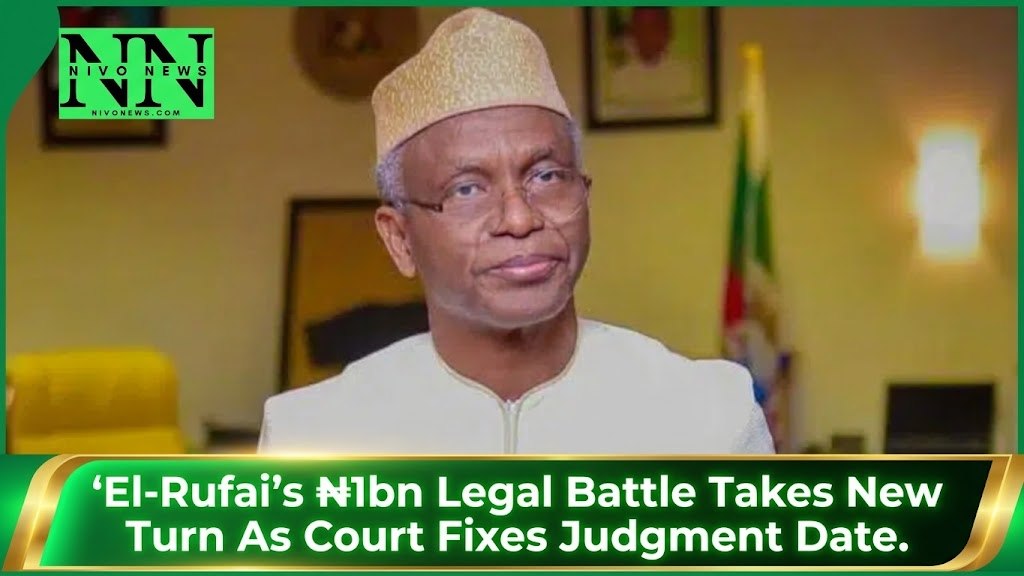
The Federal High Court in Abuja has fixed December 2, 2026, for judgment in the ₦1 billion fundamental rights suit filed by former Kaduna State Governor, Nasir El-Rufai, against the Independent Corrupt Practices and Other Related Offences Commission (ICPC) and other respondents.....KINDLY READ THE FULL STORY HERE▶
Justice Joyce Abdulmalik set the date after lawyers representing the parties adopted their respective court processes.
However, El-Rufai’s lawyer was absent when the case was initially called. The judge subsequently deemed the former governor’s filed processes adopted.
Counsel to the ICPC, Abdul Mohammed (SAN), adopted the commission’s court processes and urged the judge to dismiss the suit in its entirety.
Similarly, the lawyer representing the Inspector-General of Police, ACP Ezekiel Rimamsomte, and Maimuna Lami-Shiru, Director of Civil Litigation and Public Law, who appeared on behalf of the Attorney-General of the Federation (AGF), adopted their respective processes and asked the court to dismiss the case.
During the proceedings, El-Rufai’s lawyer, Ubong Akpan, arrived in court and apologised for his lateness.
When Akpan sought the court’s permission to adopt his client’s processes, Justice Abdulmalik informed him that the documents had already been deemed adopted.
The judge subsequently adjourned the matter until December 2, 2026, when judgment is expected to be delivered.
-

 latest1 year ago
“Social Media Erupts As Jim Iyke Declares Rita Dominic Nollywood’s Most Beautiful”
-
 latest3 years ago
Edo Political Showdown: Oshiomhole Appears At Presidential Villa As Tinubu Hands APC Gubernatorial Flag To Okpebholo (Photos & Video)
-
 entertainment3 years ago
Love Knows No Age American Woman Defends Marriage To Young Nigerian Man “I’m Not 70”
-
 latest3 years ago
Olumide Akpata Strikes Again: Drops Killer Track, Sends Edo State Into Frenzy!(Video)
-
 Politics3 years ago
Nigerians React As Pastor Adeboye Foresees Passing Away On A Sunday After Enjoying A Satisfying Meal Of Pounded Yam
-
 latest3 years ago
FG Identifies 31 States At Risk Of Heavy Flooding In 2024: See Full List
-
 Politics3 years ago
BREAKING: Inspector-General Of Police Summons Top Police Commanders For Crucial-Security Challenges
-
 latest3 years ago
5 NYSC Corpers Perish In Fatal Road Accident Returning From Camp