
latest
Defections And Disruptions: The High Price Of Nigeria’s Party Switching.

The wave of governors defecting in Nigeria has steadily become a defining feature of the country’s political scene.....KINDLY READ THE FULL STORY HERE▶
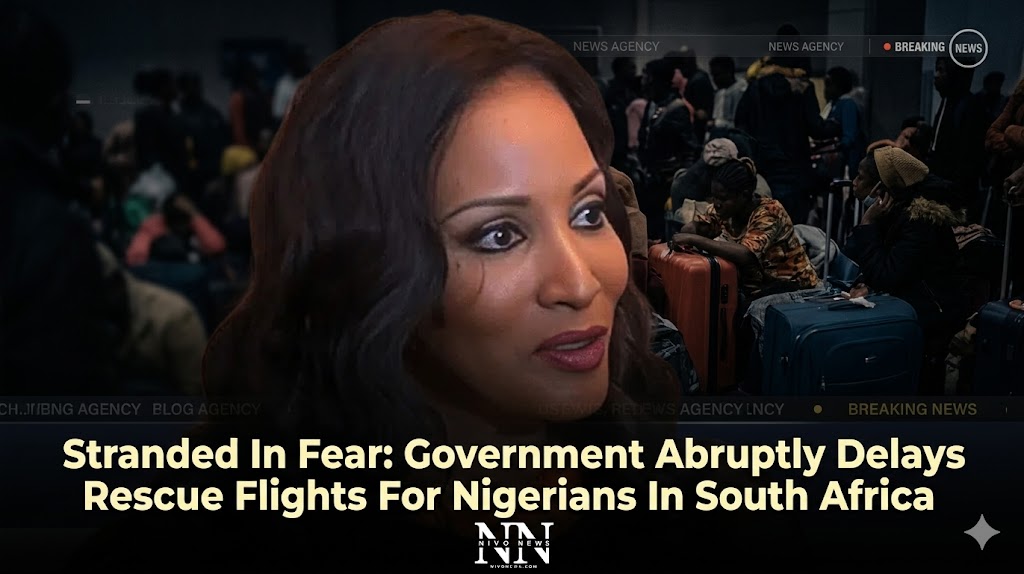
The Federal Government has postponed the initial evacuation flight for Nigerians seeking to leave South Africa amid recent xenophobic tensions. Originally set for Monday, the flight is now rescheduled for Wednesday to address logistical requirements. Ministry of Foreign Affairs spokesperson Kimiebi Ebienfa confirmed that the shift allows for an extension of the screening process, which has already cleared over 500 individuals. President Bola Tinubu has authorized five evacuation flights via Air Peace, with the first aircraft expected to transport approximately 270 passengers from Johannesburg once all final permits are secured.....KINDLY READ THE FULL STORY HERE▶
Due to unforeseen logistical challenges, the Federal Government has pushed back the first evacuation flight for Nigerians in South Africa from Monday to Wednesday. According to Foreign Affairs Ministry spokesperson Kimiebi Ebienfa, the delay provides more time for the ongoing screening of citizens, with over 500 people already processed. President Bola Tinubu has approved a total of five rescue flights operated by Air Peace. The first of these, carrying roughly 270 citizens, is slated to depart Johannesburg on Wednesday evening, with officials working to ensure a safe return for all cleared passengers.
Option 3: Quick Summary (Bullet Points)
-
Reschedule: The first evacuation flight for Nigerians in South Africa has been moved from Monday to Wednesday due to logistical considerations.
-
Capacity: The Federal Government, through President Bola Tinubu’s approval, has arranged for five total flights via Air Peace.
-
Progress: The screening process for returnees has been extended until Wednesday, with over 500 Nigerians already cleared for travel.
-
Next Steps: Approximately 270 passengers are expected to board the first flight departing from Johannesburg on Wednesday evening.
latest
2027 Mega Shockwave: Dele Momodu Unleashes Explosive Posters, Declares Self Atiku’s Running Mate!

Dele Momodu, the publisher and politician, recently posted campaign materials on his Facebook page depicting himself as the running mate to former Vice-President Atiku Abubakar for the 2027 presidential election. In his accompanying message, Momodu framed the upcoming contest as a “battle of the titans” between President Bola Tinubu and Atiku, casting doubt on the effectiveness of any potential “third force.” He further urged his party, the ADC, to modernize its strategy by acting as a bridge between veteran politicians and technocrats. Momodu argued that this shift is essential to foster national reconciliation and a return to the ideological, issue-based leadership championed by Nigeria’s founding fathers.....KINDLY READ THE FULL STORY HERE▶
Fueling speculation about the 2027 political landscape, Dele Momodu has shared a graphic on social media showcasing a potential Atiku-Momodu ticket. While emphasizing that the race will likely be a direct showdown between Tinubu and Atiku, Momodu used the post to advocate for a significant change in Nigerian politics. He called for urgent national reconstruction and urged the ADC to embrace a more cosmopolitan approach that unites diverse generations and regional interests. According to Momodu, failing to address the country’s current political tensions could lead to further instability, necessitating a return to the visionary principles of leaders like Nnamdi Azikiwe, Ahmadu Bello, and Obafemi Awolowo.
Option 3: Quick Summary (Bullet Points)
-
Campaign Speculation: Dele Momodu shared a poster on Facebook portraying himself as Atiku Abubakar’s running mate for the 2027 presidential election.
-
Political Forecast: He characterized the 2027 election as a two-man “battle of the titans” between Atiku and Tinubu, noting that third-party contenders are unlikely to have the strength to prevail.
-
Call for Reform: Momodu urged the ADC to move beyond traditional politics and instead serve as a bridge between old and new leadership, as well as between technocrats and politicians.
-
Vision for Nigeria: He highlighted the need for national reconciliation and a return to the values established by Nigeria’s founding fathers to overcome current social and political chaos.
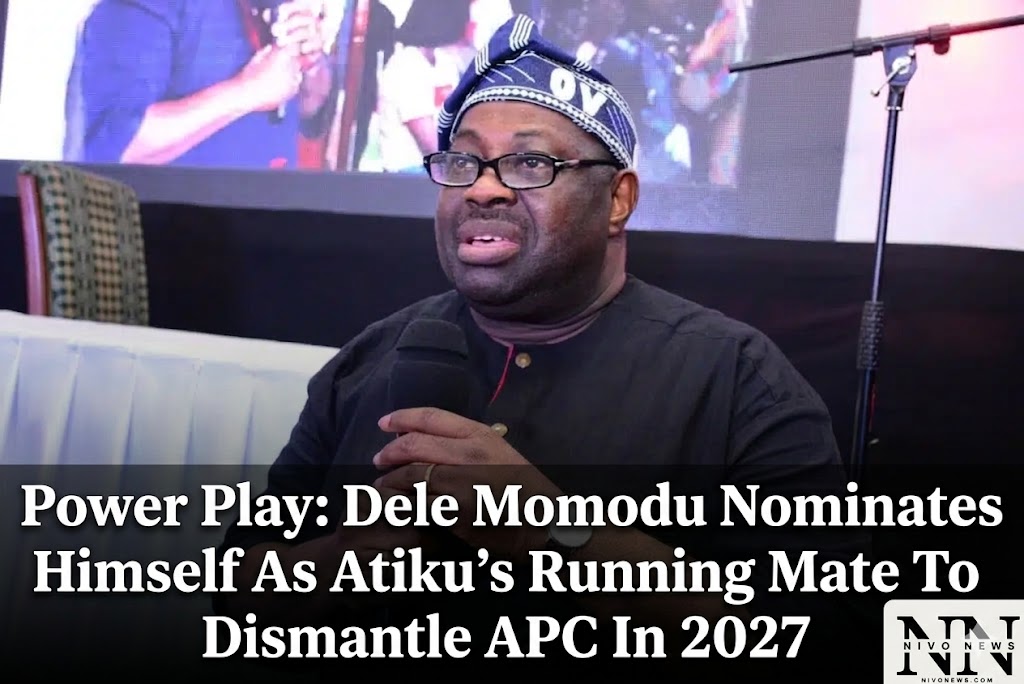
Option 1: Professional and Concise Dele Momodu, a chieftain of the African Democratic Congress (ADC), has identified former Vice President Atiku Abubakar as the primary challenger to President Bola Tinubu in the upcoming 2027 presidential election. Describing the anticipated contest as a “battle of the titans,” Momodu expressed skepticism regarding the viability of a “third force,” suggesting that while one might emerge as it did in 2023, it is unlikely to possess the strength to unseat the two major political heavyweights. Emphasizing a need for national reconciliation and reform, Momodu urged the ADC to modernize its political strategy by acting as a bridge between traditional and cosmopolitan interests, while lamenting a departure from the foundational values established by Nigeria’s past leaders.....KINDLY READ THE FULL STORY HERE▶
According to ADC chieftain Dele Momodu, the 2027 presidential race is set to be a two-man struggle between President Bola Tinubu and Atiku Abubakar. In a social media statement, Momodu characterized the matchup as a fierce battle that effectively limits the influence of any potential third-party candidates. Beyond the electoral forecast, Momodu called for a total overhaul of the ADC’s political approach, advocating for a platform that unites diverse groups, including technocrats and veteran politicians. He argued that Nigeria is currently suffering from “gangsterism” in politics and must urgently return to the visionary, ideological leadership practiced by the nation’s founding fathers to prevent total collapse.
Option 3: Quick Summary (Bullet Points)
-
2027 Outlook: Dele Momodu projects the 2027 presidential election will be a direct clash between President Bola Tinubu and Atiku Abubakar, dismissing the potential for a third-force candidate to successfully upstage them.
-
Strategic Shift: Momodu is pushing the ADC to adopt a more contemporary and inclusive strategy that bridges the gap between old-guard politics and modern, cosmopolitan governance.
-
National Call to Action: He argues that Nigeria is currently in a state of chaos and needs urgent “reconciliation, reorientation, and reconstruction.”
-
Foundational Values: The ADC chieftain claims the nation has abandoned the legacies of founding figures like Nnamdi Azikiwe, Ahmadu Bello, and Obafemi Awolowo, and must return to robust, idea-driven political discourse.
-

 latest10 months ago
“Social Media Erupts As Jim Iyke Declares Rita Dominic Nollywood’s Most Beautiful”
-
 latest2 years ago
Edo Political Showdown: Oshiomhole Appears At Presidential Villa As Tinubu Hands APC Gubernatorial Flag To Okpebholo (Photos & Video)
-
 entertainment2 years ago
Love Knows No Age American Woman Defends Marriage To Young Nigerian Man “I’m Not 70”
-
 latest2 years ago
Olumide Akpata Strikes Again: Drops Killer Track, Sends Edo State Into Frenzy!(Video)
-
 Politics2 years ago
Nigerians React As Pastor Adeboye Foresees Passing Away On A Sunday After Enjoying A Satisfying Meal Of Pounded Yam
-
 latest2 years ago
FG Identifies 31 States At Risk Of Heavy Flooding In 2024: See Full List
-
 Politics2 years ago
BREAKING: Inspector-General Of Police Summons Top Police Commanders For Crucial-Security Challenges
-
 latest2 years ago
5 NYSC Corpers Perish In Fatal Road Accident Returning From Camp