Connect with us

latest

Economic Reforms Spark Manufacturing Sector Comeback.

Published

on

Nigeria’s real sector, particularly manufacturing, has not fully emerged from its challenges. However, growing macroeconomic stability is beginning to translate into higher output, improved competitiveness, and renewed confidence. These early gains are largely attributed to sweeping — and often difficult — economic reforms carried out within less than three years of President Bola Ahmed Tinubu’s administration. Analysts caution, however, that without sustained discipline and consistent policy execution, the progress recorded so far could easily unravel, delaying a full recovery of the sector.....KINDLY READ THE FULL STORY HERE▶

Manufacturers and other real-sector operators are increasingly upbeat, noting that many of the deliberate and strategic reforms introduced to revive the struggling sector are now producing tangible results. The improved outlook is closely linked to enhanced macroeconomic stability driven by reform measures rolled out since May 29, 2023.

Key interventions — including the removal of fuel subsidies, exchange-rate unification, fiscal and tax reforms, the floating of the naira, trade facilitation measures, improved export processes, and the rebasing of Gross Domestic Product (GDP) — have reshaped the operating environment for manufacturers. The outcome has been relatively improved currency stability, moderating inflation, and steady economic growth, all of which have supported the sector’s gradual rebound that began last year.

The Managing Director and Chief Executive Officer of Coleman Technical Industries Limited, George Onafowokan, described 2025 as a year of relative stability for manufacturers. He noted that the naira stabilised, inflation trended downward, and economic growth hovered between 3.4 and 3.9 per cent, approaching four per cent. According to him, such stability provides a more predictable environment for manufacturing planning and investment.

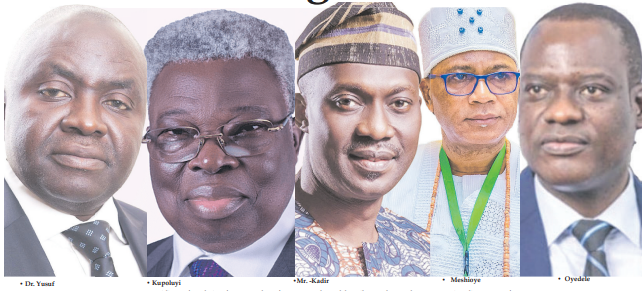
A similar assessment was shared by the President of the Lagos Chamber of Commerce and Industry (LCCI), Engr. Leye Kupoluyi, who observed that the naira showed notable stability against the dollar and other major currencies in 2025, reflecting improved market confidence and stronger policy support. He pointed out that at the official foreign exchange window, the naira appreciated by over six per cent between December 2024 and December 2025, while the parallel market also recorded double-digit appreciation. The narrowing gap between official and parallel market rates, he said, signalled reduced arbitrage opportunities and better market alignment.

Kupoluyi added that exchange-rate stability was reinforced by rising external reserves, which climbed to $45.5 billion by the end of 2025. This, he explained, strengthened the Central Bank of Nigeria’s capacity to manage liquidity, stabilise the market, and cushion the economy against external shocks.

Further affirming the improving outlook, the Chief Executive Officer of the Nigeria Economic Summit Group (NESG), Dr. Tayo Aduloju, said the bold reforms of the past two years and eight months are beginning to yield measurable outcomes. In his 2026 Macroeconomic Outlook, he noted that Nigeria’s economy has moved away from crisis conditions towards greater stability, particularly in the foreign exchange market.

One of the clearest signs of progress, analysts say, is the sustained decline in inflation. In 2025, headline inflation moderated for eight consecutive months, falling to 14.45 per cent in November — its lowest level in over three years. This trend was driven by easing food prices, improved exchange-rate stability, favourable base effects, and tight monetary policy. The Central Bank maintained the Monetary Policy Rate at 27 per cent for most of the year to anchor inflation expectations.

Despite the disinflation trend, manufacturers caution that prices remain high. The President of the Manufacturers Association of Nigeria (MAN), Otunba Francis Meshioye, acknowledged that although inflation eased significantly in 2025, elevated price levels continued to erode consumers’ purchasing power and dampen demand. Nonetheless, he said the sector showed resilience, with capacity utilisation rising to 61.3 per cent and export performance strengthening. Manufacturing’s contribution to GDP also improved, while sectoral output recorded steady growth across the first three quarters of the year.

Aduloju highlighted foreign exchange reforms as a major turning point. Prior to mid-2023, Nigeria operated a heavily managed FX regime that masked underlying distortions and encouraged arbitrage. The unification of exchange rates and reduced market intervention initially caused disruptions but eventually led to improved price discovery, stronger forex inflows, and renewed investor confidence. Business sentiment indicators, including Purchasing Managers’ Indices, remained in expansion territory through most of 2024 and 2025.

Fuel subsidy removal has also played a critical role in stabilisation. Before its elimination, subsidy payments consumed vast public resources and constrained spending on infrastructure and social services. Since its removal, fiscal space has improved, fuel supply has become more predictable, and allocations to subnational governments have increased.

Another major boost has come from tax reforms. Even before the new Tax Act took effect in January 2026, manufacturers expressed optimism that the framework would reduce multiple taxation and ease compliance burdens. Central to the reform is tax harmonisation, which consolidates numerous federal tax laws into a unified statute and encourages states to follow suit. Small businesses with annual turnover of N100 million or less are now exempt from Companies Income Tax, while larger firms are set to benefit from a phased reduction in corporate tax rates.

The reforms also introduce targeted investment incentives, including a new Economic Development Incentive that provides tax credits for qualifying capital expenditure. Manufacturers can now recover input Value Added Tax on purchases, including services and fixed assets, improving cash flow and lowering production costs. The establishment of a Tax Ombud is expected to protect taxpayer rights and curb excessive regulatory charges.

Trade reforms have further strengthened the sector. Non-oil exports rose sharply in the first half of 2025, generating a significant trade surplus and supporting Nigeria’s diversification agenda. Improved logistics, export corridors, and market access initiatives have reduced costs and enhanced the competitiveness of Nigerian products across regional markets.

Electricity reform offers additional hope. The Electricity Act 2023 decentralised power generation, transmission, and distribution, empowering states to develop their own electricity markets and attract private investment. Manufacturers see this as a potential solution to chronic power shortages that have forced heavy reliance on costly alternative energy sources.

Industry leaders broadly agree that manufacturing is regaining momentum, supported by a renewed emphasis on local production, the Buy Made-in-Nigeria campaign, and incentives for domestic industries. These policies are helping to correct long-standing distortions that left the sector overly dependent on imports and vulnerable to global supply shocks.

The road to recovery, however, has been difficult. The early phase of reforms triggered sharp increases in living and production costs, currency depreciation, high interest rates, and inflation that peaked at historic levels in late 2024. Manufacturers struggled with rising energy prices, expensive imports, and limited access to foreign exchange, leading to reduced output and temporary shutdowns in some cases.

Despite these setbacks, signs of stabilisation are now emerging. Analysts stress that the next phase must focus on consolidating the fragile gains achieved so far. Sustained policy consistency, institutional discipline, and continued reform implementation will be critical to transforming the current recovery into resilient, inclusive growth capable of creating jobs, reducing poverty, and enhancing Nigeria’s global competitiveness.

Advertisement

latest

Nigerian Soldier Shares Hilarious Experience Dating Shuwa Arab Woman In Maiduguri.

Published

on

A Nigerian soldier, Adediwuraola Ishola, has recounted a humorous experience he had while dating a Shuwa Arab woman named Falmata in Maiduguri, Borno State.....KINDLY READ THE FULL STORY HERE▶

According to Ishola, his girlfriend had a habit of carrying a small knife whenever she visited him, leaving him curious about why she always had the weapon with her.

Initially, the soldier assumed she carried the knife for self-defence, considering the security challenges in the region. However, his perception changed after he jokingly asked her about it and received an unexpected response.

Falmata reportedly told him that he would discover the knife’s purpose if he ever attempted to end their relationship.

Sharing the story in a Facebook post on Friday, Ishola recalled how the incident made him reconsider his romantic relationship.

“As a soldier, I discovered something in Maiduguri that still makes me laugh whenever I remember it,” he wrote.

He continued:

“I was dating Falmata, a beautiful Shuwa lady.

“She would visit me regularly and somehow, she’s always with a small knife.

“At first, I assumed it was for self-defence because of the insecurity in Maiduguri.

“One day, I jokingly asked her, ‘Falmata, why do you always carry this knife?’

“She said, ‘Try breaking up with me and you will understand.’ Breaking up with you ke? I no dey mad!”

The soldier added that his girlfriend’s response prompted him to make a quick decision.

“That same week, I quickly applied for a course in Lagos. My love for Falmata was strong, but my love for life was stronger,” he added.

Continue Reading

latest

Tragedy In Edo As Police Arrest 21-Year-Old Man Over Murder Of Girlfriend He Met Online.

Published

on

The Edo State Police Command has arrested a 21-year-old man, identified as Michael Samuel, over the alleged murder of his girlfriend, whom he reportedly met through social media.....KINDLY READ THE FULL STORY HERE▶

The state Commissioner of Police, Patrick Daaor, disclosed that the suspect and the deceased initially connected online and developed a friendship after communicating for several months.

According to Daaor, Samuel later invited the woman to his residence in the Ahor area of Benin City, where he allegedly stabbed her to death with a knife.

The police commissioner stated that the suspect had been taken into custody and would be charged in court after investigations were concluded.

However, Samuel has offered a different account of the incident, claiming that the woman was injured during a struggle over a knife following an argument between them.

Speaking in an interview, the 21-year-old insisted that he did not intend to kill her.

“I didn’t mean to kill her, but she got injured in the process of struggling with her for the knife during an argument,” he said.

The suspect explained that he had met the woman on social media and that their friendship developed over several months of online conversations before she decided to visit him.

He said they were initially having a discussion at his residence, but the conversation eventually escalated into an argument.

“On the day she came to my house, we were discussing, but the discussion snowballed into an argument. In the process, she picked up a knife and intended to stab me,” he claimed.

Samuel further alleged that the woman sustained an injury to her neck while they were struggling over the knife.

He maintained that he attempted to save her after she was injured but was unable to prevent her death.

“I didn’t mean to kill her. I tried to save her after she was injured, but she died,” he said.

The police are expected to conclude their investigation before proceeding with the case in court.

Continue Reading

latest

Kano Hisbah Arrests Popular TikToker, Two Other Women Over ‘Immoral’ Dance Videos.

Published

on

The Kano State Hisbah Board has arrested popular TikTok creator Amani Ishaq and two other women over allegations of sharing social media videos deemed contrary to Islamic teachings and moral standards.....KINDLY READ THE FULL STORY HERE▶

The board’s Deputy Commander, Dr Mujahid Aminuddeen, confirmed the arrests in a statement issued on Saturday, October 24, 2026.

The other women arrested alongside Ishaq were identified as Hauwa Khamis and Sa’adatu Muhammad.

According to the statement, the three suspects were brought before Magistrate Court No. 5 on Court Road in Kano.

The Hisbah Board disclosed that the case remains ongoing, with investigations continuing to determine the next steps.

The board specifically accused Ishaq of posting dance videos on TikTok that allegedly contradicted the principles of proper upbringing and the teachings of Islam.

It said the content was considered offensive to public morality and inconsistent with the religious and social values the agency seeks to uphold in Kano State.

The arrests form part of the Hisbah Board’s ongoing enforcement of moral and religious regulations, particularly concerning online content it considers obscene or contrary to Islamic teachings.

In a related development, the board had earlier arrested another TikTok content creator over alleged obscene videos after receiving intelligence that he had entered Kano State.

The Deputy Commander-General said the individual was taken into custody and that investigations into the matter were continuing.

Continue Reading

Trending