
latest
Uba Sani To Construct Largest Bus Terminal In Nigeria.


Governor Uba Sani of Kaduna State has announced plans to construct what will be the largest inter-state bus terminal in Nigeria, in terms of size and infrastructure. The groundbreaking ceremony took place on Sunday, with the terminal set to occupy 20 hectares along the Eastern Bypass in Chikun Local Government Area.....KINDLY READ THE FULL STORY HERE▶
The Ultra-Modern Inter-State Bus Terminal is designed as a dual facility capable of accommodating over 5,000 vehicles. It will feature intelligent traffic management systems, advanced surveillance, escalators, elevators, and full accessibility for the elderly and persons with disabilities. Refueling stations for petrol, diesel, and compressed natural gas (CNG) will also be integrated, alongside a three-star hotel to serve travelers, drivers, and visitors.
“This is more than concrete and steel; it is a fully integrated mobility ecosystem—safe, efficient, transparent, and future-ready,” Governor Sani said.
Highlighting the project’s economic impact, the Governor explained that the terminal will decongest the city center, enhance intra-city and inter-state connectivity, improve security surveillance, and create thousands of direct and indirect jobs for drivers, technicians, artisans, traders, and young entrepreneurs. He added that modern mobility infrastructure also strengthens security by addressing vulnerabilities that often fuel crime.
The project is part of a broader transformation of Kaduna State’s transport system. Since mid-2025, the state has deployed 100 free CNG buses, transporting over 1.4 million passengers and saving commuters nearly ₦1.5 billion. Governor Sani emphasized that this initiative has reduced household transport costs, lowered emissions, eased traffic congestion, and improved daily mobility.
Kaduna’s strategic position as a transport hub has historically been undermined by fragmented systems, leading to congestion, disorder, and insecurity. The new terminal aims to replace unsafe, scattered motor parks with a professionally managed, technology-enabled facility, strengthening regulatory oversight and restoring public confidence in transport.
The administration has already completed 200 modern bus stops across the state, while the Kakuri Modern Bus Terminal (Southern Transport Hub) is 90% complete, and the Sobawa Motor Park redevelopment is at 50%.
Looking ahead, Governor Sani announced plans to launch the Kaduna Light Rail Project by March 2026, featuring a 30 km Red Line from Rigachikun to Sabon Tasha and a 20 km Yellow Line from Millennium City to Rigasa. In addition, a 24 km Bus Rapid Transit (BRT) corridor from Kawo to Sabon Tasha will operate 120 buses across 30 modern stations, providing efficient, affordable, and reliable transport.
“These projects are part of an integrated, multimodal system designed to serve all residents—urban and rural, young and old, rich and poor,” the Governor said.
Kaduna State’s transport reforms have earned national recognition. At the National Urban Mobility Conference in Abuja on January 22, 2026, the state ranked second in Nigeria for sustainable urban mobility. Kaduna is also the first in Northern Nigeria—and second nationally after Lagos—to implement a comprehensive State Transport Policy, providing a long-term strategic framework.
Governor Sani concluded, “We are not just building terminals, buses, and rail lines; we are building confidence, restoring trust, and laying foundations for enduring prosperity.”
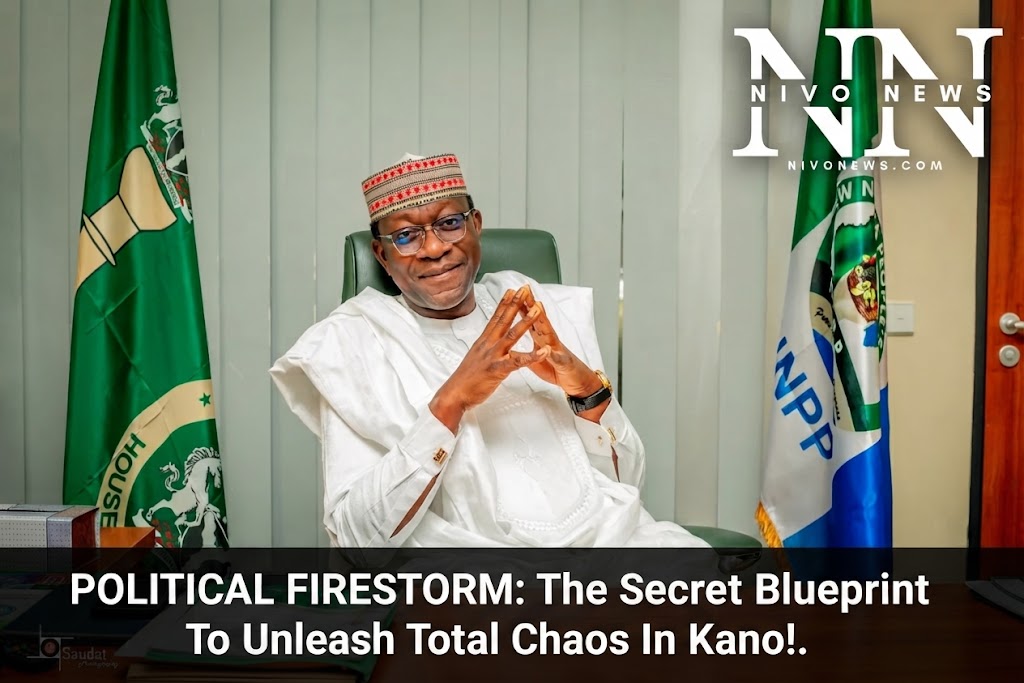
All Progressives Congress (APC) chieftain Abdulmumini Jibrin has alleged that members of the Nigeria Democratic Congress (NDC) are intentionally orchestrating unrest and turmoil in Kano as the 2027 general elections approach. This accusation follows provocative incidents where symbols like the APC broom and caps bearing President Bola Tinubu’s signature were set ablaze, prompting retaliatory burning of Kwankwansiya caps linked to NDC vice-presidential candidate Rabiu Kwankwaso.....KINDLY READ THE FULL STORY HERE▶
During an interview on Channels Television’s Politics Today, Jibrin asserted that the opposition is resorting to these tactics because they recognize they are facing certain defeat in the state, particularly within the critical Kano South swing zone. He emphasized that the opposition’s actions were a deliberate strategy to trigger a crisis right before the start of the campaign, assuring the public that the ruling party will not allow those efforts to succeed.
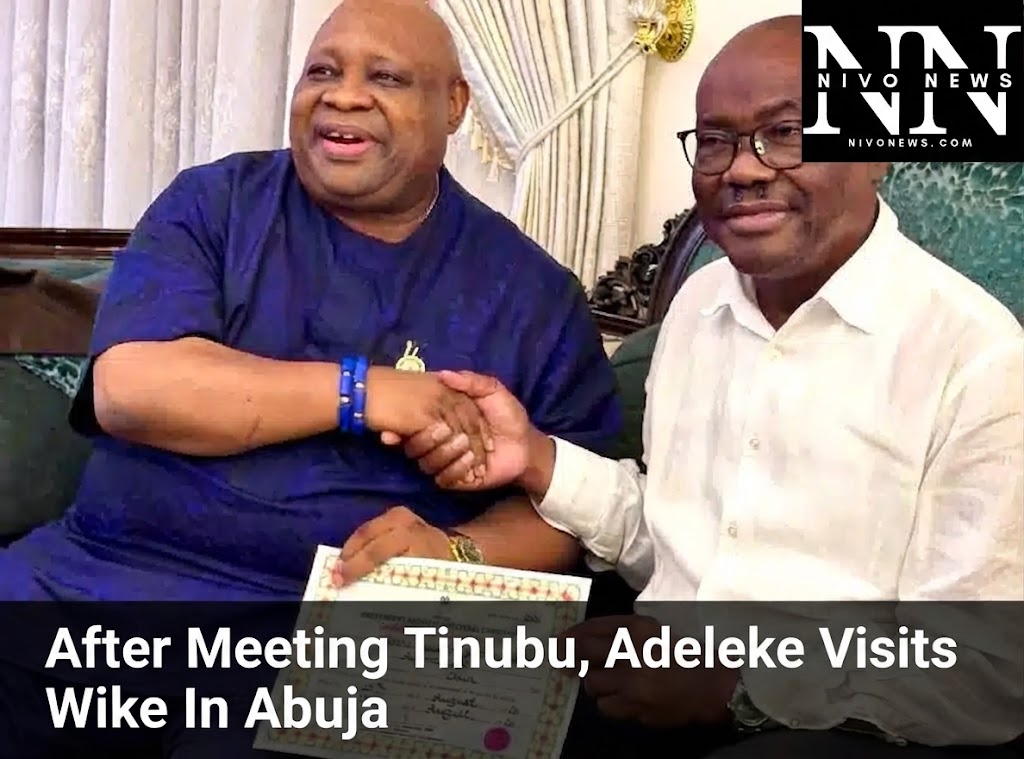
The newly re-elected Governor of Osun State, Ademola Adeleke, recently embarked on a series of political consultations in Abuja, starting with a visit to the Minister of the Federal Capital Territory, Nyesom Wike. Lere Olayinka, the media aide to the FCT minister, shared a photograph on social media documenting the meeting, which featured Adeleke and Wike shaking hands while displaying the governor’s certificate of return.....KINDLY READ THE FULL STORY HERE▶
This engagement followed closely on the heels of a closed-door meeting between Governor Adeleke and President Bola Tinubu at the Aso Rock Presidential Villa, where the governor presented his official return documents and expressed appreciation regarding the recent electoral process. During their discussions, President Tinubu advised the governor to foster an environment of unity and refrain from marginalizing political opponents, emphasizing that winning an election represents a democratic mandate rather than a conquest.
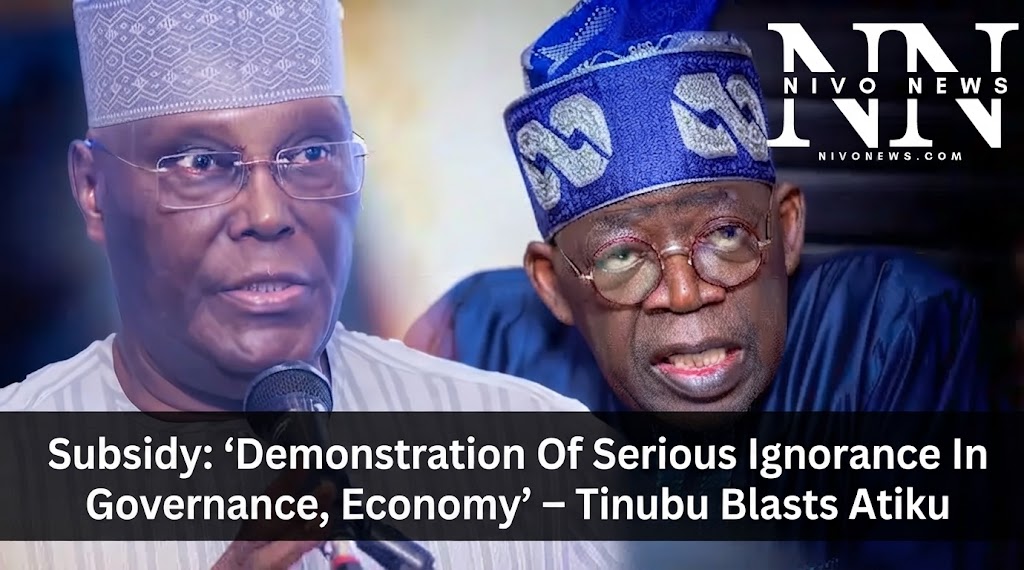
President Bola Tinubu has firmly criticized former vice-presidential candidate Atiku Abubakar, dismissing his recent proposal to reinstate the petrol subsidy regime as a fundamental lack of understanding of economic management and governance.....KINDLY READ THE FULL STORY HERE▶
Upon taking office, the current administration discontinued the fuel subsidy and floated the national currency to address structural economic imbalances. While these sweeping policy changes triggered widespread financial pressures and heightened the cost of living for average citizens, the government maintains that the reforms were essential for long-term fiscal stability.
Addressing critics from the Presidential Villa, President Tinubu defended the decision by highlighting its immediate impact on sub-national finances. He pointed out that prior to the intervention, numerous state governments struggled to meet monthly obligations to workers and retirees. According to the administration, the savings generated from ending the subsidy have since enabled states to consistently service salary arrears and pension commitments, framing the policy shift as a vital corrective measure for the nation’s broader financial framework.
-

 latest12 months ago
“Social Media Erupts As Jim Iyke Declares Rita Dominic Nollywood’s Most Beautiful”
-
 latest2 years ago
Edo Political Showdown: Oshiomhole Appears At Presidential Villa As Tinubu Hands APC Gubernatorial Flag To Okpebholo (Photos & Video)
-
 entertainment2 years ago
Love Knows No Age American Woman Defends Marriage To Young Nigerian Man “I’m Not 70”
-
 latest2 years ago
Olumide Akpata Strikes Again: Drops Killer Track, Sends Edo State Into Frenzy!(Video)
-
 Politics3 years ago
Nigerians React As Pastor Adeboye Foresees Passing Away On A Sunday After Enjoying A Satisfying Meal Of Pounded Yam
-
 latest2 years ago
FG Identifies 31 States At Risk Of Heavy Flooding In 2024: See Full List
-
 Politics3 years ago
BREAKING: Inspector-General Of Police Summons Top Police Commanders For Crucial-Security Challenges
-
 latest2 years ago
5 NYSC Corpers Perish In Fatal Road Accident Returning From Camp