
latest
Fubara’s Impeachment: Rivers Court Pauses, Awaits Appeal Decision.

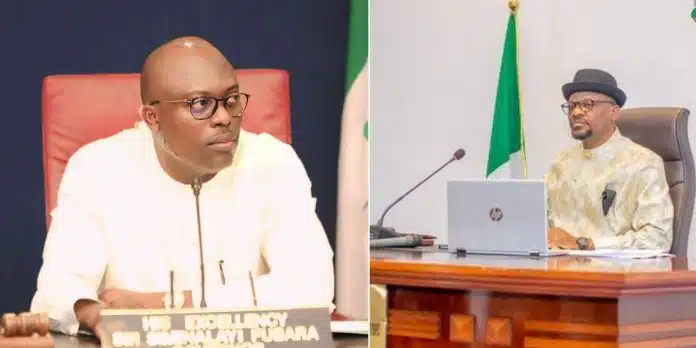
An Oyigbo High Court in Port Harcourt, Rivers State, has indefinitely adjourned the suit filed by Governor Siminalayi Fubara and his deputy, Ngozi Odu, challenging the impeachment process initiated by the Rivers State House of Assembly.....KINDLY READ THE FULL STORY HERE▶
Justice Florence Fiberesima made the decision after being informed that two separate appeals had been filed regarding the matter, ruling that the Court of Appeal must first resolve the issues before the lower court can continue proceedings.
During the resumed hearing, S.I. Amen (SAN), representing the Speaker of the House, Martin Amaewhule, and 27 lawmakers, notified the court of the pending appeals and requested a stay of proceedings. The application was not opposed by the claimants’ counsel, Paul Orikoro (SAN), nor by Lawrence Oko-Jaja (SAN), representing other defendants including Victor Oko-Jumbo, Orubienimigha Timothy, and Sokari Goodboy.
Consequently, Justice Fiberesima adjourned the case sine die, pending the outcome of the appeals.
This development follows an earlier interim injunction from the same court, which restrained the Speaker, several lawmakers, the Clerk of the House, and the Chief Judge of Rivers State from taking further steps toward the impeachment of the governor and his deputy. The order barred the forwarding, consideration, or processing of impeachment notices or any related documents intended to establish an investigative panel over allegations of gross misconduct.
Rivers Chief Judge Declines Assembly’s Request
Meanwhile, the Chief Judge of Rivers State, Justice Simeon C. Amadi, has declined the Assembly’s request to constitute a seven-member investigative panel to probe allegations of gross misconduct against Governor Fubara and his deputy.
In a formal letter to the Speaker, Martin Amaewhule, Justice Amadi noted receipt of two separate requests dated January 16, 2026, made under Sections 188(4) and 188(5) of the 1999 Constitution (as amended), following the Assembly’s resolution to commence impeachment proceedings.
Citing the doctrine of lis pendens, the Chief Judge stated that the court and parties must await the resolution of the appeals.
“By the doctrine of lis pendens, parties and the court have to await the outcome of the appeal,” the letter read in part.
He added, “My hands are fettered, as there are subsisting interim orders of injunction and appeal against the said orders. I am therefore legally disabled at this point from exercising my duties under Section 188(5) of the Constitution in this matter.”
Justice Amadi noted that the Assembly’s requests included extensive documentation, such as notices of alleged gross misconduct, the Rivers State Impeachment Panel (Conduct of Investigations) Procedure, 2025, and related media publications.
However, his office had already been served with two interim injunctions issued by the Oyigbo High Court on January 16, 2026 — OYHC/6/CS/2026 by the Deputy Governor and OYHC/7/CS/2026 by Governor Fubara. The suits listed the Speaker and 32 others as defendants, with the Chief Judge named as the 32nd defendant.
According to Justice Amadi, the interim orders explicitly restrain him from “receiving, forwarding, considering or howsoever acting on any request, resolution, articles of impeachment or other communication” from the Assembly regarding the impeachment process for seven days. Certified true copies of the court orders were attached to his correspondence.
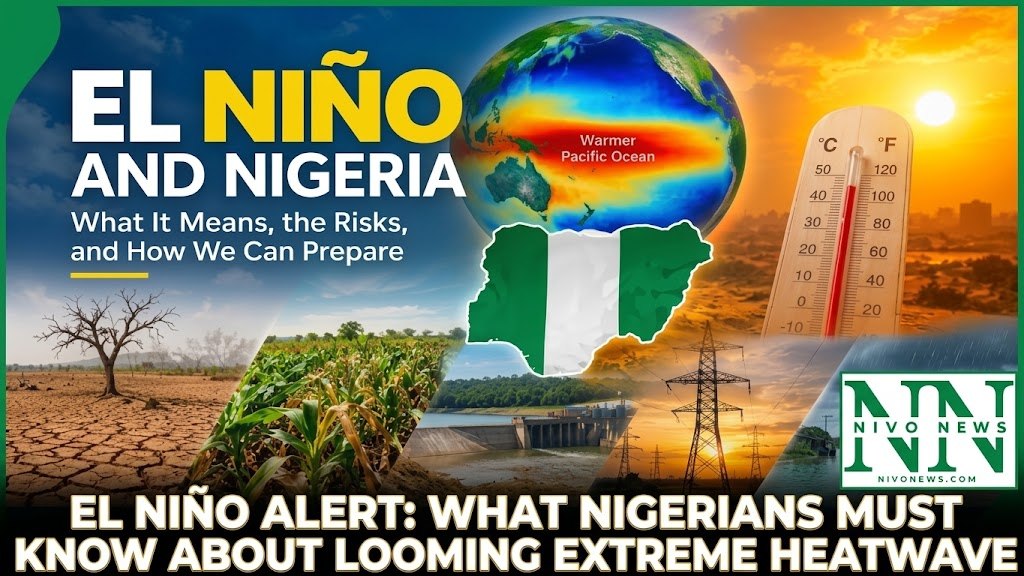
Nigeria may face significant public health challenges from extreme heat in the coming months as a strengthening El Niño climate pattern raises concerns about higher temperatures and changing rainfall patterns across the country, Naija News reports.....KINDLY READ THE FULL STORY HERE▶
Researchers at the University of Chicago’s Climate Impact Lab have projected that Nigeria could experience an additional 31,400 heat-related deaths between September 2026 and February 2027 if the forecast conditions occur.
The estimate, published in September, ranks Nigeria among the countries expected to record some of the highest numbers of additional heat-related deaths during the period.
However, the figure is a scientific projection rather than a confirmed death toll, and it does not mean that the deaths will inevitably occur.
The warning follows a September 3 report by the World Meteorological Organisation (WMO), which stated that El Niño had become firmly established and was expected to intensify into a very strong event, with potential effects on global weather patterns extending into early 2027.
Nigeria’s weather agency, the Nigerian Meteorological Agency (NiMet), also confirmed the onset of a strong El Niño event in its August 2026 climate update, cautioning that the development could influence weather conditions.
What Exactly Is El Niño?
El Niño is a natural climate phenomenon characterised by unusually warm sea surface temperatures in the central and eastern tropical Pacific Ocean.
Although the warming occurs thousands of kilometres away from Nigeria, it can influence atmospheric circulation around the world, potentially changing temperature and rainfall patterns in different regions.
El Niño is part of a broader climate cycle known as the El Niño-Southern Oscillation (ENSO). Its opposite phase, La Niña, occurs when sea surface temperatures in the same region of the Pacific Ocean become cooler than normal.
According to the WMO, El Niño typically occurs every two to seven years and generally lasts between nine and 12 months. Its effects differ across regions and may be influenced by other climate conditions.
Consequently, a strong El Niño does not automatically mean that every part of Nigeria will experience drought, flooding or extreme heat. However, it can increase the likelihood of unusual weather patterns, making advance preparation essential.
Why Nigeria Should Be Concerned
The potential impact of extreme heat extends beyond uncomfortable weather. Rising temperatures can threaten human health, agricultural production, water supplies and other essential services.
The Climate Impact Lab estimates that extreme heat could contribute to 451,000 additional deaths worldwide between June 2026 and February 2027, compared with a normal year. Nigeria accounts for a projected 31,400 of those deaths between September 2026 and February 2027.
The figures should not be interpreted as a certainty that a particular number of Nigerians will die. Instead, they highlight the potential scale of the health threat if temperatures rise and adequate protective measures are not implemented.
1. Extreme Heat Could Endanger Lives
One of the major concerns is the impact of prolonged exposure to high temperatures on human health.
Extreme heat can cause dehydration and heat exhaustion, and in severe cases, heatstroke, a life-threatening condition that requires immediate medical attention.
The World Health Organisation (WHO) identifies older people, infants, outdoor workers and individuals with underlying health conditions as particularly vulnerable to heat-related illnesses.
People working on farms, construction sites, in markets and along roads may face increased risks because of the long hours they spend outdoors, especially under direct sunlight.
To reduce these risks, Nigerians are advised to drink water regularly, wear lightweight and loose-fitting clothing, seek shade or cooler environments and avoid strenuous physical activities during the hottest hours of the day whenever possible.
Residents should also check on elderly relatives, children, neighbours and others who may be more susceptible to extreme temperatures.
Anyone who experiences severe symptoms such as confusion, convulsions or loss of consciousness during extreme heat should receive emergency medical attention.
2. Farmers Could Face Unpredictable Rainfall
Agriculture is another sector that could be affected by changes in rainfall patterns associated with shifting climate conditions.
If the rainy season ends earlier than expected or dry spells become prolonged, farmers may struggle to obtain sufficient water for their crops. Such conditions could disrupt planting schedules, affect crop development and reduce harvests.
Conversely, excessive rainfall in certain areas could trigger flooding, wash away crops and damage farmland.
NiMet’s August 2026 seasonal update highlighted the possibility of varying rainfall conditions across the country. Its outlook for August to October 2026 projected normal to above-normal rainfall across much of northern Nigeria, while parts of the South-West and Cross River State were expected to experience normal to below-normal rainfall.
These regional differences underline the importance of farmers following NiMet’s localised forecasts and adjusting their planting and water-management plans accordingly.

The Nigeria Democratic Congress (NDC) has announced that it generated ₦8.529 billion from the sale of nomination forms, party dues, levies and donations from supporters within its first seven months of operation.....KINDLY READ THE FULL STORY HERE▶
The party also disclosed that it spent ₦2.402 billion on political activities, including primary elections, publicity, staff salaries and other operational expenses.
The NDC National Treasurer, Peter Onigah, revealed the figures in Abuja on Monday while presenting the party’s financial statement at its third National Executive Committee (NEC) meeting, Naija News reports.
Onigah said the disclosure reflected the party’s commitment to transparency and accountability, assuring members and the public that its financial records would be open to scrutiny.
He added that a comprehensive breakdown of the party’s financial transactions would be made available before the end of its first accounting year.
“We have been very prudent. Our shelf is made up of technocrats, people who are experienced and people who have different capacities,” he said.
The treasurer explained that the party relied on financial contributions from its members and supporters because it did not yet have representatives in government.
“As a new party, we don’t have people in government yet. All of us are outside the government. So, we need to contribute together and ensure that our party will prevail and achieve the desired objectives,” he added.
Meanwhile, the NDC National Chairman, Moses Cleopas, said the decision to disclose the party’s finances was part of its regular accountability process and not a reaction to what he described as frivolous allegations circulating on social media.
Cleopas noted that political parties were required to submit their financial reports to the appropriate government institutions at the end of each year.
However, he said the NDC chose to brief its members on its financial position before completing its first year to promote transparency and build confidence in the party’s leadership.
“We are not up to one year. That will be after our presidential elections. But just because of what we are coming out from, we, the managers of the party, feel that in a network like this, even as we are not going into details, people must know what we are and how we are functioning and how we are managing,” he said.
He added that every party member had the right to understand how their collective resources were being managed.
“It is therefore the right and opportunity of every individual member to hear and to know what we are doing with our common resources,” Cleopas stated.
The chairman also disclosed that the party’s national leadership had prioritised the distribution of funds to its state chapters, assuring them that allocations would be made in line with the party’s constitution and objectives.
He further revealed that the NDC’s reconciliation committee had visited various geopolitical zones to engage aspirants who were dissatisfied with developments within the party ahead of the next election.
Cleopas urged members to set aside their differences and unite behind the party’s candidates to improve its chances of electoral success across the country.
“We are on a rescue mission for our nation. It is either now or never,” he said.
NDC Chairman Expresses Confidence In 2027 Victory
Cleopas also expressed confidence that the NDC would win the 2027 presidential election, predicting that its presidential candidate, Peter Obi, and running mate, Rabiu Musa Kwankwaso, would emerge as president and vice-president, respectively.
He urged party members to remain confident in the NDC’s chances, insisting that it had sufficient popular support to win the election.
“And as I said somewhere else, this is not the time for doubters. This is not the time for people to say, they have already reached a result, for where? This is not the time for people to say, will we succeed?
“No. We are succeeding. We are taking over the government. We are forming a government. Peter Obi is the next president of this country.
“Rabiu Kwankwaso is the next vice president of this country. How? By legitimately winning the popular votes of this country. And we know we have the votes,” he said.
The NEC meeting was attended by Obi, Kwankwaso, NDC national leader Seriake Dickson, members of the party’s National Working Committee and other senior party officials.
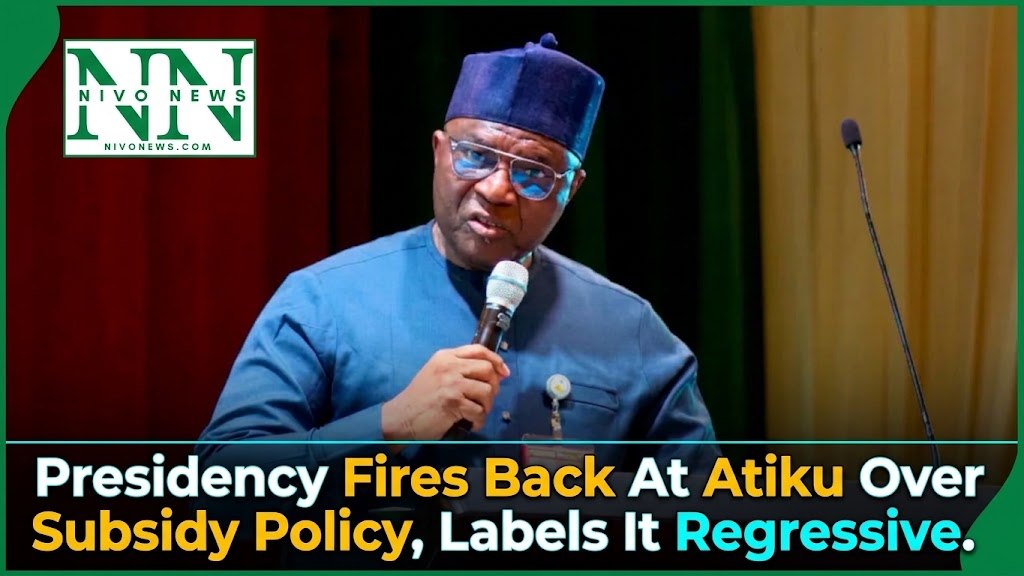
Bayo Onanuga, Special Adviser to President Bola Tinubu on Information and Strategy, has accused the African Democratic Congress (ADC) presidential candidate, Atiku Abubakar, of advocating what he described as a regressive fuel subsidy policy.....KINDLY READ THE FULL STORY HERE▶
Onanuga made the remark while reacting to Vice President Kashim Shettima’s criticism of Atiku’s ability to manage a modern economy.
Shettima had faulted the former vice president’s proposal to restore fuel subsidies, arguing that the move would take Nigeria backwards for political convenience.
Speaking at the Nigerian Economic Summit in Abuja on Monday, the vice president referenced Atiku’s training at the Kano School of Hygiene while questioning his capacity to manage the country’s economy.
Shettima also questioned Atiku’s knowledge of environmental sanitation, making a controversial remark about whether the former vice president could distinguish between flu and Ebola.
Supporting the vice president’s position, Onanuga recalled that Atiku worked as a sanitary inspector before joining the Nigerian Customs Service.
In a post on his X account, the presidential aide questioned Atiku’s understanding of economics, given his strong advocacy for the restoration of fuel subsidies.
Onanuga argued that reinstating the subsidy would reverse Nigeria’s economic progress by more than two decades.
He wrote: “Atiku Abubakar’s only qualification before joining the Nigerian Customs was as a sanitary inspector.
“You wonder what he knows about economics, given that he now advocates a regressive subsidy policy that will set our country back by over 20 years
-

 latest1 year ago
“Social Media Erupts As Jim Iyke Declares Rita Dominic Nollywood’s Most Beautiful”
-
 latest3 years ago
Edo Political Showdown: Oshiomhole Appears At Presidential Villa As Tinubu Hands APC Gubernatorial Flag To Okpebholo (Photos & Video)
-
 entertainment3 years ago
Love Knows No Age American Woman Defends Marriage To Young Nigerian Man “I’m Not 70”
-
 latest3 years ago
Olumide Akpata Strikes Again: Drops Killer Track, Sends Edo State Into Frenzy!(Video)
-
 Politics3 years ago
Nigerians React As Pastor Adeboye Foresees Passing Away On A Sunday After Enjoying A Satisfying Meal Of Pounded Yam
-
 latest3 years ago
FG Identifies 31 States At Risk Of Heavy Flooding In 2024: See Full List
-
 Politics3 years ago
BREAKING: Inspector-General Of Police Summons Top Police Commanders For Crucial-Security Challenges
-
 latest3 years ago
5 NYSC Corpers Perish In Fatal Road Accident Returning From Camp