
latest
“No Prosperity Without Hospitals: Expert Sounds Alarm On Nigeria’s Growth”

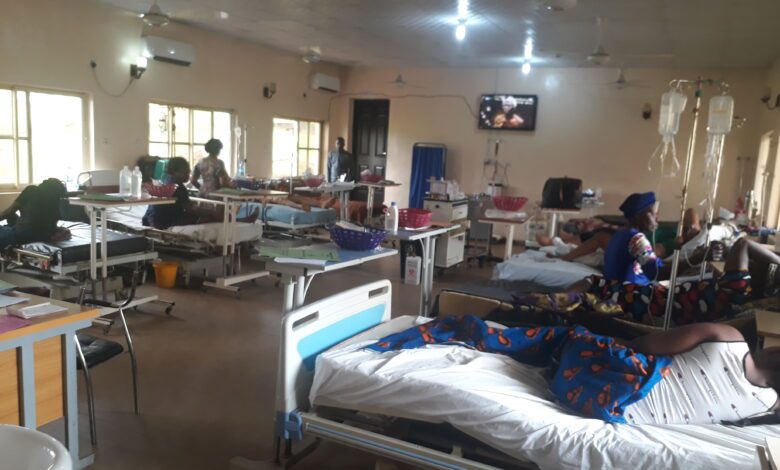
Public health is far more than hospitals and medical treatment—it is the backbone of a nation’s economic strength. In Nigeria, where millions grapple with preventable diseases and rising medical expenses consume household income, experts warn that neglecting healthcare is not only a social crisis but a significant threat to economic growth.....KINDLY READ THE FULL STORY HERE▶
Speaking in an interview monitored by Nivo News, Yusuf Hassan Wada, Health Policy and Advocacy Officer for the African Region at the Society for Family Health, underscored the critical link between health and national productivity. He stressed that a country cannot achieve sustainable development when its workforce is weakened by disease, poor access to care, and escalating healthcare costs.
According to Wada, economic growth and public health are deeply interconnected. When citizens are healthy, they live longer, work more efficiently, and contribute more meaningfully to national output. Conversely, a high disease burden drains resources, reduces life expectancy, and weakens productivity. In Nigeria, where both communicable and non-communicable diseases remain widespread, investing in healthcare is not merely a moral obligation but an economic strategy that lowers costs and accelerates growth.
He noted that poor health undermines productivity through absenteeism, reduced performance on the job, and premature deaths. Malaria alone, he explained, costs Nigeria billions of naira in lost work hours, while chronic conditions such as hypertension and diabetes diminish the potential of skilled professionals. In rural and informal sectors, illness directly reduces agricultural output and family income, creating a vicious cycle of poverty and stagnation.
Wada also highlighted the economic damage caused by health emergencies like COVID-19, cholera, and Lassa fever. These outbreaks, he said, disrupt supply chains, drain government budgets, erode investor confidence, and destroy small and medium-sized businesses. The COVID-19 pandemic, in particular, demonstrated that health crises inevitably translate into economic crises, forcing governments to divert development funds into emergency responses.
Proper healthcare financing, Wada argued, is among the most cost-effective drivers of growth. Every naira spent on preventive care and primary health services saves multiples in avoided hospital costs and lost productivity. Nations that experienced rapid economic transformation, particularly in East Asia, deliberately invested in health and education. Nigeria, he urged, must follow that example and stop viewing healthcare as a drain on resources.
On the financial strain of non-communicable diseases, Wada explained that lifelong conditions like diabetes and hypertension push families into poverty and put unsustainable pressure on public budgets. Out-of-pocket spending—currently over 70% of Nigeria’s total health expenditure—continues to devastate households, underscoring the urgent need for broader health insurance coverage. Expanding insurance schemes to include informal workers, he said, would protect citizens from catastrophic health costs while providing predictable funding for hospitals and clinics.
Wada further emphasized that unequal access to quality healthcare between rural and urban areas weakens national productivity. Rural communities, heavily reliant on agriculture, suffer higher mortality rates and poor immunization coverage, which directly affects food security and income. Without equitable health access, he warned, Nigeria cannot fully harness its demographic dividend.
Public-private partnerships, Wada added, are essential to bridge financing and infrastructure gaps. Collaborations in pharmaceutical supply chains, diagnostics, and insurance administration improve both service quality and economic outcomes, while creating jobs and boosting investor confidence.
Reflecting on lessons from the pandemic, Wada called for greater domestic manufacturing of medical supplies, stronger disease surveillance, and universal healthcare coverage. He cautioned that if health funding remains inadequate, Nigeria faces the risk of an unproductive population, deepening poverty, weakened investment inflows, and long-term economic instability.
“Underfunding health is not just a public health issue,” Wada concluded. “It is an economic time bomb that threatens Nigeria’s future.”
latest
Game Changer: Why Political Insiders Believe Makinde Is the Opposition’s Best Bet Against Tinubu!

-
The Allied Peoples Movement (APM) has urged other opposition parties to rally behind Oyo State Governor Seyi Makinde as a consensus presidential candidate to challenge President Bola Tinubu in 2027.....KINDLY READ THE FULL STORY HERE▶
-
-
Speaking in Abuja through its National Publicity Secretary, Abubakar Yusuf, the party noted that ongoing discussions facilitated by the G-100 pressure group are advancing toward presenting a unified opposition front ahead of an upcoming meeting.
-
Yusuf stressed that opposition stakeholders should prioritize national interest and regional rotation—allowing the South to complete another four-year term—over individual ambitions.
-
He touted Makinde’s governance track record, youth appeal, and proposed blueprints for national security and economic reform as key factors giving him an edge over other aspirants.
-
latest
Keep The Peace Or Lose Your Throne: Governor Otu Sends Shockwaves Through The Traditional Council!.

-
Speaking at the annual International Leboku Festival in Ugep, Yakurr Local Government Area, the governor strongly condemned the recent deadly inter-communal clashes between the Ugep and Idomi communities, labeling the violence a “show of shame.”....KINDLY READ THE FULL STORY HERE▶
-
-
Otu emphasized that traditional leaders are strictly accountable for upholding local peace and traditions, warning that the state government will withdraw certificates of recognition from royal fathers where violence erupts and will withhold recognition from communities plagued by parallel leadership factions.
-
Yakurr Council Chairman Chief Inyang Yibala Igri urged residents to choose development and historical ties over destruction, encouraging youths to focus on commercial farming.
-
Meanwhile, the Obol Lopon of Ugep, HRM Obol Ufem Ubana, pledged the traditional council’s commitment to sustaining harmony while drawing attention to local concerns, including tensions from dual coronations in Agoi-Ibami, requests for sports infrastructure upgrades, and media coverage improvements.
-

-
Joint forces comprising troops from the Army Headquarters Garrison and Operation SWEEP carried out a security raid on Sunday, August 23, 2026, targeting illegal shanties and suspected criminal hideouts in the Federal Capital Territory.....KINDLY READ THE FULL STORY HERE▶
-
-
The sweep, which commenced around 4:00 p.m., spanned several communities across the Abuja Municipal Area Council (AMAC), including Karshi, Jeje, Kurape, and Nyanya, with the objective of eliminating safe havens for criminals and boosting security surveillance.
-
According to security analyst Zagazola Makama, the operation successfully dismantled multiple unauthorized structures in areas identified as vulnerable.
-
Following the exercise, the Mai-Anguwa of Nyanya praised the military action and committed to maintaining strong intelligence sharing and communication with security agencies to flag suspicious activities.
-
-

 latest12 months ago
“Social Media Erupts As Jim Iyke Declares Rita Dominic Nollywood’s Most Beautiful”
-
 latest2 years ago
Edo Political Showdown: Oshiomhole Appears At Presidential Villa As Tinubu Hands APC Gubernatorial Flag To Okpebholo (Photos & Video)
-
 entertainment2 years ago
Love Knows No Age American Woman Defends Marriage To Young Nigerian Man “I’m Not 70”
-
 latest2 years ago
Olumide Akpata Strikes Again: Drops Killer Track, Sends Edo State Into Frenzy!(Video)
-
 Politics3 years ago
Nigerians React As Pastor Adeboye Foresees Passing Away On A Sunday After Enjoying A Satisfying Meal Of Pounded Yam
-
 latest2 years ago
FG Identifies 31 States At Risk Of Heavy Flooding In 2024: See Full List
-
 Politics3 years ago
BREAKING: Inspector-General Of Police Summons Top Police Commanders For Crucial-Security Challenges
-
 latest2 years ago
5 NYSC Corpers Perish In Fatal Road Accident Returning From Camp