
Latest News
Terror From The Skies: Sahel Militants Weaponise Civilian Drones In Deadly Attacks

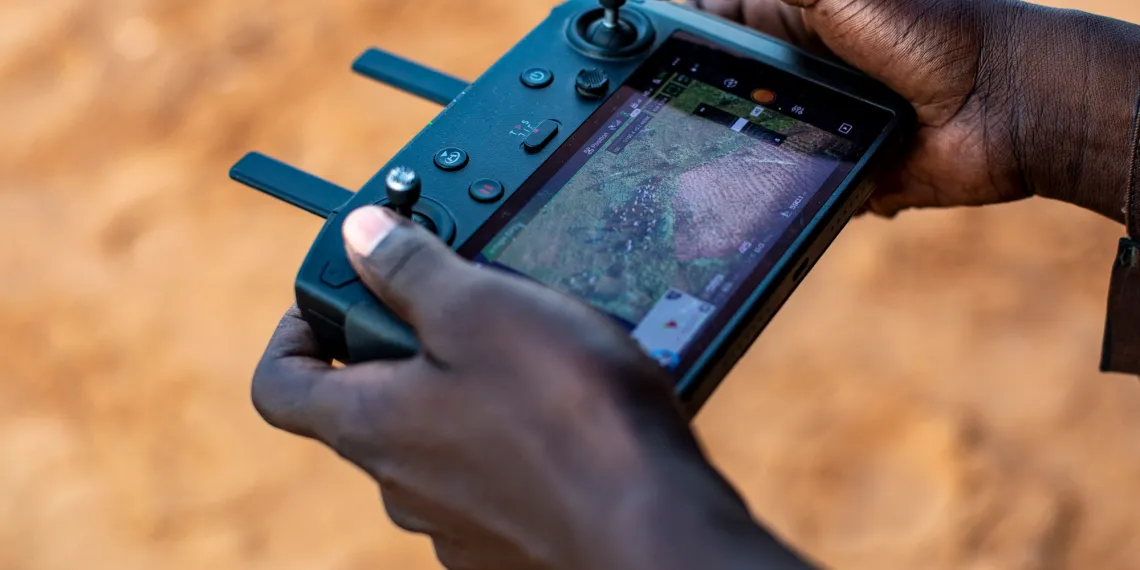
As insurgents move away from face-to-face combat with armed forces, they are turning to commercial drones as tools for launching assaults.....KINDLY READ THE FULL STORY HERE▶
Terrorist groups operating in the Central Sahel are increasingly turning to commercially available drones as a new weapon of war, a shift in strategy aimed at bypassing the military superiority of regional armed forces. According to a government statement released after a series of attacks in western Mali on July 1, the use of kamikaze drones has become a growing trend among armed groups across Mali, Burkina Faso, and Niger.
Initially used for surveillance and propaganda, drones have now been adapted to drop improvised explosive devices and conduct suicide missions. This evolution marks a turning point in asymmetric warfare in the region, inflicting growing casualties and structural damage while instilling fear in security forces.
The tactic appears to have been inspired by similar drone deployments in conflicts in Libya and the Middle East. It now features prominently in the operations of separatist and extremist groups across the Sahel.
In Burkina Faso, more than a dozen suicide drone attacks have occurred since February. In May, Jama’at Nusrat ul-Islam wa al-Muslimin (JNIM) launched drone-led assaults on Djibo and Diapaga. Meanwhile, in Niger, the Islamic State in the Greater Sahara (ISGS) used kamikaze drones for the first time on May 25, targeting an army base in Eknewan near the Malian border and killing 64 soldiers.
In Mali, the Azawad Liberation Front used drones in an April attack on a Malian military command and the Wagner Group’s base in Léré, southwest of Timbuktu. They had earlier deployed similar tactics during the battle of Tinzaouaten in Kidal region in July 2024, resulting in significant casualties for Malian and Wagner forces. Additional drone strikes were reported in Goundam and Léré in September and October 2024, with another attempted drone attack on May 5 near Amachache, close to the Algerian border.
Militant groups are reportedly modifying off-the-shelf civilian drones by adding improvised launching mechanisms, allowing them to carry out more targeted and destructive attacks. These drones—often sold in local markets for agricultural or media purposes—are inexpensive, easy to conceal, and hard to track due to porous borders and weak regional oversight.
Despite increased investment in military equipment by Mali, Burkina Faso, and Niger, their inability to detect or intercept these small and low-flying drones has created a major vulnerability. Security forces are increasingly being ambushed at camps, checkpoints, and convoys—raising the urgency for anti-drone defenses, even if costly.
By mirroring the drone warfare tactics of national armies—such as the deployment of Turkish-made Bayraktar drones—armed groups have not only adapted to modern combat but are exploiting gaps in the region’s defense systems.
The humanitarian toll is equally troubling. Civilians in these conflict zones face rising threats of indiscriminate violence, with drone strikes exacerbating already fragile security and displacement crises.
On May 22, the Alliance of Sahel States—comprising Mali, Burkina Faso, and Niger—along with the Economic Community of West African States (ECOWAS), committed to greater cooperation in combating terrorism. Experts suggest this should include regulation of commercial drone sales and use, possibly through the Wassenaar Arrangement, which restricts the export of dual-use technologies.
While military solutions are critical, analysts stress the need for non-kinetic responses, such as promoting defections among insurgents and addressing the economic and social conditions that fuel extremism.
According to Hassane Koné and Fahiraman Rodrigue Koné of the ISS Regional Office for West Africa and the Sahel, the increasing reliance on drones by non-state actors represents a dangerous escalation—one that demands both immediate countermeasures and long-term strategic responses to prevent further destabilisation of the Sahel.
”NIVONEWS REPORTS”
Latest News
Tears For A Titan: Family Unveils Emotional Three-Day Funeral Plan For Iconic Actor Kola Oyewo!.

The funeral arrangements for the celebrated Nigerian actor, theatre scholar, and traditional ruler, Chief Dr. Adekola Gabriel Oyewo (Kola Oyewo), have been finalized by his family, with interment scheduled for Friday, August 7, 2026, in Osun State. The veteran actor passed away at age 80, leaving behind a legacy as a prominent figure in stage, television, and academia.....KINDLY READ THE FULL STORY HERE▶
The three-day farewell, organized by the Balogun Oyekola Oyewo Memorial Committee, follows this schedule:
-
Wednesday, August 5, 2026: A wake-keep and service of songs will be held at St. Mary’s Catholic Church, Igboya, Ile-Ife.
-
Thursday, August 6, 2026: A commendation mass is scheduled at St. Mary’s Catholic Church, followed by an artistes’ night at the Obafemi Awolowo University (OAU) Oduduwa Hall. An exhibition celebrating his works and photographs will also open at the Pit Theatre, African Studies Building, OAU, running through Friday.
-
Friday, August 7, 2026: After a morning departure from his residence, a requiem mass will take place at St. Joseph Catholic Church, Oba-Ile. He will be laid to rest in a private ceremony at 12:45 p.m. at Labaluyegbe Villa, followed by a reception at Aderonmu Grammar School Field.
The Bangbola Oyewo family of the Ese-Ola Royal House remembered him as a beloved family man, traditional leader, and an inspiration to generations of theatre practitioners. His passing is regarded as the end of an era for the Nigerian theatre community, where he served as an Associate Professor of Drama and a long-standing mentor.
Latest News
Nation In Shock! Herders’ King Brutally Murdered: Cops Race Against Time To Catch Killers!.

Authorities have initiated a comprehensive investigation into the murder of Risku Mohammed, the Benue State Chairman of the Miyetti Allah Cattle Breeders Association of Nigeria (MACBAN), and his associate, Yakubu Isa. The two men were reportedly ambushed by unidentified attackers near Ahimeni in the Okodu area while traveling back from a peace summit in Otukpo.....KINDLY READ THE FULL STORY HERE▶
Benue State Commissioner of Police, Cletus Nwadiogbu, condemned the act as a “senseless and criminal” effort to destabilize local peace and security. Through PPRO DSP Udeme Edet, the Commissioner announced that tactical and intelligence teams have been mobilized to hunt down the perpetrators. CP Nwadiogbu has urged the public to avoid spreading rumors or pursuing vigilante justice, instead appealing for any useful information to be shared with the police to assist in the swift arrest and prosecution of those responsible.
Option 2: Concise News Style
Police in Benue State are hunting for the gunmen who killed MACBAN State Chairman Risku Mohammed and Yakubu Isa. The victims were attacked near Ahimeni in the Okodu area while returning from a peace meeting in Otukpo.
State Commissioner of Police Cletus Nwadiogbu denounced the killings and vowed that the command would “leave no stone unturned” in bringing the culprits to justice. Tactical units have been deployed to the area to track down the assailants. The Commissioner extended his condolences to the bereaved families and called on residents to remain calm, law-abiding, and to report any leads to the nearest police station. He reiterated the command’s firm commitment to ensuring the safety of all citizens and holding the criminals accountable.
Option 3: Action-Oriented
Following the tragic assassination of Benue MACBAN Chairman Risku Mohammed and Yakubu Isa, the State Police Command has launched a full-scale investigation. The victims were killed by unknown assailants near Ahimeni, Okodu, following a peace engagement in Otukpo.
Commissioner of Police Cletus Nwadiogbu has directed tactical and intelligence units to track down and arrest the attackers immediately. In a public statement, the command emphasized that such criminal acts will not be tolerated and that every effort is being made to secure justice for the victims. The public is encouraged to assist the investigation by reporting any relevant information through official channels and is cautioned against fueling tensions by sharing unverified reports.

On June 26, 2026, the dollar-to-naira exchange rate at the Lagos parallel market, commonly referred to as the black market, saw sellers offering the dollar at ₦1402, while buyers were purchasing it at ₦1391, according to Bureau De Change (BDC) sources. It is important to note that the Central Bank of Nigeria (CBN) does not officially recognize this market and advises individuals to conduct foreign exchange transactions through their respective banks.....KINDLY READ THE FULL STORY HERE▶
Additionally, the CBN’s official rates for the same period ranged from a high of ₦1385 to a low of ₦1376. Please be aware that actual transaction prices may vary and might differ from the figures provided in this report.
Exchange Rate Summary (June 26, 2026)
-
Parallel Market (Selling): ₦1402
-
Parallel Market (Buying): ₦1391
-
CBN Official Rates: ₦1376 – ₦1385
What specific aspect of the current foreign exchange market or its impact on consumer trends would you like to discuss further?
-

 latest10 months ago
“Social Media Erupts As Jim Iyke Declares Rita Dominic Nollywood’s Most Beautiful”
-
 latest2 years ago
Edo Political Showdown: Oshiomhole Appears At Presidential Villa As Tinubu Hands APC Gubernatorial Flag To Okpebholo (Photos & Video)
-
 entertainment2 years ago
Love Knows No Age American Woman Defends Marriage To Young Nigerian Man “I’m Not 70”
-
 latest2 years ago
Olumide Akpata Strikes Again: Drops Killer Track, Sends Edo State Into Frenzy!(Video)
-
 Politics3 years ago
Nigerians React As Pastor Adeboye Foresees Passing Away On A Sunday After Enjoying A Satisfying Meal Of Pounded Yam
-
 latest2 years ago
FG Identifies 31 States At Risk Of Heavy Flooding In 2024: See Full List
-
 Politics3 years ago
BREAKING: Inspector-General Of Police Summons Top Police Commanders For Crucial-Security Challenges
-
 latest2 years ago
5 NYSC Corpers Perish In Fatal Road Accident Returning From Camp