
Latest News
No More Waste! Tinubu Says Subsidy Billions Now Funding Real Development


ABUJA – President Bola Ahmed Tinubu has reiterated his administration’s dedication to transparency and responsible financial management, stating that funds saved from the removal of fuel subsidies are being redirected into critical sectors to promote inclusive development and restore public confidence.....KINDLY READ THE FULL STORY HERE▶
President Bola Ahmed Tinubu has reaffirmed his administration’s commitment to fiscal discipline, transparency, and inclusive growth, revealing that funds saved from the removal of fuel subsidies are being strategically reinvested into critical sectors to rebuild trust and stimulate national development.
Speaking through the Minister of State for Finance, Dr. Doris Nkiruka Uzoka-Anite, at the National Conference on Public Accounts and Fiscal Governance held Monday in Abuja, President Tinubu noted that ending the fuel subsidy—though a difficult decision—was necessary to realign Nigeria’s fiscal priorities.
“In 2022 alone, Nigeria spent over ₦4 trillion on fuel subsidies—more than the entire capital budget for that year. Such a fiscal trajectory was unsustainable and inequitable, benefiting the wealthy, encouraging cross-border smuggling, and fueling systemic inefficiencies,” he said.
Tinubu explained that the elimination of the subsidy has freed up vital resources, now being redirected into targeted economic programmes, expanded social welfare schemes, mass transit improvements, and essential infrastructure.
“Importantly, these efforts have helped strengthen our fiscal buffers and increased Nigeria’s resilience to external economic shocks,” he added.
Describing fiscal governance as the foundation for national progress, the president stressed the need for transparency, accountability, and prudent resource management—values he said are essential to convert national wealth into tangible improvements in citizens’ lives.
While acknowledging past inefficiencies and an overdependence on oil revenues, Tinubu voiced optimism over the country’s reform trajectory. He highlighted recent tax and revenue reforms aimed at simplifying processes, digitising collections, broadening the tax base, and improving the ease of doing business.
“These reforms are not mere administrative updates—they are transformative. We are building a diversified, self-sustaining economy no longer tethered solely to oil,” he said.
President Tinubu pointed to renewed investment in key sectors—agriculture, manufacturing, technology, renewable energy, mining, and the creative industry—driven by reform-minded policies. He also cited the newly created National Credit Guarantee Company as a tool to boost small and medium-sized enterprises (SMEs), promote local production, and support non-oil exports.
On monetary policy, Tinubu acknowledged the Central Bank of Nigeria’s efforts to stabilise the naira and rein in inflation, noting improved coordination between fiscal and monetary authorities.
He reaffirmed the administration’s zero-tolerance stance on opacity in public finance, emphasizing the role of platforms such as IPPIS, GIFMIS, and the Open Treasury Portal in enhancing transparency and real-time accountability.
“These systems allow us to track public expenditure, ensure value for money, and give citizens access to the state’s financial operations. We must leave behind a legacy of openness,” he asserted.
Tinubu also urged the National Assembly, particularly its Public Accounts Committees (PACs), to carry out their oversight functions with integrity and independence, reminding lawmakers that fiscal oversight is a constitutional obligation, not a political weapon.
“Every naira must translate into value. Budgets must reflect the priorities and needs of the people,” he declared, also calling on the media, civil society, and judiciary to actively support fiscal accountability.
Legislative Leaders Sound the Alarm
Senate President Godswill Akpabio, represented by Senator Abdul Ningi, raised concerns over rising non-compliance by public officials with legislative summons, urging PACs to assert their constitutional powers under Sections 80, 81, and 88 of the 1999 Constitution.
“Refusal to appear before PACs is not just disrespectful—it is an assault on democracy and undermines the rule of law,” he warned.
Akpabio called for stronger technical capacity and digital tools to help lawmakers monitor institutions such as the CBN, NNPC Limited, and FIRS, and demanded that the conference produce concrete strategies for improved fiscal oversight.
N300 Billion Audit Queries Unresolved — Abbas
Speaker of the House of Representatives, Rt. Hon. Abbas Tajudeen (represented by House Leader Julius Ihonbvere), lamented the failure to act on audit queries amounting to over ₦300 billion, describing it as a persistent culture of impunity.
“There must be consequences for financial violations. Audit recommendations cannot continue to be ignored,” he said.
He noted that the House has adopted a more aggressive oversight approach—digitising audits, implementing follow-up mechanisms, and introducing real-time compliance tracking.
“Fiscal oversight is now a strategic development tool, not a procedural formality,” Abbas said, calling for a unified national audit system to ensure accountability across all levels of government.
Wadada: End Fiscal Lawlessness Now
Senator Ahmed Wadada, Chair of the Senate PAC, demanded a national recommitment to fiscal integrity, saying reckless financial practices have deprived the country of meaningful development.
“Fiscal governance is the ethical compass of public service. It determines whether revenue becomes prosperity or is lost to corruption,” he stated.
He cited a recent Auditor-General’s report exposing major gaps in accountability and pledged that the 10th Senate would strengthen financial transparency, hold public hearings, and review outdated fiscal laws.
Salam: Systemic Overhaul Urgent
House PAC Chairman, Hon. Bamidele Salam, called for a complete overhaul of Nigeria’s fiscal framework, insisting the country must shift from rhetoric to reforms.
“We must instill a culture where public funds are viewed as a sacred trust—not a privilege for a few,” he said.
Salam also urged greater citizen involvement in budgeting and governance, while acknowledging gains under Tinubu’s Renewed Hope Agenda. However, he stressed the need for stronger audit systems, transparent reporting, and alignment with constitutional mandates.
AFROPAC Hails Nigeria’s Reform Leadership
AFROPAC President, Hon. Medard Lubega Sseggona, commended Nigeria’s fiscal reform efforts, saying the country is leading by example in public financial management across Africa.
“This conference sends a strong signal that Nigeria is committed to building transparent, accountable governance. It’s a model for the continent,” he said.
”NIVONEWS’
Latest News
Tears For A Titan: Family Unveils Emotional Three-Day Funeral Plan For Iconic Actor Kola Oyewo!.

The funeral arrangements for the celebrated Nigerian actor, theatre scholar, and traditional ruler, Chief Dr. Adekola Gabriel Oyewo (Kola Oyewo), have been finalized by his family, with interment scheduled for Friday, August 7, 2026, in Osun State. The veteran actor passed away at age 80, leaving behind a legacy as a prominent figure in stage, television, and academia.....KINDLY READ THE FULL STORY HERE▶
The three-day farewell, organized by the Balogun Oyekola Oyewo Memorial Committee, follows this schedule:
-
Wednesday, August 5, 2026: A wake-keep and service of songs will be held at St. Mary’s Catholic Church, Igboya, Ile-Ife.
-
Thursday, August 6, 2026: A commendation mass is scheduled at St. Mary’s Catholic Church, followed by an artistes’ night at the Obafemi Awolowo University (OAU) Oduduwa Hall. An exhibition celebrating his works and photographs will also open at the Pit Theatre, African Studies Building, OAU, running through Friday.
-
Friday, August 7, 2026: After a morning departure from his residence, a requiem mass will take place at St. Joseph Catholic Church, Oba-Ile. He will be laid to rest in a private ceremony at 12:45 p.m. at Labaluyegbe Villa, followed by a reception at Aderonmu Grammar School Field.
The Bangbola Oyewo family of the Ese-Ola Royal House remembered him as a beloved family man, traditional leader, and an inspiration to generations of theatre practitioners. His passing is regarded as the end of an era for the Nigerian theatre community, where he served as an Associate Professor of Drama and a long-standing mentor.
Latest News
Nation In Shock! Herders’ King Brutally Murdered: Cops Race Against Time To Catch Killers!.

Authorities have initiated a comprehensive investigation into the murder of Risku Mohammed, the Benue State Chairman of the Miyetti Allah Cattle Breeders Association of Nigeria (MACBAN), and his associate, Yakubu Isa. The two men were reportedly ambushed by unidentified attackers near Ahimeni in the Okodu area while traveling back from a peace summit in Otukpo.....KINDLY READ THE FULL STORY HERE▶
Benue State Commissioner of Police, Cletus Nwadiogbu, condemned the act as a “senseless and criminal” effort to destabilize local peace and security. Through PPRO DSP Udeme Edet, the Commissioner announced that tactical and intelligence teams have been mobilized to hunt down the perpetrators. CP Nwadiogbu has urged the public to avoid spreading rumors or pursuing vigilante justice, instead appealing for any useful information to be shared with the police to assist in the swift arrest and prosecution of those responsible.
Option 2: Concise News Style
Police in Benue State are hunting for the gunmen who killed MACBAN State Chairman Risku Mohammed and Yakubu Isa. The victims were attacked near Ahimeni in the Okodu area while returning from a peace meeting in Otukpo.
State Commissioner of Police Cletus Nwadiogbu denounced the killings and vowed that the command would “leave no stone unturned” in bringing the culprits to justice. Tactical units have been deployed to the area to track down the assailants. The Commissioner extended his condolences to the bereaved families and called on residents to remain calm, law-abiding, and to report any leads to the nearest police station. He reiterated the command’s firm commitment to ensuring the safety of all citizens and holding the criminals accountable.
Option 3: Action-Oriented
Following the tragic assassination of Benue MACBAN Chairman Risku Mohammed and Yakubu Isa, the State Police Command has launched a full-scale investigation. The victims were killed by unknown assailants near Ahimeni, Okodu, following a peace engagement in Otukpo.
Commissioner of Police Cletus Nwadiogbu has directed tactical and intelligence units to track down and arrest the attackers immediately. In a public statement, the command emphasized that such criminal acts will not be tolerated and that every effort is being made to secure justice for the victims. The public is encouraged to assist the investigation by reporting any relevant information through official channels and is cautioned against fueling tensions by sharing unverified reports.
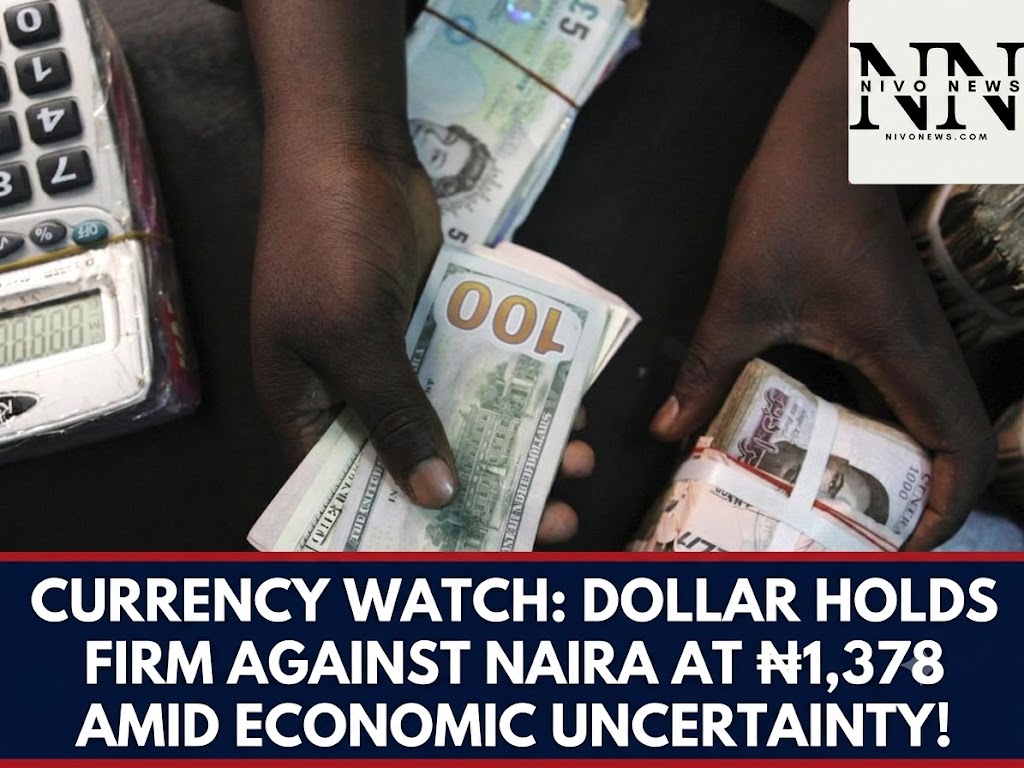
On June 26, 2026, the dollar-to-naira exchange rate at the Lagos parallel market, commonly referred to as the black market, saw sellers offering the dollar at ₦1402, while buyers were purchasing it at ₦1391, according to Bureau De Change (BDC) sources. It is important to note that the Central Bank of Nigeria (CBN) does not officially recognize this market and advises individuals to conduct foreign exchange transactions through their respective banks.....KINDLY READ THE FULL STORY HERE▶
Additionally, the CBN’s official rates for the same period ranged from a high of ₦1385 to a low of ₦1376. Please be aware that actual transaction prices may vary and might differ from the figures provided in this report.
Exchange Rate Summary (June 26, 2026)
-
Parallel Market (Selling): ₦1402
-
Parallel Market (Buying): ₦1391
-
CBN Official Rates: ₦1376 – ₦1385
What specific aspect of the current foreign exchange market or its impact on consumer trends would you like to discuss further?
-

 latest10 months ago
“Social Media Erupts As Jim Iyke Declares Rita Dominic Nollywood’s Most Beautiful”
-
 latest2 years ago
Edo Political Showdown: Oshiomhole Appears At Presidential Villa As Tinubu Hands APC Gubernatorial Flag To Okpebholo (Photos & Video)
-
 entertainment2 years ago
Love Knows No Age American Woman Defends Marriage To Young Nigerian Man “I’m Not 70”
-
 latest2 years ago
Olumide Akpata Strikes Again: Drops Killer Track, Sends Edo State Into Frenzy!(Video)
-
 Politics3 years ago
Nigerians React As Pastor Adeboye Foresees Passing Away On A Sunday After Enjoying A Satisfying Meal Of Pounded Yam
-
 latest2 years ago
FG Identifies 31 States At Risk Of Heavy Flooding In 2024: See Full List
-
 Politics3 years ago
BREAKING: Inspector-General Of Police Summons Top Police Commanders For Crucial-Security Challenges
-
 latest2 years ago
5 NYSC Corpers Perish In Fatal Road Accident Returning From Camp