
Latest News
Tinubu Declares: Brighter Days Ahead for Nigerians!


As President Bola Ahmed Tinubu celebrated his second year in office on May 29, 2025, we requested a one-on-one interview. Aso Rock instead asked for our questions in advance. Here are the President’s responses, touching on his reforms, strides in infrastructure and agriculture, efforts in tackling insecurity, the rising APC numbers, ECOWAS at 50, and what lies ahead for Nigerians under his leadership.....KINDLY READ THE FULL STORY HERE▶
Mr. President, you recently led Nigeria’s delegation to the Vatican for the inauguration of Pope Leo XIV. Many Nigerians commended your presence. As a Muslim leader, what motivated your decision to attend?
The Pope extended a formal invitation to me as the President of Nigeria, one of the nations invited to witness this significant event. My attendance reflected our national values of interfaith harmony, a principle we deeply uphold in Nigeria.
Beyond the symbolism, this visit underscored our belief in fostering deeper interfaith dialogue. It’s not just about religious diplomacy—it’s about promoting mutual understanding, tolerance, and global solidarity. We must rise above religious divisions and affirm our common humanity through cooperation and goodwill.
Muslims and Christians in Nigeria have long coexisted peacefully, and I believe we must deepen this relationship. As a Muslim married to a devout Christian, I live the reality of religious harmony every day.
You assumed office during a turbulent economic period. Two years in, are you satisfied with the economy’s trajectory?
That’s not the right question. A more accurate one would be: Have we made the right policy decisions to get the economy on the path to stability and growth? My answer is a resounding yes.
From day one, we knew that tough choices were inevitable. We swiftly removed the fuel subsidy and harmonized the foreign exchange windows—two major steps that had long been deferred. These actions were necessary to halt the financial hemorrhaging that enriched a few and drained the nation’s coffers.
Yes, it came with short-term hardship, but it was the bold reset the economy needed. Today, our fiscal condition is more stable, and we’re laying the groundwork for long-term, inclusive growth. We’re already seeing signs of progress, and more direct benefits will begin to reach Nigerians soon.
We’re not waiting passively. For instance, we’ve approved Medipool, a bulk procurement initiative for essential medicines to bring down healthcare costs. We’re also reintroducing commodity boards to manage and stabilize food prices.
Looking back, given the hardship caused by subsidy removal and exchange rate unification, would you still make the same decisions?
Absolutely. Knowing what I know now, I would do it again.
Subsidies on consumption were unsustainable and regressive. They depleted public funds and encouraged inefficiencies. Removing them was vital for restoring financial discipline and fiscal sustainability.
The benefits are emerging. Inflation, which peaked in mid-2024, has begun to decline—dropping to 23.71% in April 2025 from 34.19% in June 2024. As production picks up and policy effects cascade through the economy, the cost of living will continue to moderate.
We’ve paired these reforms with strong monetary policy from the Central Bank, and we’re seeing the beginnings of a more stable economic environment.
Yet many Nigerians say they still don’t feel the positive impact of your reforms. What is your government doing to ease the burden and improve lives more quickly?
That concern is valid, and I understand it deeply.
We are working to accelerate the translation of macroeconomic gains into improvements in people’s daily lives. While reforms take time to show full effect, we are deploying short- and medium-term interventions to support households—ranging from healthcare initiatives to targeted support for agriculture and MSMEs.
The resilience Nigerians have shown during this transition will not go unrewarded. Already, we’re witnessing a rise in investor confidence and FDI commitments. In January 2025 alone, our trade surplus doubled to $2.2 billion, up from $1.1 billion in December 2024.
These are early indicators that the economy is turning a corner. We are staying the course, and the fruits of reform will be harvested in due time.
Last year, your government pledged to cultivate 500,000 hectares to boost food production. How far have you gone with this target, especially working with state governors?
We’re making steady progress. Not every state has the same capacity to provide vast arable land, but we’ve adopted flexible models tailored to each state’s context.
For example, Lagos is constrained by geography but has innovated in food logistics and value chains. Other states, particularly in the North, have supported large-scale cultivation during both dry and wet seasons. States like Jigawa have contributed to rising yields of staples like rice, maize, wheat, and cassava—helping reduce food prices.
We’re also fostering inter-state agricultural cooperation and providing federal support to bridge existing gaps.
During your G20 visit to Brazil, you met with JBS S.A., which pledged a $2.5 billion investment in Nigeria’s livestock sector. What progress has been made since?
The engagement with JBS is moving forward. They’ve already dispatched a technical team to Nigeria, and discussions with the Ministries of Agriculture and Livestock Development are underway.
Such large-scale investments require due diligence, community engagement, and regulatory approvals. An environmental impact assessment (EIA) is a necessary part of the process.
We’re working to remove bureaucratic hurdles and ensure this transformational investment is realized. It holds promise for modernizing animal husbandry, addressing farmers-herders conflicts, and creating jobs across the value chain.
You’ve secured investment commitments exceeding $50 billion. Two years on, how many of these have been fully actualized?
There’s often a lag between investment announcements and disbursement. Investors need time to conduct feasibility studies, secure financing, and finalize contracts.
We’re closely monitoring these projects to ensure follow-through. After my trip to China in September 2024, we received multiple pledges. To ensure delivery, I appointed a seasoned coordinator as the Nigeria–China Relations Czar to fast-track implementation.
Our job is to remove red tape and create a conducive environment for capital to flow. Nigerians will see the impact of these commitments in sectors like energy, infrastructure, and manufacturing soon.
Some critics say your administration suffers from weak coordination, which slows down implementation. How are you addressing this as you begin the second half of your tenure?
That perception doesn’t reflect reality. This administration is intentional and collaborative. Fiscal and monetary teams meet regularly to align on strategy, and ministries are synchronizing their efforts across sectors.
There will always be room for improvement, and where gaps are observed, we act swiftly to address them. Our record shows results—from stabilizing the foreign exchange market to halting Ways and Means violations.
Coordination is not our weakness—it’s our strength.
Security remains a major concern, especially with renewed attacks in Borno and widespread kidnappings. Is your government winning the fight?
Yes, we are making significant progress. Many areas in the Northeast that were once overrun by terrorists have been reclaimed. Thousands of abductees have been rescued, and several terrorist commanders have been neutralized.
We’re not complacent. We’re launching Forest Guards to flush out criminal elements from hideouts. We are also investing in modern security hardware, intelligence, and the welfare of our armed forces.
Security is foundational to development, and we are determined to restore peace and stability across the country.
As ECOWAS Chair, how are you positioning Nigeria amid global tensions and shifting trade dynamics?
Nigeria’s leadership in ECOWAS is focused on economic integration, security, and democratic consolidation. The region has immense potential—abundant natural resources, youthful populations, and untapped markets.
We are strengthening intra-regional trade through unified payment systems, tariff reforms, and improved border infrastructure. We are also addressing political instability with a firm commitment to democratic norms.
Amid global uncertainties, Nigeria is emerging as a stabilizing force in West Africa and a respected voice on the global stage.
What major infrastructure should Nigerians expect to be delivered in the next two years?
A lot is in the pipeline. We’re completing legacy projects and launching transformative new ones.
Projects like the Lagos–Calabar and Sokoto–Badagry highways will link 18 states and unlock economic corridors that have been dormant for decades. The Kano–Kaduna and Kano–Katsina–Maradi rail lines are on track for completion within 18 months.
By May 31, I will commission major road projects including Section I of the Lagos–Calabar Highway, the Lekki Deep Sea Port Access Road, and a slew of roads across Kano and Zaria.
We’re also focused on Abuja’s transformation, with 19 new FCT projects set for commissioning soon. Creative financing strategies are helping us address the $3 trillion infrastructure gap estimated by the World Bank.
At your party’s National Summit, the APC endorsed you for re-election in 2027. What does that mean to you, and do you think it’s premature?
The endorsement is a reflection of the party’s confidence in our work so far. It’s not about campaigning—it’s about taking stock. After two years of reforms and rebuilding, the APC evaluated our performance and gave us a strong vote of confidence.
I deeply appreciate the support and take it as motivation to continue delivering for Nigerians.
As for those crying foul, they’re free to strategize however they like. Our democracy guarantees freedom of association and political alignment. Let the results speak for themselves.
Some fear the emergence of a one-party state, which they say is risky for Nigeria’s diversity. What’s your take?
That’s political rhetoric. In every democracy, parties rise and fall based on performance and the people’s will.
If Nigerians are flocking to the APC, it’s not coercion—it’s conviction. They’re joining a party that’s delivering. Our constitution protects freedom of association, and we respect that fully.
We’re not chasing anyone away. Our doors are open to all who want to contribute to building a better Nigeria.

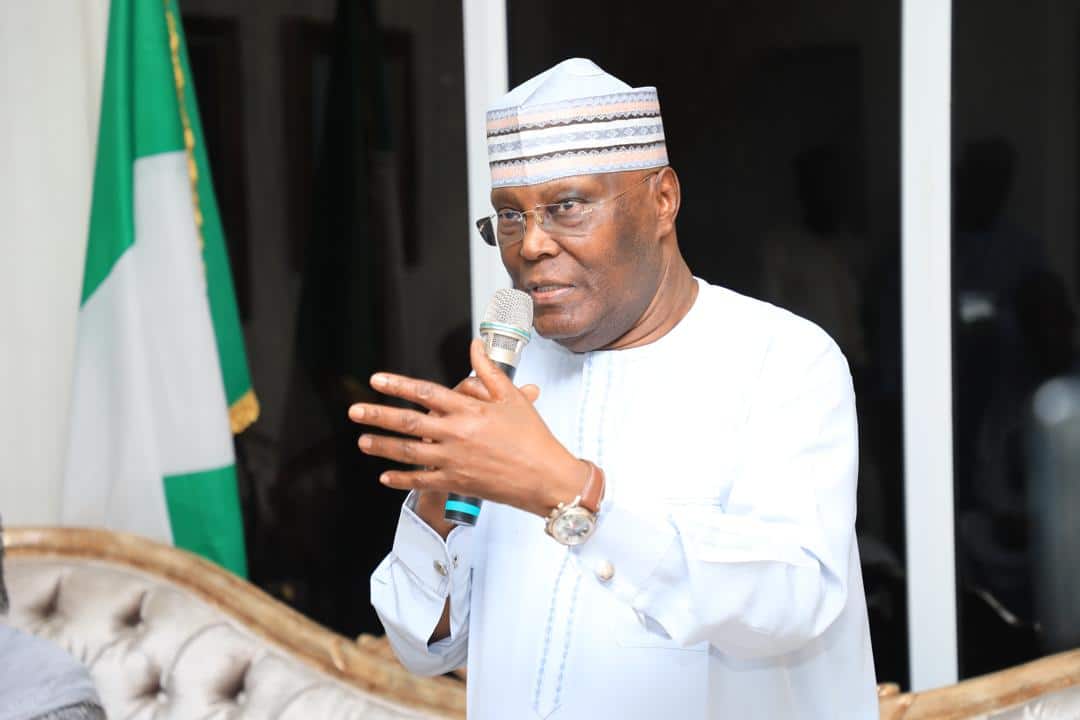
Former Vice President Atiku Abubakar has revealed that his push for an opposition coalition was initially rejected by members of the Peoples Democratic Party (PDP).....KINDLY READ THE FULL STORY HERE▶
Former Vice President Atiku Abubakar has said the African Democratic Congress (ADC) will first pursue a consensus arrangement before considering a primary election for its 2027 presidential ticket.....KINDLY READ THE FULL STORY HERE▶
Atiku made this known during an interview on Arise Television on Wednesday while discussing the party’s leadership and strategy ahead of the next general election.
He said he is open to backing a consensus candidate if that becomes the party’s collective decision, stressing that such support should not be interpreted as stepping aside.
“It is not about stepping aside, but whether I am willing to support, and yes, I will,” Atiku said.
According to him, the ADC’s first priority is to build internal unity and reach an agreement among stakeholders before considering a competitive primary process.
“Our first option will be to work out a consensus. If that doesn’t happen, then of course we will explore other options. And yes, I will support whoever eventually emerges,” he stated.
Atiku also expressed confidence in the political experience within the party, saying he believes a consensus is achievable and may make a full-scale primary contest unnecessary.
“That remains our preferred path. We will go for primaries if consensus fails, but I honestly do not expect it to get to that stage because we are dealing with mature and experienced politicians,” he added.
His comments come amid growing political consultations and coalition talks as parties begin to position themselves ahead of the 2027 general elections.
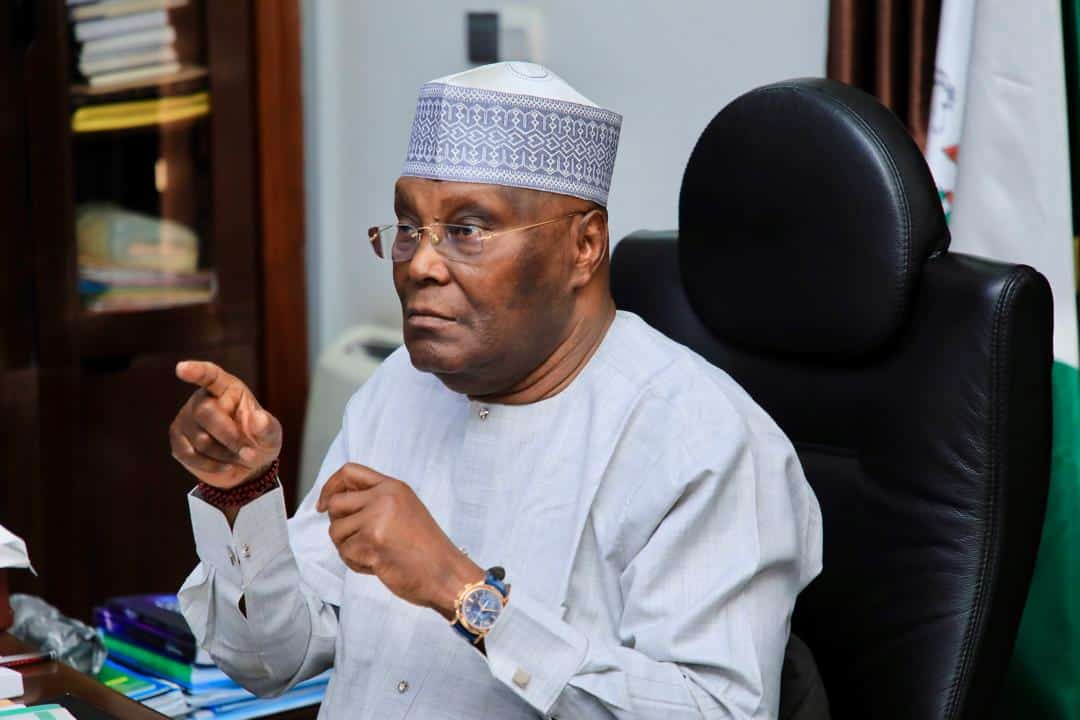
Former Vice President Atiku Abubakar has said the opposition coalition under the African Democratic Congress (ADC) has significantly strengthened his chances of winning the 2027 presidential election.....KINDLY READ THE FULL STORY HERE▶
-

 latest8 months ago
“Social Media Erupts As Jim Iyke Declares Rita Dominic Nollywood’s Most Beautiful”
-
 latest2 years ago
Edo Political Showdown: Oshiomhole Appears At Presidential Villa As Tinubu Hands APC Gubernatorial Flag To Okpebholo (Photos & Video)
-
 entertainment2 years ago
Love Knows No Age American Woman Defends Marriage To Young Nigerian Man “I’m Not 70”
-
 latest2 years ago
Olumide Akpata Strikes Again: Drops Killer Track, Sends Edo State Into Frenzy!(Video)
-
 Politics2 years ago
Nigerians React As Pastor Adeboye Foresees Passing Away On A Sunday After Enjoying A Satisfying Meal Of Pounded Yam
-
 latest2 years ago
FG Identifies 31 States At Risk Of Heavy Flooding In 2024: See Full List
-
 Politics2 years ago
BREAKING: Inspector-General Of Police Summons Top Police Commanders For Crucial-Security Challenges
-
 latest2 years ago
5 NYSC Corpers Perish In Fatal Road Accident Returning From Camp