
Latest News
Shockwave in Lagos Politics: PDP Spokesman, Chieftains Cross Over to APC, Reveal Explosive Reasons


Latest News
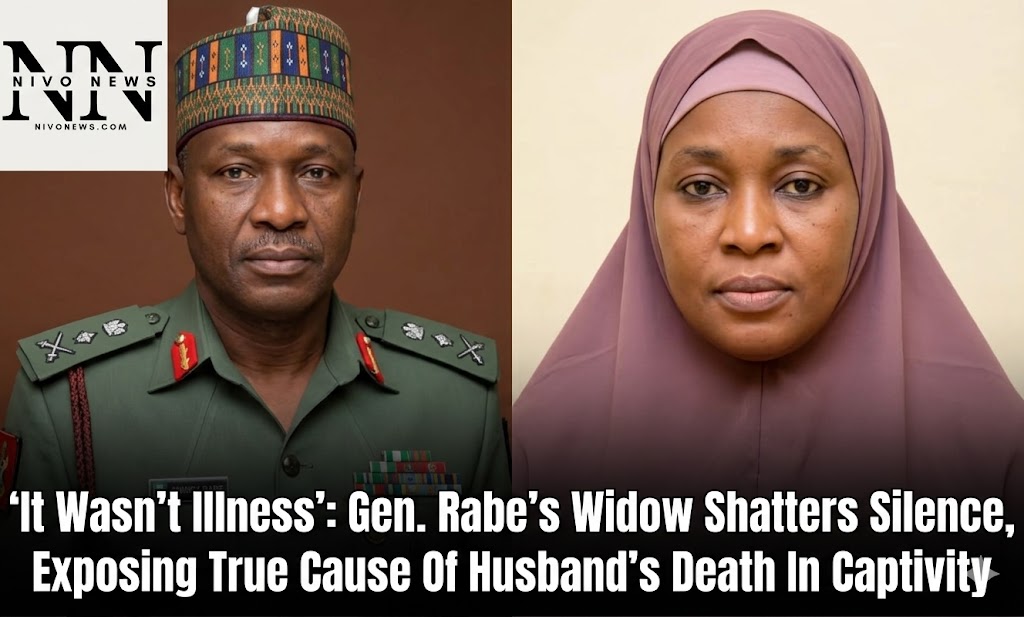
“It Wasn’t Illness”: Gen. Rabe’s Widow Shatters Silence, Exposing True Cause Of Husband’s Death In Captivity.
-
While the Katsina State Government attributed the retired general’s death to complications from diabetes and hypertension, his widow, Hajiya Amina Abubakar, reportedly disputes this.....KINDLY READ THE FULL STORY HERE▶
-
-
Sources close to the widow during her hospitalization state that she insisted her husband was healthy and had no history of either condition prior to their abduction.
-
Hajiya Amina recounted that the General’s health declined rapidly after his leg became swollen.
-
The widow believed the General had been bitten by a snake, an assessment the kidnappers reportedly confirmed to her.
-
Despite the captors applying local herbal remedies to the swelling, the General’s condition worsened, and he ultimately passed away in his wife’s arms.
Context of the Abduction and Rescue
-
Major General Rabe and his wife were abducted on May 30, 2026, while traveling through the Matazu Local Government Area of Katsina State.
-
The kidnappers, linked to a criminal network led by bandit kingpin Kachalla Muhammad Fulani, had demanded the release of detained associates.
-
Following the General’s death, military troops from Operation Fansan Yamma intensified search-and-rescue efforts.
-
During an encounter near Tunga Village, troops engaged the bandits, who shot Mrs. Abubakar before abandoning her and fleeing the area.
-
Security officials are currently investigating the possibility of intelligence leaks or sabotage regarding the rescue operation, as the kidnappers appeared to be aware of the military’s movements.
-

Former Anambra State Governor, Peter Obi, has expressed his condolences following the passing of retired Deputy Superintendent of Police (DSP) Zamani Tanko, who served as a dedicated aide to Nigeria Democratic Congress (NDC) National Leader, Senator Henry Seriake Dickson, for more than 15 years.....KINDLY READ THE FULL STORY HERE▶
-
Peter Obi announced in a condolence message that he visited Senator Dickson on Thursday morning to offer his sympathies to the Senator and his team regarding the loss.
-
In his statement, Obi noted that he learned of the death the previous night and praised the late DSP Tanko for his 15 years of loyal and dedicated service to the NDC leader.
Extending Condolences
-
On behalf of himself and his family, Obi extended heartfelt sympathies to Senator Dickson, the surviving family members, and all those whose lives were touched by the late aide.
-
He concluded his message with a prayer, asking for God to grant the deceased eternal rest and to bless his family.
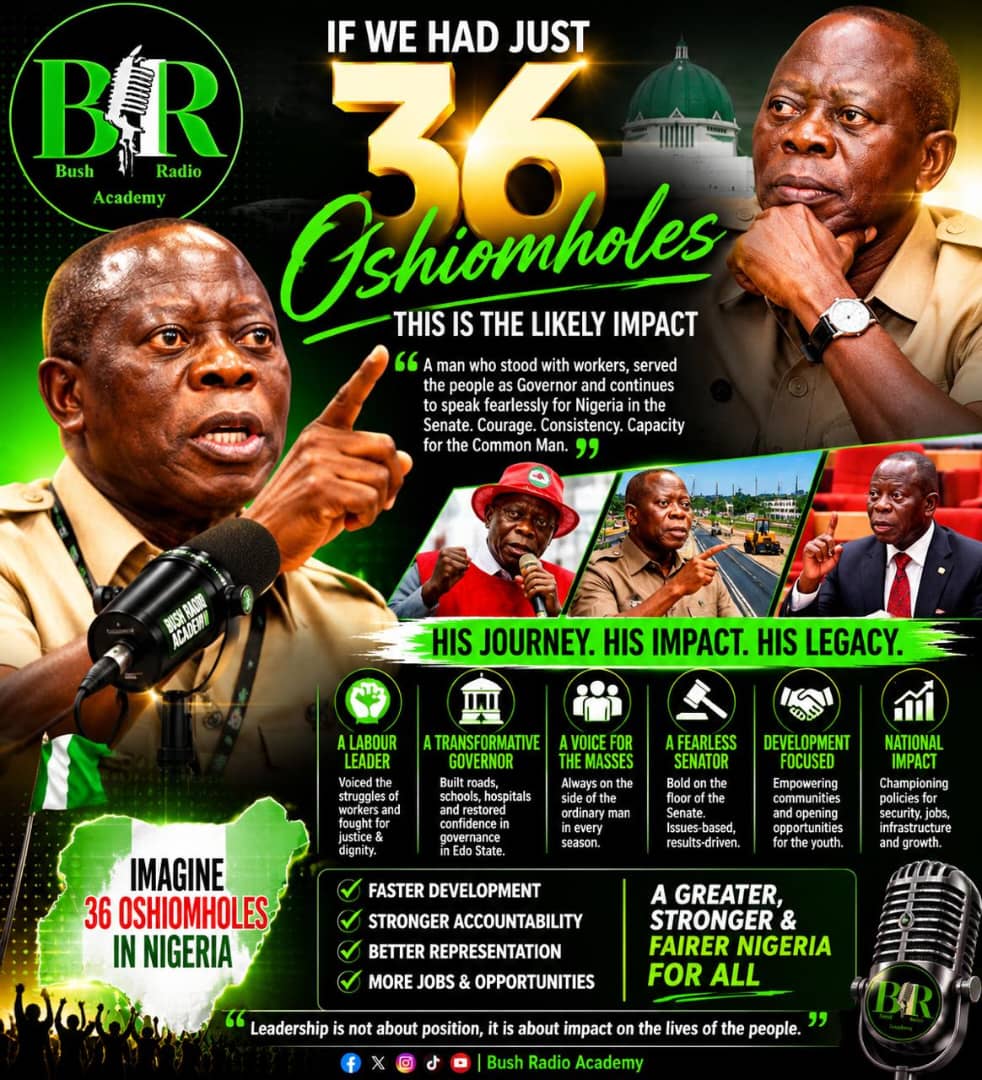
....KINDLY READ THE FULL STORY HERE▶
Nigeria is blessed with many distinguished leaders, public servants, technocrats, entrepreneurs, and patriots who contribute daily to national development.
Yet every generation produces a few individuals whose public journey cuts across multiple phases of national life and leaves a visible imprint at every stage.
One of such figures is Adams Oshiomhole.
The interesting question is not whether one agrees with him on every issue.
The more fascinating question is this:
What would Nigeria look like if every state produced a leader with the same intensity, consistency, and public engagement that has defined Oshiomhole’s career?
From The Shop Floor To The National Stage
Before politics, Oshiomhole became nationally known through the labour movement.
As President of the Nigeria Labour Congress, he emerged as one of the most recognizable voices advocating for workers, salaries, welfare, and social justice.
Many Nigerians still remember the period when labour negotiations dominated national conversations and Oshiomhole became a symbol of resistance against policies perceived as unfavourable to ordinary citizens.
Whether one agreed with his methods or not, few doubted his willingness to stand in difficult places and speak for those without access to power.
That reputation for advocacy would later become the foundation of his political career.
The Governor Who Preferred Construction Sites To Comfort Zones
When he became Governor of Edo State, the transition from activist to administrator was closely watched.
Could a labour leader govern?
The answer came through roads, schools, healthcare facilities, urban renewal projects, and public sector reforms that transformed significant parts of Edo State.
Across communities, infrastructure became a defining feature of his administration.
Roads that had been neglected for years were reconstructed.
Schools received attention.
Public confidence in government delivery improved.
His administration was not without criticism, as is the case with every government, but even political opponents often acknowledge that his tenure changed the physical landscape of the state.
More importantly, he cultivated an image of accessibility.
Many citizens saw a governor who appeared willing to leave the office, inspect projects personally, and engage directly with communities.
The Senator Who Refuses To Stay Silent
Today, as a Senator representing Edo North Senatorial District, Oshiomhole continues to attract attention for a different reason.
In an era where many legislators work quietly behind committee doors, he remains one of the most vocal voices on the floor of the Senate.
On issues ranging from insecurity to economic policy, governance accountability, public spending, and national development, he has consistently demonstrated a willingness to ask difficult questions.
He has repeatedly argued that government performance should not be measured merely by budgets approved but by results delivered.
For many Nigerians, that resonates deeply.
The average citizen is less interested in figures on paper and more interested in safer communities, better roads, quality schools, reliable healthcare, and economic opportunities.
Oshiomhole’s interventions often reflect that perspective.
His constituency projects, community engagements, educational support initiatives, infrastructure interventions, and empowerment programmes have reinforced his long-standing image as a politician who remains connected to grassroots realities.
Why The Common Man Relates To Him
Perhaps Oshiomhole’s greatest political strength is not his position.
It is his story.
He understands the language of the market woman because he once represented workers.
He understands the concerns of civil servants because he fought for them.
He understands the demands of governance because he has governed.
And he understands legislative oversight because he now serves in the National Assembly.
That combination is rare.
It allows him to speak in a manner that often resonates beyond party lines.
Many Nigerians see not just a politician, but someone who has experienced different layers of public service and continues to engage with national issues from the perspective of ordinary citizens.
If There Were 36 Oshiomholes…
Imagine 36 governors with relentless energy for project inspection.
Imagine 36 senators constantly demanding accountability and measurable results.
Imagine 36 public officials willing to challenge inefficiency regardless of whose interests are affected.
Imagine 36 leaders deeply connected to grassroots communities while simultaneously participating in national policy discussions.
The result would likely be faster infrastructure development.
Stronger public accountability.
Greater citizen engagement.
More attention to workers’ welfare.
And perhaps a more responsive system of governance.
This is not to suggest that Nigeria lacks capable leaders.
Far from it.
Across the country are men and women making meaningful contributions in public service, business, academia, security, healthcare, and governance.
But Oshiomhole’s journey offers an important lesson.
Nations make progress when leadership is active rather than passive.
When public office becomes a platform for service rather than status.
When leaders remain close enough to hear the voices of the people they represent.
The real story is not about creating 36 Oshiomholes.
It is about cultivating the values that have defined much of his public life: courage, advocacy, accountability, visibility, grassroots engagement, and an unwavering willingness to speak when others choose silence.
If those qualities were replicated across Nigeria’s institutions, regardless of who occupies public office, the country would undoubtedly move faster toward the future its citizens desire.
And perhaps that is the most important question of all:
Osigwe Omo-Ikirodah is the Principal and CEO of Bush Radio Academy
-

 latest10 months ago
“Social Media Erupts As Jim Iyke Declares Rita Dominic Nollywood’s Most Beautiful”
-
 latest2 years ago
Edo Political Showdown: Oshiomhole Appears At Presidential Villa As Tinubu Hands APC Gubernatorial Flag To Okpebholo (Photos & Video)
-
 entertainment2 years ago
Love Knows No Age American Woman Defends Marriage To Young Nigerian Man “I’m Not 70”
-
 latest2 years ago
Olumide Akpata Strikes Again: Drops Killer Track, Sends Edo State Into Frenzy!(Video)
-
 Politics3 years ago
Nigerians React As Pastor Adeboye Foresees Passing Away On A Sunday After Enjoying A Satisfying Meal Of Pounded Yam
-
 latest2 years ago
FG Identifies 31 States At Risk Of Heavy Flooding In 2024: See Full List
-
 Politics3 years ago
BREAKING: Inspector-General Of Police Summons Top Police Commanders For Crucial-Security Challenges
-
 latest2 years ago
5 NYSC Corpers Perish In Fatal Road Accident Returning From Camp