
Latest News
Price of 50kg Rice Drops to N58,000 in Nigeria Amid Import Surge

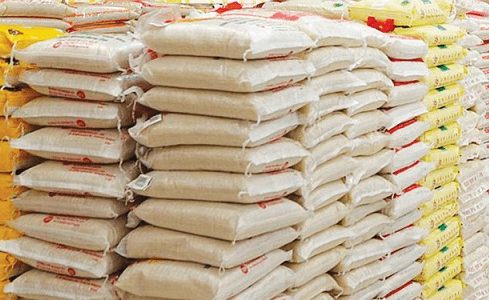
The price of a 50kg bag of rice has fallen to N58,000 in parts of Nigeria, particularly in remote areas, following an influx of rice from the Republic of Benin. According to a report by S&P Global, the West African parboiled rice market has dropped to a near two-year low due to a surge in supplies, prompted by India lifting its export duties on parboiled rice.....KINDLY READ THE FULL STORY HERE▶
The price reduction marks a significant drop from the previous N80,000, with rice now entering Nigeria via Benin, which has become a major entry point for rice imports. Market reports from S&P Global’s Platts indicate that warehouses in Benin are now filled to capacity due to an increase in low-cost rice imports from India.
India’s exports to West Africa skyrocketed between September and December, with 2.11 million metric tonnes of parboiled rice shipped to the region—up from 720,000 metric tonnes in the same period of 2023. Overall, in 2024, India exported 5.35 million metric tonnes to West Africa, up from 3.9 million metric tonnes in 2023.
In Nigeria, both local and imported rice prices have plummeted in the past two weeks as illegal rice imports from Benin continue to flood the market. Local rice now costs between N60,000 and N80,000 for a 50kg bag, while Indian rice is priced at approximately N80,000.
Despite the drop in prices, demand has not risen, with many buyers remaining cautious and waiting for the market to stabilize. A trader based in Togo noted that the West African rice market is currently experiencing a “quiet and bearish” phase, and predicted that demand will pick up closer to the Christmas season.
In border communities near Benin, the price of rice has even dropped below N50,000, owing to their proximity to the Benin Republic. Despite Nigeria’s ban on rice importation, it remains the most smuggled product, with Customs facing ongoing challenges in controlling its entry.

....KINDLY READ THE FULL STORY HERE▶
Lasting roads begin with a clear plan for where rainwater will go. With major repairs planned for the dry season and a proposed drainage connection towards the Ogba River, Governor Monday Okpebholo’s administration has outlined an approach that tackles road rehabilitation and stormwater together.
In this episode of Truth Unveiled, we examine the planning behind that approach—and what its delivery could mean for homes, businesses and everyday movement across Benin’s GRA.
Watch the full podcast.
Latest News
“THE REBELLION IS ON: Man City Declares Total War On Premier League Chiefs Over Landmark Decision!”

The Appeal: Manchester City has officially filed a comprehensive appeal challenging the findings of the Premier League Commission following its recent disciplinary decision.....KINDLY READ THE FULL STORY HERE▶
-
Filing Timeline and Claims: The club confirmed submitting the appeal at 7:00 PM on Thursday, October 1, 2026, describing the commission’s opinion as unsafe and containing clear material errors of law, principle, and fact while maintaining its complete innocence.
-
The Verdict Details: The independent commission previously found City guilty of financial breaches between the 2009-10 and 2017-18 seasons—including arranging sham contracts to disguise over 830 million pounds in secret funding—as well as failing to fully cooperate with the investigation.
-
Club and Leadership Response: City expressed surprise and disappointment at the verdict, insisting that comprehensive evidence supports their defense, though public comments remain limited due to ongoing proceedings. Chairman Khaldoon Al Mubarak and CEO Ferran Soriano expressed confidence in proving the club’s innocence.
-
Pep Guardiola’s Support: Former manager Pep Guardiola reaffirmed his unwavering backing for the club, ownership, staff, and supporters in a social media statement, declaring that they will get through the challenge together.
Latest News
3. “Donald Duke is Better Than All Of Them”: Baba-Ahmed Explains Why PRP Is Shaking Up The 2027 Race!

The National Chairman of the People’s Redemption Party (PRP), Dr. Hakeem Baba-Ahmed, has asserted that the party is exceptionally fortunate to feature former Cross River State Governor, Donald Duke, as its presidential candidate for the upcoming 2027 general elections.....KINDLY READ THE FULL STORY HERE▶
A Strong Endorsement for Donald Duke
-
Surpassing Competitors: Speaking during an interview, Baba-Ahmed confidently stated that, candidate for candidate, Donald Duke outperforms all other presidential contenders currently in the political space.
-
Integrity and Capability: He described Duke as part of a visionary leadership blueprint aimed at thinking critically, restoring national dignity, exhibiting true integrity, and offering young Nigerians a leadership style they can genuinely look up to.
The Strategic Push for an Opposition Coalition
Despite possessing what he considers the superior candidate, Baba-Ahmed explained why the party is actively championing a broader political alliance:
-
Consensus Over Ego: The PRP chairman emphasized that the party’s push for a mega-coalition is driven by consensus and constitutional processes rather than forcing Duke’s candidacy through on profile strength alone.
-
Defeating Fault Lines: Framing the 2027 election as a critical turning point for the nation, Baba-Ahmed noted that the stakes go far beyond individual party ambitions. The coalition aims to unite likeminded opposition forces to rescue Nigeria from its current trajectory and bridge its deep fault lines.
-

 latest1 year ago
“Social Media Erupts As Jim Iyke Declares Rita Dominic Nollywood’s Most Beautiful”
-
 latest3 years ago
Edo Political Showdown: Oshiomhole Appears At Presidential Villa As Tinubu Hands APC Gubernatorial Flag To Okpebholo (Photos & Video)
-
 entertainment3 years ago
Love Knows No Age American Woman Defends Marriage To Young Nigerian Man “I’m Not 70”
-
 latest3 years ago
Olumide Akpata Strikes Again: Drops Killer Track, Sends Edo State Into Frenzy!(Video)
-
 Politics3 years ago
Nigerians React As Pastor Adeboye Foresees Passing Away On A Sunday After Enjoying A Satisfying Meal Of Pounded Yam
-
 latest2 years ago
FG Identifies 31 States At Risk Of Heavy Flooding In 2024: See Full List
-
 Politics3 years ago
BREAKING: Inspector-General Of Police Summons Top Police Commanders For Crucial-Security Challenges
-
 latest3 years ago
5 NYSC Corpers Perish In Fatal Road Accident Returning From Camp