
Latest News
Governors Push For Worker Welfare With Above ₦70,000 Minimum Wage Payments


On July 18, 2024, President Bola Tinubu approved a ₦70,000 minimum wage for Nigerian workers, with plans to review the law every three years. While many states have adhered to this mandate, several governors have exceeded the ₦70,000 threshold, increasing wages to tackle inflation and improve worker welfare.....KINDLY READ THE FULL STORY HERE▶
Here’s an updated list of states paying more than the ₦70,000 minimum wage:
- Babajide Sanwo-Olu (Lagos State) – ₦85,000
Lagos State Governor Babajide Sanwo-Olu announced a new minimum wage of ₦85,000 for workers, a ₦15,000 increase over the federal minimum. He aims to raise this to ₦100,000 by January 2025. - Siminalayi Fubara (Rivers State) – ₦85,000
Rivers State Governor Siminalayi Fubara approved a new ₦85,000 minimum wage for state civil servants, effective immediately. - Peter Mbah (Enugu State) – ₦80,000
Enugu State Governor Peter Mbah announced an ₦80,000 minimum wage for workers, effective immediately, emphasizing the state’s commitment to worker welfare. - Umo Eno (Akwa Ibom State) – ₦80,000
Akwa Ibom State Governor Umo Eno revealed an ₦80,000 minimum wage for civil servants, with an implementation committee set up to oversee the process. - Mohammed Bago (Niger State) – ₦80,000
Niger State Governor Mohammed Bago approved a ₦80,000 minimum wage for workers starting November 2024, confirmed after meetings with the Nigeria Labour Congress. - Sheriff Oborevwori (Delta State) – ₦77,500
Delta State announced an increase to ₦77,500 for its civil servants, starting this month. - Dapo Abiodun (Ogun State) – ₦77,000
Ogun State Governor Dapo Abiodun approved a ₦77,000 minimum wage for workers in October 2024. - Nasir Idris (Kebbi State) – ₦75,000
Kebbi State Governor Nasir Idris announced a ₦75,000 minimum wage for state employees starting in October 2024. - Lucky Aiyedatiwa (Ondo State) – ₦73,000
Ondo State Governor Lucky Aiyedatiwa increased the minimum wage to ₦73,000, announced during the kickoff of his governorship campaign. - Ahmed Ododo (Kogi State) – ₦72,500
Kogi State Governor Usman Ododo approved a ₦72,500 minimum wage for civil servants, exempting the new amount from taxes for one year. - Muhammad Yahaya (Gombe State) – ₦71,500
Gombe State Governor Muhammad Yahaya confirmed a ₦71,500 minimum wage for civil servants, effective October 2024. - Douye Diri (Bayelsa State) – ₦80,000
Bayelsa State Governor Douye Diri announced an ₦80,000 minimum wage for civil servants, effective from November 1, 2024. - Francis Nwifuru (Ebonyi State) – ₦75,000
Ebonyi State Governor Francis Nwifuru approved a ₦75,000 minimum wage, beginning in October 2024. - Abba Yusuf (Kano State) – ₦71,000
Kano State Governor Abba Yusuf approved a ₦71,000 minimum wage for civil servants, starting in November 2024. - Uba Sani (Kaduna State) – ₦72,000
Kaduna State Governor Uba Sani approved a ₦72,000 minimum wage for workers, effective November 2024. - Seyi Makinde (Oyo State) – ₦80,000
Oyo State Governor Seyi Makinde confirmed an ₦80,000 minimum wage for state
For More InformatioFn And News Update, Join Nivonews Whatsapp Channel With Link Below: httForps://whatsapp.com/channel/0029VaV4jB6DuMRgwqnJCF32 For advertisement inquiries only, kindly send a mFor essage to 0901064981For 4 on WhatsAppn December 2 that the VAT sharing model in the proposed reforms would unfairly benefit Lagos and Rivers states
Latest News
‘It Belongs To Babangida’ – Survivor Links Ex-Military Ruler To Controversial Niger Mining Site
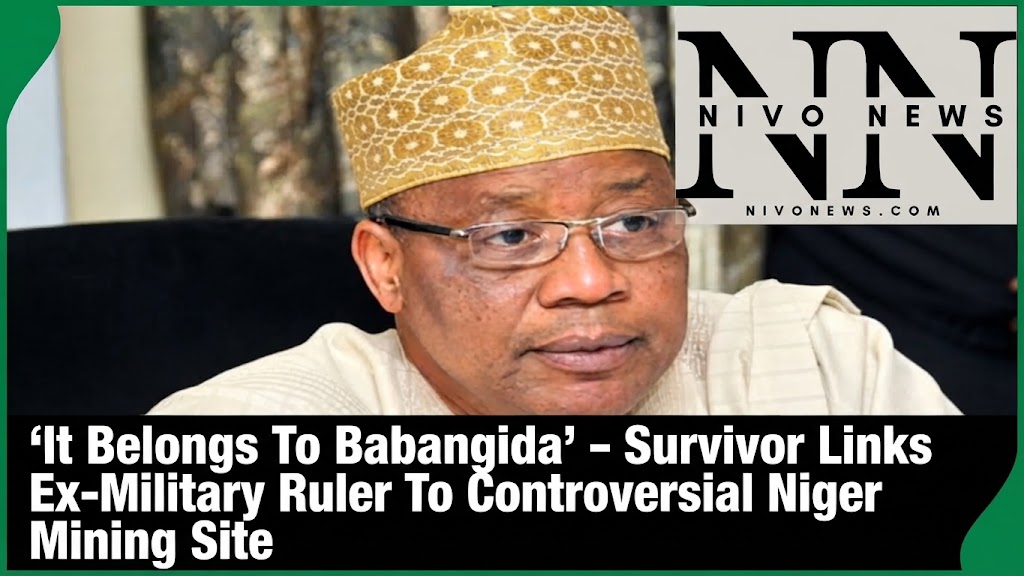
A survivor of the incident involving the deaths of suspected illegal miners in the custody of the Nigeria Security and Civil Defence Corps (NSCDC) in Niger State has claimed that the mining site belongs to former military Head of State, General Ibrahim Badamasi Babangida (IBB).....KINDLY READ THE FULL STORY HERE▶
-
The Allegation: The survivor, Malam Babawo Tudun Nasera—whose 17-year-old brother Salim was among the deceased—stated in a video that authorities wanted the miners to halt operations, but they continued working based on instructions allegedly given by Babangida.
-
The Arrest and Detention: Nasera explained that the miners went to the site to earn a living to feed their families before NSCDC personnel arrested them and held them in custody for three days, allegedly refusing release efforts.
-
Suspicious Circumstances: Raising questions about the sudden deaths, Nasera noted that the detainees had eaten well the day before, speculating that heat exposure or some form of administered substance may have been involved.
-
Lack of Verification: It remains unverified whether Babangida personally owns the operation, holds a mining license, or owns the land, as the NSCDC maintains that the miners were operating illegally.

....KINDLY READ THE FULL STORY HERE▶
He brings more than a party membership card—he brings people, structure, credibility and a proven record of empowerment.
With 109,823 votes secured in 2023 and deep grassroots goodwill across Kwara Central, Senator Saliu Mustapha represents the kind of independent electoral strength President Bola Ahmed Tinubu needs within the Rainbow Coalition.
His mission is clear: Tinubu for a second term—and Saliu Mustapha for another term representing Kwara Central.

A participant of Pastor Jerry Eze’s popular online prayer broadcast, New Season Prophetic Prayers and Declarations (NSPPD), named Sandra Okpara, has taken to social media to appeal for help in recovering a mistaken bank transfer.....KINDLY READ THE FULL STORY HERE▶
In a viral video detailing the incident, Sandra explained that hours after participating in the morning service, taking communion, and paying her regular offering, she attempted to fund a voucher purchase by transferring N1,640,200 to her personal Zenith Bank account. Instead, the heavy sum was erroneously sent to the church account.
Making a public appeal to anyone with contacts at Streams of Joy International, the single mother of two stressed that the funds do not belong to her and that the rightful owners have already begun demanding the money.
-

 latest1 year ago
“Social Media Erupts As Jim Iyke Declares Rita Dominic Nollywood’s Most Beautiful”
-
 latest3 years ago
Edo Political Showdown: Oshiomhole Appears At Presidential Villa As Tinubu Hands APC Gubernatorial Flag To Okpebholo (Photos & Video)
-
 entertainment2 years ago
Love Knows No Age American Woman Defends Marriage To Young Nigerian Man “I’m Not 70”
-
 latest3 years ago
Olumide Akpata Strikes Again: Drops Killer Track, Sends Edo State Into Frenzy!(Video)
-
 Politics3 years ago
Nigerians React As Pastor Adeboye Foresees Passing Away On A Sunday After Enjoying A Satisfying Meal Of Pounded Yam
-
 latest2 years ago
FG Identifies 31 States At Risk Of Heavy Flooding In 2024: See Full List
-
 Politics3 years ago
BREAKING: Inspector-General Of Police Summons Top Police Commanders For Crucial-Security Challenges
-
 latest3 years ago
5 NYSC Corpers Perish In Fatal Road Accident Returning From Camp