
Crime
Why Tinubu Didn’t Stop EFCC’s N110 Billion Fraud Case Against Yahaya Bello


Why Tinubu Didn’t Stop EFCC’s N110 Billion Fraud Case Against Yahaya Bello. President Bola Ahmed Tinubu’s decision not to intervene in the Economic and Financial Crimes Commission’s (EFCC) investigation of former Kogi State Governor Yahaya Bello has been clarified.....KINDLY READ THE FULL STORY HERE▶
Despite allegations that Bello, a prominent All Progressives Congress (APC) figure and former member of the Tinubu/Shettima campaign team, was being unfairly targeted, the President has reiterated the EFCC’s responsibility to carry out its legal duties, urging Nigerians to support anti-corruption efforts.
According to a source close to Tinubu, his choice not to interfere was intended to demonstrate that his administration would not condone corruption in public office, regardless of political affiliations. The EFCC, led by Ola Olukoyede, has accused Bello of fraud amounting to N110 billion, including earlier money laundering allegations totaling N80.2 billion. The charges involve the purchase of 12 properties in Abuja and criminal breach of trust.
Following his repeated failure to appear in court, Bello was declared wanted, and the Nigerian Immigration Service placed him on a watchlist. In September 2024, the former governor’s media team alleged that EFCC operatives attempted to arrest him at the Kogi Government Lodge.
Presidency insiders explained that Tinubu’s stance reflects a commitment to preventing the selective prosecution of individuals based on political loyalties, stressing the importance of transparency, accountability, and the rule of law. By allowing the EFCC to act independently, the President aims to bolster public confidence in Nigeria’s institutions and ensure that political office is not used as a shield against legal scrutiny.
Another official confirmed that Tinubu’s administration is dedicated to fighting corruption at all levels and maintaining the independence of anti-graft agencies. The EFCC chairman has previously noted that the President has not interfered in the commission’s operations, reinforcing Tinubu’s belief in democratic principles and accountability, even when it involves close political allies.
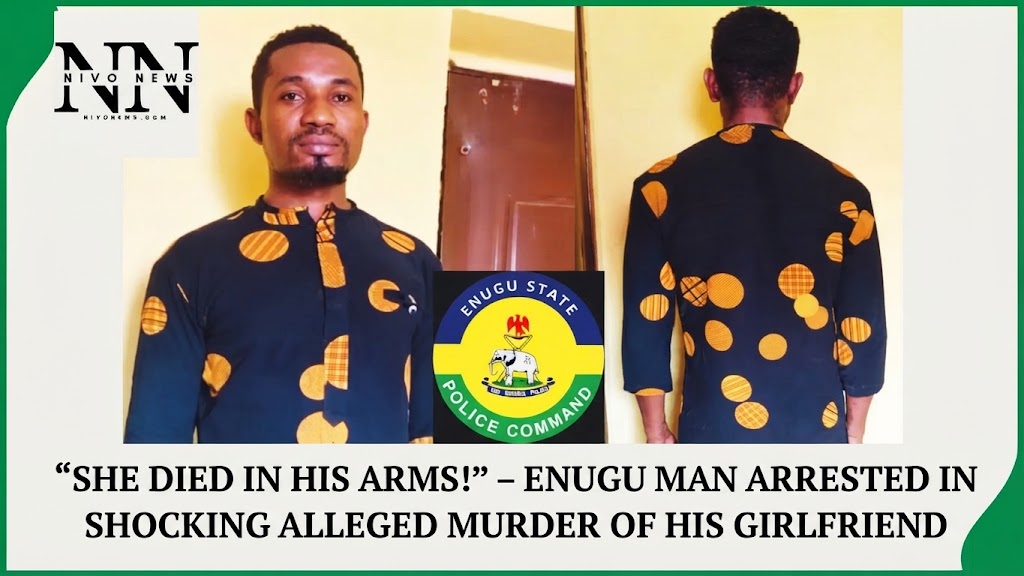
The Enugu State Police Command has arrested 30-year-old Okpara Emmanuel in connection with the alleged murder of his girlfriend, Chinyere.....KINDLY READ THE FULL STORY HERE▶
The suspect, a resident of Olympic Layout, One-Day, Enugu, was apprehended by operatives from the Awkunanaw Police Division after being rescued from an angry mob.
Key details of the tragic incident include:
-
Discovery of the Crime: According to police spokesperson SP Daniel Ndukwe, Emmanuel allegedly killed Chinyere on September 19 following an argument. He then wrapped her body in nylon and concealed it inside his apartment’s toilet.
-
Neighbours’ Intervention: The decomposing body’s foul odour eventually alerted neighbours, who forced their way into the apartment and detained the suspect before authorities arrived.
-
Suspect’s Confession: During preliminary interrogations, Emmanuel reportedly confessed that the fatal dispute stemmed from an argument over who infected each other with HIV, during which he allegedly struck her on the head with a pestle.
-
Next Steps: The victim’s remains have been moved to a mortuary for an autopsy and preservation, while the State Criminal Investigation Department—under the directive of Commissioner of Police Mamman Bitrus Giwa—has launched a full investigation for prosecution.
-
Police Advice: Authorities have urged members of the public, especially young women, to exercise caution and always inform trusted friends or family of their whereabouts when visiting others.
Crime
Disguised Evil: Police Nab ‘Fake Okada Rider’ Terrorizing Bauchi In Shocking Spree Of Kidnapping, Rape, And Robbery!.

The Bauchi State Police Command has apprehended a 53-year-old resident of Igbo Quarters, Bauchi, named Gambo Hassan (also known as “Anahaka”), on allegations of involvement in kidnapping, rape, armed robbery, and the unlawful possession of weapons within the Bauchi metropolis.....KINDLY READ THE FULL STORY HERE▶
Operatives from the ‘B’ Division, GRA, arrested Hassan around 8:45 p.m. on September 11, 2026, during a routine patrol on Adamu Jumba Road. According to police reports, the suspect allegedly operated as a fake commercial motorcyclist during evening hours to prey on vulnerable passengers, particularly women. At the time of his arrest, he was riding a Bajaj motorcycle (registration number BAU 150G), wearing a fez cap and a black face mask, and was found in possession of a sharp knife.
Initial interrogation led the suspect to identify 15 women as victims of his alleged crimes, a number that police stated later rose to 35. Following these confessions, detectives executed a search warrant at his home and recovered numerous items believed to be proceeds of crime, including:
-
15 assorted mobile phones
-
3 power banks
-
6 women’s wristwatches
-
6 assorted native caps
-
5 bundles of women’s wrappers
-
3 women’s hijabs
-
₦425,435 in cash, alongside Turkish and Kenyan currency notes
The suspect and all recovered exhibits have been moved to the State Criminal Investigation Department (SCID) in Bauchi for further investigation and prosecution.
State Commissioner of Police Sani-Omolori Aliyu praised the officers for their vigilance, while the command’s spokesperson, SP Nafiu Habib, encouraged anyone who may have fallen victim to the suspect to come forward with information to support the ongoing investigation.
Crime
CRIME TSUNAMI: Kidnappers Pocket A Staggering ₦7.7 Billion Across The Country In Mind-Blowing Report!.
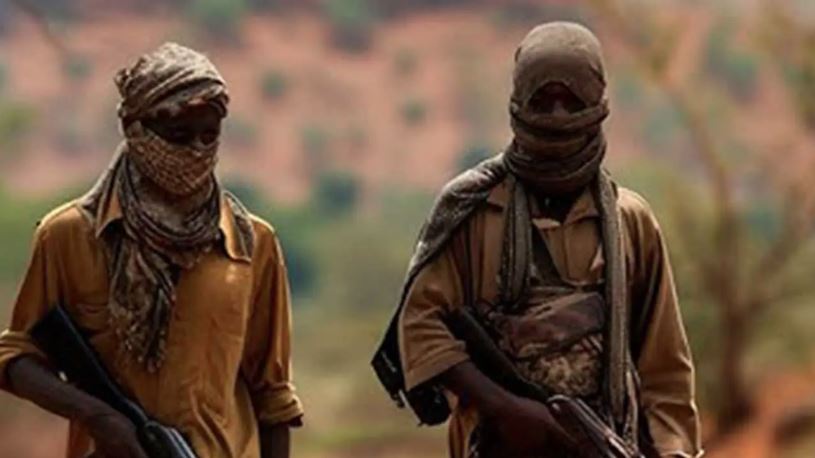
A report by SBM Intelligence titled Economics of Nigeria’s Kidnap Industry 2026 reveals that kidnappers across Nigeria amassed a staggering ₦7.779 billion in ransoms between July 2025 and June 2026, which accounts for 34 percent of the total ₦22.856 billion demanded during that timeframe. Although total demands decreased from the previous cycle’s ₦48 billion (which was inflated by a massive ₦30 billion demand in Delta State), the proportion of actual ransom collected surged dramatically compared to the prior period’s 5.35 percent. This year’s record payments were heavily propelled by large-scale mass abductions capable of holding hundreds of victims under intense pressure.....KINDLY READ THE FULL STORY HERE▶
Terrorist and insurgent factions dominated the collections, with the JAS faction and its affiliates raking in roughly ₦7 billion—accounting for about 90 percent of nationwide ransom payouts. This total was driven primarily by two massive incidents:
-
A ₦5 billion ransom reportedly paid following the April 2026 abduction of 416 people in Ngoshe, Borno State, led by commander Ali Ngulde, marking the largest single ransom payment in SBM’s database.
-
An estimated ₦2 billion payout following the November 2025 kidnapping of 315 pupils and staff members from St Mary’s School in Papiri, Niger State.
Beyond these major terrorist-linked factions, unaffiliated kidnappers and bandits collected ₦719.4 million (about nine percent of total payments), while the Islamic State West Africa Province (ISWAP) secured ₦53 million.
Geographically, Kwara State registered the highest ransom demands at ₦7.375 billion (32.3 percent of the national total, largely driven by a ₦3.52 billion demand linked to Boko Haram activity around Woro and Wawa), followed by Borno at ₦5.698 billion and Kaduna at ₦1.459 billion. However, when looking at actual payouts, Borno led the country with ₦5.0545 billion collected, trailed by Niger (₦2 billion), Kwara (₦278.3 million), Kaduna (₦64 million), and Sokoto (₦58 million), with these five states alone accounting for 95.8 percent of nationwide ransom collections. Conversely, states like Kebbi, Abia, Akwa Ibom, Sokoto, and Imo saw much lower demands, and minimal payouts—such as ₦70,000 in Cross River or ₦100,000 in Bauchi—often represented token settlements or arrangements finalized with supplies and food rather than large cash sums.
-

 latest1 year ago
“Social Media Erupts As Jim Iyke Declares Rita Dominic Nollywood’s Most Beautiful”
-
 latest3 years ago
Edo Political Showdown: Oshiomhole Appears At Presidential Villa As Tinubu Hands APC Gubernatorial Flag To Okpebholo (Photos & Video)
-
 entertainment3 years ago
Love Knows No Age American Woman Defends Marriage To Young Nigerian Man “I’m Not 70”
-
 latest3 years ago
Olumide Akpata Strikes Again: Drops Killer Track, Sends Edo State Into Frenzy!(Video)
-
 Politics3 years ago
Nigerians React As Pastor Adeboye Foresees Passing Away On A Sunday After Enjoying A Satisfying Meal Of Pounded Yam
-
 latest2 years ago
FG Identifies 31 States At Risk Of Heavy Flooding In 2024: See Full List
-
 Politics3 years ago
BREAKING: Inspector-General Of Police Summons Top Police Commanders For Crucial-Security Challenges
-
 latest3 years ago
5 NYSC Corpers Perish In Fatal Road Accident Returning From Camp