
Politics
Akpata’s Vision for Transforming Rural Infrastructure in Edo: A Path to Prosperity


Akpata’s Vision for Transforming Rural Infrastructure in Edo: A Path to Prosperity....KINDLY READ THE FULL STORY HERE▶
Written By Oshiobugie John
Olumide Osaigbovo Akpata, the Labour Party flagbearer for the highly anticipated Edo State election, has unveiled an ambitious plan to revitalize the state’s rural infrastructure and improve the standard of living for all Edolites. Recognizing the urgent need for development in rural areas, Akpata aims to transform these regions from their current dilapidated state to world-class standards. His comprehensive approach includes significant upgrades across various sectors, including healthcare, roads, drainages, and social services, ensuring that every Edolite benefits from enhanced public amenities and services.
Akpata’s infrastructure overhaul plan will prioritize the construction and rehabilitation of rural roads, which are essential for connecting communities and facilitating economic activities. By improving road networks, Akpata intends to boost trade, enhance accessibility, and stimulate local economies. His strategy also includes the development of modern drainage systems to address issues of flooding and environmental degradation, which have long plagued rural areas and hindered their growth.
In the healthcare sector, Akpata plans to build and upgrade health facilities to provide quality medical services in even the most remote parts of the state. By equipping these facilities with essential medical equipment and trained personnel, Akpata aims to ensure that rural residents have access to necessary healthcare services without having to travel long distances. This commitment to improving healthcare infrastructure will play a critical role in enhancing the overall well-being of the state’s population.
Edo State is blessed with abundant natural resources, rich cultural heritage, and hardworking people who are poised to drive the state to new heights. Akpata’s vision is to harness these strengths through diligent, transparent, and honest governance. By addressing the infrastructure deficits in rural areas, Akpata and his running mate, Kadiri Yusuf, are dedicated to paving the way for a better tomorrow. Their leadership promises to unlock the full potential of Edo State, ensuring that all Edolites can thrive in a prosperous and well-developed environment. Vote Olumide Osaigbovo Akpata and Kadiri Yusuf for a transformative future.
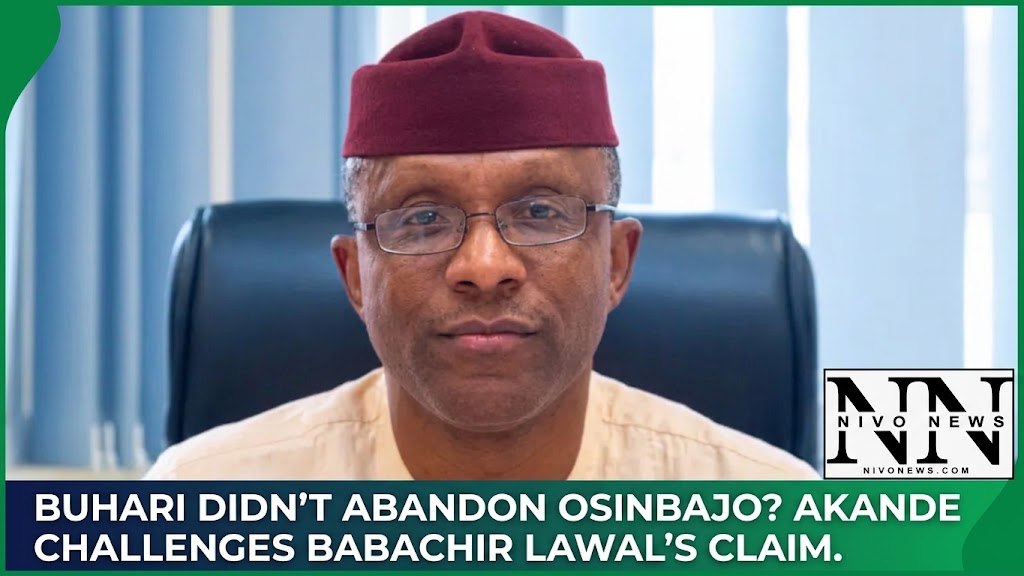
Laolu Akande, former spokesperson to ex-Vice President Yemi Osinbajo, has dismissed claims by former Secretary to the Government of the Federation (SGF), Babachir Lawal, that late President Muhammadu Buhari did not fully support Osinbajo’s ambition to succeed him in the 2023 presidential election.....KINDLY READ THE FULL STORY HERE▶
Akande, in a lengthy statement on Saturday, described Lawal’s allegations as fabrications, insisting that he was directly involved in many of the decisions surrounding Osinbajo’s time in office and was therefore in a position to clarify what happened.
He maintained that Buhari had fully supported Osinbajo’s presidential ambition, contrary to Lawal’s account.
Lawal had made the claims during an interview with Symfoni TV, where he suggested that Buhari’s personal values, relationship with President Bola Tinubu and concerns over some of Osinbajo’s actions while serving as acting president may have influenced his level of support.
The former SGF argued that if Buhari genuinely wanted his administration’s policies and achievements to continue after leaving office, backing Osinbajo would have been a natural choice, given that he had served as vice president for eight years.
However, Akande rejected that position, saying Buhari had repeatedly expressed his willingness to support Osinbajo.
“I have watched the video in which former Secretary to the Government of the Federation, Mr. Babachir Lawal, made a string of allegations against former Vice President Prof. Yemi Osinbajo, SAN. Ordinarily, such fabrications would not deserve a response.
“But I served as the Vice President’s spokesperson. I was in the room where many of these decisions were taken. And the allegations touch directly on the staff of the Office of the Vice President — of which I was a part. For the sake of the record, facts only must be stated,” Akande said.
Akande: Buhari Never Considered Osinbajo’s Ambition Immoral
Addressing Lawal’s claim that Buhari considered Osinbajo’s 2022 presidential ambition “immoral”, Akande described the allegation as false.
He said Buhari had personally offered to support the former vice president on at least four occasions.
“On at least four separate occasions, President Buhari personally offered to support the Vice President, telling him plainly: ‘If I don’t support you, who will I support?’” he stated.
Akande also recalled that during the All Progressives Congress (APC) presidential primaries in 2022, Buhari publicly commended Osinbajo at a Federal Executive Council meeting for conducting an issue-based and dignified campaign across the country.
According to him, the president’s remarks were witnessed by members of the council and demonstrated that Buhari did not consider Osinbajo’s ambition inappropriate.
“That is not a President who found Osinbajo’s ambition distasteful. That is a President who broached it, encouraged and applauded it,” Akande added.
Former Aide Denies Alleged Memo Containing Staff Names
Akande also dismissed Lawal’s claim that Osinbajo had submitted a memo containing more than 20 staff names, which was allegedly delayed by Buhari’s Chief of Staff before Lawal took it to the president.
He insisted that no such memo existed and rejected the suggestion that Buhari had made an ethnically charged remark about the proposed staff members.
“Anyone who knew President Buhari knows he does not engage in the kind of snide ethnic profiling Mr. Lawal attributed to him — ‘BD, these are all Yorubas.’ That language and that conduct are alien to President Buhari,” he said.
Akande explained that Osinbajo had direct access to Buhari and routinely submitted memos to him for approval. Once approved, the documents were passed to Osinbajo’s Chief of Staff, Ade Ipaye, who then communicated with the relevant agencies.
He said the process did not require the SGF’s involvement, except for the subsequent issuance of appointment letters.
Akande further disputed Lawal’s claim that the alleged memo was delayed for three months, noting that he resumed work in the Office of the Vice President in June 2015 alongside several other staff members.
According to him, the appointments were made through different batches of memos submitted at various times as the office was being established and government policies evolved.
“What actually happened in 2015 is that Osinbajo took different batches of memos to the President at different times for different categories of staff as the office was being set up and as government policies evolved. That is standard practice,” he explained.
“There was never a single, bloated, religiously and ethnically-charged list.”
Akande also alleged that by the time many of the appointments were made, Lawal had already been removed from office by Buhari over allegations of corruption.
Akande Rejects Claim That Osinbajo Appointed Church Members
The former presidential aide also rejected Lawal’s allegation that Osinbajo appointed people because they belonged to his church, describing the claim as inconsistent with the composition of the former vice president’s team.
He said the Office of the Vice President had an inclusive workforce that reflected different parts of the country and accommodated both Christians and Muslims.
“The Office was one of the most inclusive, pan-Nigerian offices in that government — North, South, East, West, Christian and Muslim.
“To suggest a narrow church agenda is not only to ignore the facts, but to pursue a curious and worrying vendetta,” Akande said.
To support his position, he highlighted the religious and regional diversity of the team.
He noted that Ade Ipaye, the Deputy Chief of Staff to the President, was a Muslim and a distinguished lawyer. He also said three of Osinbajo’s four special advisers were Muslims, including Maryam Uwais, Special Adviser on Social Investment, and Ahmad Zakari, Special Adviser on Infrastructure.
Other members of the team included Babafemi Ojudu, Adeyemi Dipeolu, Balkisu Saidu, Abdullahi Gwary, Emmanuel Bright, Edobor Iyamu, Ismaeel Ahmed, Olayinka Oyeneyin, Fadi Rose Audu, Imeh Patience Okon, Lillian Idiaghe, Arukaino Umukoro, Daniel Ikuenobe, Folarin Alayande, Effiong Essien and Olaolu Beckley.
The wider team also included Abdulrahman Baffa, Rotimi Akinnadeju, Novo Isioro, Feyishayo Aina, Gambo Manzo, Hafiz Ibrahim, Nonye Ojekwe, Nicholas Audifferen, Ayoleke Adu, Ajuri Ngelale, Louis Odion, Foluso Idumu, Edewede Akhidenor, Lanre Osibona, Tolani Alli, Tola Asekun, Damilola Ogunbiyi, Mariam Masha, Chiedu Ugbo, Jumoke Oduwole, Muktar Tijani, Tochi Nwachukwu, Mohammed Brimah, Yahaya Maibe, Jibola Ajayi, Ife Adebayo, Myani Bukar, Nkoli Anyaoku, Phil Obin and Lillian Chukwueke, among others.
“This was a truly national team. It was never a church list,” Akande maintained.
Akande also disputed Lawal’s claim that a pastor who took over Osinbajo’s parish in the Redeemed Christian Church of God (RCCG) was appointed minister because of his relationship with the former vice president.
He identified the person in question as Dr. Okey Enelamah, explaining that Enelamah was heading one of Africa’s largest private equity firms when he was appointed.
According to Akande, two people in the financial services industry proposed Enelamah, while Buhari’s then Chief of Staff, the late Abba Kyari, informed Osinbajo that the president wanted to appoint him.
Akande said he personally asked Osinbajo about the matter when speculation emerged that the former vice president had recommended Enelamah for the position.
“I had assumed, like many others, that because Enelamah was close to Osinbajo, he must have nominated him. He did not,” Akande said, adding that Enelamah could confirm the account.
Akande Defends Osinbajo’s Decisions As Acting President
On Lawal’s criticism of board appointments made while Osinbajo served as acting president, Akande said the former vice president acted within his constitutional powers.
He explained that Osinbajo was required to review lists of nominees before forwarding them for confirmation, adding that any changes were based on legal and professional requirements.
According to Akande, the adjustments were made to ensure compliance with provisions relating to federal character, age, qualifications and professional standards.
He added that Buhari was fully briefed on the changes upon his return and did not object to them.
“Due process, not personal preference, guided those decisions,” Akande stated.
Akande concluded by suggesting that Lawal’s claims might be connected to lingering resentment over his removal as SGF.
He said Lawal’s removal followed allegations that had also been examined by the Senate and the Attorney-General’s report.
Akande further stated that Osinbajo had chaired an investigation into the allegations against Lawal and claimed that evidence provided by the former SGF himself implicated him.
“Personal grievance cannot justify the manufacture of falsehoods against a man who served with integrity,” he said.
Akande maintained that Osinbajo served Buhari loyally for eight years and led an inclusive team that reflected Nigeria’s diversity.
“Prof. Osinbajo served President Buhari loyally for eight years, without blemish, with an inclusive team that reflected the best of Nigeria. The records are there for anyone who cares to check,” he concluded.
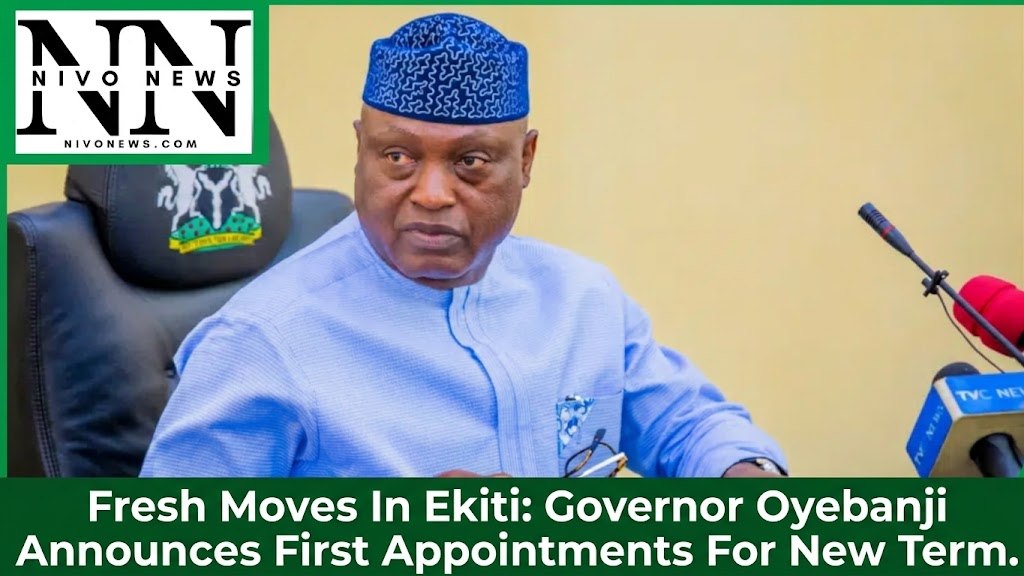
Ekiti State Governor, Biodun Oyebanji, has reappointed the Secretary to the State Government (SSG), Prof. Habibat Adubiaro; Chief of Staff, Oyeniyi Adebayo; and Chief Press Secretary, Olayinka Oyebode.....KINDLY READ THE FULL STORY HERE▶
The appointments were announced shortly after Oyebanji was sworn in for his second term in office on Friday.
According to a statement issued on Friday, October 16, 2026, and signed by Oyebode, the three officials will retain their respective positions in the governor’s administration.
Adubiaro will continue serving as Secretary to the State Government, while Adebayo remains Chief of Staff to the Governor.
Oyebode was also reappointed as Chief Press Secretary.
The statement noted that all three appointments take immediate effect.
Oyebanji Begins Second Term In Office
The reappointments followed Oyebanji’s inauguration for a second term as governor of Ekiti State.
He was sworn in alongside his deputy, Chief Monisade Afuye, at the Ekiti Parapo Pavilion in Ado-Ekiti, the state capital, on Friday.
The Chief Judge of Ekiti State, Justice Lekan Ogunmoye, administered the oaths of office and allegiance during the ceremony.
Oyebanji took his oaths at approximately 1:40 p.m. before a large gathering of political supporters, dignitaries and other guests who attended the event.
He subsequently signed the necessary documents formalising his inauguration for another four-year term.
Afuye had earlier taken her oaths of office and allegiance at about 1:28 p.m. before signing the relevant documents.
Oyebanji’s re-election and inauguration marked a significant moment in Ekiti State’s political history, as he became the first governor in the state to secure a consecutive term in office, breaking its long-standing succession pattern.
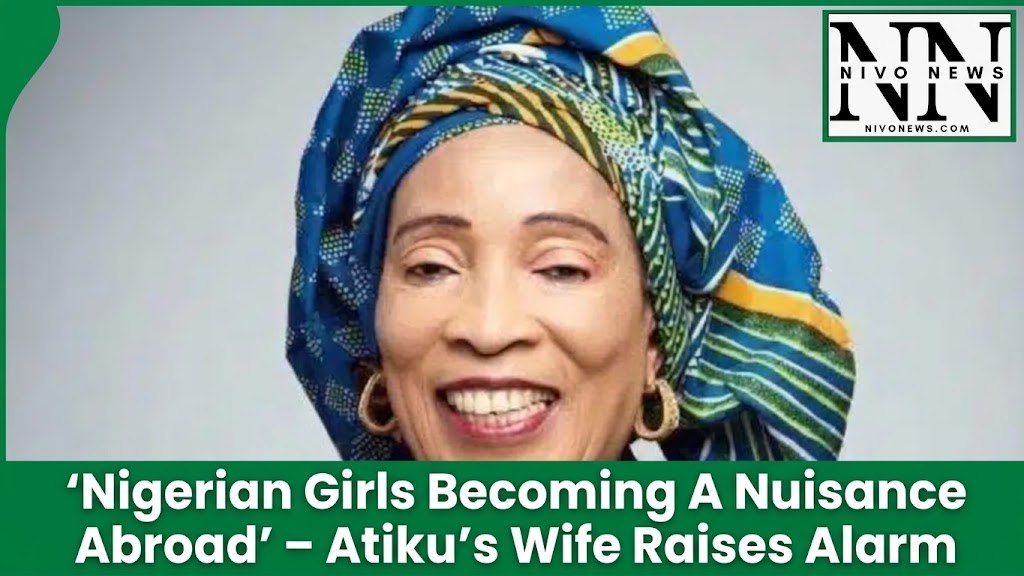
Titi Atiku Abubakar, wife of former Vice President Atiku Abubakar, has expressed concern over the increasing number of Nigerian girls travelling abroad, saying the situation has become a source of worry for foreign countries and contributed to international partners’ support for Nigeria’s fight against human trafficking.....KINDLY READ THE FULL STORY HERE▶
She explained that the partners wanted more Nigerian girls to remain in the country and pursue their ambitions at home rather than migrate overseas and become a burden on their host nations.
Titi, who is the Chairman of the Board of Trustees of the Network Against Child Trafficking, Abuse and Labour (NACTAL), made the remarks on Thursday in Abuja during the presentation of the organisation’s review of the 2025 Trafficking in Persons Report issued by the United States Department of State.
Speaking on the reasons behind international partners’ support for Nigeria’s anti-trafficking initiatives, she said the objective was to encourage Nigerian girls to stay in their country and build their futures there.
“You see, why our partners are actually helping us? Because they want our girls to stay at home. Our girls are becoming nuisance in overseas countries. So that is why these partners are helping us,” she said.
She added that the assistance was intended to strengthen efforts to combat human trafficking and empower Nigerian girls to pursue their goals within the country.
“They are supporting us, they are supporting the girls. They want them to stay at home and do whatever they want to do in their homes, in their country,” she added.
The NACTAL board chair also called for stronger collaboration among civil society organisations, stressing that tackling human trafficking, child abuse and child labour required a collective effort.
According to her, NACTAL could not successfully address the challenges alone and needed the support of other organisations working to protect vulnerable people and prevent trafficking.
“NACTAL has about 286 foot soldiers, those are the CSOs that are working with NACTAL because NACTAL alone cannot do it. So we must bring everybody on board to help in this fight,” she said.
Meanwhile, Abdulganiu Abubakar, the immediate past president of NACTAL and regional representative of the West African Coalition Against Trafficking in Persons and Smuggling of Migrants, said the network’s review found that the contributions of the Nigerian government, development partners and civil society organisations were not sufficiently acknowledged in the 2025 US Trafficking in Persons Report.
He explained that the review was initiated after the report’s release to assess its evaluation of Nigeria’s efforts to combat human trafficking, particularly in the areas of victim protection, rehabilitation and shelter provision.
Abubakar noted that development partners had supported Nigeria in formulating policies, assisting trafficking victims and renovating shelters operated by civil society organisations and the National Agency for the Prohibition of Trafficking in Persons (NAPTIP).
He said about 10 NAPTIP shelters had received renovation support, but the interventions were not adequately reflected in the US report.
He also argued that the work of more than 289 NACTAL member organisations, alongside Nigeria’s involvement in regional initiatives to combat human trafficking across West Africa, deserved greater recognition.
However, Abubakar acknowledged that Nigeria continued to face significant challenges in enforcing anti-trafficking policies.
He identified inadequate funding, insufficient political will and weaknesses in prosecuting trafficking cases, particularly high-profile cases, as some of the factors undermining the country’s response.
He urged the Federal Government to increase funding for ministries, departments and agencies responsible for combating human trafficking and demonstrate stronger commitment to implementing existing policies.
“The government of Nigeria needs to do a lot in terms of funding. The political will and commitment should improve,” he said.
Abubakar also called on the government to create an enabling environment for civil society organisations and development partners to operate independently while complementing official efforts.
He further urged the authorities to recognise investigative journalists who uncover human trafficking networks and expose alleged perpetrators.
NACTAL Plans To Expand Membership
In his remarks, NACTAL President Osita Osemene announced plans to increase the organisation’s membership from approximately 286 civil society organisations to 500 within the first three months of his administration.
He said the network was also targeting a membership of at least 1,000 organisations within one year.
According to Osemene, expanding the network would promote greater grassroots participation in the fight against human trafficking and improve assistance for victims and other vulnerable people.
He emphasised that the responsibility for tackling human trafficking should not be left to international partners alone, urging Nigerians to play a more active role in addressing the problem.
“The fight against human trafficking is a collective responsibility, and everybody must come together to ensure that this fight is won,” he said.
Osemene added that his administration would prioritise training and capacity-building programmes to equip more civil society workers with the knowledge and skills required to handle cases involving human trafficking and child labour.
He explained that the strategy would combine membership expansion with professional development to improve the quality of support available to victims.
-

 latest1 year ago
“Social Media Erupts As Jim Iyke Declares Rita Dominic Nollywood’s Most Beautiful”
-
 latest3 years ago
Edo Political Showdown: Oshiomhole Appears At Presidential Villa As Tinubu Hands APC Gubernatorial Flag To Okpebholo (Photos & Video)
-
 entertainment3 years ago
Love Knows No Age American Woman Defends Marriage To Young Nigerian Man “I’m Not 70”
-
 latest3 years ago
Olumide Akpata Strikes Again: Drops Killer Track, Sends Edo State Into Frenzy!(Video)
-
 Politics3 years ago
Nigerians React As Pastor Adeboye Foresees Passing Away On A Sunday After Enjoying A Satisfying Meal Of Pounded Yam
-
 latest3 years ago
FG Identifies 31 States At Risk Of Heavy Flooding In 2024: See Full List
-
 Politics3 years ago
BREAKING: Inspector-General Of Police Summons Top Police Commanders For Crucial-Security Challenges
-
 latest3 years ago
5 NYSC Corpers Perish In Fatal Road Accident Returning From Camp