Connect with us

Business

Ban On Cooking Gas Exportation Leads To Price Drop – Marketers Announce New Rates

Published

on

Ban On Cooking Gas Exportation Leads To Price Drop – Marketers Announce New Rates
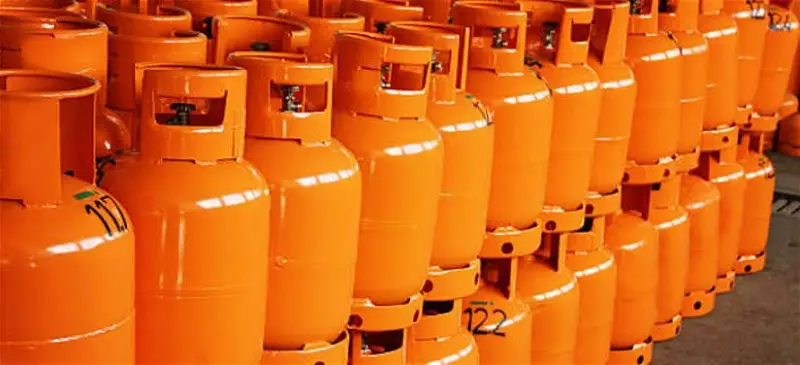
Dealers of Liquefied Petroleum Gas (LPG), commonly known as cooking gas, have announced that the Federal Government’s recent ban on the exportation of the product has resulted in a significant price drop, from approximately ₦1,500 per kilogram to around ₦900/kg.....KINDLY READ THE FULL STORY HERE▶

The Nigerian Association of Liquefied Petroleum Gas Marketers (NALPGAM) made this announcement during a courtesy visit to the Minister of State for Petroleum Resources (Gas), Ekperikpe Ekpo, in Abuja.

Naija News recalls that on February 22, 2024, the Federal Government implemented a ban on LPG exports to boost domestic supply and reduce prices.

During the meeting on Wednesday, the National President of NALPGAM, Oladapo Olatunbosun, commended Minister Ekpo for mandating the domestication of all LPG produced within Nigeria.

In a statement issued by the minister’s media aide, Louis Ibah, Olatunbosun highlighted the concerns over the volume of cooking gas being exported by international oil companies operating in Nigeria.

The NALPGAM president expressed gratitude to the Federal Government for addressing these concerns, noting that the intervention has led to a reduction in LPG prices from ₦20 million per 20 metric tonnes to ₦15 million.

“We appreciate the fact that at the parley with us, you (Ekpo) promised to address the issue of LPG exportation amid inadequate supply and rising prices, and you have indeed taken steps to fulfill that promise,” Olatunbosun stated.

“Today, we say thank you because the ban on LPG exports has significantly impacted the market, and consumers can attest to this improvement. Those who had abandoned their gas cylinders due to the price hike are now returning, and we are confident that as the naira strengthens, consumers will enjoy even better LPG prices.”

Advertisement
Click to comment

Leave a Reply

Your email address will not be published. Required fields are marked *

Business

Nigerian Government and Dangote Refinery Continue Talks on Naira-for-Crude Policy Renewal

Published

on

The future of Nigeria’s Naira-for-Crude policy remains in limbo as negotiations continue between the Nigerian government and Dangote Refinery. The six-month agreement between the Nigerian National Petroleum Corporation (NNPCL) and Dangote Refinery expired on March 31, 2025, without a renewal, leading to the suspension of the refinery’s sale of refined petroleum products in Naira. However, the refinery has continued processing approximately 400,000 barrels of crude oil daily, with 35% of the crude sourced from international markets, particularly Brazil and Equatorial Guinea.....KINDLY READ THE FULL STORY HERE▶

Although the policy’s future is still under review, sources suggest that its economic implications, especially concerning fuel prices and foreign exchange rates, make it crucial to the national economy. Despite challenges in crude supply from NNPC, Dangote Refinery has expanded its global sourcing and is currently sourcing crude from Brazil’s Petrobras and Equatorial Guinea.

No official agreement has been reached yet to extend the Naira-for-Crude deal. The Nigerian government’s committee in charge of the policy is waiting for recommendations from the Nigeria Upstream Petroleum Regulatory Commission before proceeding. Meanwhile, the refinery’s management has expressed uncertainty regarding the renewal of the deal, citing concerns over the financial strain and volatility of exchange rates. The future of the policy remains unclear, with NNPC expected to supply crude oil to Dangote Refinery in April, but payment terms are yet to be finalized.

Continue Reading

Business

Cement Prices Surge: Dangote, BUA, and Lafarge Rates This Week

Published

on

The price of cement, a vital resource for Nigeria’s construction industry, has witnessed significant changes recently, with rates fluctuating depending on brand, location, and market factors. Here is an overview of the current prices for some leading cement brands:....KINDLY READ THE FULL STORY HERE▶

  1. Dangote Cement: The cost of a 50kg bag of Dangote Cement ranges between ₦8,000 and ₦10,300. Known for its high quality, Dangote Cement remains a preferred choice in various construction projects. Prices are generally lower in areas near production plants but tend to rise in regions requiring extensive distribution.

  2. BUA Cement: Priced between ₦8,000 and ₦8,500 per 50kg bag, BUA Cement is popular among builders due to its competitive pricing and stability. Prices may vary slightly depending on proximity to manufacturing sites.

  3. Lafarge Water Shield Cement: Priced at ₦20,000 per 50kg bag, this cement variant is specifically formulated for durability and resistance to moisture, making it ideal for projects in damp environments.

  4. Waterproof Cement JK: Available at ₦15,000 per 50kg bag, Waterproof Cement JK is engineered to offer exceptional protection against water ingress, particularly useful for wet construction sites.

Over the past year, cement prices in Nigeria have surged significantly. At the start of 2024, a 50kg bag cost around ₦4,500. By November 2024, the price rose to about ₦8,500, reflecting an increase of approximately 89%. This upward trend is attributed to factors such as rising production costs, increased demand, and logistical challenges.

Marketers predict a potential further increase in cement prices, emphasizing the need for stakeholders in the construction sector to stay informed and plan accordingly.

Continue Reading

Business

Cooking Gas Prices Drop Significantly Across Nigeria: Relief for Households and Businesses

Published

on

A recent survey conducted by Naija News has revealed a notable decrease in the price of cooking gas in Nigeria, offering much-needed relief to households and small businesses. According to the survey, the cost of refilling cooking gas per kilogram has reduced significantly from ₦1,350 to ₦1,020.....KINDLY READ THE FULL STORY HERE▶

This positive development is expected to ease the financial burden on Nigerian families and small enterprises, especially those that heavily depend on cooking gas as a primary energy source. The survey, encompassing gas stations and vendors from various parts of the country, shows that the reduced price may help lower the overall cost of living.

The revised price breakdown is as follows:

  • 1 kg of Cooking Gas: ₦1,020

  • 3 kg of Cooking Gas: ₦3,060

  • 5 kg of Cooking Gas: ₦5,100

  • 10 kg of Cooking Gas: ₦10,200

  • 12.5 kg of Cooking Gas: ₦12,750

This decline marks a significant shift from the previous upward trend in gas prices and is likely to positively impact the economy, particularly the food and hospitality sectors. Businesses that rely on cooking gas will experience reduced operational costs, ultimately boosting their profit margins.

Experts attribute the drop in cooking gas prices to several factors, including fluctuations in global energy costs and adjustments within local supply chains. Despite recent variations in crude oil and natural gas prices, the reduction is perceived as a welcome development for Nigerian consumers.

By spending less on cooking gas, households and small businesses will now see some financial relief in their monthly budgets, especially during these economically challenging times.

Continue Reading

Trending