
latest
President Tinubu Puts Brakes On Cybersecurity Levy Amid Economic Pressures

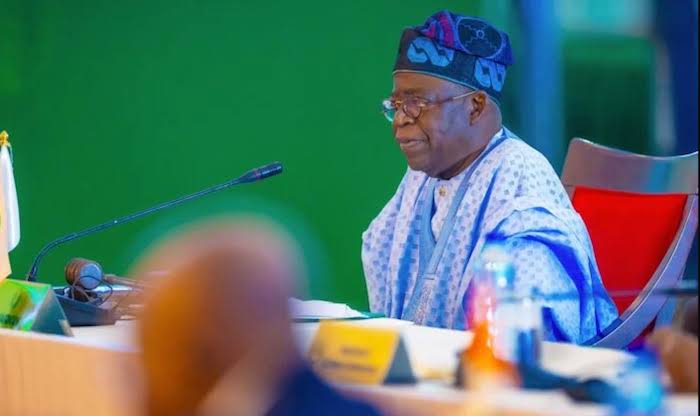
President Tinubu Puts Brakes On Cybersecurity Levy Amid Economic Pressures
In a significant development aimed at easing the financial burden on citizens grappling with economic challenges, President Bola Ahmed Tinubu has intervened to suspend the implementation of the cybersecurity levy outlined in the Cybersecurity Act 2015. This decision comes amidst recent directives from the Central Bank of Nigeria (CBN) regarding the collection and remittance of the national cybersecurity levy across various financial sectors.....KINDLY READ THE FULL STORY HERE▶
The cybersecurity levy, mandated under Section 44(2) of the Cybercrime (Prohibition, Prevention, etc.) Act 2015, was designed to strengthen cybersecurity measures in the country by imposing charges on electronic transactions, with proceeds earmarked for the National Cybersecurity Fund (NCF) overseen by the Office of the National Security Adviser (ONSA).
While the levy was initially perceived as targeting individuals, clarification from the Senate Committee on National Security and Intelligence emphasized that it was directed at financial institutions and telecommunications firms. Despite this clarification, concerns raised by the public prompted President Tinubu to take action.
Contrary to initial reports suggesting direct presidential intervention with the CBN, presidential sources have revealed that President Tinubu directed the National Security Adviser to suspend execution, respecting the autonomy of the CBN as a regulatory body. This nuanced approach underscores Tinubu’s commitment to upholding the rule of law while considering the economic well-being of citizens.
An anonymous source close to the decision-making process stated that Tinubu’s move reflects sensitivity to public opinion and the need to alleviate additional financial burdens on businesses and individuals. While acknowledging the commendable intentions behind the levy to bolster cybersecurity and support counterterrorism efforts, Tinubu aims to strike a balance that safeguards both national security and economic stability.
This decision marks a significant step towards addressing the concerns of citizens amidst challenging economic conditions, demonstrating President Tinubu’s responsiveness to the needs and aspirations of the Nigerian populace.
In a significant development aimed at easing the financial burden on citizens grappling with economic challenges, President Bola Ahmed Tinubu has intervened to suspend the implementation of the cybersecurity levy outlined in the Cybersecurity Act 2015. This decision comes amidst recent directives from the Central Bank of Nigeria (CBN) regarding the collection and remittance of the national cybersecurity levy across various financial sectors.
The cybersecurity levy, mandated under Section 44(2) of the Cybercrime (Prohibition, Prevention, etc.) Act 2015, was designed to strengthen cybersecurity measures in the country by imposing charges on electronic transactions, with proceeds earmarked for the National Cybersecurity Fund (NCF) overseen by the Office of the National Security Adviser (ONSA).
While the levy was initially perceived as targeting individuals, clarification from the Senate Committee on National Security and Intelligence emphasized that it was directed at financial institutions and telecommunications firms. Despite this clarification, concerns raised by the public prompted President Tinubu to take action.
Contrary to initial reports suggesting direct presidential intervention with the CBN, presidential sources have revealed that President Tinubu directed the National Security Adviser to suspend execution, respecting the autonomy of the CBN as a regulatory body. This nuanced approach underscores Tinubu’s commitment to upholding the rule of law while considering the economic well-being of citizens.
An anonymous source close to the decision-making process stated that Tinubu’s move reflects sensitivity to public opinion and the need to alleviate additional financial burdens on businesses and individuals. While acknowledging the commendable intentions behind the levy to bolster cybersecurity and support counterterrorism efforts, Tinubu aims to strike a balance that safeguards both national security and economic stability.
This decision marks a significant step towards addressing the concerns of citizens amidst challenging economic conditions, demonstrating President Tinubu’s responsiveness to the needs and aspirations of the Nigerian populace.

The national leadership of the Nigeria Democratic Congress (NDC) has withdrawn recognition from all its diaspora chapters in compliance with a court judgment restricting Nigerian political parties from establishing branches outside the country.....KINDLY READ THE FULL STORY HERE▶
News reports that the party’s National Publicity Secretary, Osa Director, announced the decision in a statement issued on Sunday.
According to Director, Justice Peter Kekemeke of the Federal Capital Territory (FCT) High Court in Maitama ruled that “no political party registered in Nigeria has the legal authority to establish, operate or supervise chapters outside the country’s territorial boundaries.”
He added that the court also held that “diaspora chapters of Nigerian political parties were illegal, unconstitutional, and unknown to the laws of the Federal Republic of Nigeria.”
In response to the ruling, the NDC said it had suspended recognition of its foreign chapters and withdrawn all previously granted recognitions.
The party, however, expressed appreciation to its diaspora supporters for their loyalty, contributions and continued interest in its activities, particularly their support for its presidential candidate, Peter Obi.
The statement explained that the decision followed a review of the party’s relationship with groups operating under its name outside Nigeria.
It also cited the case of Prof. Ali Alao v. All Progressives Congress (APC) & Anor, Suit No. CV/187/2025, which was decided by Justice Kekemeke at the FCT High Court in Maitama.
The NDC said it was complying with the judgment as part of its commitment to accountability, transparency and due process.
The statement added that the party had initiated a harmonisation process in locations where multiple groups were operating, with the aim of bringing them under a single umbrella.
It further disclosed that the judgment had been referred to the party’s Legal Department for further examination and advice on the appropriate steps to take.
Despite withdrawing formal recognition, the NDC encouraged its supporters in the diaspora to continue meeting and engaging with one another, assuring them that the party would maintain communication through appropriate and lawful channels.
The party acknowledged the strong interest Nigerians living abroad have shown in its candidates, especially Obi, and urged them to sustain their support.
The statement concluded with a call for collective efforts to build a better Nigeria, criticising the ruling All Progressives Congress (APC) and reiterating the NDC’s belief that “A New Nigeria is POssible!”
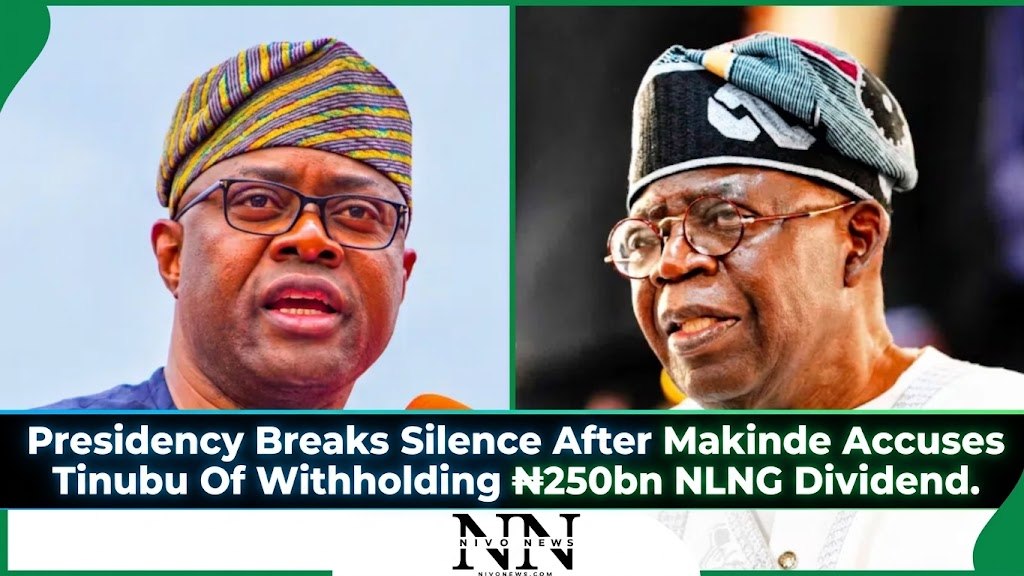
The Presidency has rejected allegations by Oyo State Governor Seyi Makinde that President Bola Ahmed Tinubu is deliberately delaying the release of Nigeria LNG (NLNG) dividend funds meant for states until after the 2027 general elections.....KINDLY READ THE FULL STORY HERE▶
News reports that the Presidency described the allegation as false and urged the public to disregard it.
The response came in a statement issued on Sunday by Bayo Onanuga, Special Adviser to the President on Information and Strategy.
Makinde, who is the 2027 presidential candidate of the Allied Peoples Movement (APM), had alleged that the Federal Government planned to withhold the funds until after the elections. He also claimed that the money had already been spent by the government.
The governor made the allegation on Friday while speaking at the 2027 Budget Stakeholders’ Consultative Engagement held at Olola Ogunlana Hall, International Conference Centre, University of Ibadan.
According to Makinde, each state was expected to receive ₦250 billion from the dividend funds, which his administration had planned to invest in projects aimed at expanding Oyo State’s economy.
He said: “Each state was supposed to get ₦250 billion. We had already identified projects that would expand Oyo State’s economy. But they have now said the money will not be paid until after the election. Is the election more important than the people of Nigeria?”
However, the Presidency dismissed the governor’s claims, insisting that the Federal Government was not withholding the NLNG dividend windfall as alleged.
Onanuga also advised Makinde to exercise caution in his public statements, warning against making claims that could mislead Nigerians for political reasons.
In the statement, the presidential spokesman sought to explain how the Federation Account is managed and how revenue is distributed among the three tiers of government.
He noted that distributing ₦250 billion to each of Nigeria’s 36 states would amount to ₦9 trillion, excluding allocations to the Federal Government, the Federal Capital Territory (FCT) and the 774 local government areas.
The Presidency maintained that the figures and circumstances surrounding the proposed distribution should be understood within the broader framework of revenue allocation in the country.
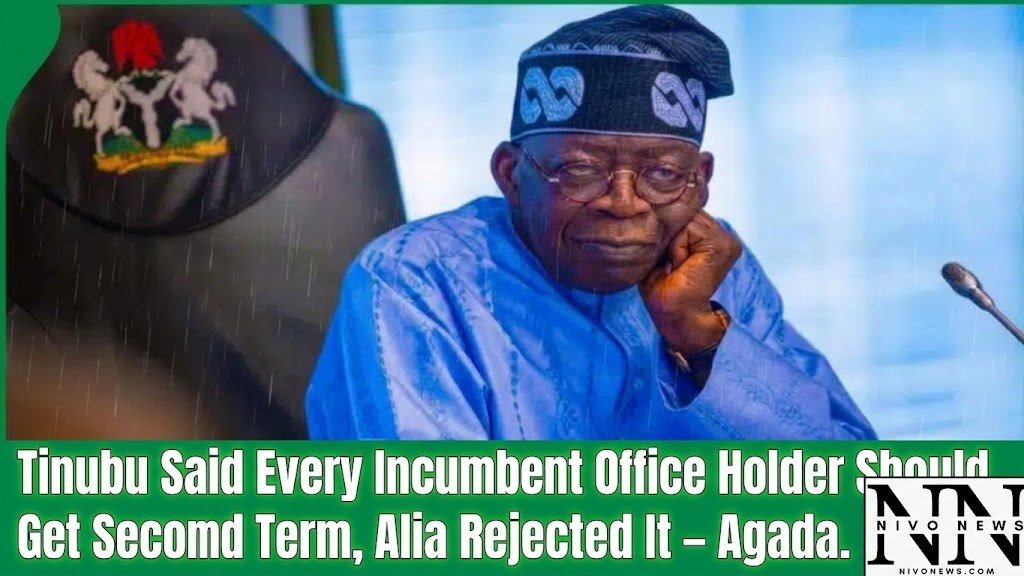
A former chairman of the All Progressives Congress (APC) in Benue State, Austin Agada, has accused Governor Hyacinth Alia of rejecting a proposal by President Bola Ahmed Tinubu concerning the re-election of incumbent party officeholders in 2027.....KINDLY READ THE FULL STORY HERE▶
News reports that Agada made the allegation during an interview with African Independent Television (AIT).
According to the former APC chairman, Tinubu had proposed that all serving APC officeholders in Benue State be allowed to seek a second term without facing challenges from other aspirants during the party’s primaries.
Agada explained that the proposal was presented at a peace and reconciliation meeting convened to resolve disagreements among APC members in the state.
He said the Secretary to the Government of the Federation (SGF), George Akume, communicated the President’s position at the meeting and urged participants to accept the arrangement.
Agada added that Akume advised party members against rejecting Tinubu’s proposal, prompting them to agree to the arrangement.
However, he alleged that Governor Alia subsequently rejected the proposal despite the agreement reached at the meeting.
The former party chairman further claimed that the governor went on to support other aspirants seeking to challenge incumbent party officeholders pursuing re-election.
Speaking during the interview, Agada said: “The president, the C-in-C, gave a proposal to the state where he said that we should allow every incumbent to go for a second term. Do you remember that peace meeting that took place under the chairmanship of the Secretary to the Government of the Federation George Akume? And Akume said that you don’t say no to Mr President. So we accepted the proposal but the governor refused the proposal and brought other candidates to contest against the proposal of Mr President.”
-

 latest1 year ago
“Social Media Erupts As Jim Iyke Declares Rita Dominic Nollywood’s Most Beautiful”
-
 latest3 years ago
Edo Political Showdown: Oshiomhole Appears At Presidential Villa As Tinubu Hands APC Gubernatorial Flag To Okpebholo (Photos & Video)
-
 entertainment3 years ago
Love Knows No Age American Woman Defends Marriage To Young Nigerian Man “I’m Not 70”
-
 latest3 years ago
Olumide Akpata Strikes Again: Drops Killer Track, Sends Edo State Into Frenzy!(Video)
-
 Politics3 years ago
Nigerians React As Pastor Adeboye Foresees Passing Away On A Sunday After Enjoying A Satisfying Meal Of Pounded Yam
-
 latest3 years ago
FG Identifies 31 States At Risk Of Heavy Flooding In 2024: See Full List
-
 Politics3 years ago
BREAKING: Inspector-General Of Police Summons Top Police Commanders For Crucial-Security Challenges
-
 latest3 years ago
5 NYSC Corpers Perish In Fatal Road Accident Returning From Camp