
latest
Asue In The Limelight, Okpebholo In The Shadows, Akpata’s Quiet Play: The Edo Election Saga


Asue In The Limelight, Okpebholo In The Shadows, Akpata’s Quiet Play: The Edo Election Saga....KINDLY READ THE FULL STORY HERE▶
Editorial
Acknowledging the high tension within Edo’s political landscape hardly comes as a surprise. The People’s Democratic Party (PDP) finds itself in a quandary, especially after Governor Obaseki’s immediate impeachment and replacement of his deputy, Philip Shaibu, all within the same hour, day, and month. On another front, the All Progressives Congress (APC) is still trying to find its footing following its primary elections…CONTINUE READING
The Labour Party (LP), meanwhile, is embroiled in its own leadership tussles, seemingly entangled in a power struggle with the Nigeria Labour Congress (NLC) .Even the controversial LP chairman, Julius Abure, appears to be travelling alone. Doubts remain about Edo’s top goal on his agenda, especially after his handpicked candidate was defeated by Akpata.
While the reasons behind Akpata’s low profile remain unclear, it directs our attention to the focal point of today’s discourse: the conspicuous presence of Asue Ighodalo in the ongoing campaigns and outreach efforts.
Let’s not misconstrue this observation; being the first to start a race doesn’t guarantee victory. However, Ighodalo’s current visibility is undeniably invigorating, motivating supporters to intensify their campaign efforts when their preferred candidate holds the lead. Undoubtedly, there’s an undeniable advantage to this momentum.
Asue Ighodalo radiates charisma and charm, effortlessly captivating his audience—a striking departure from Obaseki’s tentative demeanor when he initially pursued the governorship eight years ago. While Obaseki’s intellect was evident, his hesitancy in speech during early engagements was palpable.
In contrast, Ighodalo embodies the versatility of a preacher, motivational speaker, and eloquent orator rolled into one. His serene and uninterrupted delivery of motivational messages resonates deeply with his listeners, evoking the captivating sermons of his renowned preacher brother.
Asue appears to attract significant media attention, indicating much about his formidable personality. His pervasive presence across popular influencers, online platforms, and various media channels underscores the widespread enthusiasm for his narrative.
For the APC, Senator Okpebholo is evidently putting in the effort, albeit with considerably less visibility compared to Asue. It seems he might be focusing more on reconciliation efforts rather than outright campaign strategies, which could explain the relative scarcity of media coverage on his activities. In contrast, Asue is making his rounds with the urgency of a sprinter in a 100-meter race, acting as if the election day is just around the corner.
There appears to be a mysterious aspect to Senator Okpebholo’s approach, which remains elusive and challenging to decipher. It’s possible that this tendency to maintain a certain distance and operate discreetly is inherent to his nature.
As for Akpata, he appears to be maintaining a low profile, possibly devising a strategy to make a significant impact on the political stage. Currently, however, his campaign fails to resonate with the electorate as strongly as expected.
For now, let’s remain cautiously optimistic and observe how events unfold. Will Asue sustain his momentum? Could Akpakomiza alter the course of events? And will Akpata, like Peter Obi, emerge as a dominant force in the political arena? Only time will tell.
This editorial presents an impartial analysis of the current visibility of the three leading political party candidates, and it is not influenced or sponsored by any external entities.
Source: editorial iReporteronline.
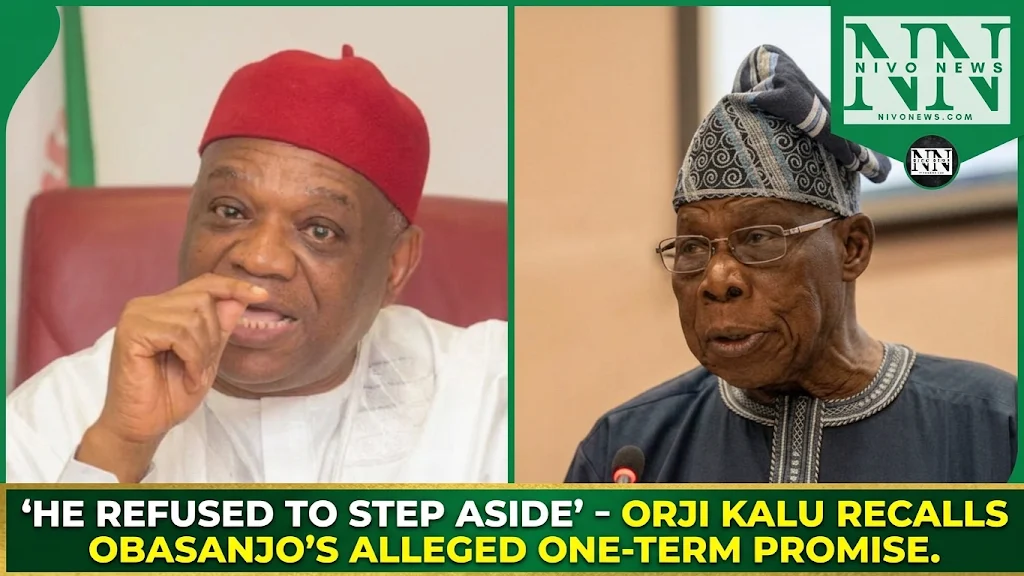
Former Abia State Governor, Orji Uzor Kalu, has revealed the circumstances that led to the breakdown of his relationship with former President Olusegun Obasanjo.....KINDLY READ THE FULL STORY HERE▶
Kalu said their disagreement stemmed from an alleged agreement that Obasanjo would serve only one term as president before handing over power to former military Head of State, General Ibrahim Babangida.
He explained that the understanding was reached among himself, Babangida and Obasanjo before the latter was supported to become Nigeria’s president.
Kalu made the disclosure during an appearance on Arise Television, where he spoke about his political relationship with the former president.
According to him, the arrangement was for Obasanjo to serve a single four-year term from 1999 to 2003 before transferring power to Babangida.
He said, “I had a very good relationship with President Obasanjo, and it went sour. And it didn’t go sour because I wanted what I wanted to have as a person. It’s because I wanted something for all of us Nigerians.
“Because most of the things we discussed, he didn’t do. We discussed that he would be president for four years. We discussed that he would only do four years and leave, and another person would take over. We helped him a lot when he came out of prison. We maintained our support to make sure that he succeeded.”
The former governor further explained that Obasanjo was expected to hand over power to another political bloc after completing his first term.
He noted that Obasanjo’s emergence as president in 1999 was partly aimed at addressing the political grievances of the South-West following the annulment of the June 12, 1993 presidential election and the death of its presumed winner, Chief MKO Abiola.
Kalu added that the arrangement was also expected to sustain the rotation of power, with the presidency eventually returning to the North.
However, he said he could not confirm reports that Babangida had considered making him vice president under the proposed political arrangement.
“Whether he had given IBB to make me vice president, I don’t know. Man, I never thought about that. But the one you’re certain about is what I was certain about,” he added.
Reflecting on the disagreement, Kalu said he was much younger at the time but had since grown older and become more conscious of the importance of honouring political agreements.
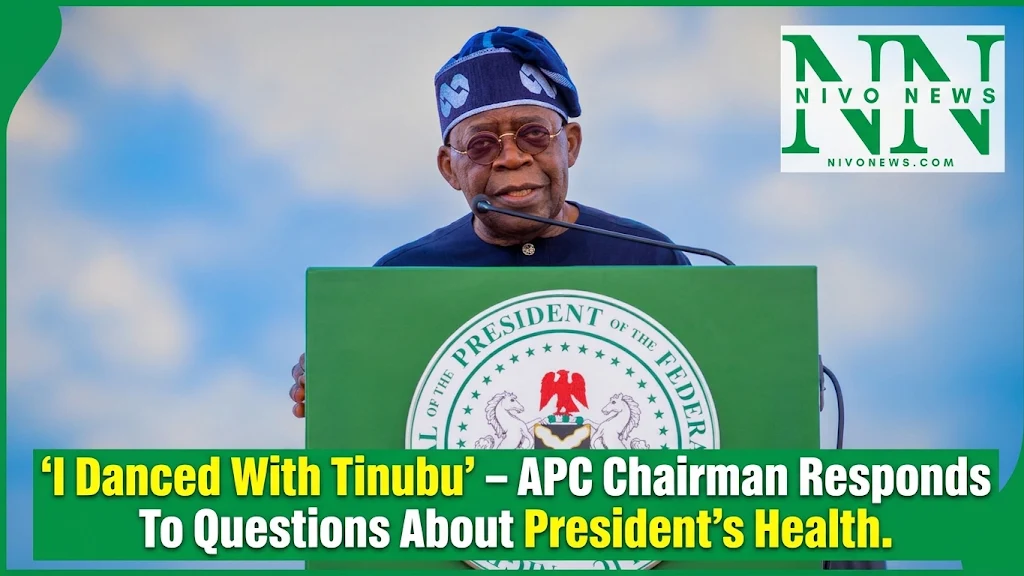
The National Chairman of the All Progressives Congress (APC), Nentawe Yilwatda, has urged Nigerians to support President Bola Tinubu’s re-election bid, insisting that the President is physically fit to continue leading the country.....KINDLY READ THE FULL STORY HERE▶
Yilwatda made the appeal on Monday night while appearing on Channels Television’s Politics Today.
He argued that Tinubu’s recent visits to Akwa Ibom and Rivers States on Friday demonstrated his physical fitness and ability to handle the demands of the presidency.
Speaking during the programme, Yilwatda said he personally witnessed the President dancing during his visit to Akwa Ibom.
“Did you watch him (Tinubu) dance in Akwa Ibom? I was there live and I danced with him, he danced to the music of the people,” he said.
The APC chairman maintained that Tinubu’s schedule during the visit showed that he was capable of handling demanding engagements.
“Tinubu is fit to go. He was in Akwa Ibom, he had a dinner, town hall meeting with the people that same Friday, he engaged the people late in the night after the dinner and the next morning he was in Rivers.
“And if someone is not fit, he will do 48 hours of non-stop engagements and trips at the same time? Bring another complaint,” Yilwatda added.
He also explained that the APC had arranged Tinubu’s campaign schedule in a way that would prevent governance from suffering.
According to him, the President would spend two days campaigning and three days attending to official duties, with visits to Jigawa and Jos also scheduled.
Yilwatda further disclosed that the Senate President and Speaker of the House of Representatives had advised against participating in every campaign activity to ensure that the National Assembly continued its work.
He said the party had equally staggered the activities of members of its National Working Committee to prevent its operations from being disrupted by the campaign.
The APC chairman questioned whether governance, the National Assembly and the party should be shut down simply because of the election campaign, describing such a suggestion as unreasonable.
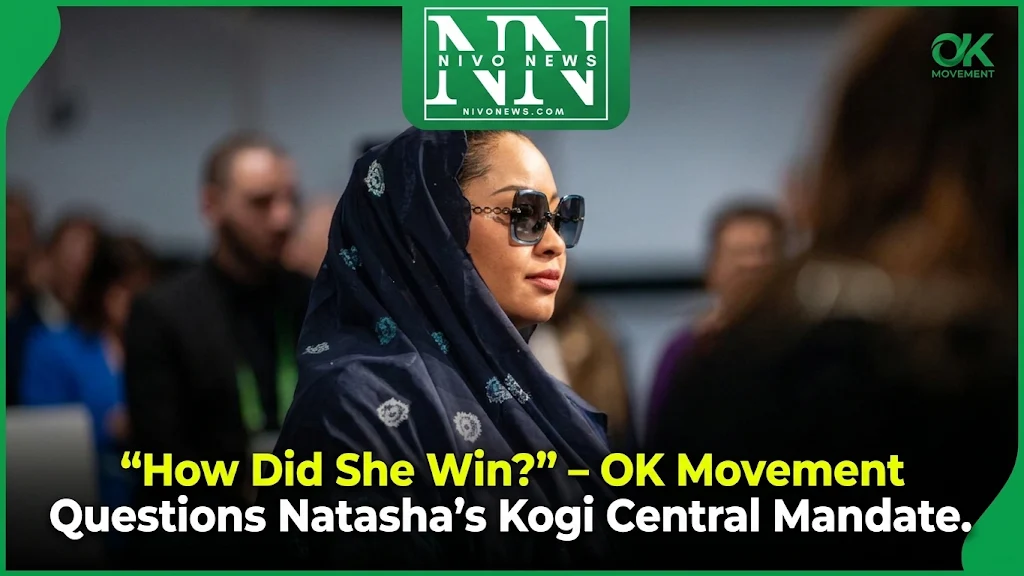
The Obi-Kwankwaso Movement has responded to Senator Natasha Akpoti-Uduaghan, representing Kogi Central, following her criticism of the group’s call for an investigation into her distribution of millions of naira to constituents.....KINDLY READ THE FULL STORY HERE▶
News reports that Akpoti-Uduaghan had criticised the Movement for urging the Economic and Financial Crimes Commission (EFCC) to investigate her cash empowerment programme, which she claimed was funded through a Federal Government budgetary allocation.
However, speaking in an interview with Punch, the Director-General of the Obi-Kwankwaso Movement, John Ughulu, said the senator’s response failed to address the concerns raised by the group.
Ughulu maintained that elected public officials needed continuous orientation on their constitutional duties, ethical responsibilities and accountability to the people.
He said the widely discussed cash distribution had raised concerns about the possible misuse of public office and the integrity of Nigeria’s electoral process.
According to him, if investigations establish that the money was distributed to influence voters ahead of an election, the action could amount to advance vote buying and should be examined under relevant electoral laws.
Ughulu stated:
“What Nigerians witnessed in the widely discussed money distribution incident raises serious questions about the abuse of public office and the integrity of our electoral process.
“If the circumstances establish that the money was distributed to influence voters ahead of an election, the matter could amount to advance vote buying and should be investigated under the relevant provisions of Nigerian electoral law.”
The movement’s director-general also challenged Akpoti-Uduaghan to clarify whether similar cash distributions formed part of her election campaigns, arguing that the circumstances surrounding her emergence as a senator also warranted scrutiny.
He said:
“The election that brought Senator Natasha into the National Assembly was decided by the people. Therefore, an important question must be asked: Was the same practice of distributing money to influence voters involved in securing her electoral victory?
“That question deserves a factual answer, not an emotional reaction.”
The group further rejected suggestions that its criticism was politically motivated, insisting that its position on electoral accountability applied to politicians across party lines, including candidates of the Nigeria Democratic Congress (NDC).
Ughulu stressed that the movement would not overlook alleged electoral misconduct involving individuals within its political camp while condemning similar actions by members of other parties.
He added:
“We cannot condemn alleged electoral malpractice under the present administration while appearing to tolerate similar conduct from individuals within our own political space. The same standards of integrity, transparency and accountability must apply to everyone.
“The OK Movement will not make exceptions for anyone. This applies equally to NDC candidates and candidates of every other political party. Anyone involved in electoral manipulation, vote buying, result falsification or any attempt to undermine the will of the electorate should expect lawful scrutiny and accountability.”
Ughulu also warned that the movement would explore legal options to demand accountability if the EFCC or other relevant agencies failed to investigate credible allegations.
-

 latest1 year ago
“Social Media Erupts As Jim Iyke Declares Rita Dominic Nollywood’s Most Beautiful”
-
 latest3 years ago
Edo Political Showdown: Oshiomhole Appears At Presidential Villa As Tinubu Hands APC Gubernatorial Flag To Okpebholo (Photos & Video)
-
 entertainment3 years ago
Love Knows No Age American Woman Defends Marriage To Young Nigerian Man “I’m Not 70”
-
 latest3 years ago
Olumide Akpata Strikes Again: Drops Killer Track, Sends Edo State Into Frenzy!(Video)
-
 Politics3 years ago
Nigerians React As Pastor Adeboye Foresees Passing Away On A Sunday After Enjoying A Satisfying Meal Of Pounded Yam
-
 latest3 years ago
FG Identifies 31 States At Risk Of Heavy Flooding In 2024: See Full List
-
 Politics3 years ago
BREAKING: Inspector-General Of Police Summons Top Police Commanders For Crucial-Security Challenges
-
 latest3 years ago
5 NYSC Corpers Perish In Fatal Road Accident Returning From Camp