
latest
Nigerians Embrace Traditional Healing As Pharmaceuticals Become Unaffordable


Nigerians Embrace Traditional Healing As Pharmaceuticals Become Unaffordable....KINDLY READ THE FULL STORY HERE▶
Traditional Medicine Gains Traction Amid Soaring Drug Prices
Victor Ayeni delves into the rising popularity of traditional medicine amidst the exorbitant costs of conventional drugs in Nigeria, highlighting the promising potential for research in alternative medicine……..CONTINUE READING
In the bustling Sango Ota market, nestled in the Ado-Odo/Ota Local Government Area of Ogun State, Mrs. Ayoni Oladipo proudly displays her assortment of herbal remedies. Adorning the wooden table before her shop are variously shaped plastic bottles, each labeled with the ailments they aim to remedy.
Weekly, customers from the vicinity and beyond flock to the shop of this Osogbo native, who confesses her expertise in herbal concoctions was inherited from her mother.
During a visit to her shop on a Tuesday morning, Mrs. Oladipo, a cheerful 41-year-old, enthusiastically provided herbal mixtures for treating conditions such as diarrhea and malaria, reflecting the high demand for her products.
“I receive a lot of patronage, even from outside Ogun State. People come from Lagos, Ibadan, and even Abuja seeking remedies for various ailments,” remarked Mrs. Oladipo, radiating genuine joy.
Responding to skepticism about the efficacy of herbal products, Mrs. Oladipo recounted success stories, citing instances where her herbal remedies had effectively treated serious conditions such as stroke and infertility.
Despite economic inflation driving up the cost of her herbs, Mrs. Oladipo noted increased patronage, as people increasingly recognize the affordability of herbal medicine compared to Western pharmaceuticals.
Another herbal vendor, Mrs. Kemisola Banwo, echoed Mrs. Oladipo’s sentiments, noting a shift in public perception towards traditional medicine. Banwo emphasized the role of education in changing attitudes towards herbal remedies.
Rising Demand Amid Economic Challenges
With the prices of modern drugs soaring, many Nigerians are turning to herbal medicines and alternative therapies, a trend driven by the high cost of imported pharmaceuticals.
According to data from the International Drug Centre, import prices of pharmaceutical products are projected to exceed N900 billion in 2024, exacerbating the financial strain on consumers.
As pharmaceutical companies like GlaxoSmithKline Consumer Nigeria Plc and Sanofi shift their distribution models, drug prices continue to surge, prompting citizens to seek relief in traditional herbs.
Taiwo Divine, a chef in Ibadan, attested to relying solely on herbal concoctions to address his family’s health needs, citing affordability and efficacy as decisive factors.
Similarly, Treasure Etteh, a marketer in Lagos, highlighted the affordability and accessibility of herbal medicine amidst rising drug costs, expressing a preference for herbal remedies over costly pharmaceuticals.
Untapped Potential and Calls for Standardization
While Nigeria boasts a rich diversity of natural herbs and plants, experts assert that the country has yet to fully harness the potential of traditional medicine.
Dr. Olusina Ajidahun, CEO of Lifebox Labs, emphasized the need for research and standardization in herbal medicine to ensure safe and effective treatments. He advocated for the integration of traditional and conventional medicine to expand healthcare options for Nigerians.
Echoing Dr. Ajidahun’s sentiments, pharmacists Fahd Khalid-Salako and James Ucheaga underscored the importance of scientific investigation and standardization in herbal medicine. They called for government support in promoting research and integrating traditional medicine into mainstream healthcare.
Government Recognition and Future Outlook
Amidst the growing acceptance of traditional medicine, stakeholders stress the need for evidence-based approaches and collaboration between traditional healers and healthcare professionals.
Government officials, including the Minister of State for Health and Social Welfare, Dr. Tunji Alausa, have acknowledged the significant role of traditional medicine in Nigeria’s healthcare landscape. Efforts are underway to integrate traditional healing practices with modern healthcare systems to enhance accessibility and promote holistic well-being.
As Nigeria navigates economic challenges and strives to improve healthcare access, the potential of traditional medicine remains a valuable resource that, with proper research and regulation, could provide affordable and effective healthcare solutions for millions of Nigerians.


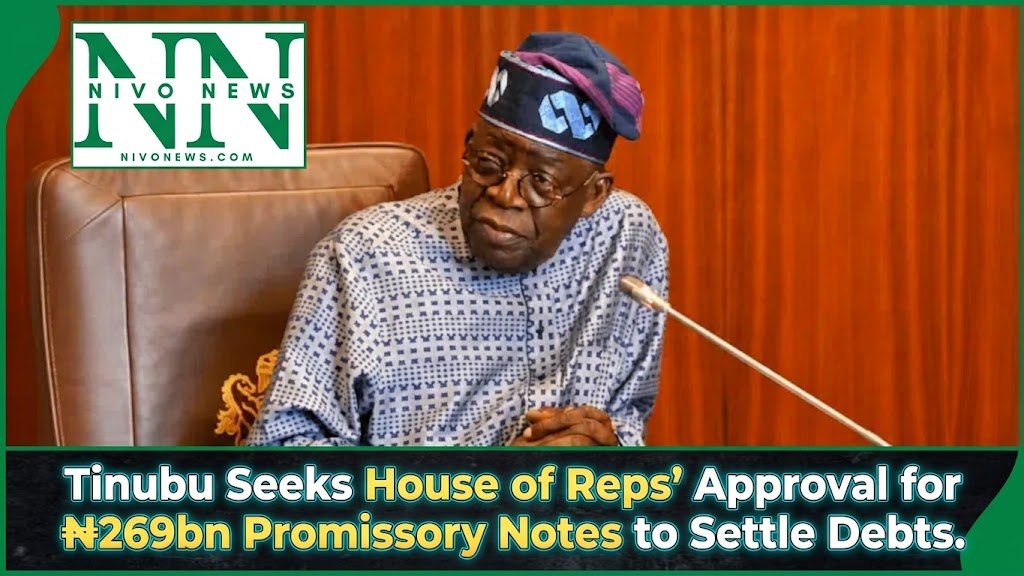
The Federal Government has asked the National Assembly to approve the issuance of promissory notes worth ₦269.44 billion to settle outstanding debts owed to contractors and other creditors.....KINDLY READ THE FULL STORY HERE▶
President Bola Tinubu made the request in a letter conveyed by the Secretary to the Government of the Federation (SGF), Senator George Akume, and read during plenary at the House of Representatives in Abuja.
The President is seeking lawmakers’ approval to establish and expand the Promissory Note Programme to address the government’s outstanding financial obligations.
In the letter dated August 18, 2026, and received by the Speaker’s office on October 21, Akume disclosed that the total liabilities amounted to ₦269,446,402,822.56.
He explained that the debts, which include contract-related and project-related obligations, were identified and confirmed following a comprehensive review by the relevant ministries, departments and agencies.
According to the SGF, the programme would provide “a structured, transparent and fiscally responsible framework” for settling the liabilities, with only verified and validated claims considered for payment.
In addition to seeking approval for the issuance of the promissory notes, Tinubu asked lawmakers to authorise the inclusion of the identified categories of creditors and beneficiaries, subject to final verification and certification.
The President also requested approval for the Minister of Finance and Coordinating Minister of the Economy, the Debt Management Office and other relevant government agencies to oversee the implementation of the programme.
Akume said the initiative would prevent the outstanding debts from accumulating further interest, penalties and other charges.
He added that the arrangement would reduce the financial pressure on affected creditors and demonstrate the government’s commitment to fulfilling its legitimate obligations.
The SGF noted that the Promissory Note Programme had previously been used to address inherited domestic debts and contractual liabilities, following approval by the Federal Executive Council and the National Assembly.
He explained that the scheme would allow the government to settle the obligations in phases without placing excessive pressure on public finances, in accordance with sound debt management principles.
Akume urged the House of Representatives to consider the request urgently, citing the substantial value of the liabilities, the length of time some debts had remained unpaid and the risk of additional interest accruing.
He said timely approval would enable the government to commence issuing the promissory notes and facilitate the resolution of the outstanding obligations.
A detailed schedule containing the debts, beneficiaries, amounts involved and supporting documents was attached to the request for lawmakers’ consideration.

President Bola Tinubu has approved the distribution of 500,000 solar-powered lights to rural households across the South-East, according to the Deputy Speaker of the House of Representatives, Benjamin Kalu.....KINDLY READ THE FULL STORY HERE▶
Kalu made the disclosure during the flag-off ceremony of the Renewed Hope Light-Up initiative in Bende Federal Constituency, Abia State, where 26 transformers, alongside 10,000 solar-powered lights and fans, were distributed to communities.
He said 42,000 households in the constituency had been selected to benefit from the programme, adding that the first batch of 10,000 solar-powered lights and fans was expected to arrive within two weeks.
According to the deputy speaker, the initiative commenced with a pilot scheme under which 1,000 units were provided to selected beneficiaries. He noted that representatives from the constituency’s wards had confirmed that the units were working properly.
Kalu explained that the programme was designed to extend the benefits of the Federal Government’s Renewed Hope Agenda to rural communities, particularly households struggling with unreliable electricity supply.
He described the planned distribution of solar-powered lights to 42,000 households in a single federal constituency as unprecedented, noting that the intervention would improve access to electricity in underserved communities.
Meanwhile, Emmanuel Ndubuisi, the lawmaker representing Bende South Constituency in the Abia State House of Assembly, welcomed the initiative.
Ndubuisi said some communities in the area had been without electricity for approximately two years following transformer failures, adding that the intervention would help address their power challenges.

The Christian Association of Nigeria (CAN) has called on security agencies to investigate a viral video allegedly showing a young man leading a group of boys in chants threatening attacks on Christians in Enugu and Jos during Sunday worship.....KINDLY READ THE FULL STORY HERE▶
CAN President, Archbishop Daniel Okoh, condemned the alleged incitement and urged the Department of State Services (DSS), the Nigeria Police Force and other security agencies to identify those involved and prosecute anyone found guilty.
In a statement, Okoh expressed particular concern over the apparent involvement of children and young people, warning that exposure to messages promoting religious hatred could have serious consequences.
“The possibility that young people are being exposed to or encouraged to embrace such hatred raises serious concerns that must not be ignored,” he said.
The association called on investigators to determine where and when the video was recorded, identify the individuals featured in it and establish whether any persons or groups organised, sponsored or facilitated the activity.
It also urged security agencies to assess the potential threats arising from the incident and ensure adequate protection for Christian communities and places of worship in Enugu, Jos and other parts of the country.
Although CAN acknowledged reports that the leadership of Jama’atu Izalatil Bid’ah Wa Iqamatis Sunnah (JIBWIS) had disowned the video, it maintained that the denial should not prevent an independent investigation.
“The denial of responsibility by any organisation cannot replace an independent investigation into the identities of those involved, the origin of the video and the circumstances surrounding the chants,” the association said.
CAN insisted that anyone found responsible for the alleged threats must be held accountable under the law, without favour or discrimination.
The association also appealed to religious leaders to reject teachings and activities that encourage hatred or violence against people of other faiths. It warned against exposing young Nigerians to messages that portray fellow citizens as enemies because of their religious beliefs.
According to CAN, failure to investigate the incident could embolden further religiously motivated threats and worsen existing tensions.
“Allowing such conduct to go unchallenged would send a dangerous message that threats against citizens on religious grounds can be made without consequence,” it said.
The association urged Christians to remain calm, vigilant and law-abiding while investigations are ongoing. It also cautioned against retaliatory actions that could put lives at risk and deepen religious divisions.
Reaffirming its commitment to religious freedom, justice and peaceful coexistence, CAN stressed that every Nigerian deserves equal protection under the law, irrespective of religious affiliation.
The association further called on the government to move beyond condemning the alleged incident and establish the facts, insisting that citizens’ safety and their freedom to worship must be protected.
-

 latest1 year ago
“Social Media Erupts As Jim Iyke Declares Rita Dominic Nollywood’s Most Beautiful”
-
 latest3 years ago
Edo Political Showdown: Oshiomhole Appears At Presidential Villa As Tinubu Hands APC Gubernatorial Flag To Okpebholo (Photos & Video)
-
 entertainment3 years ago
Love Knows No Age American Woman Defends Marriage To Young Nigerian Man “I’m Not 70”
-
 latest3 years ago
Olumide Akpata Strikes Again: Drops Killer Track, Sends Edo State Into Frenzy!(Video)
-
 Politics3 years ago
Nigerians React As Pastor Adeboye Foresees Passing Away On A Sunday After Enjoying A Satisfying Meal Of Pounded Yam
-
 latest3 years ago
FG Identifies 31 States At Risk Of Heavy Flooding In 2024: See Full List
-
 Politics3 years ago
BREAKING: Inspector-General Of Police Summons Top Police Commanders For Crucial-Security Challenges
-
 latest3 years ago
5 NYSC Corpers Perish In Fatal Road Accident Returning From Camp