
latest
Lagos Revenue Service Clarifies: Stamp Duty As A Revenue Stamp And Not Postage Stamp


Lagos Revenue Service Clarifies: Stamp Duty As A Revenue Stamp And Not Postage Stamp....KINDLY READ THE FULL STORY HERE▶

Mr. Tokunbo Akande, the Special Adviser to the Executive Chairman of the Lagos State Internal Revenue Service, LIRS, has provided clarity on the misconception surrounding stamp duty, emphasizing that it is a revenue stamp, not a postage stamp.
During his appearance on the Tax Talk program on Channels Television, Akande explained that a stamp’s purpose extends beyond courier services. It is intended to certify transactions between two entities, be they corporate entities or individuals. The stamp duty framework ensures that documents related to these transactions are admissible in court should disputes arise.
Read Also Unizik Sets Example: Erring Staff And Students Face Punishments For Violations
He highlighted the historical significance of stamp duty, which dates back to 1939, and clarified that it remains in effect today, with updates through various finance acts. Stamp duty imposes a responsibility on parties involved in specific transactions to provide documented evidence that outlines the transaction’s details. For instance, when someone purchases an item from another person, a receipt is issued to record the transaction. This receipt must bear a stamp to be considered admissible evidence in court.
Regarding revenue generation in Lagos State, Akande mentioned that stamp duty has contributed significantly, generating over N5 million in revenue for the state in recent years. However, he noted that there is room for improvement, and the agency is considering reintroducing revenue stamps for wholesalers and distributors for transactions exceeding N10,000. This approach was used in the 1970s and is now being revitalized.
Akande highlighted the agency’s efforts to digitize its stamp duty operations, moving from manual to electronic processes. He emphasized that the Joint Tax Board (JTB) and LIRS have been actively promoting awareness about stamp duty and engaging with professional bodies.
Despite these efforts, he stressed that it is the legal requirement that all transactions between two entities be stamped, even including items like cheques. Proper stamping is essential to ensure the admissibility of documents in court, and individuals and entities are responsible for ensuring that documents related to transactions above a specific expense threshold receive proper stamping.
LIRS has expanded its presence across various states and has offices strategically located to assist taxpayers, including those seeking assistance with legal proceedings. Their team of experts ensures proper stamping and verification of necessary documents, with a strong emphasis on record-keeping to authenticate documents passing through their hands. Proper stamping of documents is crucial, as it ensures their legal validity in various transactions, such as borrowing from a bank or renting a property. Failure to stamp documents appropriately may render them inadmissible in court, and LIRS is committed to assisting in certifying documents with the necessary stamps.
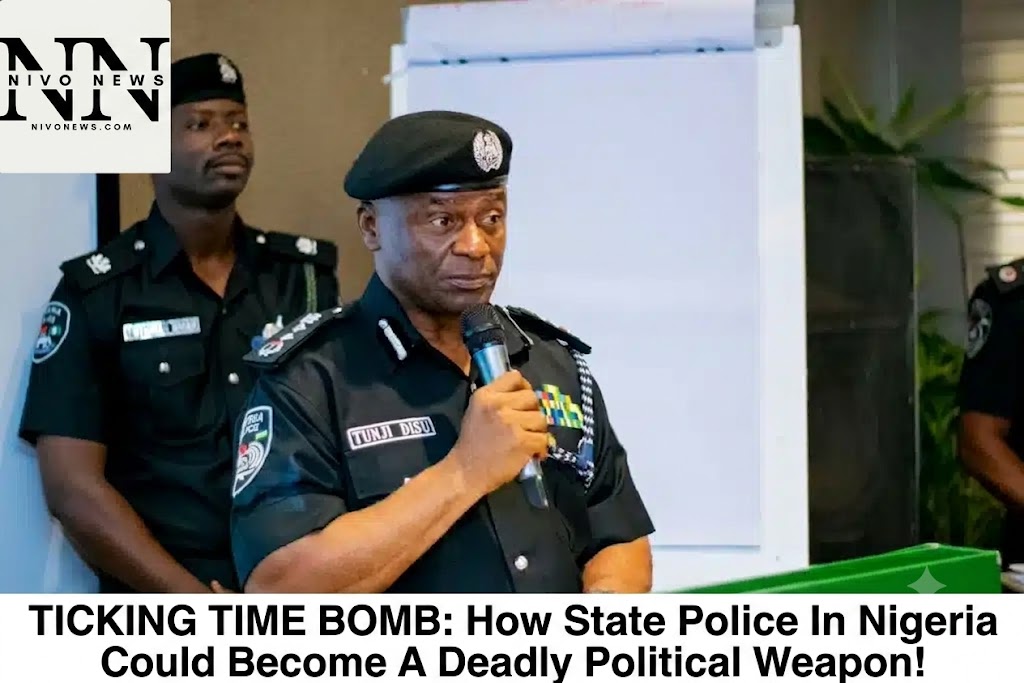
The House of Representatives took a historic step by advancing a bill to establish state police. While many view decentralization as a crucial fix for Nigeria’s escalating security crises, a walkout by minority lawmakers highlighted a critical concern: granting state governments direct control over armed police could easily turn a security fix into a political weapon.....KINDLY READ THE FULL STORY HERE▶
Currently governed under the 1999 Constitution and the Police Act, Nigeria’s centralized policing model faces mounting criticism. Proponents argue that decentralized policing aligns with federal practices in nations like the US, Canada, and Australia, offering distinct advantages:
-
Local Intelligence & Cultural Familiarity: Officers who understand local languages, traditions, and geography can gather better intelligence and respond faster than officers posted from federal headquarters in Abuja.
-
Targeted Threat Response: Tailored security strategies can be developed locally to combat region-specific challenges, including banditry and terrorism.
2. The Risks: Why Caution is Critical
Despite the obvious benefits, Nigeria’s political landscape presents serious risks if state governors gain direct command over police forces:
-
Political Capture & Intimidation: Governors already wield vast political and financial power—amplified further by increased revenue allocations following fuel subsidy removals. Without strict safeguards, authoritarian executives could use state police to intimidate political rivals, suppress protests, target activists, and crush internal party dissent.
-
Historical Precedents of Executive Excess: Past incidents—such as political standoffs blocking elected lawmakers from taking office or the arbitrary demolition of opposition properties—demonstrate how aggressively state power can be exercised even without an armed police force under state command.
-
Institutionalizing Thuggery: Poorly designed frameworks could allow politicians to recruit, pay, and arm loyalists or political thugs under the official banner of state policing.
-
Funding & Security Disparities: Running a modern police force requires massive financial investment in technology, training, and welfare. Many states already struggle to cover basic civil service salaries. Underfunding could lead to ineffective, corrupt units, while creating severe security disparities between wealthy and poor states.
-
Inter-Agency Conflict: Unclear jurisdictional boundaries could trigger operational friction between state police and federal security agencies.
3. The Middle Ground: Federal Control with Local Deployment
Rather than creating independent, governor-controlled state police forces that risk political abuse, a hybrid policing model offers a safer alternative:
┌─────────────────────────┐latest
“TRAITOR IN UNIFORM!” — Military Confirms Arrest Of Wanted Soldier Selling Gear To Terrorists!

The Nigerian Army has confirmed the arrest of Private Mohammed Yusuf, a soldier recently declared wanted for his alleged role in a criminal network supplying military uniforms and gear to terrorists and other criminal elements.....KINDLY READ THE FULL STORY HERE▶
The breakthrough was announced on Sunday in a statement by Captain Mohammed Goni, the Acting Military Information Officer for the Headquarters Joint Task Force (North East) Operation HADIN KAI.
Intercepted at the Border
According to Captain Goni, Private Yusuf was apprehended by troops of the 7 Provost Group at approximately 6:30 p.m. on July 25, 2026. The arrest took place at the Jidari Bus Stop in Maiduguri, Borno State.
Authorities allege that at the time of his capture, Yusuf was attempting to flee Nigeria to the Republic of Cameroon.
Background of the Case
Yusuf, with service number 23NA/84/1939, was attached to the Nigerian Army Ordnance Kits Factory in Lagos. Military records indicate he absconded from his unit on July 7, 2026.
Following his desertion, he allegedly relocated to Maiduguri and went into hiding in the Gomari Costain area of Jere Local Government Area, reportedly with the help of an associate.
Recognizing the threat posed by his alleged activities, the Nigerian Army officially declared him wanted on July 23, 2026. His subsequent arrest just two days later was credited to “credible human intelligence” and highly effective intelligence-driven operations.
Ongoing Investigation
Private Yusuf is currently in the custody of the 7 Provost Group. Captain Goni stated that a comprehensive investigation is ongoing to trace the full extent of Yusuf’s illicit activities and to identify any accomplices or broader networks involved in supporting terrorism.
Operation HADIN KAI reiterated its stance that there is no safe haven for anyone supporting terrorism, regardless of their status. The Command emphasized the Nigerian Army’s “unwavering commitment to holding personnel accountable for actions that undermine military ethics, discipline, and national security.“
Security agencies continue to urge members of the public to provide timely and credible information to assist in restoring lasting peace to the region.

The 11th edition of Big Brother Naija has officially kicked off, revealing a vibrant mix of 26 housemates spanning content creators, models, techies, entrepreneurs, and artists. All eyes are on the massive ₦160 Million grand prize, with contestants bringing a mix of strategy, romance, and non-stop drama to Biggie’s house.....KINDLY READ THE FULL STORY HERE▶
The Official Season 11 Lineup
1. Tram (24) — Streamer, Lagos State
-
The Vibe: Pure focus.
-
Game Plan: He has zero interest in romance or house drama—his eye is strictly on the ₦160 million prize.
2. Temi Nkem (21) — Strategist
-
The Vibe: Bold, vocal, and self-assured.
-
Game Plan: Playing strictly by “Temi Nkem’s rules” with plenty to say and zero intentions to back down.
3. Martins (30) — Model & Visual Storyteller, Kogi State
-
The Vibe: Heart on his sleeve.
-
Game Plan: Swapping runway catwalks for Biggie’s house, he claims to possess mind-reading skills and is ready to enjoy the ride.
4. Mercedes (26) — CEO & Massage Therapist, Delta State
-
The Vibe: Ambition and luxury.
-
Game Plan: She isn’t in the house chasing success—she’s here to add another bag to her empire.
5. Keivo (27) — Web Developer, Benue State
-
The Vibe: Multi-talented gamer & painter.
-
Game Plan: Extremely confident and open to love, though marriage isn’t on his radar anytime soon.
6. Chimsom Chuka (27) — Pharmacist, Anambra State
-
The Vibe: Cool, calm, and collected under pressure.
-
Game Plan: Serving humor, patience, and authenticity to the viewers every step of the way.
7. Abi — Chef & Model, Osun State
-
The Vibe: The scene-stealer.
-
Game Plan: She is bringing the “sauce,” big humor, and an electric personality to season the house.
8. Bells (22) — Independent Creator
-
The Vibe: Foodie and self-confessed rule follower.
-
Game Plan: Deeply in love with her high school sweetheart, she intends to stay grounded and authentic.
9. Flora — Makeup Entrepreneur
-
The Vibe: High fashion and raw honesty.
-
Game Plan: Her love life may be “complicated,” but she has zero tolerance for disrespect or insults.
10. Aikou (25) — Teacher & Web Developer, Abuja
-
The Vibe: Outspoken intellectual.
-
Game Plan: Single and open to falling in love again, but lie to him at your own risk.
11. Sultex (24) — Choreographer & Dancer, Lagos State
-
The Vibe: Energetic and unfiltered.
-
Game Plan: A straight shooter who refuses to sugarcoat issues, though he admits to being a people-pleaser.
12. Kamsy (24) — Event Planner & Gift Curator
-
The Vibe: Glamorous, ambitious, and dramatic.
-
Game Plan: Bringing high fashion and humor—just keep in mind that forgiveness doesn’t come easily to her.
13. Gerard (23) — OAP, Lagos State
-
The Vibe: The house’s official Wild Card.
-
Game Plan: An open book with multi-faceted talents who despises dishonesty and lives in the moment.
14. Oyin (22) — Entrepreneur & Model, Ogun State
-
The Vibe: “Daddy’s Girl” with a point to prove.
-
Game Plan: Set on proving that first impressions are misleading as she sets her sights on the top prize.
15. Sheba — Fitness Enthusiast
-
The Vibe: Proud mom with a warm heart.
-
Game Plan: Bringing positive energy, fitness motivation, and an open mind toward romance.
16. Araga — Fashion Model
-
The Vibe: Self-proclaimed “last loverboy standing.”
-
Game Plan: In the house for the money, the high energy, and charismatic romance.
17. Ricky (33) — Writer, Rivers State
-
The Vibe: “Bad boy by necessity.”
-
Game Plan: Fascinated by love but doesn’t subscribe to it; relying on storytelling and charm to stand out.
18. Barry (26) — Civil Engineer & Fashion Designer, Abuja
-
The Vibe: High-fashion competitor.
-
Game Plan: Highly competitive, expects absolute respect, and plans to out-style everyone in the house.
19. Nechey — Fashion Designer, Anambra State
-
The Vibe: Quiet hustle over noise.
-
Game Plan: Believes hard work speaks for itself and is ready to turn her work ethic into headline news.
20. Neche (25) — Multi-hyphenate
-
The Vibe: “Brains, beauty, and bundles.”
-
Game Plan: Entering with smart instincts and razor-sharp intellect to dominate the game.
21. Yusuf (25) — Actor, Kogi State
-
The Vibe: Unpredictable, emotional, and romantic.
-
Game Plan: Hoping to earn the title of the ultimate “Loverboy” while keeping the house entertained.
22. Goddessa (30) — Musician, Abia State
-
The Vibe: Unapologetic and bold.
-
Game Plan: Zero time for romance or liars—she’s commanding attention from day one.
23. Bluethophia (22) — Photographer & Student, Adamawa State
-
The Vibe: Quiet confidence and sharp intuition.
-
Game Plan: Using her calm demeanour and keen observations to navigate house politics smoothly.
24. Cassi (27) — Actor & Entrepreneur, Abia State
-
The Vibe: Creative, organized, and multi-talented.
-
Game Plan: Skilled in acting, painting, and chiropractic therapy—though being overly organized might be his biggest test.

-

 latest11 months ago
“Social Media Erupts As Jim Iyke Declares Rita Dominic Nollywood’s Most Beautiful”
-
 latest2 years ago
Edo Political Showdown: Oshiomhole Appears At Presidential Villa As Tinubu Hands APC Gubernatorial Flag To Okpebholo (Photos & Video)
-
 entertainment2 years ago
Love Knows No Age American Woman Defends Marriage To Young Nigerian Man “I’m Not 70”
-
 latest2 years ago
Olumide Akpata Strikes Again: Drops Killer Track, Sends Edo State Into Frenzy!(Video)
-
 Politics3 years ago
Nigerians React As Pastor Adeboye Foresees Passing Away On A Sunday After Enjoying A Satisfying Meal Of Pounded Yam
-
 latest2 years ago
FG Identifies 31 States At Risk Of Heavy Flooding In 2024: See Full List
-
 Politics3 years ago
BREAKING: Inspector-General Of Police Summons Top Police Commanders For Crucial-Security Challenges
-
 latest2 years ago
5 NYSC Corpers Perish In Fatal Road Accident Returning From Camp