
latest
Nigeria’s Economic Reforms Strain Citizens As Labor Threatens Strikes


Nigeria’s Economic Reforms Strain Citizens As Labor Threatens Strikes....KINDLY READ THE FULL STORY HERE▶

The prevailing tough economic conditions in Nigeria, exacerbated by a series of economic reform policies, have started taking a toll on the majority of the population, who bear no responsibility for the downturn. One of the most impactful reforms has been the removal of petrol subsidies, leading to a ripple effect on the prices of goods and services and exacerbating the already high inflation rate, currently hovering around 24.08 percent.
While this reform has been praised by insightful analysts as a necessary step, its implementation seems to have underestimated the unintended but foreseeable short-term negative consequences. This oversight now threatens to trigger a significant social crisis, with organized labor at the forefront, ready to call for an indefinite work stoppage if the government doesn’t translate promises of alleviating the people’s suffering into action.
Recently, the Nigerian Labour Congress (NLC) threatened to initiate a nationwide strike, following a two-day warning strike that disrupted economic activities across several states. The NLC’s grievance is that the federal government has disengaged from discussions on palliative measures.
President Bola Tinubu displayed political courage by implementing the removal of petrol subsidies, a policy that had been on the table since 1999. However, President Muhammadu Buhari initially removed the subsidy in 2015 but reintroduced it less than a year later, leading to a significant increase in economic burdens. In 2022 alone, the Nigerian National Petroleum Company Ltd spent $9.7 billion (N4.39 trillion) on subsidies, depriving the Federation Account of vital inflows for several months.
Recognizing the impending economic disaster due to the excessive spending on petrol subsidies, the Buhari administration proposed its cessation in June 2022, postponed it to December of the same year, and ultimately omitted funding for it in the 2023 Appropriation Act, effective from June 2023. In contrast, Tinubu implemented the policy a month earlier, announcing in his May 29, 2023 inauguration speech, “Subsidy is gone.”
While the reform itself received support, its abrupt implementation without a strategic plan to mitigate short-term negative impacts, particularly on vulnerable populations, led to concerns. Organized labor, including the NLC and the Trade Union Congress, raised objections, emphasizing the need for corresponding wage increases to offset the policy’s effects, especially on workers with stagnant incomes.
Initially, the Tinubu administration responded commendably by entering negotiations with labor to address their demands, including wage hikes and the longstanding need for local petroleum product refining. The president established a committee to negotiate these demands and propose an agreeable solution that would satisfy all parties.
However, labor now alleges that the government has abandoned these negotiations and must be compelled to return to the discussion table. It is challenging to believe labor’s account because it’s unlikely any responsible government would overlook the restraint shown by workers thus far. Furthermore, labor had shifted its position from demanding subsidies to insisting on local refining preceding subsidy removal, accepting a government commitment to domestic production at a specified date.
A strike would undoubtedly exacerbate an already fragile economy. Therefore, it’s tempting to either implore labor to postpone its planned action or outrightly call it off to prevent further economic risks. However, the reality on the ground is dire, with many Nigerians barely managing to cope with the soaring cost of living. High transportation expenses have hindered workers from commuting to work, leading to transportation costs impacting food prices, tuition fees, and healthcare expenses.
Read Also Nigerian Police Apprehend 22-Year-Old Suspected Rapist And Robber In Ondo State
Recognizing the immense challenges facing the populace, Tinubu unveiled a series of short-term measures in late July to alleviate their suffering. These measures included providing 200,000 MT of grains to households, 225,000 MT of fertilizer, and N200 billion for farming support. Additionally, N75 billion was allocated to MSMEs, N50 billion to Nano businesses, N75 billion to manufacturers, and N100 billion for 3,000 gas-powered buses.
While labor initially welcomed these palliative measures but expressed skepticism about their implementation, the sluggish rollout of these initiatives seems to validate their concerns and impatience. Although the Tinubu administration can argue that it’s just getting started with recent ministerial appointments, it’s crucial to engage in confidence-building talks with labor to assure workers that the short-term relief measures will be consistently implemented.
Historically, the government’s response to citizen grievances has often involved delaying action until mass protests erupt. The Tinubu administration, whose leadership has participated in such protests for decades, should break this pattern. Returning to the negotiation table with labor to address their demands is essential to preserve the fragile peace prevailing in the country. During these discussions, labor should also be pragmatic, recognizing that several years of damage cannot be reversed overnight.
latest
UNGA SHOWDOWN: Furious Obidients Demand Immediate Answers For Tinubu’s Three-Year Global Snub!
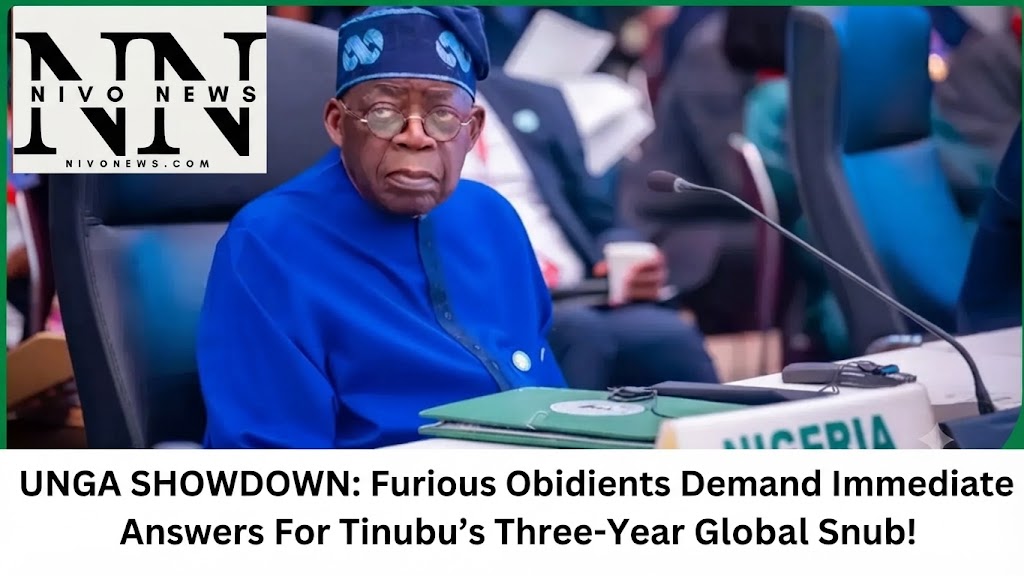
The Obidient Movement has criticized President Bola Tinubu for his continuous absence from the United States and the United Nations General Assembly (UNGA), demanding that the government account for his failure to attend the global summit for three consecutive years.....KINDLY READ THE FULL STORY HERE▶
-
Global Snub Criticism: In a statement issued by its Media and Communications Directorate, the group questioned why President Tinubu chose to holiday in France and attend a private dinner with French President Emmanuel Macron instead of representing Nigeria at the UN summit.
-
Implications for Nigeria’s Image: The movement argued that Tinubu’s repeated absence projects a lack of seriousness regarding international diplomacy, noting that UNGA provides a crucial platform to advance national interests, engage global leaders, and address matters affecting Nigeria and Africa.
-
Demand for Transparency: Contrasting Tinubu’s European trip with French President Emmanuel Macron—who traveled to New York for UNGA—the group insisted that the administration must clarify its official engagements and provide clear facts regarding the decisions keeping the President away from the international assembly.
latest
THE GREAT DEFECTION: Former Buhari Ally Babachir Lawal Breaks Silence, Shatters Opposition Lines With Surprise NDC Move!
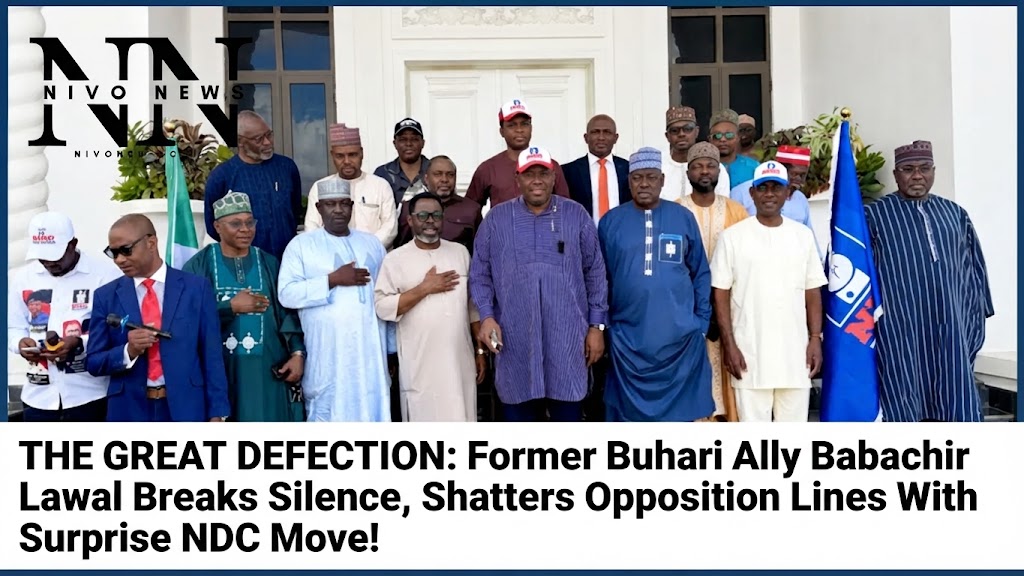
A former Secretary to the Government of the Federation (SGF), Babachir David Lawal, has officially defected to the Nigeria Democratic Congress (NDC).....KINDLY READ THE FULL STORY HERE▶
-
The Reception: Lawal was welcomed into the party by NDC National Leader, Senator Seriake Dickson, and members of the National Working Committee (NWC) on behalf of the party’s presidential candidate, Peter Obi, and his running mate, Rabiu Kwankwaso.
-
Past Departure: Earlier in the year, Lawal parted ways with the African Democratic Congress (ADC) following leadership disputes and allegations that their presidential primary was manipulated in favor of Atiku Abubakar.
-
Endorsing the Ticket: Explaining his move, Lawal urged patriotic Nigerians troubled by the country’s economic hardship, hunger, and insecurity to support the Obi-Kwankwaso ticket, looking forward to a successful celebration on May 29, 2027.
-
Party Leadership Praise: Senator Dickson lauded Lawal as an experienced politician and grassroots mobilizer, assigning him a leadership role to oversee NDC activities and campaigns across the North-Eastern zone.
Lawal expressed confidence that the NDC represents the genuine path forward for Nigeria, calling on citizens to partner with the movement to rescue the nation.
latest
PRISON WARZONE: Fake Army General Brutally Ambushed And Attacked Behind Bars In Maximum Security Ikoyi Prison!
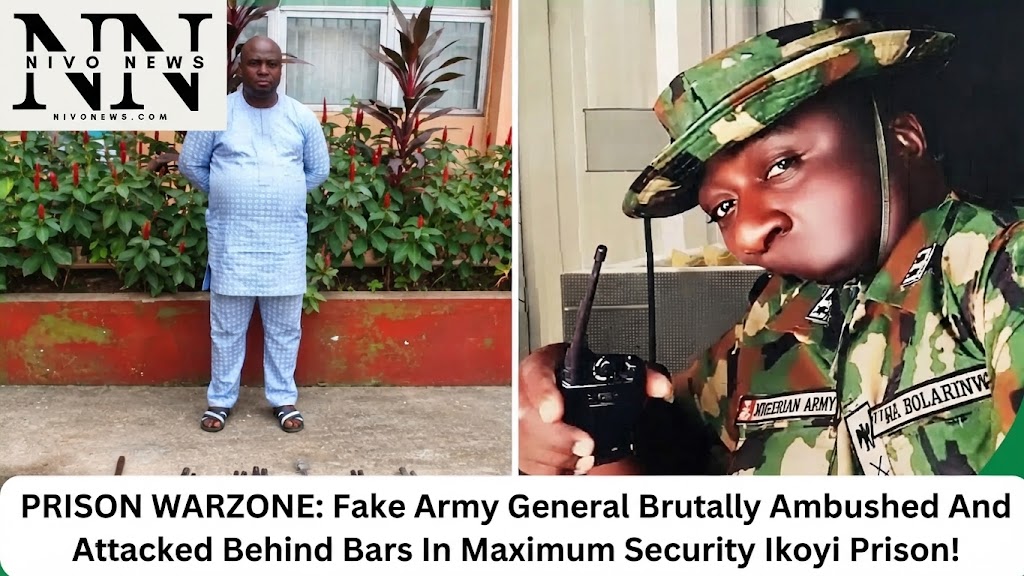
Bolarinwa Abiodun, a convicted fake Nigerian Army general, was reportedly hospitalized following an alleged physical assault by correctional officers at the Ikoyi Correctional Centre in Lagos.....KINDLY READ THE FULL STORY HERE▶
-
According to an insider source, prison warders entered Bolarinwa’s cell while he was asleep, woke him up suddenly, and pushed him to the ground, causing him to fall.
-
Following the alleged altercation, he was rushed to the Military Hospital on Awolowo Road, Ikoyi, for medical attention and theatre evaluation.
-
A family source corroborated that relatives were later informed of the incident, claiming that Bolarinwa reported being severely beaten and subjected to physical abuse during a search for a mobile phone.
-
The family source also expressed deep safety concerns, alleging that this incident follows several previous attempts on his life.
Background on Conviction
Bolarinwa has been serving a prison sentence following his initial remand in April 2022 by the Economic and Financial Crimes Commission (EFCC).
-
He was arraigned before Justice Oluwatoyin Taiwo of the Special Offences Court in Ikeja on a 13-count charge encompassing forgery, possession of false documents, and obtaining money by false pretences amounting to ₦266.5 million.
-
The EFCC stated that Bolarinwa deceived Kodef Clearing Resources Limited by posing as a military general and claiming that former President Muhammadu Buhari had shortlisted him for appointment as Chief of Army Staff, extracting large sums to “facilitate” the role.
-
Investigators also recovered forged appointment letters, military identification cards, recommendations bearing former President Olusegun Obasanjo’s name, and several firearms from his Alagbado residence.
-
Although he initially pleaded not guilty, Bolarinwa changed his plea to “guilty” during court proceedings on July 7, 2022.
-
Justice Taiwo convicted him on all 13 counts, sentencing him to seven years’ imprisonment without the option of a fine, ordering asset forfeitures, and directing him to pay ₦20 million in restitution.
-

 latest1 year ago
“Social Media Erupts As Jim Iyke Declares Rita Dominic Nollywood’s Most Beautiful”
-
 latest3 years ago
Edo Political Showdown: Oshiomhole Appears At Presidential Villa As Tinubu Hands APC Gubernatorial Flag To Okpebholo (Photos & Video)
-
 entertainment2 years ago
Love Knows No Age American Woman Defends Marriage To Young Nigerian Man “I’m Not 70”
-
 latest3 years ago
Olumide Akpata Strikes Again: Drops Killer Track, Sends Edo State Into Frenzy!(Video)
-
 Politics3 years ago
Nigerians React As Pastor Adeboye Foresees Passing Away On A Sunday After Enjoying A Satisfying Meal Of Pounded Yam
-
 latest2 years ago
FG Identifies 31 States At Risk Of Heavy Flooding In 2024: See Full List
-
 Politics3 years ago
BREAKING: Inspector-General Of Police Summons Top Police Commanders For Crucial-Security Challenges
-
 latest3 years ago
5 NYSC Corpers Perish In Fatal Road Accident Returning From Camp