
latest
‘South Africa Is Not Xenophobic’ – Who Made This Bold Declaration?.

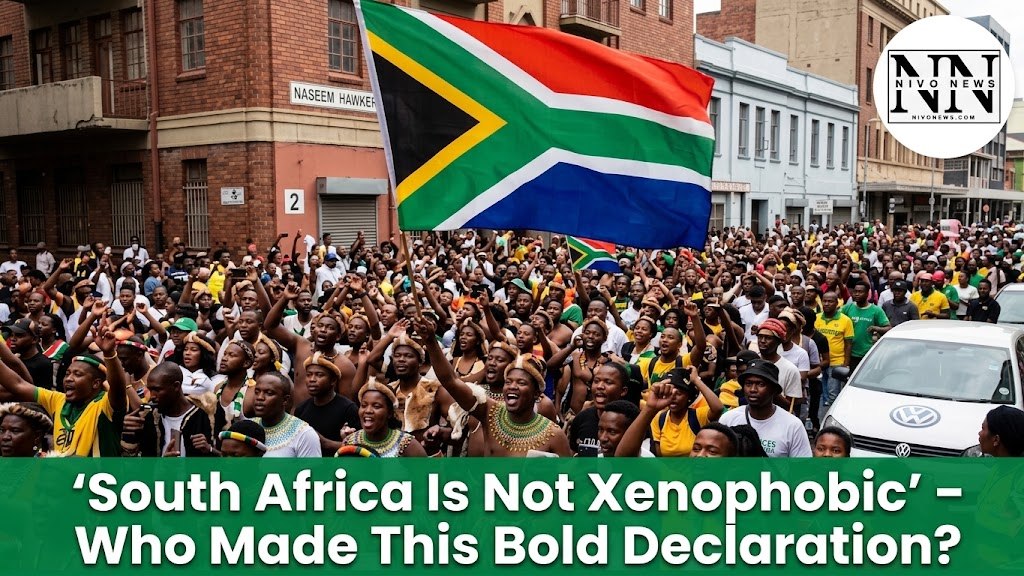
The South African government has arrested 364 individuals in connection with attacks on African migrants, as the country rejects allegations that it is xenophobic.South Africa’s Acting Consul-General in Lagos, Ms Kgothatso Xulu, disclosed this on Tuesday while speaking at the 47th Annual Conference of the Nigerian Society of International Law (NSIL) in Lagos.
Speaking at the Nigerian Institute of International Affairs in Victoria Island, Xulu argued that the attacks should not be used to portray the entire country as hostile towards foreigners.
She maintained that South Africa and its people rejected xenophobia, insisting that the actions of a small group should not define the nation.
“I wouldn’t be doing my country any justice if I don’t actually address and defend that South Africa is not xenophobic and we reject, we completely reject what is happening,” she said.
“But we cannot be generalized with small pockets that are using the opportunity, which is a global problem that is affecting the continent.”
The conference was held under the theme, “From Obligation to Implementation: Reassessing the Efficacy of International Law in Contemporary International Relations.”
The diplomat acknowledged that irregular migration and inadequate service delivery remained challenges in South Africa. However, she urged African countries to tackle the underlying reasons their citizens leave their home countries.
Xulu questioned why many Africans migrate primarily to escape economic hardship instead of moving across borders to trade, establish businesses and expand their markets.
According to her, African nations should create economic conditions that enable citizens to travel to other countries in search of business opportunities rather than out of desperation.
“If we want to really have an Africa that we see viable, it has to be that our people are not leaving our homes because of economic emancipation, but rather we are leaving our homes to say that I would like to trade, I would like to extend our market,” she said.
She linked the issue to the African Continental Free Trade Area (AfCFTA), an agreement aimed at boosting trade between African countries and establishing a single continental market.
Xulu argued that trade should focus on creating economic opportunities and expanding markets rather than serving as a means of survival for people facing financial difficulties.
“Trade shouldn’t be about survival, but trade should be about we are creating a market,” she added.
The consul-general also defended South Africa’s constitutional protection of peaceful protests, noting that demonstrations played a significant role in the country’s struggle against apartheid.
She explained that public protests should not automatically be classified as violent simply because they attract large crowds or public attention.
“The Constitution says peaceful protests for South Africans are allowed. This is how we were partly able to win and be able to push the apartheid government, because our people protested,” she said.
She further explained that procedures exist for organizing protests, adding that the police are responsible for protecting demonstrators and members of the public.
Xulu noted that South Africa had spent about three decades under democratic rule and urged other African countries to consider the nation’s history when assessing its current challenges.
The diplomat also cautioned against drawing sweeping conclusions about an entire country based on isolated incidents.
She warned that misinformation and fake news in media reports could create false impressions about South Africans and worsen tensions among African nations.
Highlighting South Africa’s connections with the rest of the continent, Xulu referred to the country’s national anthem, which opens with a prayer for God’s blessings upon Africa.
She said the anthem reflects South Africa’s recognition of the support it received from other African countries during the anti-apartheid struggle.
Xulu called for platforms that would enable African countries to hold open and structured discussions on migration, xenophobia and economic cooperation.
She urged Nigeria to take the lead in facilitating such discussions at the next meeting of the Nigerian Society of International Law.
According to her, African countries must work together to address the root causes of migration and other challenges confronting the continent.
She also called on African nations to participate more actively in discussions on international law and global governance instead of remaining on the sidelines while decisions affecting them are made.
Xulu maintained that greater involvement would strengthen Africa’s ability to protect its interests and influence international policies.
“Entering into the space of international rules means that Africans are able to make decisions for themselves,” she said.
The consul-general expressed appreciation for the conference’s discussions on international law and South Africa’s role at the International Court of Justice.
She concluded by urging young Africans to take responsibility for shaping the continent’s future.....KINDLY READ THE FULL STORY HERE▶
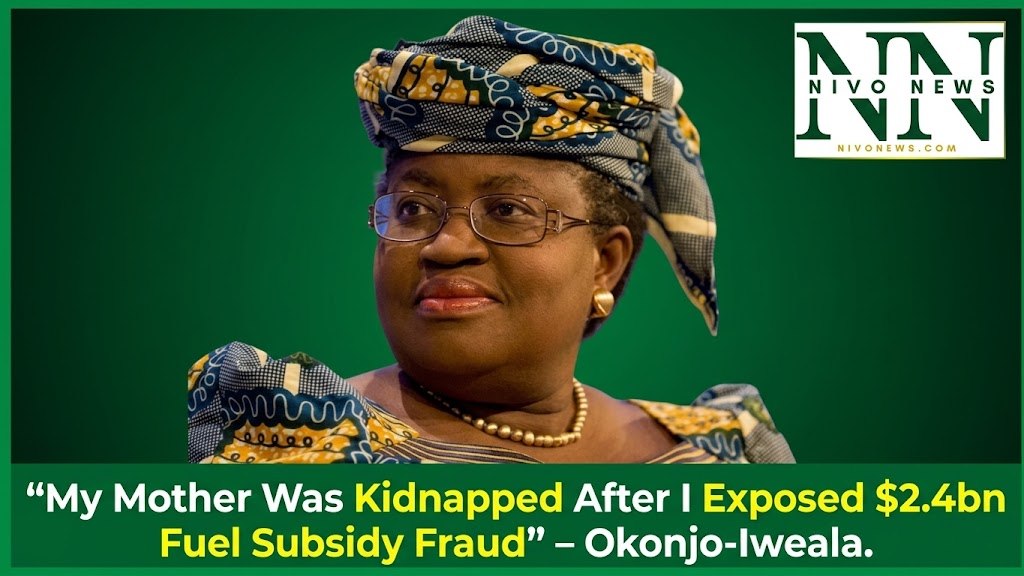
Former Nigerian Minister of Finance and Director-General of the World Trade Organisation (WTO), Ngozi Okonjo-Iweala, has recounted how her efforts to uncover an alleged $2.4 billion fuel subsidy fraud resulted in threats against her and the kidnapping of her mother.....KINDLY READ THE FULL STORY HERE▶
Okonjo-Iweala disclosed this during an interview with Bloomberg’s Francine Lacqua, explaining how irregularities in Nigeria’s fuel subsidy programme prompted her to request an audit of payments made to fuel importers.
She explained that although Nigeria produces crude oil, the country relied on imported refined petroleum products because its refineries could not meet domestic demand at the time.
Under the subsidy arrangement, fuel importers brought refined petroleum products into the country and received government payments that enabled them to sell the products at subsidised prices at filling stations.
However, Okonjo-Iweala said the claims submitted by importers began to rise sharply, raising suspicions about possible fraud within the programme.
Concerned by the growing figures, she approached the then president and requested approval to audit the accounts. The request was granted, and the subsequent investigation uncovered what she described as approximately $2.4 billion in fraudulent claims.
Following the discovery, the government refused to pay the disputed claims, a decision that she said triggered threats against her and eventually led to her mother’s abduction.
According to the former finance minister, the kidnappers demanded that she resign from her position and leave Nigeria in exchange for her mother’s release.
Recalling the incident, Okonjo-Iweala said the ordeal was among the most painful experiences of her life.
She explained that the subsidy fraud investigation began after officials noticed that unusually large sums were being claimed under the programme.
“Nigeria is an oil-producing country, but we cannot refine everything that we consume. So we do bring in refined oil from outside,” she said.
She added that importers received subsidies from the government and sold fuel at lower prices, but the amounts claimed under the scheme suddenly increased beyond what appeared normal.
“So I went to the president and said, look, something is going on here. Could we audit the accounts? And he said, yes, go ahead. And we found about $2.4 billion worth of fraud. So we refused to pay,” she recounted.
Okonjo-Iweala said the decision was followed by threats and the kidnapping of her mother, with the abductors insisting that she quit her job and leave the country.
Describing the five-day ordeal, she said the possibility that her actions could lead to her mother’s death placed her under enormous emotional strain.
She disclosed that her mother was held in a forest before eventually escaping one night.
Despite the traumatic experience, Okonjo-Iweala said she was grateful that her mother survived. Now 96, her mother still reacts emotionally whenever the incident is mentioned.
Reflecting on the difficult choice she faced, the WTO chief said her mother’s life would always take priority over her position.
“Having my mother alive and staying in a job, I will pick my mother any day,” she said.
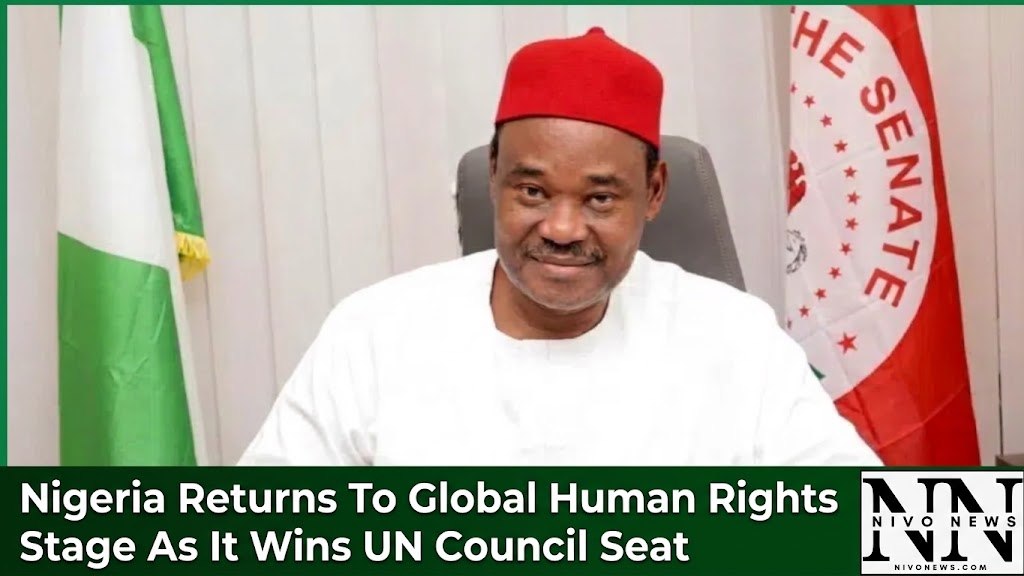
Nigeria has secured a seat on the United Nations Human Rights Council after garnering 172 votes out of 181 cast in an election.....KINDLY READ THE FULL STORY HERE▶
The development marks another significant milestone in the country’s participation in international efforts to promote and protect human rights.
The UN Human Rights Council is responsible for addressing human rights issues worldwide, investigating alleged violations and encouraging cooperation among member states.
Following Nigeria’s election, the country’s Permanent Representative to the United Nations, Ambassador Jimoh Ibrahim, congratulated President Bola Ahmed Tinubu on the achievement.
In a related development, President Tinubu has commended the Economic and Financial Crimes Commission (EFCC) for its efforts in prosecuting financial crimes, securing convictions and recovering stolen assets.
Tinubu gave the commendation on Tuesday, October 13, 2026, during the opening of the eighth EFCC and National Judicial Institute (NJI) Workshop for Judges and Justices in Abuja.
The workshop focused on the investigation and prosecution of economic and financial crimes in the digital age.
Represented by Vice President Kashim Shettima, the President praised the commission for its efforts to combat cryptocurrency fraud and recover virtual assets.
He noted that the EFCC had continued to adapt its operations to tackle criminal activities associated with emerging technologies.
Tinubu also called on anti-corruption agencies and the judiciary to deepen their cooperation to ensure that offenders are brought to justice and recovered assets are properly managed.
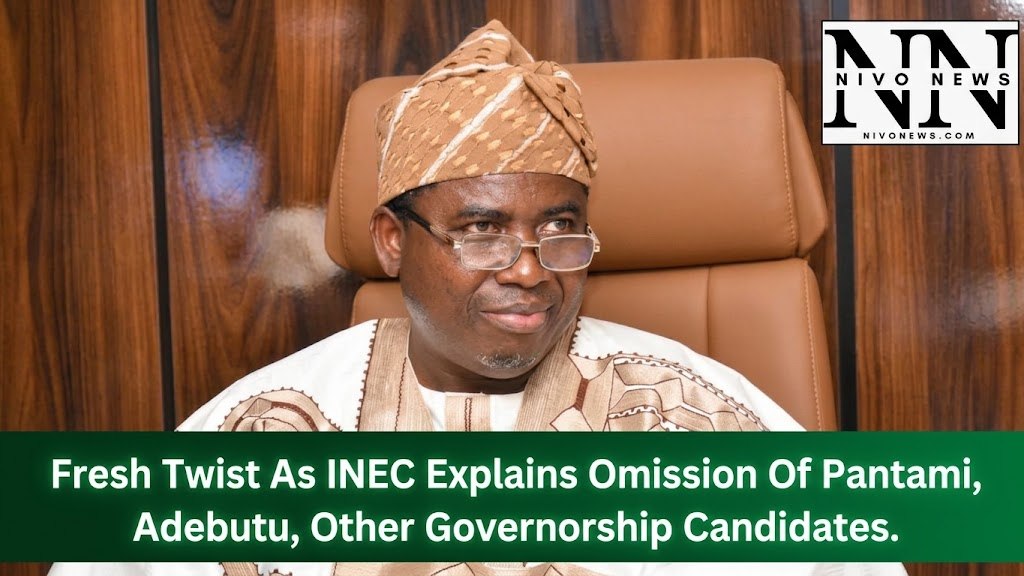
The Independent National Electoral Commission (INEC) has explained why some candidates were excluded from the final list for the 2027 governorship elections.....KINDLY READ THE FULL STORY HERE▶
The omission of former Minister of Communications and Digital Economy, Professor Isa Pantami, who is seeking the governorship of Gombe State, and the Peoples Democratic Party (PDP) governorship candidate in Ogun State, Oladipupo Adebutu, alongside other candidates, has sparked widespread outrage.
However, INEC’s National Commissioner and Chairman of the Information and Voter Education Committee, Mohammed Kudu Haruna, explained in a statement on Tuesday that the decision was based on a Supreme Court judgment concerning the submission of political parties’ membership registers.
According to the commission, the Supreme Court ruled that Sections 77(5)–(7) of the Electoral Act 2026 require political parties to submit their membership registers within the stipulated period of April 21 to May 10, 2026.
INEC stated that parties that failed to comply with the deadline were ineligible to sponsor candidates in the elections.
In its statement, the commission referred to the Supreme Court judgment in INEC v. Zenith Labour Party, Appeal No. SC/CV/495/2026, delivered on September 24, 2026.
The case arose from INEC’s appeal against a Court of Appeal ruling that had nullified the provisions requiring political parties to submit their membership registers as a condition for conducting valid primaries.
However, the Supreme Court upheld the constitutionality of Sections 77(5)–(7) of the Electoral Act 2026. It also affirmed the validity of Item 2 of INEC’s timetable, which required political parties to submit their membership registers between April 21 and May 10, 2026.
The court further ruled that any political party that failed to meet the requirements would be disqualified from sponsoring candidates in the election.
INEC said it applied the Supreme Court’s decision when preparing the final list of governorship candidates, excluding parties that did not comply with the relevant provisions of the Electoral Act.
The commission explained that the final lists of presidential and National Assembly candidates had already been published on September 12, 2026, 13 days before the Supreme Court delivered its judgment.
It added that, under Section 32(2) of the Electoral Act 2026, political parties that believe their candidates were wrongly omitted from the list have 14 days from the date of publication to notify the commission.
According to INEC, the deadline for submitting such notifications is October 24, 2026.
The electoral body reaffirmed its commitment to transparency, the rule of law and the credibility of the electoral process.
-

 latest1 year ago
“Social Media Erupts As Jim Iyke Declares Rita Dominic Nollywood’s Most Beautiful”
-
 latest3 years ago
Edo Political Showdown: Oshiomhole Appears At Presidential Villa As Tinubu Hands APC Gubernatorial Flag To Okpebholo (Photos & Video)
-
 entertainment3 years ago
Love Knows No Age American Woman Defends Marriage To Young Nigerian Man “I’m Not 70”
-
 latest3 years ago
Olumide Akpata Strikes Again: Drops Killer Track, Sends Edo State Into Frenzy!(Video)
-
 Politics3 years ago
Nigerians React As Pastor Adeboye Foresees Passing Away On A Sunday After Enjoying A Satisfying Meal Of Pounded Yam
-
 latest2 years ago
FG Identifies 31 States At Risk Of Heavy Flooding In 2024: See Full List
-
 Politics3 years ago
BREAKING: Inspector-General Of Police Summons Top Police Commanders For Crucial-Security Challenges
-
 latest3 years ago
5 NYSC Corpers Perish In Fatal Road Accident Returning From Camp