
latest
Tinubu Govt Unveils Major Digital Plan, Sets 3 Million Jobs Target For 2030.


The Federal Government has unveiled a digital platform designed to help investors identify business opportunities in Nigeria’s tourism and creative industries, as it aims to contribute $100 billion to the economy and create more than three million jobs by 2030.....KINDLY READ THE FULL STORY HERE▶
Known as D30, or Destination 2030, the platform is expected to provide information on tourist attractions, creative professionals, cultural industries, infrastructure and government interventions to support investment decisions.
The Minister of Art, Culture, Tourism and the Creative Economy, Hannatu Musawa, launched the initiative on Tuesday in Abuja, describing it as a significant step towards unlocking the economic potential of Nigeria’s cultural and creative sectors.
Musawa said the absence of reliable and accessible data had made it difficult for investors and businesses to assess opportunities and determine the resources required to develop the industries.
According to her, D30 will bring together research findings, industry statistics and economic information to enable government agencies, entrepreneurs and private investors to make better-informed decisions.
“Today, we are not simply unveiling a technology platform. We are taking a deliberate step towards changing how Nigeria understands, measures and harnesses the economic value of its cultural and creative assets,” the minister said.
She noted that Nigeria’s music, film, fashion, visual arts, literature, cultural heritage and tourism attractions had significant potential to generate revenue, create employment and stimulate economic growth.
However, she observed that the country had lacked comprehensive information to accurately assess the value of these sectors and identify areas that require investment.
Musawa explained that the new platform would bridge this gap by linking available data with practical business opportunities.
She said investors interested in establishing film production facilities, state governments planning tourism destinations and entrepreneurs seeking to expand their businesses could use D30 to evaluate opportunities and identify infrastructure requirements.
“These are the kinds of decisions we want D30 to support. We want to move from fragmented information to coordinated intelligence, from untapped potential to visible opportunities, and from economic possibilities to actual investments and sustainable jobs,” she said.
The minister stated that the initiative aligned with President Bola Tinubu’s Renewed Hope Agenda and the ministry’s target of generating more than three million jobs while contributing $100 billion to Nigeria’s gross domestic product by 2030.
She stressed, however, that achieving these objectives would require increased investment, improved infrastructure, stronger institutions and policies that encourage business growth.
Musawa added that D30 was designed to go beyond serving as a government database by helping investors identify viable projects, supporting business expansion and enabling public institutions to allocate resources more effectively.
Platform to Link Tourism With Creative Industries
The minister also emphasised the relationship between tourism and the creative economy, noting that Nigerian music, films, festivals and cultural heritage could attract visitors and boost business for hotels, restaurants and other local operators.
She explained that D30 was designed to connect both sectors rather than treat them as separate areas of economic activity.
Musawa urged ministries, departments and agencies, state governments, industry associations, private businesses and research institutions to contribute to the initiative.
She said the government intended to establish a framework that would protect the confidentiality of information provided by stakeholders while allowing access to reliable published data.
According to the minister, the platform’s success would ultimately be measured by the investments it attracts, the businesses it supports and the employment opportunities it helps generate.
She also praised Cavista, the ministry’s technology partner, for providing the technical expertise needed to develop the platform.
The ministry’s Permanent Secretary, Abdulkarim Ozi, described the launch as an important milestone in efforts to strengthen Nigeria’s cultural and creative industries.
Ozi said the country’s music and film industries, fashion, visual arts and tourism destinations could attract greater investment and create more jobs if supported by dependable information and adequate infrastructure.
He explained that the platform would serve as a central source of information on the sectors, helping investors discover emerging opportunities and businesses identify areas for expansion.
“The D30 Platform is designed to provide a centralized source of reliable information and economic intelligence on Nigeria’s creative and tourism sectors,” he said.
The permanent secretary noted that meeting the ministry’s employment and economic growth targets would require more than government policies and programmes.
He identified infrastructure development, credible data, partnerships and a business-friendly environment as essential factors for attracting investors and sustaining growth.
Ozi called on government agencies, development partners and private-sector operators to collaborate in ensuring that the platform remained accurate, reliable and useful.
He added that its effectiveness should be assessed based on the investments it attracts, the businesses it helps grow and the jobs created through its use.
Cavista Explains Private-Sector Role
Also speaking at the launch, Olumide Olayomi, Executive Director and Vice President of Government and External Affairs at Cavista Holdings, said the company had committed private funding and technical expertise to the project through its subsidiary, Cavista Technologies, in partnership with the ministry.
Olayomi explained that D30 would provide information on tourism infrastructure, attractions, cultural and creative industries, government programmes and creative professionals.
He said the platform would help investors identify business prospects, assess infrastructure gaps and make informed decisions about projects within the tourism and creative sectors.
According to him, the initiative’s impact would depend on how effectively businesses, investors and government institutions use the information it provides.
“The value of this platform will ultimately be determined by how it is used. It will be measured by the quality of decisions it supports, the investments it helps unlock, the enterprises it enables to grow and the jobs that follow,” he said.
Olayomi said the project demonstrated how government policies and private-sector investment could work together to achieve shared economic objectives.
He also highlighted Cavista Holdings’ involvement in the hospitality industry through Glocient Hospitality, which owns and operates Ikogosi Warm Springs Resort and Conference Centre in Ekiti State.
He noted that the company’s experience had underscored the importance of infrastructure, accessibility, investment, skills and effective planning in developing successful tourism destinations.
The Cavista executive commended the ministry, the National Bureau of Statistics and other participating government institutions for contributing to the project.
He described the launch as the beginning of efforts to translate the platform’s information into investments and measurable economic benefits.
“Our hope is that this platform will help Nigeria see its tourism and creative assets more clearly, identify opportunities more precisely and mobilize investment more effectively,” Olayomi said.
The D30 platform is expected to bring together information on tourism attractions, infrastructure, creative professionals, cultural industries and government initiatives in a single digital resource.
Its long-term success will depend on the accuracy and regular updating of its data, the participation of relevant institutions and the extent to which investors and businesses use the information to develop projects, expand operations and create jobs.
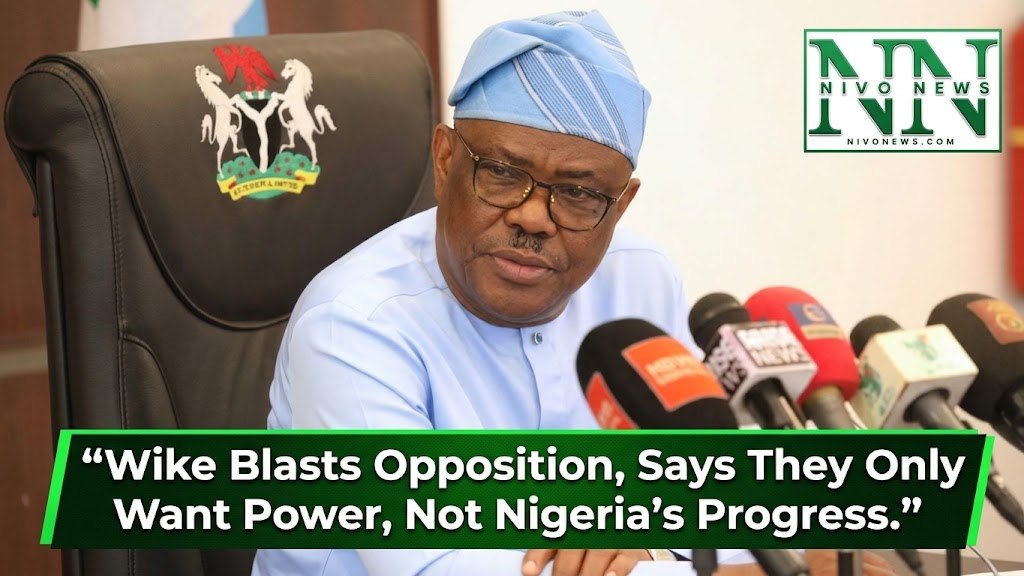
The Minister of the Federal Capital Territory (FCT), Nyesom Wike, has accused opposition politicians of misleading Nigerians about President Bola Tinubu’s administration, arguing that their primary objective is to take over power.....KINDLY READ THE FULL STORY HERE▶
Wike made the remarks during his monthly media chat in Abuja on Tuesday, where he cautioned opposition parties against turning politics into a do-or-die affair.
The former Rivers State governor maintained that Tinubu had performed well, insisting that political differences should not prevent politicians from acknowledging the administration’s achievements.
According to Wike, opposition parties should not automatically dismiss the president’s performance simply because they are not part of the ruling government.
He said: “The time has come that not because you are in the opposition party and then you say the man who is in charge of the affairs of the country has done nothing just because of the sake that I’m in opposition, that is not fair.
“We have taken politics to a level that it must not be played that it’s all do-or-die affairs.
“For us, we think the president has done well, it’s just that the opposition wants to take over power.
“Whether you have done anything to the satisfaction of Nigerians, the opposition will say, ‘Look, the ruling party has not done anything. We want to take over power.’
“But the way the opposition is going now is a bit of a concern to us because they are not telling Nigerians the truth.
“Let those of us in other political parties say no, this is not the truth, this is what is happening and that is what is going on.
“When you see something that will help your country, come out and say it, it doesn’t matter if you are in opposition or not.”
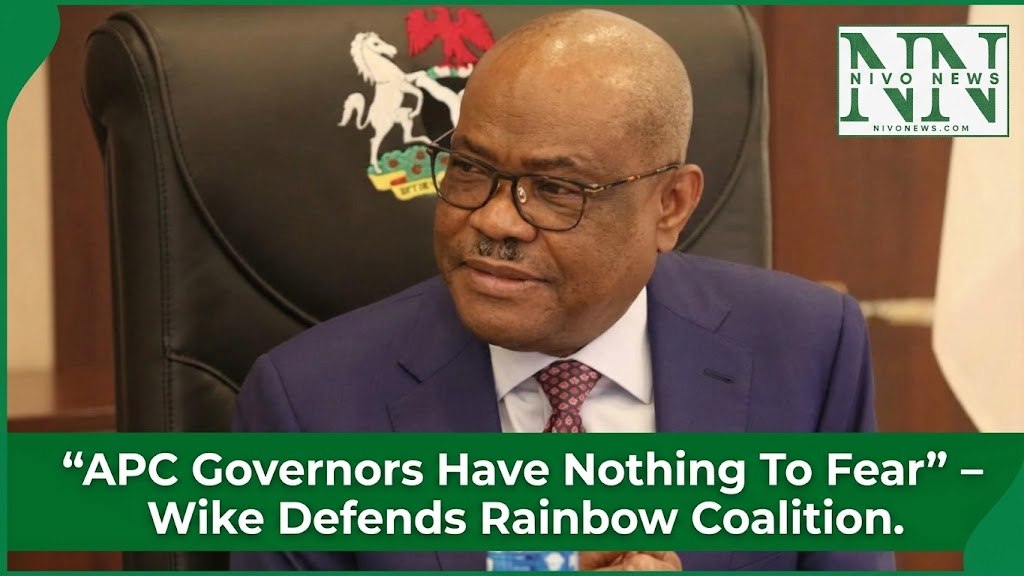
The Minister of the Federal Capital Territory (FCT), Nyesom Wike, has defended the political coalition established to mobilise support for President Bola Tinubu’s re-election bid.....KINDLY READ THE FULL STORY HERE▶
The former Rivers State governor maintained that the initiative was intended to strengthen support for the president rather than undermine the All Progressives Congress (APC).
Wike made the remarks during a media parley in Abuja on Tuesday, dismissing concerns that the Rainbow Coalition could create divisions within the ruling party or pose a threat to APC governors.
He explained that the coalition was designed to unite APC members and Tinubu’s supporters from other political parties in pursuit of a common objective.
According to the minister, the president’s re-election campaign should not be limited to APC members, as Nigerians from different political backgrounds could also contribute to his bid for another term.
Wike said: “If you see that word, PBT/APC, it means those who are supporting the president who are not members of the party, together with the party, are working together to achieve that purpose.
“The major thing is Mr President. Whatever we are going to do, whoever has any idea or anything to contribute is to the success of Mr President. That is the whole thing.
“I don’t know what concerns there are. As far as I am concerned, there is no problem.”
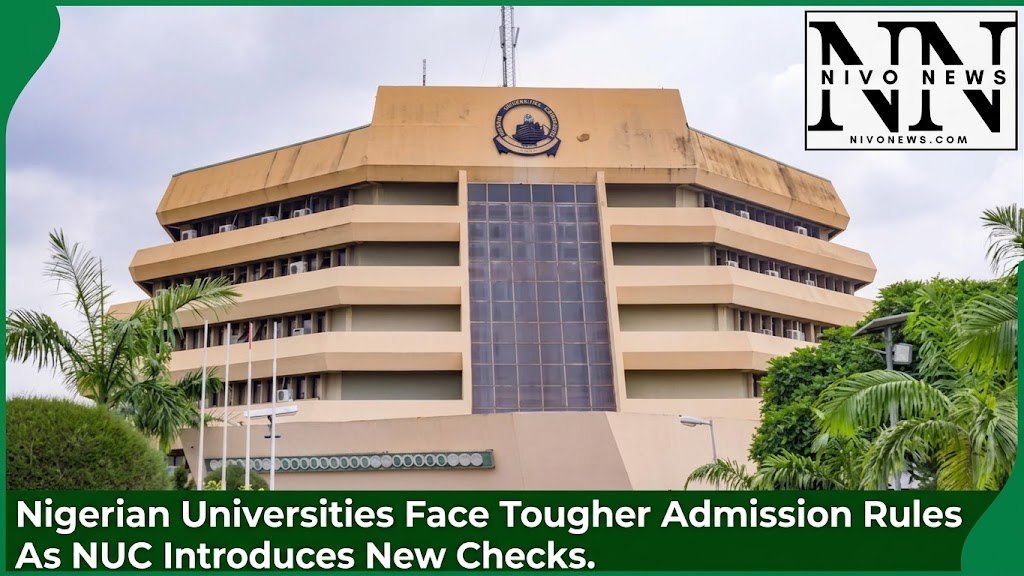
The National Universities Commission (NUC) is planning to introduce stricter monitoring measures for Nigerian universities to improve admission procedures, uphold academic standards and promote greater accountability across institutions.....KINDLY READ THE FULL STORY HERE▶
The commission also intends to introduce post-accreditation monitoring visits, develop new software for accreditation exercises and establish guidelines governing the award and use of honorary doctorate degrees.
The Executive Secretary of the NUC, Prof. Abdullahi Yusufu Ribadu, disclosed these plans on Tuesday in Abuja while opening the 2026 retreat with vice-chancellors of Nigerian universities.
Ribadu said the commission was committed to improving the quality of university education through stronger regulation, effective leadership, digital transformation and more rigorous institutional monitoring.
He explained that the NUC had introduced post-matriculation monitoring and carrying-capacity visits to scrutinise admission processes and ensure universities did not exceed their approved admission limits.
According to him, the commission is also preparing to commence post-accreditation monitoring visits to determine whether universities continue to comply with prescribed standards after their academic programmes have been accredited.
Ribadu added that new software for accreditation exercises was being developed to enhance transparency, improve data management and ensure compliance with regulatory requirements.
The two-day retreat, which brought together vice-chancellors from federal, state and private universities, is themed “Enhancing Regulatory Compliance, Governance, Leadership, and Partnership in the Nigerian University System.”
NUC Plans National AI Policy
Beyond admission reforms and accreditation, Ribadu announced plans to develop a national artificial intelligence (AI) roadmap and policy framework for Nigerian universities.
He noted that emerging technologies were transforming how knowledge is produced, taught and accessed, making it necessary for universities to prepare adequately for the changes.
However, the NUC executive secretary cautioned that digital transformation should go beyond purchasing computers and other technological equipment.
He stressed that universities must also prioritise staff training, cybersecurity, institutional preparedness and policies to ensure the responsible use of technology.
Ribadu revealed that the commission had already developed and deployed the e-NUC platform to automate its internal workflow, while the development of accreditation software was ongoing.
He also said the commission had strengthened its operational guidelines since he assumed office on December 23, 2024.
According to him, the NUC’s Policy Development Strategy Committee had completed a review and produced Blueprint 2.0 for the Rapid Revitalization of Nigerian University Education.
He further disclosed that the commission was developing a strategic plan suited to the demands of the 21st century. It is also transitioning from the Annual Performance Evaluation system to a Performance Monitoring System pioneered by the Office of the Head of the Civil Service of the Federation.
Ribadu urged vice-chancellors to strengthen institutional planning and establish clear targets for measuring progress within their universities.
The Minister of State for Education, Prof. Suwaiba Said Ahmad, also called on university administrators to promote transparency, improve regulatory compliance and ensure the effective management of their institutions.
Ahmad, who declared the retreat open, said the challenges confronting higher education could not be resolved through isolated efforts by individual universities or regulatory directives alone.
She emphasised the importance of sustained engagement between the NUC and university managements to ensure effective policy implementation and keep institutions responsive to national priorities and global developments.
The minister urged vice-chancellors to demonstrate accountability in financial management, procurement, recruitment, promotion, admissions and examinations.
She also encouraged university leaders to establish clear institutional objectives, set measurable performance targets and create environments that promote academic excellence.
Ahmad warned that although artificial intelligence, digital learning, data analytics and virtual laboratories presented significant opportunities, universities must protect academic integrity, uphold ethical standards and safeguard data.
She said the retreat should produce practical commitments and actionable outcomes rather than end with discussions alone.
The minister also supported the proposed communiqué and a post-retreat monitoring system to track the implementation of decisions reached during the meeting.
NUC Seeks To Commercialise University Research
Ribadu also called for stronger partnerships among universities, government agencies, industries and other stakeholders to ensure that research findings translate into practical solutions to Nigeria’s challenges.
He identified agriculture, healthcare, education, technology, manufacturing, environmental protection and the creative industry as key sectors where university research could generate economic and social benefits.
The NUC chief disclosed that the commission had launched the ACE Alliance platform to strengthen collaboration among Nigeria’s 20 African Centres of Excellence.
He added that the commission had unveiled a four-volume compendium documenting research outputs from the centres.
According to Ribadu, the Tertiary Education Research and Application Services platform of the Tertiary Education Trust Fund had been integrated with the Nigerian Research and Education Network following a directive from the Minister of Education. The move is intended to encourage research collaboration.
He further revealed that the NUC was establishing a Research Commercialization Division to strengthen intellectual property protection and help transform promising research findings into commercially viable products.
The commission was also working towards organising an international study tour for selected vice-chancellors to universities in Europe and Asia, where they would learn about global best practices in research commercialisation.
Ribadu said the initiatives were designed to ensure that research conducted in Nigerian universities contributed more directly to national development.
Acknowledging that inadequate funding remained a major obstacle to university development, he urged institutions to explore alternative funding sources, including partnerships with private companies, alumni associations and development partners.
He, however, cautioned that such arrangements must comply with regulatory requirements and align with the objectives of the institutions involved.
The NUC executive secretary also disclosed that the commission had established partnerships with development organisations, including the World Bank, Agence Française de Développement and the African Development Bank, to attract additional support for university development.
He assured stakeholders that the commission would continue working with relevant partners to improve the quality of university education and enhance the global competitiveness of Nigerian institutions.
Earlier, the Chairman of the Local Organising Committee and NUC Director of Research, Innovation and Information Technology Transfer, Lawal Mohammed Faruk, said the retreat was organised to strengthen relations between the commission and university managements.
Faruk explained that the meeting was expected to improve regulatory compliance and quality assurance, promote good governance and transformational leadership, and encourage strategic partnerships for the advancement of university education.
Ribadu urged vice-chancellors to uphold integrity, accountability and established procedures in managing their institutions, stressing that institutional interests must take precedence over personal considerations.
The retreat is expected to conclude with a communiqué outlining agreed policy actions and commitments by participating universities. A post-retreat monitoring and feedback mechanism is also being proposed to assess progress and ensure that the decisions reached are implemented.
-

 latest1 year ago
“Social Media Erupts As Jim Iyke Declares Rita Dominic Nollywood’s Most Beautiful”
-
 latest3 years ago
Edo Political Showdown: Oshiomhole Appears At Presidential Villa As Tinubu Hands APC Gubernatorial Flag To Okpebholo (Photos & Video)
-
 entertainment3 years ago
Love Knows No Age American Woman Defends Marriage To Young Nigerian Man “I’m Not 70”
-
 latest3 years ago
Olumide Akpata Strikes Again: Drops Killer Track, Sends Edo State Into Frenzy!(Video)
-
 Politics3 years ago
Nigerians React As Pastor Adeboye Foresees Passing Away On A Sunday After Enjoying A Satisfying Meal Of Pounded Yam
-
 latest2 years ago
FG Identifies 31 States At Risk Of Heavy Flooding In 2024: See Full List
-
 Politics3 years ago
BREAKING: Inspector-General Of Police Summons Top Police Commanders For Crucial-Security Challenges
-
 latest3 years ago
5 NYSC Corpers Perish In Fatal Road Accident Returning From Camp