
latest
Clearing The Smoke: Ndume Slams The Endless Certificate Drama And Demands Immediate Shift In National Priorities!.


Former Senate Leader and prominent All Progressives Congress (APC) chieftain, Senator Ali Ndume, has publicly characterized the ongoing public discourse and controversy surrounding President Bola Tinubu’s academic credentials as an unnecessary distraction from governance. This debate was reignited following the publication of academic qualifications and candidate forms for presidential contenders and their running mates by the Independent National Electoral Commission (INEC). Senator Ndume addressed these developments through an official press statement, arguing that opposition parties and political figures are misdirecting their energy by fixating on credentials rather than substantive executive performance.....KINDLY READ THE FULL STORY HERE▶
According to the former Senate Leader, President Tinubu has fully satisfied the legal prerequisites mandated for occupying the nation’s highest office, thereby rendering challenges regarding specific secondary school documentation legally moot. He emphasized that the matter had already undergone rigorous legal scrutiny and judicial settlement through litigation stemming from the preceding electoral cycle. Referencing the explicit provisions of Section 131(d) of the 1999 Constitution of the Federal Republic of Nigeria, Ndume highlighted that the foundational law establishes a baseline educational threshold rather than mandating a specific educational document as the exclusive proof of qualification. The constitutional provision explicitly states that an individual qualifies for election to the office of the President if they have been educated up to at least school certificate level or its equivalent.
Expanding upon his critique, Ndume urged political stakeholders and the broader public to pivot away from administrative contentions and instead evaluate the sitting administration based on its governance, public policies, and socio-economic outcomes. He noted that continuous concentration on procedural credential narratives detracts from addressing pressing national priorities. For individuals seeking further details regarding candidate eligibility frameworks, electoral regulations, and official announcements, consulting the Independent National Electoral Commission or reviewing updates via established media platforms such as Channels Television and Premium Times provides comprehensive context on the legal and political dimensions of the discourse.
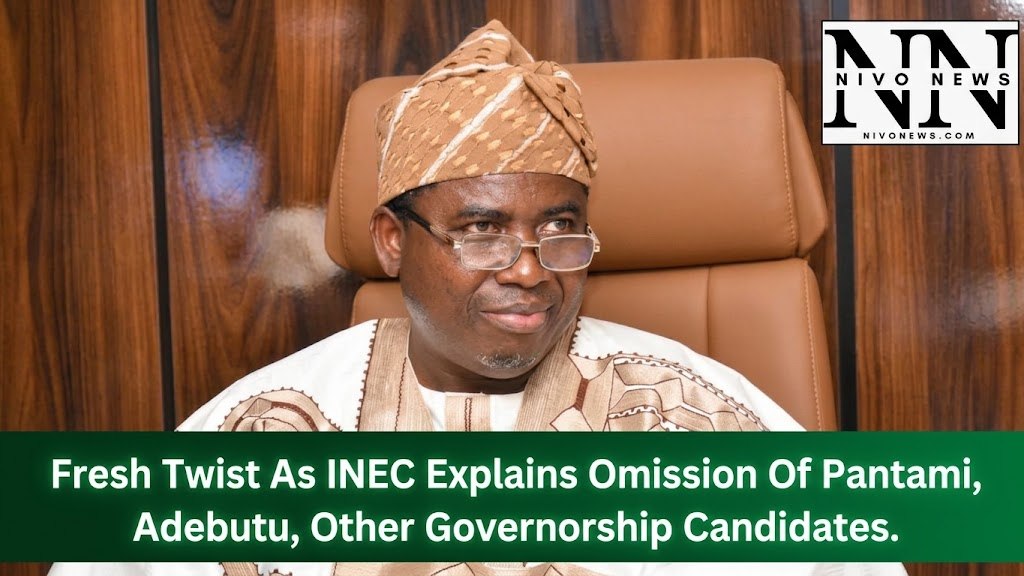
The Independent National Electoral Commission (INEC) has explained why some candidates were excluded from the final list for the 2027 governorship elections.....KINDLY READ THE FULL STORY HERE▶
The omission of former Minister of Communications and Digital Economy, Professor Isa Pantami, who is seeking the governorship of Gombe State, and the Peoples Democratic Party (PDP) governorship candidate in Ogun State, Oladipupo Adebutu, alongside other candidates, has sparked widespread outrage.
However, INEC’s National Commissioner and Chairman of the Information and Voter Education Committee, Mohammed Kudu Haruna, explained in a statement on Tuesday that the decision was based on a Supreme Court judgment concerning the submission of political parties’ membership registers.
According to the commission, the Supreme Court ruled that Sections 77(5)–(7) of the Electoral Act 2026 require political parties to submit their membership registers within the stipulated period of April 21 to May 10, 2026.
INEC stated that parties that failed to comply with the deadline were ineligible to sponsor candidates in the elections.
In its statement, the commission referred to the Supreme Court judgment in INEC v. Zenith Labour Party, Appeal No. SC/CV/495/2026, delivered on September 24, 2026.
The case arose from INEC’s appeal against a Court of Appeal ruling that had nullified the provisions requiring political parties to submit their membership registers as a condition for conducting valid primaries.
However, the Supreme Court upheld the constitutionality of Sections 77(5)–(7) of the Electoral Act 2026. It also affirmed the validity of Item 2 of INEC’s timetable, which required political parties to submit their membership registers between April 21 and May 10, 2026.
The court further ruled that any political party that failed to meet the requirements would be disqualified from sponsoring candidates in the election.
INEC said it applied the Supreme Court’s decision when preparing the final list of governorship candidates, excluding parties that did not comply with the relevant provisions of the Electoral Act.
The commission explained that the final lists of presidential and National Assembly candidates had already been published on September 12, 2026, 13 days before the Supreme Court delivered its judgment.
It added that, under Section 32(2) of the Electoral Act 2026, political parties that believe their candidates were wrongly omitted from the list have 14 days from the date of publication to notify the commission.
According to INEC, the deadline for submitting such notifications is October 24, 2026.
The electoral body reaffirmed its commitment to transparency, the rule of law and the credibility of the electoral process.

The Accord Party’s presidential candidate, Gbenga Olawepo-Hashim, has condemned the inclusion of opposition figures in the All Progressives Congress (APC) Presidential Campaign Council, describing the move as “indiscipline and rascality.”....KINDLY READ THE FULL STORY HERE▶
Olawepo-Hashim made the remarks on Tuesday during an interview on Channels Television’s Politics Today, where he reacted to the inclusion of prominent opposition figures, including the Minister of the Federal Capital Territory (FCT), Nyesom Wike; Osun State Governor, Ademola Adeleke; and Anambra State Governor, Charles Soludo, in the APC campaign council ahead of the 2027 general elections.
Asked whether the development represented political maturity or political survival, the Accord Party candidate dismissed both interpretations.
“No, this is simply indiscipline and rascality,” he said.
Olawepo-Hashim also argued that Adeleke’s involvement in the APC campaign council would not necessarily translate into electoral support for President Bola Tinubu among voters in Osun State.
According to him, the governor’s victory in the state election does not give him the authority to dictate how residents should vote in the presidential election.
He expressed confidence that the people of Osun would support the Accord Party’s presidential candidate in 2027, regardless of Adeleke’s political alignment.
“Governor Adeleke, the fact that he won his election cannot compel the people of Osun State to vote for Asiwaju Bola Ahmed Tinubu,” he said.
Describing the people of Osun as honourable and ideologically conscious, Olawepo-Hashim said they had a strong history of making independent political choices.
“Osun people are incredibly honourable people, what we call Omoluabi in the Yoruba parlance; they are ideological; they have great history, they are not conquered people, they do what they believe,” he stated.
He added that he remained convinced that the governor’s participation in the APC campaign council would not prevent Osun voters from supporting the Accord Party in the presidential election.
“I still believe that regardless of what Governor Adeleke is doing, Osun people are still going to vote for Accord Party at the presidential election,” he said.

President Bola Tinubu has commended the Economic and Financial Crimes Commission (EFCC) for its achievements in prosecuting financial crimes, securing convictions and recovering stolen assets.....KINDLY READ THE FULL STORY HERE▶
Tinubu made the remarks on Tuesday, October 13, 2026, during the opening of the eighth EFCC and National Judicial Institute (NJI) Workshop for Judges and Justices in Abuja.
The workshop focused on investigating and prosecuting economic and financial crimes in the digital age.
Represented by Vice President Kashim Shettima, the President praised the EFCC for its efforts to combat cryptocurrency fraud and recover virtual assets. He noted that the commission had continued to adapt its operations to tackle criminal activities involving emerging technologies.
Tinubu also called on anti-corruption agencies and the judiciary to strengthen their collaboration to ensure that offenders are brought to justice and recovered assets are properly managed.
Figures presented at the event showed that the EFCC filed 14,476 cases in court and secured 10,872 convictions within the first 34 months of the current administration. This represents a conviction rate of approximately 75.1 per cent compared with the number of cases filed.
The commission also recorded 1,370 convictions out of 1,889 cases filed in the first half of 2026.
During the period under review, the EFCC recovered ₦1.233 trillion, $684,478,457.32, £373,905.78 and €9,343,803.66 in financial assets.
Tinubu also highlighted the prosecution and subsequent deportation of 192 foreign nationals arrested over cyberterrorism and cryptocurrency fraud, describing the development as evidence of the agency’s efforts to combat technology-related offences.
He observed that the growing use of blockchain technology and artificial intelligence had made financial crimes increasingly complex, requiring investigators, prosecutors and judicial officers to continually improve their knowledge and skills.
The President stressed that government institutions must strengthen their investigative and prosecutorial methods to keep pace with criminals who exploit technological advancements to conceal illegal activities.
He reaffirmed the Federal Government’s commitment to supporting judicial training and capacity development, noting that an independent and progressive judiciary remained crucial to the fight against corruption.
Tinubu urged judges to enhance their ability to handle complex financial crime cases while maintaining independence in the discharge of their duties.
He expressed concern that corruption cases could be undermined by procedural errors and other avoidable shortcomings, urging the EFCC and the judiciary to address such weaknesses and close loopholes that allow suspects to frustrate criminal proceedings.
The President maintained that the fight against corruption should not be left to the executive arm of government alone, describing it as a shared responsibility among all arms of government.
He also acknowledged the contribution of the EFCC’s asset recovery efforts to government initiatives, including the Nigerian Education Loan Fund (NELFUND) and the Nigerian Consumer Credit Corporation (CREDICORP).
EFCC Chairman Highlights Operational Reforms
Speaking at the workshop, EFCC Chairman Ola Olukoyede said the commission had introduced reforms aimed at improving the quality of investigations, increasing asset recoveries and securing more convictions.
He explained that the agency was strengthening intelligence-led investigations, forensic operations and cooperation with local and international partners.
According to Olukoyede, the commission was also improving its understanding of emerging financial technologies to enable its officers to investigate crimes involving digital platforms and virtual assets more effectively.
He said the EFCC was focused on building stronger cases rather than simply increasing the number of suspects investigated or prosecuted. He stressed that investigations must be properly conducted, evidence must meet legal requirements, and recovered assets must be handled lawfully and transparently.
The EFCC chairman identified procedural delays and institutional challenges as major obstacles to the successful prosecution of financial crimes.
He warned that repeated adjournments and frequent changes of legal representatives could prolong trials, weaken evidence and make witnesses difficult to trace. According to him, lengthy proceedings could also erode public confidence in the justice system.
Olukoyede urged judges to approach corruption cases with integrity, courage and a firm commitment to the rule of law. He called for faster and more effective determination of cases without compromising the standards required for fair trials.
He also encouraged judicial officers to consider the long-term implications of their decisions for accountability and the fight against financial crimes.
The EFCC chairman said the ultimate objective was to build a justice system in which investigators understood the evidence required by courts, prosecutors anticipated legal challenges, forensic experts could explain digital evidence clearly, and judges had a better understanding of modern financial crimes.
Chief Justice Calls For Stronger Judicial Capacity
Chief Justice of Nigeria Kudirat Kekere-Ekun called for improved judicial capacity to address financial crimes committed through digital platforms.
She noted that cryptocurrency transactions, encrypted communications, electronic records and international financial dealings had introduced new challenges into criminal proceedings.
Kekere-Ekun stressed that judges must understand how digital evidence is obtained, preserved, authenticated and assessed before it can be relied upon in court.
She maintained that the seriousness of an allegation must not determine the outcome of a trial, insisting that prosecutors must establish their cases with credible evidence that satisfies the requirements of the law.
The Chief Justice also urged judges to apply the Administration of Criminal Justice Act, 2015, effectively to prevent unnecessary delays while safeguarding the rights of all parties.
She said continuous judicial training had improved judges’ capacity to handle financial crime cases. She also cited Nigeria’s removal from the Financial Action Task Force’s Grey List on October 24, 2025, as an achievement that required sustained cooperation among relevant institutions.
However, Kekere-Ekun cautioned that collaboration between the judiciary and anti-corruption agencies must not compromise the constitutional independence of the courts. She emphasised that institutional cooperation should never be used to influence judicial decisions.
Lawmakers, Attorney-General Seek Faster Trials
Chairman of the Senate Committee on Anti-Corruption, Senator Emmanuel Udende, identified prolonged trials as one of the major challenges affecting Nigeria’s fight against financial crimes.
He explained that investigations and prosecutions could lose their impact when cases remained in court for years. Such delays, he said, could weaken deterrence, reduce public confidence, consume judicial resources and make the recovery of public funds more difficult.
Udende urged judges to improve case management, minimise unnecessary adjournments and ensure that proceedings were concluded within a reasonable period.
He, however, stressed that the need for faster trials must not override defendants’ rights to fair hearings and due process.
The senator also called for closer cooperation among investigators, prosecutors, defence lawyers and judges to address challenges associated with digital evidence and increasingly sophisticated financial crimes.
He urged the EFCC and the NJI to develop practical measures to reduce delays, improve the handling of electronic evidence and strengthen coordination across the criminal justice system.
Similarly, Chairman of the House of Representatives Committee on Financial Crimes, Ginger Obinna Onwusibe, called for urgent reforms to address weaknesses in evidence management, delays in court proceedings and gaps in existing laws.
Onwusibe pledged the National Assembly’s support for the EFCC through improved funding for forensic laboratories, digital investigation equipment and specialised personnel training.
He also promised legislative efforts to improve the admissibility of digital evidence, establish clearer rules for managing virtual assets and strengthen the legal framework for tackling cybercrime and money laundering.
The lawmaker called for better welfare and the protection of judicial independence, noting that courts required adequate resources to deliver justice effectively.
He said that while the EFCC could arrest suspects and lawmakers could enact legislation, the responsibility for determining guilt and convicting offenders rested with the judiciary.
He urged judges to ensure that the justice system could respond effectively to crimes committed using modern technology.
Attorney-General of the Federation and Minister of Justice, Lateef Fagbemi, also emphasised the importance of thorough investigations and proper digital evidence management in securing successful prosecutions.
He said electronic evidence must be obtained legally, carefully preserved, reliably authenticated and linked to the specific offences alleged against defendants.
Fagbemi warned against measuring prosecutorial success solely by the number of arrests or charges filed. He said the quality of investigations, fairness of proceedings and reliability of court decisions were equally important.
The Attorney-General described prosecutors as ministers of justice, explaining that their duty was to pursue justice through lawful means rather than seek convictions at all costs.
He urged investigators, prosecutors, defence counsel and judges to perform their responsibilities professionally and ensure that efforts to accelerate trials did not undermine the right to a fair hearing.
Fagbemi also highlighted the importance of recovering and managing proceeds of crime, noting that the Proceeds of Crime (Recovery and Management) Act, 2022, provides a legal framework for tracing, preserving, recovering and managing assets linked to criminal activities.
He stressed that asset recovery must be supported by credible evidence and proper judicial procedures, with due regard for the rights of those affected.
The minister further called for improvements in forensic investigations, information sharing and international cooperation, particularly as financial crimes increasingly cross national borders.
He urged relevant institutions to set aside rivalries and work towards the common goal of combating corruption while protecting innocent persons and upholding the rule of law.
The opening ceremony was attended by judges, lawyers, anti-corruption experts and other stakeholders in Nigeria’s justice system.
The three-day EFCC and NJI workshop is scheduled to end on Thursday, October 15, 2026.
-

 latest1 year ago
“Social Media Erupts As Jim Iyke Declares Rita Dominic Nollywood’s Most Beautiful”
-
 latest3 years ago
Edo Political Showdown: Oshiomhole Appears At Presidential Villa As Tinubu Hands APC Gubernatorial Flag To Okpebholo (Photos & Video)
-
 entertainment3 years ago
Love Knows No Age American Woman Defends Marriage To Young Nigerian Man “I’m Not 70”
-
 latest3 years ago
Olumide Akpata Strikes Again: Drops Killer Track, Sends Edo State Into Frenzy!(Video)
-
 Politics3 years ago
Nigerians React As Pastor Adeboye Foresees Passing Away On A Sunday After Enjoying A Satisfying Meal Of Pounded Yam
-
 latest2 years ago
FG Identifies 31 States At Risk Of Heavy Flooding In 2024: See Full List
-
 Politics3 years ago
BREAKING: Inspector-General Of Police Summons Top Police Commanders For Crucial-Security Challenges
-
 latest3 years ago
5 NYSC Corpers Perish In Fatal Road Accident Returning From Camp