
latest
“Age Is But A Number In Crime: NDLEA Nab 101-Year-Old Suspect In Massive Drug Bust”.

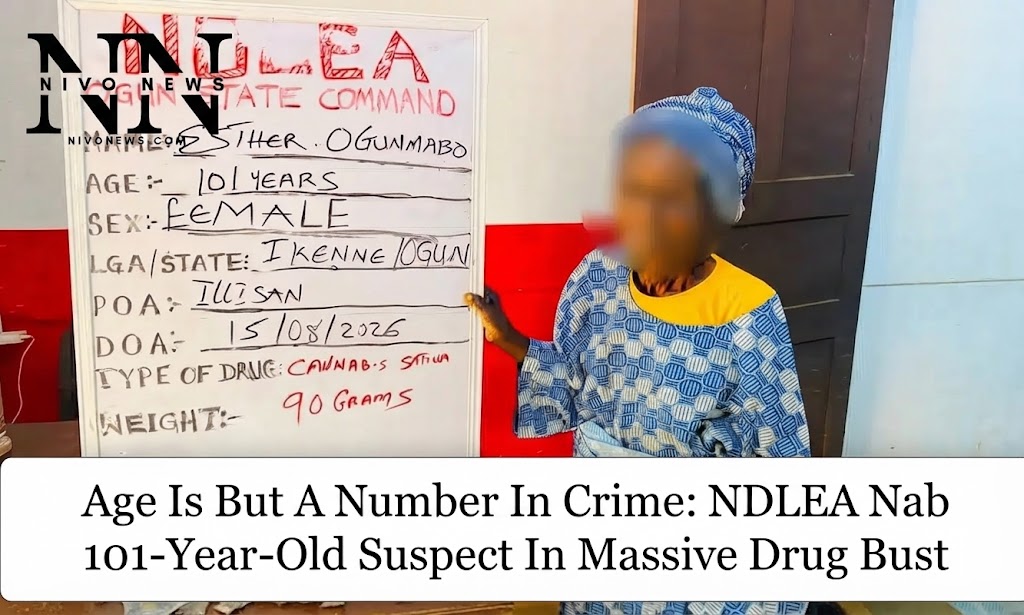
The National Drug Law Enforcement Agency has confirmed a remarkable and unprecedented development regarding the arrest of a 101-year-old woman, Esther Ogunmabo, who was taken into custody for alleged involvement in illicit drug trafficking. The extraordinary arrest unfolded in a rather unusual manner at Ilisan within Ogun State, capturing widespread public attention due to the advanced age of the suspect involved in the criminal enterprise. According to the disclosures provided by the anti-narcotics agency, the centenarian was found in possession of ninety grams of skunk, which is a potent strain of cannabis, meticulously packaged inside retail-ready sachets for distribution within her local community. During the preliminary interrogation conducted by operatives, Ogunmabo reportedly confessed that she engaged in the commercial distribution of the illicit substance to various individuals residing in her neighborhood. She attempted to justify her actions by explaining that she was forced to pivot into the illegal drug trade following a devastating fire incident that completely destroyed her legitimate provision shop, leaving her with alternative means of survival. The elderly suspect further disclosed that one of her daughters, who resides and operates out of Lagos State, regularly supplied her with the cannabis shipments every four days, allowing her to continuously restock and sell the substances in smaller, manageable quantities to her clientele.....KINDLY READ THE FULL STORY HERE▶
In response to these bizarre and exceptional circumstances, the Chairman and Chief Executive Officer of the National Drug Law Enforcement Agency, Retired Brigadier General Mohamed Buba Marwa, issued a specific directive concerning the handling of the case. Recognizing her extreme chronological age as a mitigating factor, he ordered that the 101-year-old suspect be granted administrative bail and formally placed under professional counseling rather than being subjected to standard incarceration. However, law enforcement authorities did not extend the same leniency to her offspring, as her daughter was successfully tracked down and arrested in connection with her complicity in the drug supply chain. The full details surrounding this astonishing operation were formally made public through an official press statement released by the agency’s Director of Media and Advocacy, Femi Babafemi, highlighting the ongoing challenges and multi-generational dimensions often encountered in modern drug enforcement operations across the country.
Beyond this sensational domestic arrest, the National Drug Law Enforcement Agency simultaneously executed a series of high-profile, coordinated border enforcement operations that yielded massive quantities of illicit narcotics across maritime corridors and land routes. In a landmark breakthrough that underscores evolving transnational smuggling methods, the agency recorded what officials officially classified as its very first seizure of illicit drugs shipped directly from Thailand via the maritime shipping corridor. This operation targeted containerized cargo arriving at the nation’s premier maritime gateways, resulting in the interception of massive consignments of Loud, an expensive and highly sought-after strain of synthetic cannabis, with a combined estimated street value exceeding ₦4.4 billion. Both suspicious containers were traced back to their loading point at the Port of Laem Chabang in Thailand, raising grave institutional concerns among security analysts regarding the emergence of novel trafficking routes being aggressively exploited by international drug cartels attempting to flood the Nigerian market with synthetic narcotics.
The specific execution of these port seizures involved rigorous joint examinations conducted by operatives alongside sister security agencies. At the Apapa Port, a targeted container carrying a declared manifesto of dry fish, household rice, vehicle spare parts, turmeric soap, and inverter batteries underwent a thorough joint physical inspection, which ultimately unmasked a hidden cache of 1,090.5 kilograms of Thai Loud concealed inside fifty-four separate cartons containing a staggering 2,181 individual half-kilogram sachets. Simultaneously, at the Lekki Deep Sea Port, another high-risk container that had been placed under active surveillance by the agency’s Marine Special Operations Unit was subjected to a meticulous joint examination. Out of the seven total pallets stowed inside the container, four were discovered to be packed entirely with ninety-six cartons consisting of four hundred parcels of Thai Loud weighing a collective four hundred kilograms, while the remaining three pallets were stuffed with 798 rims of standard A4 printing paper cynically utilized as a physical camouflage shield to mask the contraband from automated scanning equipment.
The maritime offensive extended far beyond the commercial ports of Lagos, registering significant operational successes along the coastal high seas of Akwa Ibom State. Acting on highly actionable and credible intelligence, tactical operatives intercepted a wooden motorized boat actively navigating the high seas while clandestinely conveying illicit drug consignments toward isolated fishing settlements situated within the neighboring Republic of Cameroon. This decisive high-seas operation led to the apprehension of three male suspects aboard the vessel, identified as twenty-nine-year-old Etima Effiong Eekpo, thirty-three-year-old Otobong Eyoh Etukudoh, and twenty-seven-year-old Kingsley Effiong John. A comprehensive search of the intercepted boat revealed diverse quantities of narcotics, including a particularly ingenious concealment method wherein twenty grams of pure cocaine were artfully wrapped and hidden directly inside a massive ball of traditional edible cassava fufu, alongside substantial quantities of skunk, bringing the total weight of recovered illicit substances from the three suspects to over forty-two kilograms destined for foreign fishing ports such as Ine Isu, Ine Mbah, and Ine Ikot Itie Udung.
Concurrently, nationwide anti-narcotics sweeps generated major victories across multiple inland states, disrupting distribution networks and cultivation sites alike. In the Federal Capital Territory, vigilant operatives intercepted three separate waybill packages containing a massive total of 24,410 pills of tramadol capsules secreted deep inside a commercial Hummer passenger bus transit vehicle traveling along the Enugu-to-Zuba transport corridor, prompting a swift follow-up operation into Niger State that culminated in the apprehension of the primary consignor, twenty-eight-year-old Sunday Eze, in Kontagora. In Ondo State, intelligence-led raids targeted the dense canopy of the Ijare Forest within Ifedore Local Government Area, where tactical teams systematically destroyed approximately 10,000 kilograms of illicit skunk cultivated extensively across four hectares of protected forest land, following the prior arrest of three suspected plantation workers. An additional interception at Ita-Ogbolu in Akure North yielded over two hundred kilograms of skunk alongside a getaway vehicle linked to a fleeing kingpin.
Further compounding these blows against drug syndicates, tactical patrols along major transportation arteries successfully intercepted traffickers in Kwara State, where a motorist conveying methamphetamine and cannabis sativa concealed within black nylon bags along the Ogbomosho-Ilorin Expressway was arrested. In Oyo State, a sweeping raid in Ibadan resulted in the capture of a sixty-five-year-old female distributor, Adebayo Kaosarat, who was found hoarding a toxic cocktail of Scottish Loud, tramadol, codeine-based cough syrups, and pharmaceutical sedatives. Similar high-yield arrests were recorded in Kano State, where bulk blocks of skunk were recovered from a commercial dealer; in the border community of Seme in Lagos State, where three members of an extended family were rounded up with massive quantities of cannabis; and in Abia State, where tactical officers raided a residential drug depot in Umuahia, seizing varied quantities of synthetic narcotics and pharmaceutical opioids.
Alongside these aggressive enforcement actions and asset seizures, the National Drug Law Enforcement Agency maintained a robust and continuous nationwide footprint through its ongoing War Against Drug Abuse sensitization campaign. Specialized public outreach teams deployed educational programs across diverse community institutions, including Islamic colleges, teaching centers, nursing and midwifery schools, youth leadership camps, and local government secretariats, aiming to instill preventive awareness and curb substance abuse at the grassroots level. At the conclusion of these extensive weekly operations, agency leadership commended the resilience and professionalism displayed by tactical commands across the federation, explicitly urging all personnel to persistently uphold a balanced strategic doctrine that seamlessly integrates aggressive law enforcement interdiction with community-level prevention, public enlightenment, and rehabilitation advocacy.
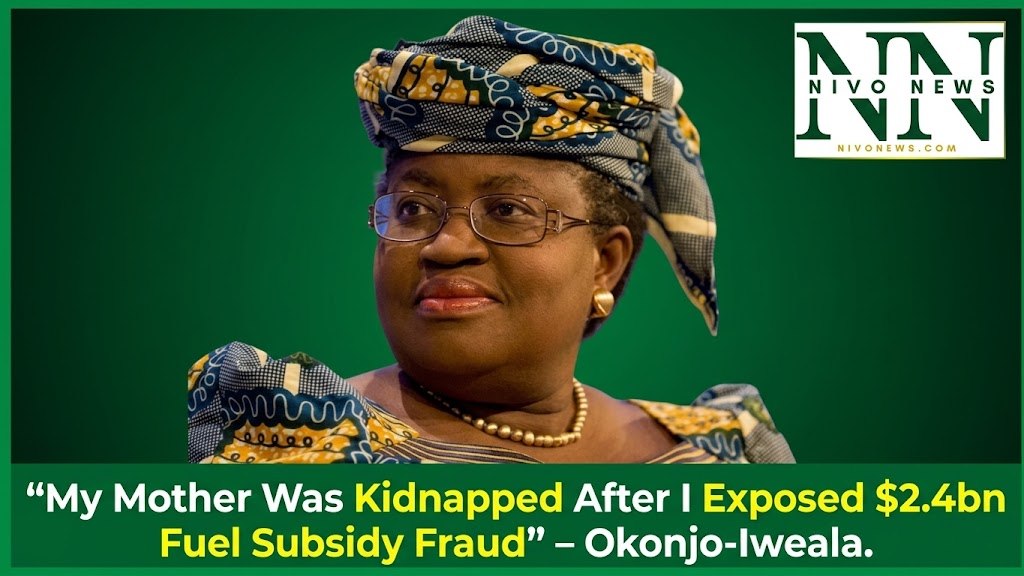
Former Nigerian Minister of Finance and Director-General of the World Trade Organisation (WTO), Ngozi Okonjo-Iweala, has recounted how her efforts to uncover an alleged $2.4 billion fuel subsidy fraud resulted in threats against her and the kidnapping of her mother.....KINDLY READ THE FULL STORY HERE▶
Okonjo-Iweala disclosed this during an interview with Bloomberg’s Francine Lacqua, explaining how irregularities in Nigeria’s fuel subsidy programme prompted her to request an audit of payments made to fuel importers.
She explained that although Nigeria produces crude oil, the country relied on imported refined petroleum products because its refineries could not meet domestic demand at the time.
Under the subsidy arrangement, fuel importers brought refined petroleum products into the country and received government payments that enabled them to sell the products at subsidised prices at filling stations.
However, Okonjo-Iweala said the claims submitted by importers began to rise sharply, raising suspicions about possible fraud within the programme.
Concerned by the growing figures, she approached the then president and requested approval to audit the accounts. The request was granted, and the subsequent investigation uncovered what she described as approximately $2.4 billion in fraudulent claims.
Following the discovery, the government refused to pay the disputed claims, a decision that she said triggered threats against her and eventually led to her mother’s abduction.
According to the former finance minister, the kidnappers demanded that she resign from her position and leave Nigeria in exchange for her mother’s release.
Recalling the incident, Okonjo-Iweala said the ordeal was among the most painful experiences of her life.
She explained that the subsidy fraud investigation began after officials noticed that unusually large sums were being claimed under the programme.
“Nigeria is an oil-producing country, but we cannot refine everything that we consume. So we do bring in refined oil from outside,” she said.
She added that importers received subsidies from the government and sold fuel at lower prices, but the amounts claimed under the scheme suddenly increased beyond what appeared normal.
“So I went to the president and said, look, something is going on here. Could we audit the accounts? And he said, yes, go ahead. And we found about $2.4 billion worth of fraud. So we refused to pay,” she recounted.
Okonjo-Iweala said the decision was followed by threats and the kidnapping of her mother, with the abductors insisting that she quit her job and leave the country.
Describing the five-day ordeal, she said the possibility that her actions could lead to her mother’s death placed her under enormous emotional strain.
She disclosed that her mother was held in a forest before eventually escaping one night.
Despite the traumatic experience, Okonjo-Iweala said she was grateful that her mother survived. Now 96, her mother still reacts emotionally whenever the incident is mentioned.
Reflecting on the difficult choice she faced, the WTO chief said her mother’s life would always take priority over her position.
“Having my mother alive and staying in a job, I will pick my mother any day,” she said.

Nigeria has secured a seat on the United Nations Human Rights Council after garnering 172 votes out of 181 cast in an election.....KINDLY READ THE FULL STORY HERE▶
The development marks another significant milestone in the country’s participation in international efforts to promote and protect human rights.
The UN Human Rights Council is responsible for addressing human rights issues worldwide, investigating alleged violations and encouraging cooperation among member states.
Following Nigeria’s election, the country’s Permanent Representative to the United Nations, Ambassador Jimoh Ibrahim, congratulated President Bola Ahmed Tinubu on the achievement.
In a related development, President Tinubu has commended the Economic and Financial Crimes Commission (EFCC) for its efforts in prosecuting financial crimes, securing convictions and recovering stolen assets.
Tinubu gave the commendation on Tuesday, October 13, 2026, during the opening of the eighth EFCC and National Judicial Institute (NJI) Workshop for Judges and Justices in Abuja.
The workshop focused on the investigation and prosecution of economic and financial crimes in the digital age.
Represented by Vice President Kashim Shettima, the President praised the commission for its efforts to combat cryptocurrency fraud and recover virtual assets.
He noted that the EFCC had continued to adapt its operations to tackle criminal activities associated with emerging technologies.
Tinubu also called on anti-corruption agencies and the judiciary to deepen their cooperation to ensure that offenders are brought to justice and recovered assets are properly managed.

The Independent National Electoral Commission (INEC) has explained why some candidates were excluded from the final list for the 2027 governorship elections.....KINDLY READ THE FULL STORY HERE▶
The omission of former Minister of Communications and Digital Economy, Professor Isa Pantami, who is seeking the governorship of Gombe State, and the Peoples Democratic Party (PDP) governorship candidate in Ogun State, Oladipupo Adebutu, alongside other candidates, has sparked widespread outrage.
However, INEC’s National Commissioner and Chairman of the Information and Voter Education Committee, Mohammed Kudu Haruna, explained in a statement on Tuesday that the decision was based on a Supreme Court judgment concerning the submission of political parties’ membership registers.
According to the commission, the Supreme Court ruled that Sections 77(5)–(7) of the Electoral Act 2026 require political parties to submit their membership registers within the stipulated period of April 21 to May 10, 2026.
INEC stated that parties that failed to comply with the deadline were ineligible to sponsor candidates in the elections.
In its statement, the commission referred to the Supreme Court judgment in INEC v. Zenith Labour Party, Appeal No. SC/CV/495/2026, delivered on September 24, 2026.
The case arose from INEC’s appeal against a Court of Appeal ruling that had nullified the provisions requiring political parties to submit their membership registers as a condition for conducting valid primaries.
However, the Supreme Court upheld the constitutionality of Sections 77(5)–(7) of the Electoral Act 2026. It also affirmed the validity of Item 2 of INEC’s timetable, which required political parties to submit their membership registers between April 21 and May 10, 2026.
The court further ruled that any political party that failed to meet the requirements would be disqualified from sponsoring candidates in the election.
INEC said it applied the Supreme Court’s decision when preparing the final list of governorship candidates, excluding parties that did not comply with the relevant provisions of the Electoral Act.
The commission explained that the final lists of presidential and National Assembly candidates had already been published on September 12, 2026, 13 days before the Supreme Court delivered its judgment.
It added that, under Section 32(2) of the Electoral Act 2026, political parties that believe their candidates were wrongly omitted from the list have 14 days from the date of publication to notify the commission.
According to INEC, the deadline for submitting such notifications is October 24, 2026.
The electoral body reaffirmed its commitment to transparency, the rule of law and the credibility of the electoral process.
-

 latest1 year ago
“Social Media Erupts As Jim Iyke Declares Rita Dominic Nollywood’s Most Beautiful”
-
 latest3 years ago
Edo Political Showdown: Oshiomhole Appears At Presidential Villa As Tinubu Hands APC Gubernatorial Flag To Okpebholo (Photos & Video)
-
 entertainment3 years ago
Love Knows No Age American Woman Defends Marriage To Young Nigerian Man “I’m Not 70”
-
 latest3 years ago
Olumide Akpata Strikes Again: Drops Killer Track, Sends Edo State Into Frenzy!(Video)
-
 Politics3 years ago
Nigerians React As Pastor Adeboye Foresees Passing Away On A Sunday After Enjoying A Satisfying Meal Of Pounded Yam
-
 latest2 years ago
FG Identifies 31 States At Risk Of Heavy Flooding In 2024: See Full List
-
 Politics3 years ago
BREAKING: Inspector-General Of Police Summons Top Police Commanders For Crucial-Security Challenges
-
 latest3 years ago
5 NYSC Corpers Perish In Fatal Road Accident Returning From Camp