Connect with us

latest

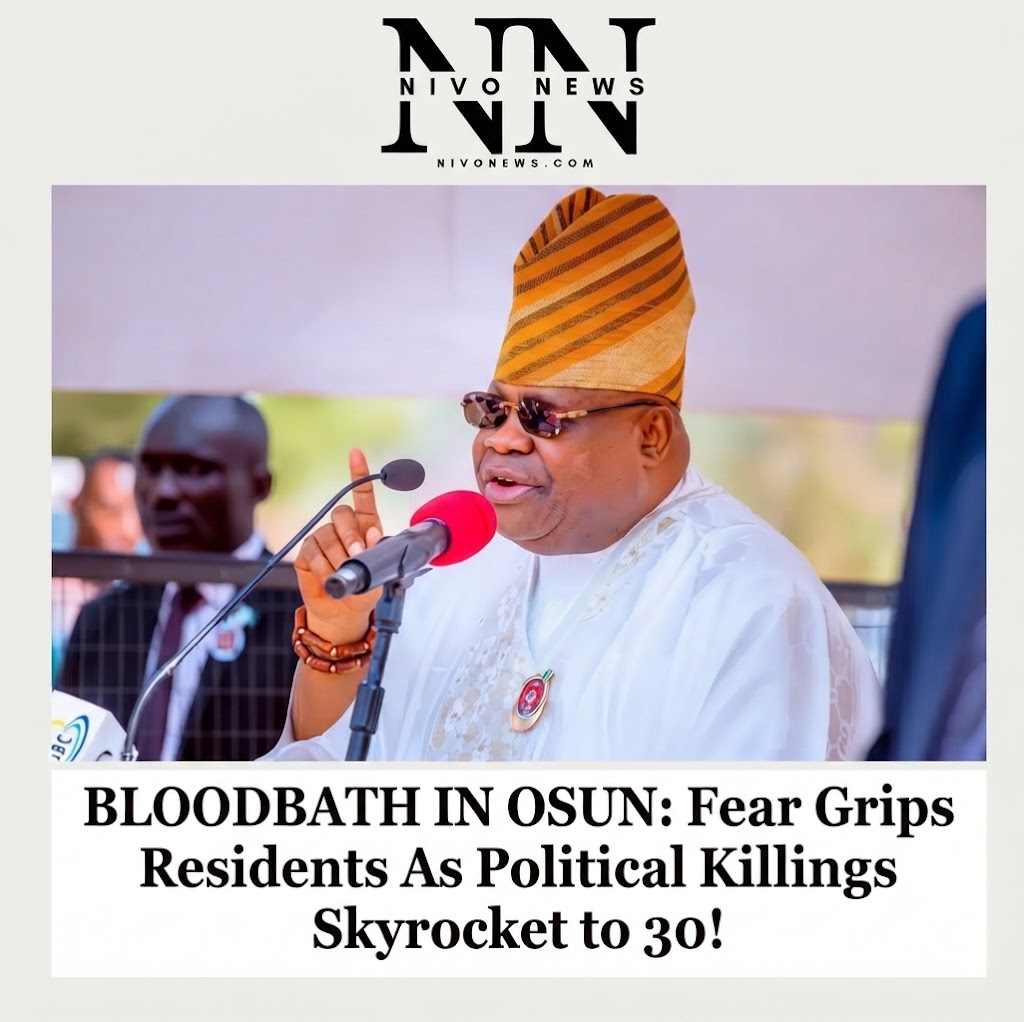
Osun Poll: Fear Grips Residents As Political KiIllings Hit 30

Published

on

Fear has gripped parts of Osun State ahead of the August 15 governorship election, with some residents avoiding clothes, caps and other materials bearing political party colours or insignia following a series of politically linked killings.....KINDLY READ THE FULL STORY HERE▶

According to Punch, the Nigeria Police Force (NPF) has documented at least 30 politically motivated killings in the state, heightening concerns about voter safety and the possibility of further violence before and during the poll.

Findings showed that some residents now consider publicly displaying political allegiance a security risk, particularly in areas that have witnessed clashes between rival groups.

The election is expected to be a three-way contest involving incumbent Governor Ademola Adeleke, All Progressives Congress (APC) candidate Bola Oyebamiji and African Democratic Party (ADP) candidate Najeem Salaam.

Amid the security concerns, the Inspector-General of Police, Tunji Disu, announced on Friday that at least four police personnel would be deployed to each polling unit across the state.

The deployment is expected to form part of a large-scale security operation designed to prevent violence and maintain order during the election.

Despite the growing presence of security personnel, residents in some communities remain anxious over the possibility of being mistaken for supporters of rival political parties.

The movement of security operatives and convoys belonging to political officeholders has also increased activity across the state.

Edo State Governor, Monday Okpebholo and his Kogi State counterpart, Usman Ododo, arrived in Osun on Wednesday and have since been moving around the state in convoys.

Chairman of the Osun State Civil Societies Coalition, Waheed Lawal, said the atmosphere remained tense due to political violence and what he described as declining public confidence in security agencies.

“There is tension and people are currently afraid because of the violence here and there, and because of what the security agencies are doing, especially the police. People have lost confidence in them,” Lawal said.

He argued that it had become increasingly difficult to separate cult-related killings from political violence because some suspected cultists had become involved in partisan activities.

“Some of the violence is cult-related, but you can hardly differentiate between political and cult killings now because these cultists have integrated themselves into politics,” he said.

Lawal alleged that some political actors were seeking to create fear and discourage voter turnout.

“The political actors are trying to create an atmosphere where people will be afraid to come out and vote, but people are now determined to vote,” he added.

‘Political Attacks Have Not Stopped’

The Executive Director of Socio-Economic and Civic Rights Advocacy, Emmanuel Olowu, also said tension remained in parts of the state despite recent changes in police leadership.

He said the replacement of the former Commissioner of Police, Ibrahim Gotan, had reduced some of the agitation but added that concerns persisted, particularly in the Ijesa axis.

Olowu said, “There is tension; people are afraid, and the political attacks have not stopped. People are being killed, and the police are perceived to be biased.

“We hope the police will be able to restore people’s confidence by acting professionally and maintaining neutrality.”

Executive Director of the World Institute for Peace, Lamina Kamiludeen, said his organisation recorded at least 14 deaths between January and August, although police records put politically motivated killings at 30.

He warned political actors against arming suspected cultists and thugs, saying the consequences could extend beyond election day.

He said, “Between January and August this year, no fewer than 14 people have been killed, and it is disheartening. We condemn the political killings.

“Politicians should refrain from sponsoring political thugs. They are the ones causing violence without considering the future implications of their actions. Political thuggery has become a menace in Osun.”

Kamiludeen alleged that political actors in rival camps had recruited suspected cultists for election-related activities.

He said, “Our observation is that no one has a monopoly of violence in the coming election.

“After the election, the weapons and other materials given to them to perpetrate violence cannot simply be withdrawn. Whoever wins the election should be prepared to tackle cult-related attacks.”

He, however, said tension had eased following the deployment of additional security personnel.

“Currently, there is not much panic compared to the past weeks. The tension is now about 25 per cent. It reduced after the IG came to Osun,” he said.

Accord Appeals For Calm

Osun State Accord Party Chairman, Pastor Victor Akande, acknowledged the tension but expressed confidence that improved security deployment would help restore calm before voting begins.

“There is certainly some tension in the state, but we are hopeful that the atmosphere will improve before the election with the deployment of adequate security personnel,” Akande said.

He urged residents to remain peaceful and law-abiding.

“As you know, the people of Osun State are Omoluabi and have consistently conducted themselves peacefully. We urge everyone to remain calm, law-abiding and committed to sustaining the state’s tradition of peaceful coexistence,” he added.

APC Dismisses Tension Claims

The APC Director of Media and Publicity, Kola Olabisi, however, said there was no anxiety within his party.

“There’s no tension in our party. Oyebamiji has been carrying his campaign train to all the nooks and crannies of the state, where his supporters and members of the party lean round him as ants do to sugar, to show you the level of his popularity,” Olabisi said.

He accused rival politicians of promoting violence because they feared defeat, while expressing confidence in the police.

“There is a heavy presence of police in the state who will monitor to ensure that they keep the peace during the election. As for us, all is well,” he said.

Several politically linked deaths have been recorded across the state in recent months.

In January, an APC supporter and former unit chairman of the National Union of Road Transport Workers, Kazeem Oyewole, was killed at Orita Elelede in Osogbo by assailants alleged to be linked to a rival political camp.

On May 8, Kolade Eluyera, son of the Accord Party Women Leader in Irewole Local Government Area, was killed in Ikire.

Two persons identified as Accord supporters were also killed in Akoda and Owode-Ede on June 9.

On June 21, 14-year-old Ezekiel Olapade was killed during an attack in Ilobu, headquarters of Irepodun Local Government Area. He was reportedly struck by a bullet allegedly intended for another person.

Accord member Ajayi Rogba was killed in Esa-Oke, Obokun LGA, on June 23, while APC member Taofeeq Mustapha was shot dead on June 27.

A 19-year-old, Timilehin Oni, was killed in Ijebu-Jesa on July 6, while another victim identified as Ibrahim was killed in the Atelewo area of Osogbo on July 26.

Two other persons, Lateef Adelodun, popularly known as Lexy, and Waheed Adigun, were killed during an attack in Egbatedo, Osogbo, on July 15.

Other fatalities linked to the political violence include Aderombi Abass, Ganiyu Gele, Wole Vulcaniser, Rafiu Quadri Abiodun and Elijah Baba Ewe.

A report by the non-governmental organisation Kimpact Development Initiative said 56 election-related violent incidents resulting in 14 fatalities had been recorded in Osun within the past 12 months.

Presenting the report at an election summit in Osogbo on July 13, KDI said the state capital accounted for 23 of the incidents and nine of the 14 fatalities.
Advertisement
Click to comment

Leave a Reply

Your email address will not be published. Required fields are marked *

latest

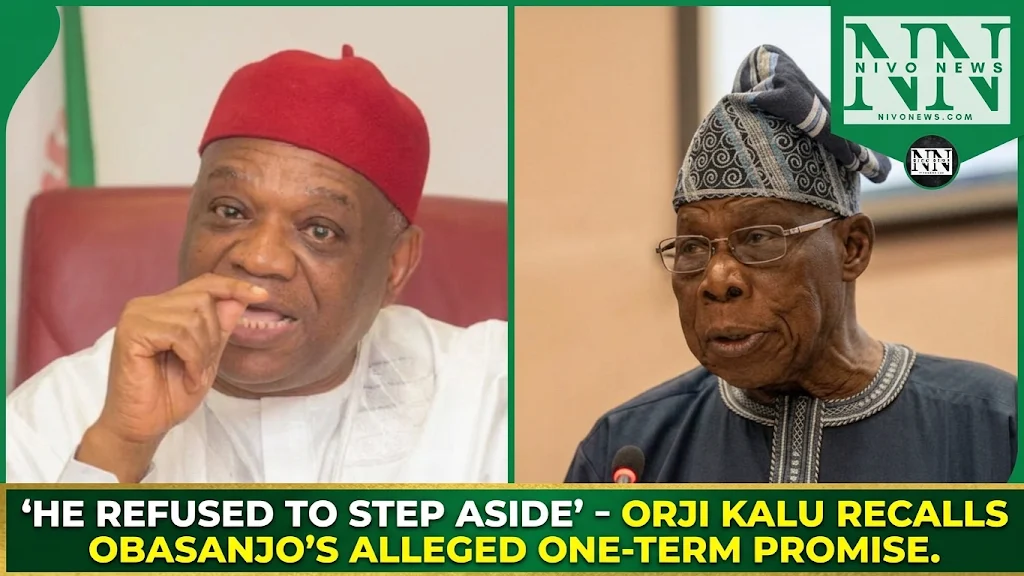
‘He Refused To Step Aside’ – Orji Kalu Recalls Obasanjo’s Alleged One-Term Promise.

Published

on

Former Abia State Governor, Orji Uzor Kalu, has revealed the circumstances that led to the breakdown of his relationship with former President Olusegun Obasanjo.....KINDLY READ THE FULL STORY HERE▶

Kalu said their disagreement stemmed from an alleged agreement that Obasanjo would serve only one term as president before handing over power to former military Head of State, General Ibrahim Babangida.

He explained that the understanding was reached among himself, Babangida and Obasanjo before the latter was supported to become Nigeria’s president.

Kalu made the disclosure during an appearance on Arise Television, where he spoke about his political relationship with the former president.

According to him, the arrangement was for Obasanjo to serve a single four-year term from 1999 to 2003 before transferring power to Babangida.

He said, “I had a very good relationship with President Obasanjo, and it went sour. And it didn’t go sour because I wanted what I wanted to have as a person. It’s because I wanted something for all of us Nigerians.

“Because most of the things we discussed, he didn’t do. We discussed that he would be president for four years. We discussed that he would only do four years and leave, and another person would take over. We helped him a lot when he came out of prison. We maintained our support to make sure that he succeeded.”

The former governor further explained that Obasanjo was expected to hand over power to another political bloc after completing his first term.

He noted that Obasanjo’s emergence as president in 1999 was partly aimed at addressing the political grievances of the South-West following the annulment of the June 12, 1993 presidential election and the death of its presumed winner, Chief MKO Abiola.

Kalu added that the arrangement was also expected to sustain the rotation of power, with the presidency eventually returning to the North.

However, he said he could not confirm reports that Babangida had considered making him vice president under the proposed political arrangement.

“Whether he had given IBB to make me vice president, I don’t know. Man, I never thought about that. But the one you’re certain about is what I was certain about,” he added.

Reflecting on the disagreement, Kalu said he was much younger at the time but had since grown older and become more conscious of the importance of honouring political agreements.

Continue Reading

latest

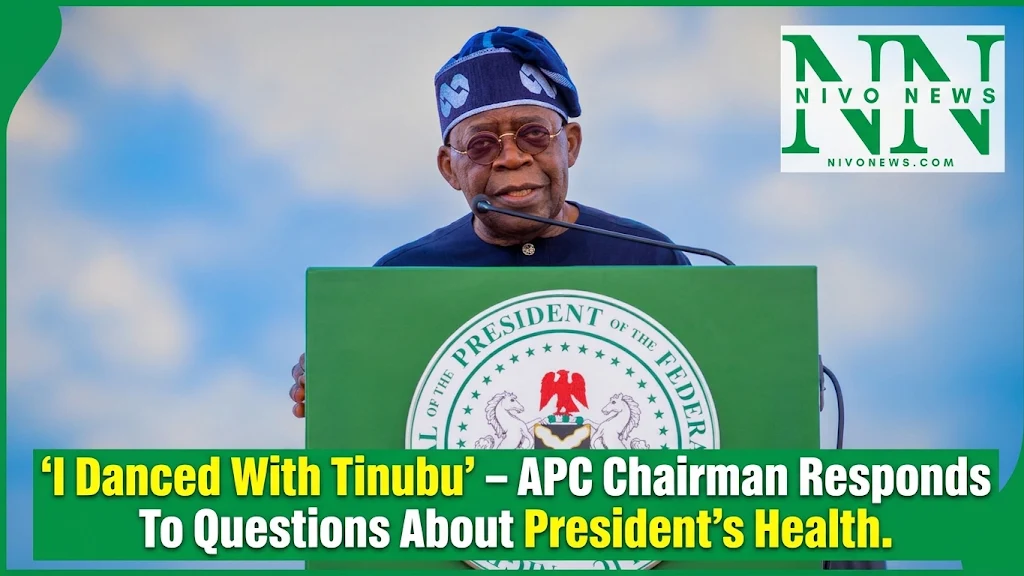
‘I Danced With Tinubu’ – APC Chairman Responds To Questions About President’s Health.

Published

on

The National Chairman of the All Progressives Congress (APC), Nentawe Yilwatda, has urged Nigerians to support President Bola Tinubu’s re-election bid, insisting that the President is physically fit to continue leading the country.....KINDLY READ THE FULL STORY HERE▶

Yilwatda made the appeal on Monday night while appearing on Channels Television’s Politics Today.

He argued that Tinubu’s recent visits to Akwa Ibom and Rivers States on Friday demonstrated his physical fitness and ability to handle the demands of the presidency.

Speaking during the programme, Yilwatda said he personally witnessed the President dancing during his visit to Akwa Ibom.

“Did you watch him (Tinubu) dance in Akwa Ibom? I was there live and I danced with him, he danced to the music of the people,” he said.

The APC chairman maintained that Tinubu’s schedule during the visit showed that he was capable of handling demanding engagements.

“Tinubu is fit to go. He was in Akwa Ibom, he had a dinner, town hall meeting with the people that same Friday, he engaged the people late in the night after the dinner and the next morning he was in Rivers.

“And if someone is not fit, he will do 48 hours of non-stop engagements and trips at the same time? Bring another complaint,” Yilwatda added.

He also explained that the APC had arranged Tinubu’s campaign schedule in a way that would prevent governance from suffering.

According to him, the President would spend two days campaigning and three days attending to official duties, with visits to Jigawa and Jos also scheduled.

Yilwatda further disclosed that the Senate President and Speaker of the House of Representatives had advised against participating in every campaign activity to ensure that the National Assembly continued its work.

He said the party had equally staggered the activities of members of its National Working Committee to prevent its operations from being disrupted by the campaign.

The APC chairman questioned whether governance, the National Assembly and the party should be shut down simply because of the election campaign, describing such a suggestion as unreasonable.

Continue Reading

latest

‘How Did She Win?’ – OK Movement Questions Natasha’s Kogi Central Mandate.

Published

on

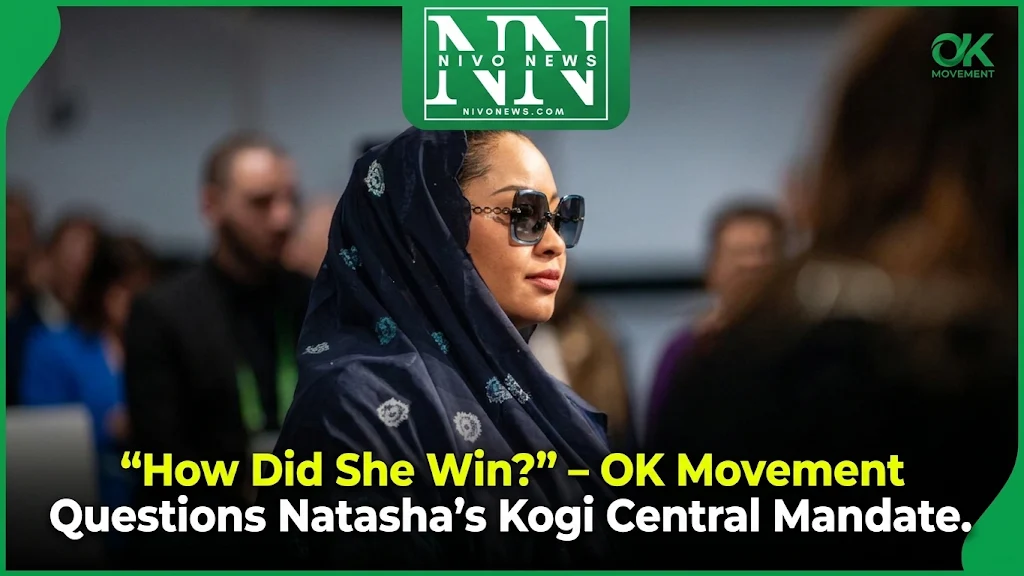
The Obi-Kwankwaso Movement has responded to Senator Natasha Akpoti-Uduaghan, representing Kogi Central, following her criticism of the group’s call for an investigation into her distribution of millions of naira to constituents.....KINDLY READ THE FULL STORY HERE▶

News reports that Akpoti-Uduaghan had criticised the Movement for urging the Economic and Financial Crimes Commission (EFCC) to investigate her cash empowerment programme, which she claimed was funded through a Federal Government budgetary allocation.

However, speaking in an interview with Punch, the Director-General of the Obi-Kwankwaso Movement, John Ughulu, said the senator’s response failed to address the concerns raised by the group.

Ughulu maintained that elected public officials needed continuous orientation on their constitutional duties, ethical responsibilities and accountability to the people.

He said the widely discussed cash distribution had raised concerns about the possible misuse of public office and the integrity of Nigeria’s electoral process.

According to him, if investigations establish that the money was distributed to influence voters ahead of an election, the action could amount to advance vote buying and should be examined under relevant electoral laws.

Ughulu stated:

“What Nigerians witnessed in the widely discussed money distribution incident raises serious questions about the abuse of public office and the integrity of our electoral process.

“If the circumstances establish that the money was distributed to influence voters ahead of an election, the matter could amount to advance vote buying and should be investigated under the relevant provisions of Nigerian electoral law.”

The movement’s director-general also challenged Akpoti-Uduaghan to clarify whether similar cash distributions formed part of her election campaigns, arguing that the circumstances surrounding her emergence as a senator also warranted scrutiny.

He said:

“The election that brought Senator Natasha into the National Assembly was decided by the people. Therefore, an important question must be asked: Was the same practice of distributing money to influence voters involved in securing her electoral victory?

“That question deserves a factual answer, not an emotional reaction.”

The group further rejected suggestions that its criticism was politically motivated, insisting that its position on electoral accountability applied to politicians across party lines, including candidates of the Nigeria Democratic Congress (NDC).

Ughulu stressed that the movement would not overlook alleged electoral misconduct involving individuals within its political camp while condemning similar actions by members of other parties.

He added:

“We cannot condemn alleged electoral malpractice under the present administration while appearing to tolerate similar conduct from individuals within our own political space. The same standards of integrity, transparency and accountability must apply to everyone.

“The OK Movement will not make exceptions for anyone. This applies equally to NDC candidates and candidates of every other political party. Anyone involved in electoral manipulation, vote buying, result falsification or any attempt to undermine the will of the electorate should expect lawful scrutiny and accountability.”

Ughulu also warned that the movement would explore legal options to demand accountability if the EFCC or other relevant agencies failed to investigate credible allegations.

Continue Reading

Trending