
latest
DIRECT LINE: President Tinubu Calls Governor Adeleke in Aftermath Of Explosive EFCC Standoff!.

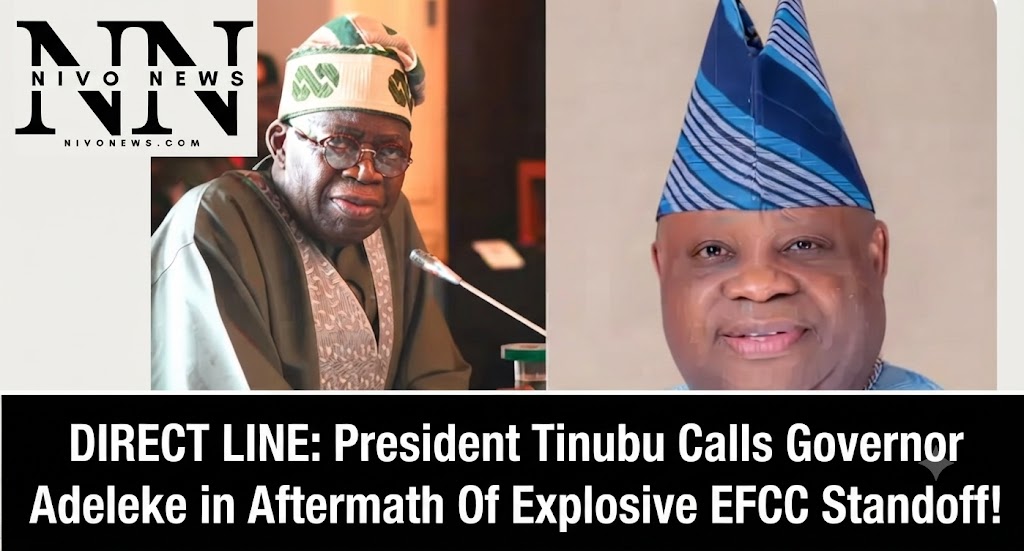
President Bola Tinubu spoke directly with Osun State Governor Ademola Adeleke over the phone on Thursday, informing him of a presidential directive given to the Economic and Financial Crimes Commission (EFCC) to lift the court order that froze the state government’s accounts.....KINDLY READ THE FULL STORY HERE▶
The conversation was made public by the Special Adviser to the President on Information and Strategy, Bayo Onanuga, via a post on his official X handle.
In a personal statement released on the same day, President Tinubu explained that he felt deeply embarrassed by the anti-graft agency’s action—not because they lacked a legal mandate backed by a court order, but entirely because of the poor timing. He noted that actions taken by federal state institutions are automatically attributed to him as President, even when he has no prior knowledge of them.
While emphasizing his ongoing commitment to the operational independence and statutory powers of law enforcement agencies without political interference, Tinubu noted that he felt compelled to step in. He concluded that the timing of the EFCC’s move was inauspicious and required intervention to ensure the public perceives federal institutions as entirely neutral and uninvolved in the electoral process.
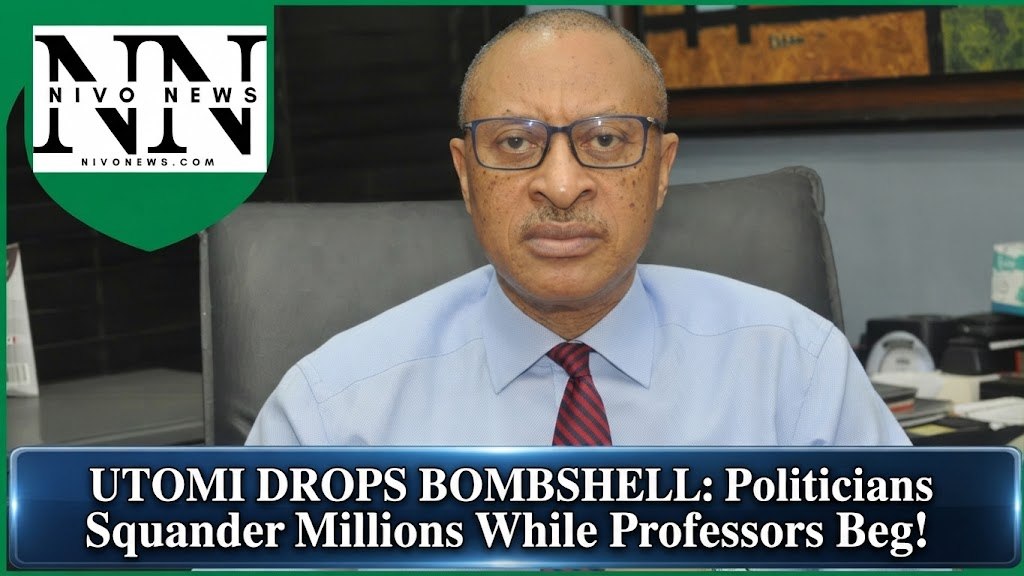
Political economy professor Pat Utomi has raised concerns over the poor remuneration of university professors in Nigeria, claiming that some professors earn no more than ₦500,000 monthly.....KINDLY READ THE FULL STORY HERE▶
Utomi lamented the disparity between the earnings of academics and the amount of money allegedly spent by politicians during elections.
He expressed his concerns in a post on X, where he also highlighted the financial struggles faced by many Nigerians amid rising living costs.
According to Utomi, about 70 per cent of Nigerians earn less than ₦100,000 monthly, even as the prices of goods and services continue to rise.
He questioned how politicians could afford to spend millions of naira during primary elections while university professors struggle to meet basic expenses from their monthly salaries.
“Some of us in Nigeria earn less than ₦100,000 a month. That takes nearly two and a half times to fill the tank of my car, and I’m asking myself, is it possible that people even need to think of it?” he said.
Utomi also questioned the earnings of university professors, particularly those employed by government-owned institutions.
“How much does a university professor earn in this country? Some work for government universities. They earn probably, at best, ₦500,000 a month,” he said.
He noted that a significant portion of a professor’s salary could be consumed by electricity and other household expenses, particularly for those living in areas with high living costs.
“They probably live in an area where power will take up ₦150,000 or ₦200,000 of that money. How is it possible that people are still alive and going?” Utomi asked.
The professor expressed further concern over the contrast between the financial difficulties experienced by academics and the huge sums allegedly spent by politicians during party primaries.
“Yet, I watched primary elections and saw politicians spending millions of naira. How can they have all that money when professors can’t even fill a tank with their entire month’s salary? What’s going on?” he asked.
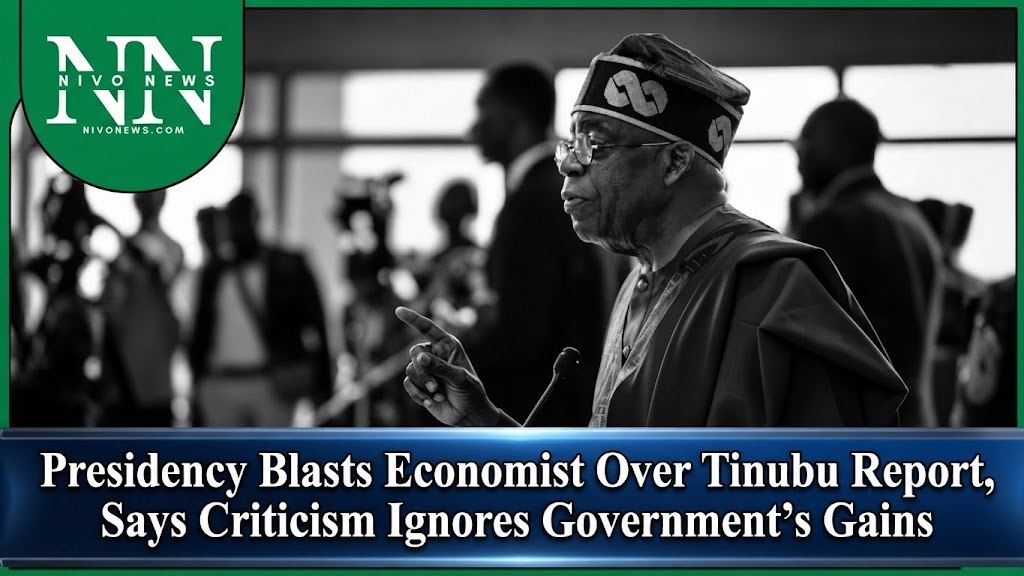
The Presidency has rejected claims by The Economist regarding President Bola Ahmed Tinubu’s popularity among Nigerians, describing the publication’s assessment as “intellectual fraud” while defending the administration’s economic reforms.....KINDLY READ THE FULL STORY HERE▶
In a statement titled “Beyond the Economist Condescension: Nigeria’s Re-engineering Under Tinubu is Unstoppable,” the Special Adviser to the President on Media and Public Communications, Sunday Dare, accused the international publication of presenting a distorted picture of developments in Nigeria.
Dare argued that The Economist failed to adequately consider the economic challenges inherited by the Tinubu administration and the impact of reforms implemented since May 2023.
“The Economist claims Nigerians dislike their President, but it’s a claim that smells of opposition and is riddled with inconsistencies,” he said.
The presidential aide also accused some foreign publications of relying on what he described as “sensationalist half-truths” in their coverage of Nigeria.
He dismissed the suggestion that Nigerians were broadly rejecting Tinubu, describing such a conclusion as an oversimplification of the country’s political and economic realities.
According to Dare, foreign commentators have repeatedly viewed Nigeria through a “cracked, distorted lens,” focusing on predictions of economic collapse, institutional paralysis and widespread public despair while overlooking developments across the country.
He said some publications had promoted what he called a “lazy, hollow fiction” that Nigerians hated President Tinubu, arguing that such narratives reduced complex administrative challenges to a simplistic story of national rejection.
“This is not merely analytical laziness; it is an intellectual fraud,” Dare stated, adding that such assessments ignored what he described as the “monumental” task undertaken by the Tinubu administration since May 2023.
The former Minister of State for Information said Tinubu’s performance should be assessed against the economic conditions that confronted the administration when it assumed office.
Dare argued that the President did not inherit a “functioning, well-oiled state,” but rather an economy facing severe financial and structural challenges.
He pointed to the fuel subsidy regime, multiple foreign exchange windows, public debt pressures and years of underinvestment in critical infrastructure as some of the problems inherited by the administration.
“The Nigerian economy groaned under multiple, distorted foreign exchange windows that bred corruption and choked legitimate enterprise,” the Presidency stated.
It added that the debt service-to-revenue ratio had risen to about 95 per cent, leaving government finances under severe pressure, while decades of underinvestment had weakened critical national assets, security infrastructure, energy systems and other essential infrastructure.
Dare maintained that addressing such deep-rooted problems could not happen without some transitional hardship.
He argued that, rather than postponing difficult decisions, Tinubu chose to confront what he described as structural contradictions within the Nigerian economy.
According to the Presidency, the administration’s reforms have begun to reshape the economy through policies aimed at eliminating longstanding distortions.
It cited the removal of the petrol subsidy as one of the administration’s major decisions, arguing that it had stopped the loss of public resources and enabled government to redirect funds towards capital development and fiscal sustainability.
The Presidency also highlighted the foreign exchange reforms, claiming that the unification and rationalisation of the market reduced opportunities for arbitrage, attracted foreign investment and contributed to improvements in trade balances and external reserves.
It further pointed to the Nigerian Education Loan Fund (NELFUND), saying the programme had enabled hundreds of thousands of students from financially disadvantaged backgrounds to access higher education without the burden of tuition fees.
Other achievements highlighted by the Presidency included local government financial autonomy, the increase in the national minimum wage, mass-transit Compressed Natural Gas buses and various measures aimed at reducing the impact of rising transportation costs.
The administration also cited fertiliser distribution, agricultural loans and the provision of modern farming equipment, including tractors, as part of its efforts to improve food production and revitalise rural economies.
On the suggestion that Nigerians were broadly hostile towards Tinubu, the Presidency rejected the claim, arguing that such a narrative did not reflect the experiences of many citizens.
It maintained that the impact of government programmes could be seen among students, parents, farmers and other Nigerians who had benefited from various interventions.
The Presidency therefore urged Nigerians and international observers to assess Tinubu’s administration within the context of the economic conditions it inherited and the reforms it has implemented since assuming office.
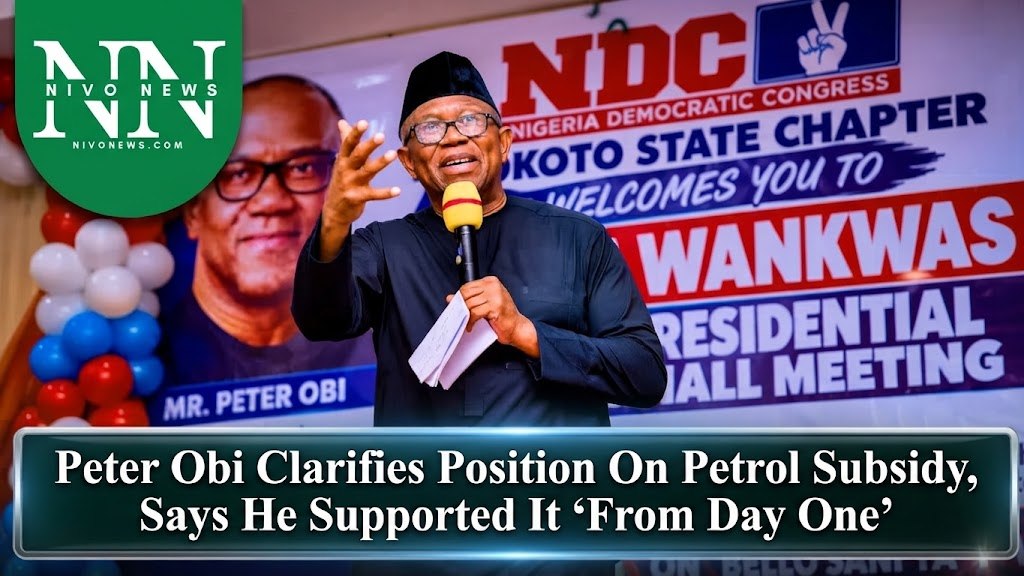
The presidential candidate of the Nigeria Democratic Congress (NDC), Peter Obi, has said he would restore the petrol subsidy regime if elected president in the 2027 election.....KINDLY READ THE FULL STORY HERE▶
The former Anambra State governor, however, said his administration would ensure that the subsidy programme was not undermined by the corruption he believes characterised its previous implementation.
Obi made the comments during an interview with the BBC on Tuesday, marking a change from his position during the 2023 presidential campaign, when he supported the removal of the petrol subsidy.
He argued that the subsidy itself was not the major problem, but rather the corruption associated with its administration.
“From day one, I’ve talked about subsidy. I talked about corruption; corruption is the problem of subsidy,” Obi said.
When asked directly whether he would reintroduce the subsidy if elected president, Obi answered in the affirmative but stressed that he would first tackle the corruption surrounding the policy.
“Yes. But remember, I have qualified it, not with the corruption that’s associated with it. I’ll remove the corruption and retain the subsidy,” he stated.
Obi also outlined his approach to fighting corruption in government, saying the conduct of the president and members of his immediate family would play an important role in reducing corruption.
“If you are not stealing, if you are not involved, your wife and family are not involved, you reduce it by 50 per cent,” the presidential candidate said.
During the 2023 presidential campaign, Obi had supported the removal of the petrol subsidy, arguing that funds spent on the programme could instead be channelled into critical areas such as education, healthcare and infrastructure.
President Bola Ahmed Tinubu subsequently announced the end of the petrol subsidy regime during his inauguration on May 29, 2023.
Obi’s latest position also comes after comments by his running mate, Dr Rabiu Musa Kwankwaso, who said in September that an NDC government led by Obi would introduce its own form of subsidy arrangement.
Meanwhile, during the BBC interview, Obi rejected suggestions that he should withdraw from the 2027 presidential race in favour of another opposition candidate if opposition parties eventually agree on a consensus candidate.
“We don’t need to step down. We need to do the right thing,” he said.
-

 latest1 year ago
“Social Media Erupts As Jim Iyke Declares Rita Dominic Nollywood’s Most Beautiful”
-
 latest3 years ago
Edo Political Showdown: Oshiomhole Appears At Presidential Villa As Tinubu Hands APC Gubernatorial Flag To Okpebholo (Photos & Video)
-
 entertainment3 years ago
Love Knows No Age American Woman Defends Marriage To Young Nigerian Man “I’m Not 70”
-
 latest3 years ago
Olumide Akpata Strikes Again: Drops Killer Track, Sends Edo State Into Frenzy!(Video)
-
 Politics3 years ago
Nigerians React As Pastor Adeboye Foresees Passing Away On A Sunday After Enjoying A Satisfying Meal Of Pounded Yam
-
 latest2 years ago
FG Identifies 31 States At Risk Of Heavy Flooding In 2024: See Full List
-
 Politics3 years ago
BREAKING: Inspector-General Of Police Summons Top Police Commanders For Crucial-Security Challenges
-
 latest3 years ago
5 NYSC Corpers Perish In Fatal Road Accident Returning From Camp