
latest
“Crisis In The Camp: Poor Infrastructure Threatens To Derail Nigeria’s 2030 World Cup Dream”.


Following the Super Eagles’ second consecutive failure to qualify for the FIFA World Cup, former international Segun Odegbami is leading a renewed push for a total overhaul of the Nigeria Football Federation (NFF). Stakeholders, including former Minister of Sports Solomon Dalung and current FCT Minister Nyesom Wike, have joined the chorus of disapproval, citing deep-rooted mismanagement, administrative rot, and a systemic lack of accountability as the primary drivers of this national disappointment.....KINDLY READ THE FULL STORY HERE▶
The crisis extends beyond pitch results; the absence from the 2026 tournament in North America has cost the nation an estimated $10.5 million (over ₦15.5 billion) in lost FIFA participation funds, along with significant declines in sponsorship and broadcast revenue. Meanwhile, the country’s sporting infrastructure—including the National Stadium in Surulere and the Godswill Akpabio International Stadium—continues to deteriorate due to neglect and overuse. As former players like Chikelue Iloenyosi and Austin Popo call for greater ex-international involvement in football governance, stakeholders warn that without urgent, depoliticized reforms, Nigeria risks missing the 2030 World Cup, threatening its status as a major African football powerhouse.
Option 2: Concise Summary (Ideal for Briefs)
Nigerian football is facing a severe crisis following the Super Eagles’ failure to qualify for the 2026 World Cup, prompting calls for immediate NFF reform from figures like Segun Odegbami.
-
Financial Impact: The nation lost approximately $10.5 million in FIFA revenue, funds that could have been used for youth development and infrastructure.
-
Systemic Failure: Former Minister Solomon Dalung alleged that entrenched interests benefit from failure, creating a culture where accountability is stifled.
-
Infrastructure Decay: Major stadiums across the country are suffering from long-term neglect, rendering many unfit for international standards.
-
Call to Action: Leaders and former players are urging the government to intervene and are calling on ex-internationals to unify and take a more active role in football administration.
-
The 2030 Warning: Experts warn that if the current governance structures are not replaced with transparent, competent leadership, Nigeria faces a high risk of another World Cup qualification failure in 2030.
Key Figures Mentioned:
-
Segun Odegbami: Advocating for NFF statute changes to allow for the democratic removal of ineffective administrators.
-
Nyesom Wike (FCT Minister): Voiced public frustration regarding the team’s absence during a recent infrastructure commissioning.
-
Solomon Dalung (Former Sports Minister): Highlighted how financial mismanagement often benefits administrators when teams exit tournaments early.

The daughters of late Nollywood actor Taiwo Hassan, popularly known as Ogogo, have announced plans to venture into the Nigerian movie industry as they seek to sustain their father’s legacy.....KINDLY READ THE FULL STORY HERE▶
The sisters, Lima Olamide Taiwo and Shakira Taiwo, also known as Kira Ogogo, disclosed their decision in a statement released on Wednesday, October 21, 2026.
According to reports, the daughters expressed gratitude to Nigerians, friends, family members and prominent figures in the entertainment industry who supported them following their father’s death.
Lima, who spoke on behalf of the family, appreciated everyone who reached out to them and offered support during their period of mourning.
She also acknowledged the contributions of several notable personalities, including Honourable Tayo Ayinde, Nigeria’s First Lady, the Ogun State governor, Senator Solomon Olamilekan Adeola, popularly known as Yayi, and the Olu of Ilaro.
Lima said the family remained thankful to everyone who showed them love, provided assistance and stood by them during the difficult period.
She further revealed that fans of their late father would continue to experience aspects of his legacy through her sister, Kira Ogogo, who is preparing to begin her career in the entertainment industry.
The family expressed confidence that their entry into Nollywood would help keep their father’s name and contributions to the Nigerian film industry alive.
Speaking on behalf of the family, Lima said, “On behalf of my family and I, we want to say thank you very much to everybody who stood by us. We are going to start seeing Ogogo through my sister Kira Ogogo. We are coming to the industry and we are here to stay.”
latest
‘Sowore Is Just A Skit Maker’ – APC Chieftain Basiru Mocks Activist, Makes Bold Claim About His Party
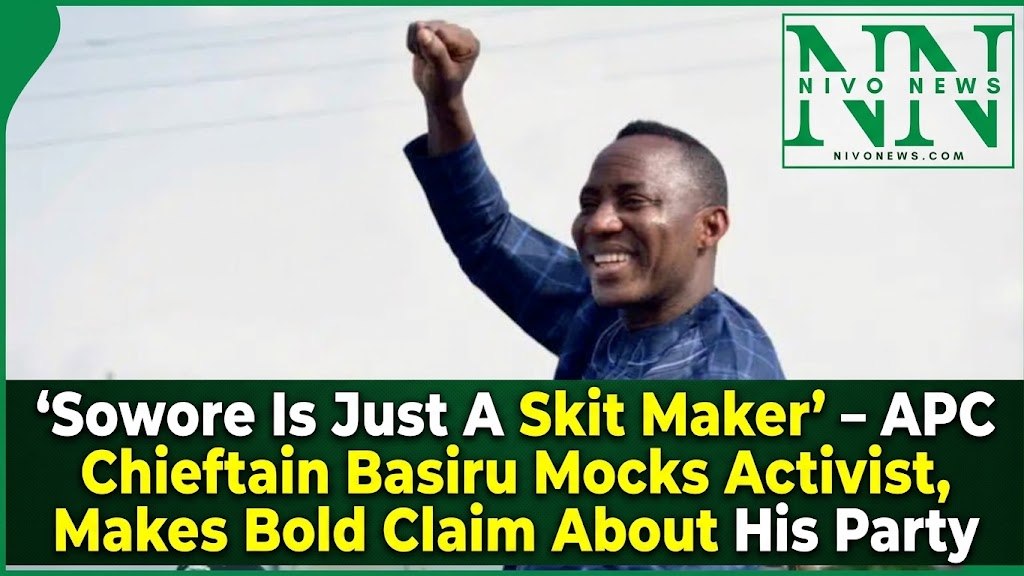
The National Secretary of the All Progressives Congress (APC), Ajibola Basiru, has described Omoyele Sowore, the presidential candidate of the African Action Congress (AAC), as a skit maker and comedian.....KINDLY READ THE FULL STORY HERE▶
Basiru made the remarks while reacting to the AAC’s request to use the Presidential Villa in Abuja for the inauguration of its Presidential Campaign Council ahead of the 2027 general elections.
The party has appealed to President Bola Tinubu to grant it access to the presidential facility for the event. It also requested that the Presidency provide food, drinks and other logistical support for participants at the programme scheduled for November 11, 2026.
The requests were contained in a letter dated October 21, 2026, and signed by the party’s National Secretary, Oshiokhai Ikpeminioghena.
Speaking during an interview on Channels Television’s Politics Today on Wednesday, Basiru argued that Nigerians would take Sowore more seriously as a politician if he could secure a seat in a State House of Assembly.
He said, “Sowore is a skit maker. Let him struggle to even get a seat in the House of Assembly as a politician, and then people will begin to take him seriously.”
The APC national secretary also questioned the electoral strength of Sowore’s party, citing its performance in the 2023 general elections.
Taking a swipe at the AAC, Basiru said rejected ballot papers recorded more votes than the party during the election, using the claim to argue that the party lacked significant electoral support.
He stated, “Even rejected ballot papers had more votes than his party in the 2023 election. This shows that rejected ballot papers are more popular than his political party. So he is just making skit.”
When the television host challenged his assessment by suggesting that Sowore was a strong contender, Basiru dismissed the suggestion and maintained that the AAC leader lacked the political strength to pose a serious challenge.
“Which strong contender? He also knows that he cannot contend anything, if I see him, I will tell him, Sowore you are just a comedian,” he added.
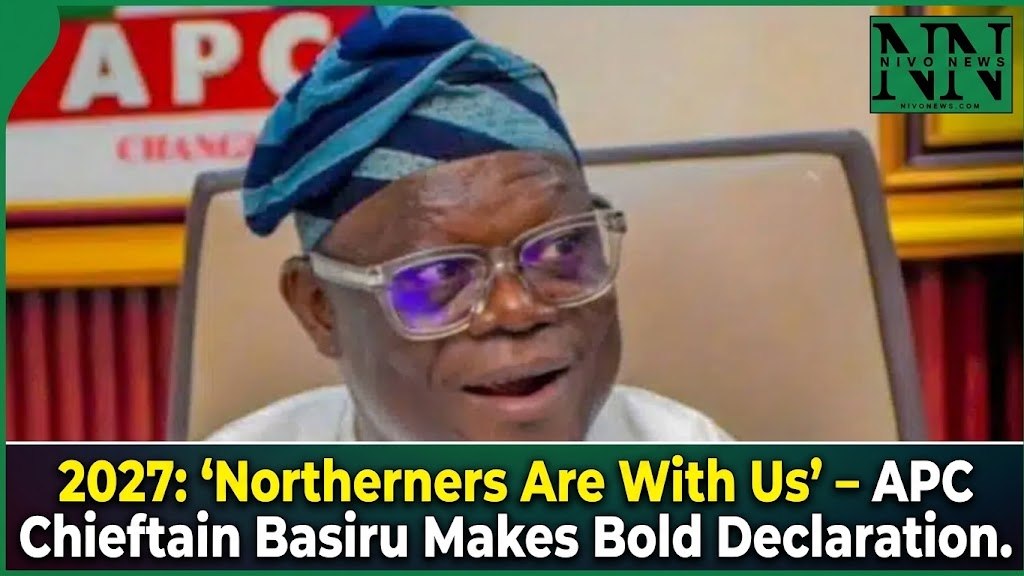
The National Secretary of the All Progressives Congress (APC), Senator Ajibola Basiru, has expressed confidence in the ruling party’s chances in the 2027 general election, claiming that Northern Nigerians are firmly behind the APC.....KINDLY READ THE FULL STORY HERE▶
reports that Basiru made the statement during an appearance on Channels Television’s Politics Today on Wednesday, describing Northern Nigeria as a strong base for the ruling party.
He maintained that the APC enjoys support from influential political figures as well as ordinary citizens across the region.
To reinforce his position, the APC national secretary pointed to the involvement of prominent personalities, including former Niger State Governor Babangida Aliyu, and the establishment of a campaign office known as Arewa for Asiwaju.
Basiru said the development demonstrated growing political support for President Bola Tinubu and the ruling party ahead of the 2027 elections.
He stated, “The strength of the APC is in the Northern part of this country and you will see it by the grace of God when election comes in 2027. On Saturday, we had the leading lights in politics, in economy, in industry gathering together to donate a campaign office they call Arewa for Asiwaju.
“Even some who are in the opposition party have changed, people like the former governor of Niger State Babangida Aliyu, now all of them are coming to join and work for the APC. The truth is that today, when you see the creme de la creme of Northern Nigeria, they are with us, you see the masses of Northern Nigeria are with us.”
Beyond the APC’s electoral prospects, Basiru also took aim at opposition parties over their reactions to electoral defeats, arguing that political actors must learn to accept both victories and losses in a democracy.
He referenced President Bola Tinubu’s position that politicians who celebrate electoral victories must also be prepared to endure defeat.
According to Basiru, the opposition should recognise that losing elections and court cases is part of the democratic process, rather than continually challenging unfavourable outcomes.
He noted that the APC had also experienced setbacks in political contests and legal proceedings but had accepted the outcomes, learnt from its experiences and moved forward.
Basiru said, “One of the things that our leader President Bola Ahmed Tinubu said is that anybody that wants that savour the joy of victory in a democracy must also be able to endure the pain when he loses. But in the case of Nigeria, it appears that the opposition only wants to win, they don’t want to lose. We have had our fair share of losses both in the court and in the political contests, and we have taken it, learn our lessons and moved on.”
-

 latest1 year ago
“Social Media Erupts As Jim Iyke Declares Rita Dominic Nollywood’s Most Beautiful”
-
 latest3 years ago
Edo Political Showdown: Oshiomhole Appears At Presidential Villa As Tinubu Hands APC Gubernatorial Flag To Okpebholo (Photos & Video)
-
 entertainment3 years ago
Love Knows No Age American Woman Defends Marriage To Young Nigerian Man “I’m Not 70”
-
 latest3 years ago
Olumide Akpata Strikes Again: Drops Killer Track, Sends Edo State Into Frenzy!(Video)
-
 Politics3 years ago
Nigerians React As Pastor Adeboye Foresees Passing Away On A Sunday After Enjoying A Satisfying Meal Of Pounded Yam
-
 latest3 years ago
FG Identifies 31 States At Risk Of Heavy Flooding In 2024: See Full List
-
 Politics3 years ago
BREAKING: Inspector-General Of Police Summons Top Police Commanders For Crucial-Security Challenges
-
 latest3 years ago
5 NYSC Corpers Perish In Fatal Road Accident Returning From Camp