
latest
“POLITICAL VOLCANO: Fubara Blows The Whistle On Abuja’s Plot To Underline Rivers State—’I Will Not Be Bullied!'”.


Trust is the ultimate currency of political patronage—both an honor to receive and a heavy burden to bear. When intact, it drives the wheels of power; but once shattered, it burns like an unquenchable fire. In the ruthless theater of Nigerian politics, the furnace of distrust swiftly consumes the vulnerable or the poorly fortified.....KINDLY READ THE FULL STORY HERE▶
Governor Siminalayi Fubara of Rivers State has just learned this bitter lesson. Much like other embattled godsons before him, Fubara failed to secure the All Progressives Congress (APC) governorship ticket for his second-term bid in the recently concluded Abuja primaries. From all indications, he was systematically schemed out during the screening exercise. This political eviction was partly a coordinated hit by his estranged godfather and FCT Minister, Nyesom Wike, alongside the APC national secretariat, and wholly a consequence of Fubara’s own strategic missteps.
Ironically, before his defection months ago, political fifth columnists touted Fubara as more popular on the ground than his benefactor. How that narrative disintegrated so rapidly speaks volumes; it highlights Wike’s masterful hijacking of the state’s party machinery rather than Fubara’s inability to govern.
Indeed, Wike has pulled off a legendary, perhaps unprecedented feat in Nigerian political history: openly fielding and controlling candidates across both the APC and the PDP lines simultaneously. For Fubara and Wike, the bridge is entirely burnt—a classic case where once trust is compromised, deep-seated distrust becomes inevitable.
The Mirage of Federal Protection
Whispers within political circles suggest that shortly after returning from a state of emergency, Fubara confided in President Bola Tinubu and key party secretariat members that he only desired a single term. While the governor has not officially confirmed this, his sudden, frantic pivot to secure a second-term ticket exposes the fluid, unpredictable nature of our political landscape.
In Nigeria, political godfathers often elevate loyal stooges on a wave of initial goodwill without testing their long-term loyalty, only to orchestrate their downfall at the slightest sign of independence. The Fubara-Wike fallout mirrors the 2018 Lagos APC primaries, where former Governor Akinwunmi Ambode was spectacularly humiliated by his own estranged godfathers. Interestingly, both Fubara and Ambode share a striking similarity: they were quiet, career civil service accountants plucked from obscurity by their mentors. There must be something uniquely appealing about accountants that makes godfathers view them as ideal proxies.
However, Fubara neglected a foundational rule of power. In his timeless classic, The 48 Laws of Power, Robert Greene counsels: “When asking for help, appeal to people’s self-interest, never to their mercy or gratitude.” Following President Tinubu’s initial intervention in the Rivers crisis, it was a grave, tactical miscalculation for Fubara to rely on Abuja for protection. Migrating toward the APC with his cards face-up, without extracting an ironclad, guaranteed endorsement, was a monumental risk.
Furthermore, Fubara violated Law 3 of Greene’s playbook: Conceal your intentions. In statecraft, one must keep opponents off-balance and cloaked in smoke; by the time they realize your true goal, it should be too late to counter. Abuja has now given Fubara a masterclass in this law.
The governor’s optimal strategy would have been to play along with the APC on the surface while quietly cultivating an independent, underground alliance. Instead, Wike and the APC leadership beat him to the punch, maintaining a diplomatic smokescreen while executing a parallel strategy to isolate him. Fubara walked straight into the trap, blinded by his trust in his newfound Abuja benefactors.
Machiavelli, Metrics, and Lessons from the Past
As Niccolò Machiavelli famously observed, “Love is held by a chain of obligation which, because men are wicked, is broken at every opportunity for their advantage.” Fubara’s reliance on an unwritten, gentleman’s agreement in a room occupied by Nyesom Wike was a structural anomaly. Wike’s political stock in Abuja surged significantly after delivering electoral “success” during the local government polls in the FCT. Once Wike proved his transactional value to the APC national secretariat, the political music changed, and Fubara’s betrayal became a matter of when, not if.
To analyze this through the lens of political science, the philosopher Katherine Hawley notes that while trust implies relying on someone to fulfill a commitment, distrust is the active expectation of unfulfilled commitments. The takeaway? It is far safer to rely on Nigerian politicians based on shared interests than to trust them based on sentiment. I can rely on my computer to process this article, but if it crashes, it owes me no apology—hence, I do not place emotional trust in it.
Fubara’s current predicament is a classic case of political karma; he is being paid back in the exact currency of distrust he dealt his godfather. This saga evokes memories of Oyo State politics in 2003. Rashidi Ladoja rode to the governorship on the shoulders of the late garrison commander of Ibadan politics, Chief Lamidi Adedibu. The relationship soured almost immediately when Ladoja refused to share state allocations with his benefactor. A bitter, Adedibu-engineered impeachment followed. Though the courts reinstated Ladoja after an 11-month legal battle, his second-term ambitions were permanently destroyed. In Nigerian politics, once a godfather is crossed, they rarely forgive. By constitutional grace, a rebellious godson may finish his current term, but a second act is rarely permitted.
A Contrast in Alliances: The Kano Blueprint
Fubara’s misfortune stands in stark contrast to Governor Abba Kabir Yusuf of Kano State, who successfully navigated the turbulent waters to secure his second-term ticket. Faced with a fallout with his original godfather, Senator Rabiu Musa Kwankwaso, Governor Yusuf swiftly pivoted. He built a mutually beneficial, transactional alliance with APC National Chairman Abdullahi Ganduje and secured the federal backing of President Tinubu. Guided by the timeless aphorism, “The enemy of my enemy is my friend,” Yusuf’s screening was seamless.
Unfortunately for Fubara, his primary adversary (Wike) happens to be the best friend of his newfound federal allies. On paper, Yusuf and Fubara share similar temperaments and bureaucratic backgrounds, proving that Fubara’s failure wasn’t due to personal defects, but rather a catastrophic failure of alignment.
With only a minor faction of the State House of Assembly and a fractured cabinet in his corner, Fubara is operating under severe structural limitations. His critics suffer from a distinct cognitive bias—attributing his political isolation to personal flaws rather than the overwhelming institutional weight stacked against him.
Defeating a political godfather in Nigeria requires immense leverage, usually backed by federal might. We saw this in Kano, where Ganduje fiercely and successfully contested the soul of the state against Kwankwaso over two terms. Most godsons simply do not possess that institutional luck. Even in Lagos, the actor-turned-politician Desmond Elliot recently lost his APC primary ticket for the Surulere Constituency, subsequently displaying his frustration in grand, theatrical fashion across the media. Listen closely to the grievances of Elliot and his former allies, and the distinct echoes of trust violated and distrust activated ring loud and clear.
Conclusion
In the final analysis, trust enthrones leaders in Nigerian politics, and distrust dethrones them. However, mistrust—the tragedy of misplaced confidence—is the ultimate political peril.
Trust brought Siminalayi Fubara to the Dennis Osadebe House, and distrust is actively engineering his exit. His naive overestimation of Abuja’s loyalty has anchored his political downfall. As the curtain falls on the latest APC primaries, Nigeria enters yet another cyclic season of shifting alliances, broken vows, and political betrayals.
Ariwoola Samuel Akinwale wrote this piece from Lagos and can be reached via ariwoolaakinwale@gmail.com.
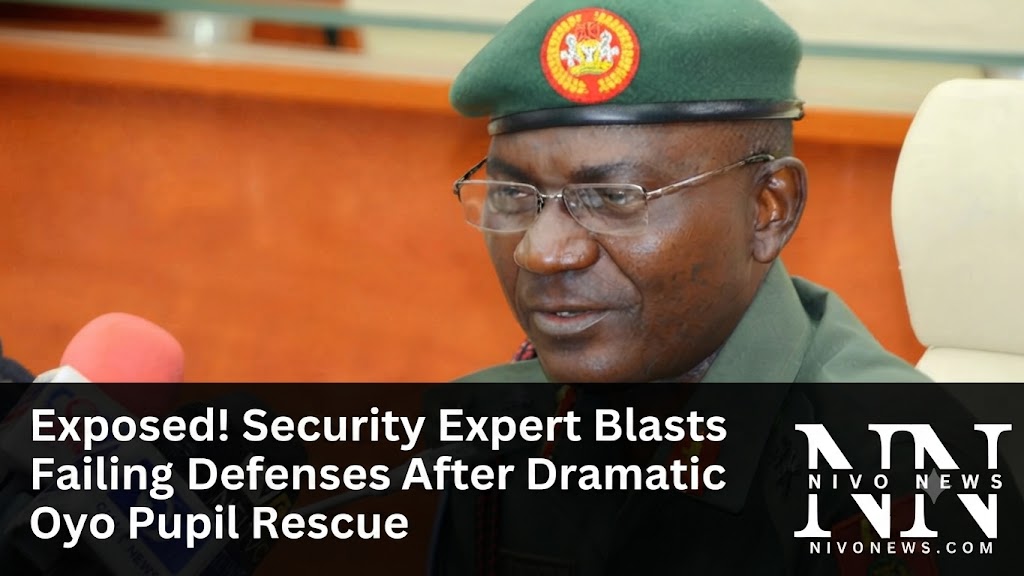
Maj. Gen. John Enenche (retd.), former Director of Media Operations at the Defence Headquarters, has praised the Federal Government and security agencies for the successful rescue of the pupils and teachers abducted in Oriire, Oyo State. Although relieved by the successful outcome, Enenche noted that the fact the victims were held for over 50 days highlights critical deficiencies within Nigeria’s security framework.....KINDLY READ THE FULL STORY HERE▶
-
Addressing Security Gaps: Enenche stressed that the primary lesson from this ordeal is the urgent need to close existing security gaps to prevent prolonged abductions in the future.
-
Role of Retired Personnel: He encouraged his retired colleagues to remain active and utilize their experience and knowledge to assist in national efforts to combat insecurity.
-
Technological Advancement: To improve threat detection and response, he advocated for greater collaboration to deploy innovative technological tools for tracking, surveillance, and rapid response.
-
National Capability: He argued that Nigeria possesses the capacity to effectively “geolocate” criminal hideouts and establish a more robust security umbrella over the country.
-
Public Support: Enenche appealed to Nigerians to provide encouragement and show pride in security personnel, arguing that focusing solely on their shortcomings harms morale rather than supporting further operational successes.
latest
“Midnight Mandate: Explosive Details Reveal Rescue Order For Oyo Pupils Issued Thursday Night!”.

New information regarding the final rescue mission for the pupils and teachers abducted from Oyo State’s Oriire Local Government Area highlights the role of precise intelligence and past strategic lessons.....KINDLY READ THE FULL STORY HERE▶
-
Final Assault Authorization: Security authorities issued the directive to storm the terrorists’ hideout on Thursday night, following confirmed intelligence that the hostages were no longer being utilized as human shields.
-
Tactical Execution: The rescue team launched a swift, coordinated assault utilizing superior firepower, which caught the weakened kidnappers off guard.
-
Pre-Operation Pressure: Weeks of intense gun battles prior to the final raid had successfully diminished the kidnappers’ ammunition supplies and restricted their mobility.
-
Operational Outcome: The final operation resulted in the deaths of scores of terrorists, the arrest of eight suspects, and the safe extraction of all surviving hostages, despite some casualties reported among the rescue personnel.
-
Strategic Lessons: The decision to bypass further negotiations in favor of a direct assault was influenced by the earlier death of Maj. Gen. Abubakar Rabe in Katsina State. Authorities concluded that prolonged negotiations with heavily armed groups, as seen in the Rabe case, increased the risk to hostages, leading to a shift in policy toward prioritizing intelligence-led operations over ransom or concession-based deals.
-
Rejection of Demands: The kidnappers had issued several extreme demands, including ransom, vehicles, the implementation of Sharia-related laws, and the release of high-profile Ansaru leaders Mahmud Usman and Abubakar Abba. Security agencies rejected all conditions, determining that the victims could be safely extracted via military action.
-
Ongoing Investigations: While children of the suspects are being vetted for potential release, any wives found to have actively participated in or supported the criminal enterprise will face legal prosecution.

The Federal Government has approved a new ₦50,000 registration fee for the West African Examinations Council (WAEC) and National Examinations Council (NECO) Senior School Certificate Examinations, effective from 2027. This amount reflects an approximately 82 per cent increase from the current fee of ₦27,500.....KINDLY READ THE FULL STORY HERE▶
The approval was conveyed in a June 18, 2026, letter signed by Adeniji Ibrahim, the Federal Ministry of Education’s Director of Senior Secondary Education, following a March 31, 2026, meeting between the Minister of Education and examination bodies regarding rising operational costs. Folasade Boriowo, the Ministry’s Director of Press and Public Relations, confirmed the official approval of the upward review.
Stakeholder Concerns and Criticism Education experts, private school proprietors, and political stakeholders have voiced strong opposition to the fee hike, warning of several potential consequences:
-
Access to Education: Stakeholders warned that the increase could place significant burdens on struggling families, force children out of school, and undermine efforts to expand educational access.
-
Out-of-school Crisis: Adaramoye Michael Lenin of the Education Rights Campaign argued the hike is counterproductive and will worsen the country’s out-of-school crisis by making education appear commercialized and unaffordable.
-
Retention Challenges: Mrs. Dorothy Okwuenu of the National Association of Proprietors of Private Schools (FCT chapter) stated the increase could derail policies aimed at providing 12 years of uninterrupted basic education by discouraging school retention.
-
Broad Impact: Educators, including Dr. Mary Chinwuba and Rosemary Onyenagubo, expressed concerns that the hike will widen the educational opportunity gap, leaving children from low-income households behind while making formal education accessible primarily to the wealthy.
-
State Government Pressures: The fee increase could force state governments that sponsor candidates to provide significantly higher budgetary allocations, creating further financial strain.
Political Response
-
Atiku Abubakar: The ADC presidential candidate criticized the move as “cruel and economically insensitive,” arguing that it conflicts with the government’s constitutional responsibility to make education accessible to all children.
-
Resurfaced Context: Amid the backlash, a 2001 video of then-Lagos State Governor Bola Tinubu resurfaced, showing him describing his administration’s decision to pay WAEC fees for students because many parents could not afford the costs at that time.
-

 latest11 months ago
“Social Media Erupts As Jim Iyke Declares Rita Dominic Nollywood’s Most Beautiful”
-
 latest2 years ago
Edo Political Showdown: Oshiomhole Appears At Presidential Villa As Tinubu Hands APC Gubernatorial Flag To Okpebholo (Photos & Video)
-
 entertainment2 years ago
Love Knows No Age American Woman Defends Marriage To Young Nigerian Man “I’m Not 70”
-
 latest2 years ago
Olumide Akpata Strikes Again: Drops Killer Track, Sends Edo State Into Frenzy!(Video)
-
 Politics3 years ago
Nigerians React As Pastor Adeboye Foresees Passing Away On A Sunday After Enjoying A Satisfying Meal Of Pounded Yam
-
 latest2 years ago
FG Identifies 31 States At Risk Of Heavy Flooding In 2024: See Full List
-
 Politics3 years ago
BREAKING: Inspector-General Of Police Summons Top Police Commanders For Crucial-Security Challenges
-
 latest2 years ago
5 NYSC Corpers Perish In Fatal Road Accident Returning From Camp